huffpost Press
Trump Keeps Making Comments About Men’s Bodies — And Experts Have A Theory Why
Images
1 / 9

2 / 9
3 / 9
4 / 9
5 / 9
6 / 9
7 / 9
8 / 9

9 / 9
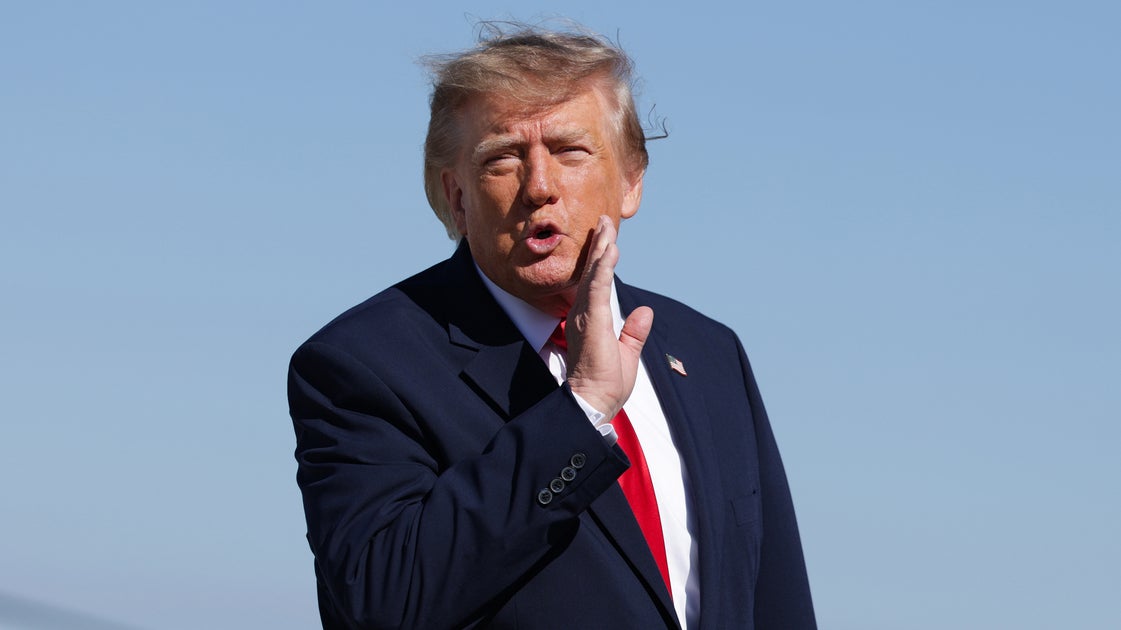
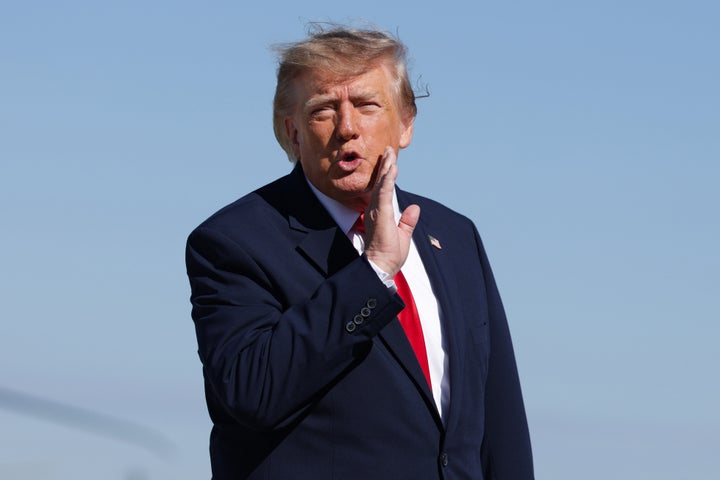
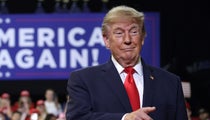
The midterm elections are less than two weeks away, and President Donald Trump has traveled to at least 10 states in October to campaign for Republican Senate and gubernatorial nominees — while repeatedly boasting about how good he thinks some of the candidates look.

On Tuesday, Trump spoke about eyeing Sen. Jon Husted (R-Ohio) during a North Carolina midterm rally. Husted, who is in a competitive race against former Sen. Sherrod Brown (D), was not at the event.

“He’s over here, I’m over here, and I’m studying his body,” the president said. “I’ve never studied the body of a man before. It’s not my thing. Nothing wrong with it, of course. I always precede it by saying, ‘Nothing wrong,’ but it’s never been my thing to be honest with you.”

Trump on Jon Husted: "I'm studying his body. I've never studied the body of a man before. It's not my thing. Nothing wrong with it, of course. But it's never been my thing. But I looked at his ass. I said, 'His ass, shit, it's like a pile of muscle.' Then I looked at his legs and… pic.twitter.com/hAkx2tWgpK

“His ass, shit, it’s like, it’s like a pile of muscle,” Trump continued. “Then I look at his legs, and I said, ‘Man, his feet are big.’ Then I looked at his shoulders, and I tapped him on the shoulder, and it actually hurt my hand. He’s like a piece of steel.”

Trump made similar public compliments about Husted at midterm rallies in Kentucky on Oct. 17 and Ohio on Oct. 12.

“I never did that with a man before,” Trump said in Kentucky, referring to Husted. “I examined his ass, and then I looked at his shoulders. I looked at his feet. I looked at his hand. I looked at his jawline. Studied him. He’s got a jawline.” Husted’s campaign team did not respond to HuffPost’s request for comment.

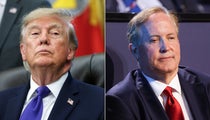
Trump then said that when he met Kentucky Republican nominee Ed Gallrein, he thought, “He’s going to be a perfect man.”

“I needed somebody good, and this guy walks through the door,” Trump said about Gallrein. “I said, look at this beautiful guy.”

At a rally in Dalton, Georgia, on Oct. 16, Trump claimed someone told him Sen. Jon Ossoff (D-Ga.) was a “good-looking man,” but Trump disagreed. He later compared Ossoff to the character Pee-wee Herman.

“I don’t think he’s a good-looking man,” he told the crowd. “I actually think Mike Collins is a good-looking man, and he’s all man. I’m not sure about Ossoff.” Rep. Collins is the Republican challenger to Ossoff.

“I’m casting a movie for senator, I like the white hair,” Trump said, referring to Collins. “I like the big, strong build. Big, strong guy. But that’s what I want.”

Trump also praised Rick Jackson, who is the Republican nominee for Georgia governor.

“I actually think that Rick Jackson’s a very handsome, distinguished, beautiful-looking guy,” he said.

It’s not all positive. Earlier in the month, Trump was at the midterm convention in Dallas, Texas, and repeated his earlier remarks about not liking Republican Senate nominee Ken Paxton’s appearance, but urged voters to support him anyway.

“He may not be the best-looking guy I’ve ever seen,” he said. “But you know what he is? He’s the greatest attorney general in America.”

Dan Cassino, a political science professor at Fairleigh Dickinson University who studies socio-political consequences of male gender identities, told HuffPost that his theory on what could be driving Trump to overshare compliments on physical looks may be the ‘halo effect.’

“Candidate appearance has a mostly indirect impact on vote likelihood and vote choice,” Cassino said. “More attractive candidates are assumed to have other positive traits — what psychologists call a ‘halo effect.’”

The halo effect occurs when a candidate’s appearance leads voters to believe they have other positive traits. For example, if a politician is attractive and has a great speaking voice, some voters may assume they also have good leadership qualities, even though the two are unrelated.

But with Trump’s compliments, Cassino argued, the focus is more on masculinity.

“He’s saying to voters that this guy — and it’s always a guy — looks the way you’d expect a really masculine guy to look,” Cassino said. “The implicit argument is that if he has those masculine traits, he’s going to have other masculine traits as well, especially the leadership traits that U.S. voters still associate with masculinity.”

“What’s really interesting about this is that, up until now, the conversations we’ve been having about this have been centered on women candidates, and how their bodies and their presentations of masculinity and femininity change how voters see them,” Cassino continued. “This focus on men’s performance of masculinity, on the way they embody masculine traits, is really new.”

Jennifer Lawless, a political science professor at the University of Virginia, said Trump’s comments break with political norms.

“The objectification of women has long been part of the political narrative and candidates have been well aware, especially male candidates, of being careful not to comment on their female opponent’s appearance,” Lawless told HuffPost.

Lawless’s theory of Trump’s motive has more to do with him than with helping any candidate or leveraging the so-called halo effect.

“I think that what Trump is doing is a little bit different,” she said. “Some of it, I think, is the shock value. It’s crass. … I think it’s a way for him to garner more attention in the midterms and to be the lead in almost every news cycle when he’s not on the ticket.”

Research suggests a small effect, concentrated among undecided and less-informed voters.

“A candidate’s appearance may not matter much to committed partisans, but nothing really matters to committed partisans other than the letter they see after a name,” Cassino said.

“When there’s a D or an R in front of your name, it tells you pretty much anything you need to know,” Lawless agreed. “Even an uninformed voter or somebody who might have only turned out because Trump was on the ticket in 2020 and in 2024, the R means a lot to them. I don’t know how much added gain there is by Trump saying what a candidate’s ass looks like.”

In Ohio, on Oct. 12, Trump claimed Husted’s “poll numbers have gone through the roof” since he complimented him. In Kentucky on Oct. 17, he said, “[Husted’s] picked up like nine or 10 points since I talked” about him. Then again, on Tuesday, while in North Carolina, Trump said, “[Husted] went from being 10 points down to being two points … Today a poll came out, he’s two points up.”

Trump did not cite or specify which polls he was looking at. The president also posted a chart on Truth Social on Oct. 12 captioned “Look what happened in Ohio since my last Rally,” showing Husted and Republican Ohio gubernatorial candidate Vivek Ramaswamy running ahead of the generic ballot. The chart does not cite a source, pollster or methodology, and does not explain how the generic-ballot comparisons were calculated. The chart Trump posted may have been what he referenced in his speech at an Ohio rally later that night, though that has not been confirmed.

The White House did not respond to HuffPost’s request for comment.

A Marist University poll released Tuesday shows Brown ahead of Husted by four points among likely voters, while Cook Political Report’s poll published Wednesday shows Brown up by six points.

By entering your email and clicking Sign Up, you're agreeing to let us send you customized marketing messages about us and our advertising partners. You are also agreeing to our Terms of Service and Privacy Policy.
Comments
You must be logged in to comment.