huffpost Press
Trump's DOJ Is Openly Hostile To Congressional Oversight. Here's How Dems Outsmart Them if They Win In November.
Images
1 / 13
2 / 13
3 / 13

4 / 13

5 / 13
6 / 13
7 / 13

8 / 13

9 / 13

10 / 13

11 / 13

12 / 13

13 / 13
If Democrats rout Republicans from Congress in November, they’re expected to get right down to business by opening congressional investigations into the Trump administration.

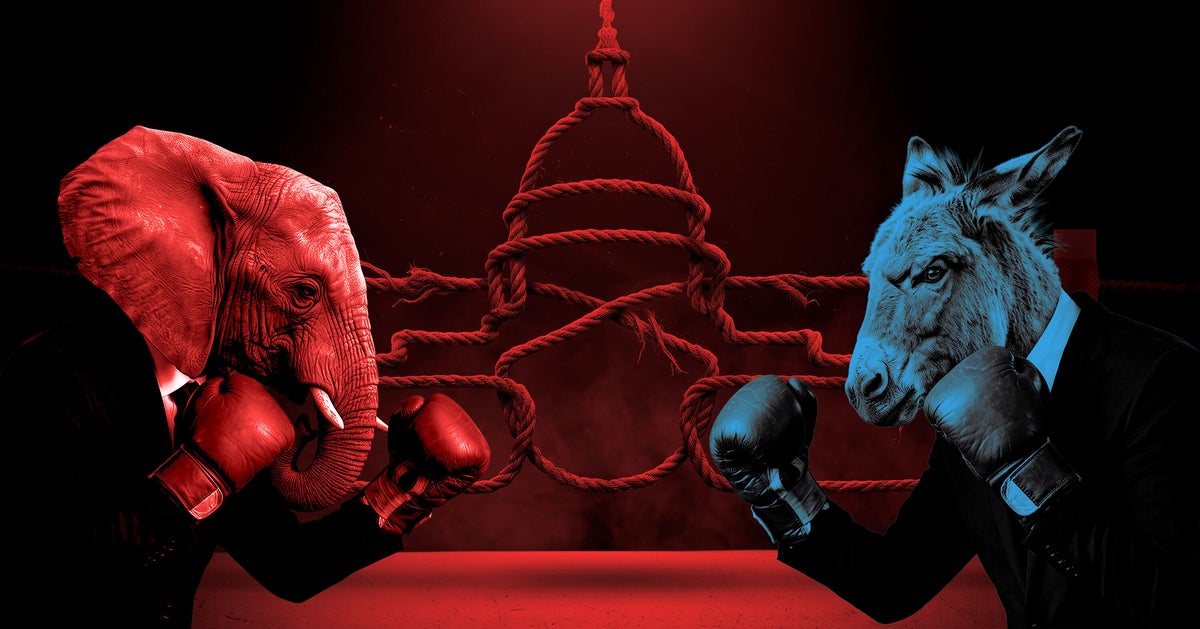
But a formidable opponent looms: the U.S. Justice Department.

When Democrats last held slim or simple majorities from 2019 to 2023, Congress used the full range of its powers to investigate and impeach Donald Trump. Democrats referred a number of administration officials for contempt and, for the first time ever, referred a congressional case to the Justice Department for prosecuting a president.

Democrats, though largely cool on impeachment this go-around, are eager to investigate the administration’s excesses, cronyism, and corruption, balance power between the branches of government, and deliver tangible accountability.

“There is a lot that has been going on that, frankly, we don’t have the full picture on,” said Praveen Fernandes, vice president of the Constitutional Accountability Center, adding that there could be “a more intense focus upon oversight and accountability than we’ve had for a long, long time.”

But something significant has changed in the last couple of years: The Justice Department — the institution congressional investigators must turn to if they unearth evidence of a potential crime and want to seek prosecution on behalf of the American people — is now run by the president’s protection racket.

“I think we are at a pivotal point where there is almost no true accountability mechanism,” said Jonathan Shaub, a former attorney-adviser at the Office of Legal Counsel turned professor of law at the University of Kentucky.

Administration officials have so far been able to be openly hostile to Democrats’ attempts at oversight because there has been no threat of consequences. The president has decimated the DOJ and ushered in sycophants and former personal lawyers to top positions. This includes the person leading the way: Attorney General Todd Blanche, who openly espouses his “love” for Trump and publicly disavows the notion that the department should exist free of political influence.

Congressional investigations will run headlong into this heavyweight Trump has created.

But hope for accountability is not entirely lost, legal experts told HuffPost — Democrats will just have to be strategic in how they handle their probes, including being picky about who they focus on and outsmarting the executive branch’s legal advisers.

“I am really interested to see what happens in the next two years because I think this is all going to come to a head,” Shaub said.

Indeed, there is no shortage of investigations.

Trump’s exploding self-enrichment of $2.2 billion, with most of it coming from his murky cryptocurrency operation World Liberty Financial, has Democrats demanding answers. They want to probe the heads of crypto firms, prediction markets and AI companies about how Trump and his family are raking in profits while pardoning cryptocurrency fraudsters and dismantling industry regulations.

Lawmakers have put Trump on notice, warning they will subpoena the late sex offender Jeffrey Epstein’s private bankers. They want to investigate former Department of Government Efficiency head Elon Musk and his employees to probe how the billionaire’s wasteful agency impounded congressionally approved funds, dismantled aid programs, infiltrated private networks at the Department of the Treasury and Labor Department, conducted mass layoffs of federal personnel, bypassed union protections and allegedly engaged in over 100 incidents of potential conflicts of interest.

Democrats say an investigation of potential sweetheart deals with Trump family-related venture capital firms at the Defense Department could advance. Private contractors hired to build U.S. Immigration and Customs Enforcement detention centers are poised for review.

Administration and Cabinet officials are expected to close ranks around Trump, but many of the investigations Democrats say they want to undertake involve private actors and entities. Legal experts say this is where Congress must focus its attention if it wants a better chance of success or, at least, to avoid total obstruction by the Justice Department.

“The interesting thing about going after private parties is that at some point, the White House doesn’t have control of that information,” Shaub said.

The Office of Legal Counsel, which falls under the DOJ and provides non-binding legal advice to the department and the president, issued two opinions earlier this year, seemingly anticipating that problem.

“Both memos seem, really, designed to give legal cover for the people in the White House and it seems they were written in advance to give a defense to people who might be accused of violating a subpoena or court order,” Shaub said.

The first memo, published in April, declared that the Presidential Records Act — which for 50 years has qualified the president’s records as public property, mandated their retention and barred their destruction — was unconstitutional and that Trump should be allowed to destroy his records because they belong to him alone. The Supreme Court deemed presidential records public property after President Richard Nixon’s corrupt, secretive reign.

The April guidance said that congressional attempts to “regulate the president” through PRA are a “violation” of the separation of powers. That novel theory was immediately challenged, and a lawsuit over the memo is now before the D.C. Circuit Court of Appeals. Trump’s odds for success are low.

Then, in a separate memo published this August, OLC declared that executive privilege could extend to private advisers, including individuals or businesses outside the executive branch. Cabinet officials and presidential advisers can typically invoke executive privilege because that’s how it works inside the federal government, but private corporations and actors historically haven’t had that baked-in benefit.

Although there is “some precedent” of OLC issuing guidance around privilege protections for private conversations with private parties, Shaub said, the memo left him “shocked.”

(The memo, he noted, was “very poorly reasoned,” and he suspects it is unlikely to hold up in court.)

“OLC opinions are generally written when there is a legal issue that needs answering. For example, if Congress subpoenaed documents and there’s questions about whether they have to be turned over or if privilege should be asserted. Usually OLC opinions will give factual backgrounds for its decisions,” he said. “But this one kind of came out of the blue.”

The memo was the administration’s attempt to invoke “a new privilege never before heard of in American law: the Trump Crony Privilege,” said Norm Eisen, who served as ethics czar under President Barack Obama and as special counsel for Democrats during Trump’s 2019 impeachment trial.

It may seem that the administration has a foolproof plan to avoid scrutiny with the memos, but that’s not necessarily the case. The memos likely won’t be of much use to the administration once investigations begin or the courts get involved — after all, the OLC gives guidance and doesn’t have the power to write or change the law.

“If these private actors think they can hide behind an obstructionist DOJ to dodge congressional subpoenas, they are in for a brutal wake-up call,” Eisen said. “If they’ve engaged in misconduct, they can expect to get hit with relentless subpoenas to dismantle every fraudulent privilege claim, and tear down any stonewalling brick by brick.”

Without a long history of impenetrable privilege, private entities are more likely to give in when pressed for information relevant to an official probe or legal case.

“I think some of these private entities are very unlikely to accept the OLC’s tenuous arguments when they’re facing a congressional subpoena or a potential contempt charge,” Shaub said. “Corporations tend to be more risk-averse to that.”

The air of invincibility surrounding the administration during Trump’s second term could grow stale with a Democratic takeover thanks to a steady roll of investigations, highly publicized hearings that zero in on the administration’s overt corruption and a series of defeats in court over records or privileges.

“Maybe as the politics change, as the political winds change, people will start to be less loyal,” Shaub said.

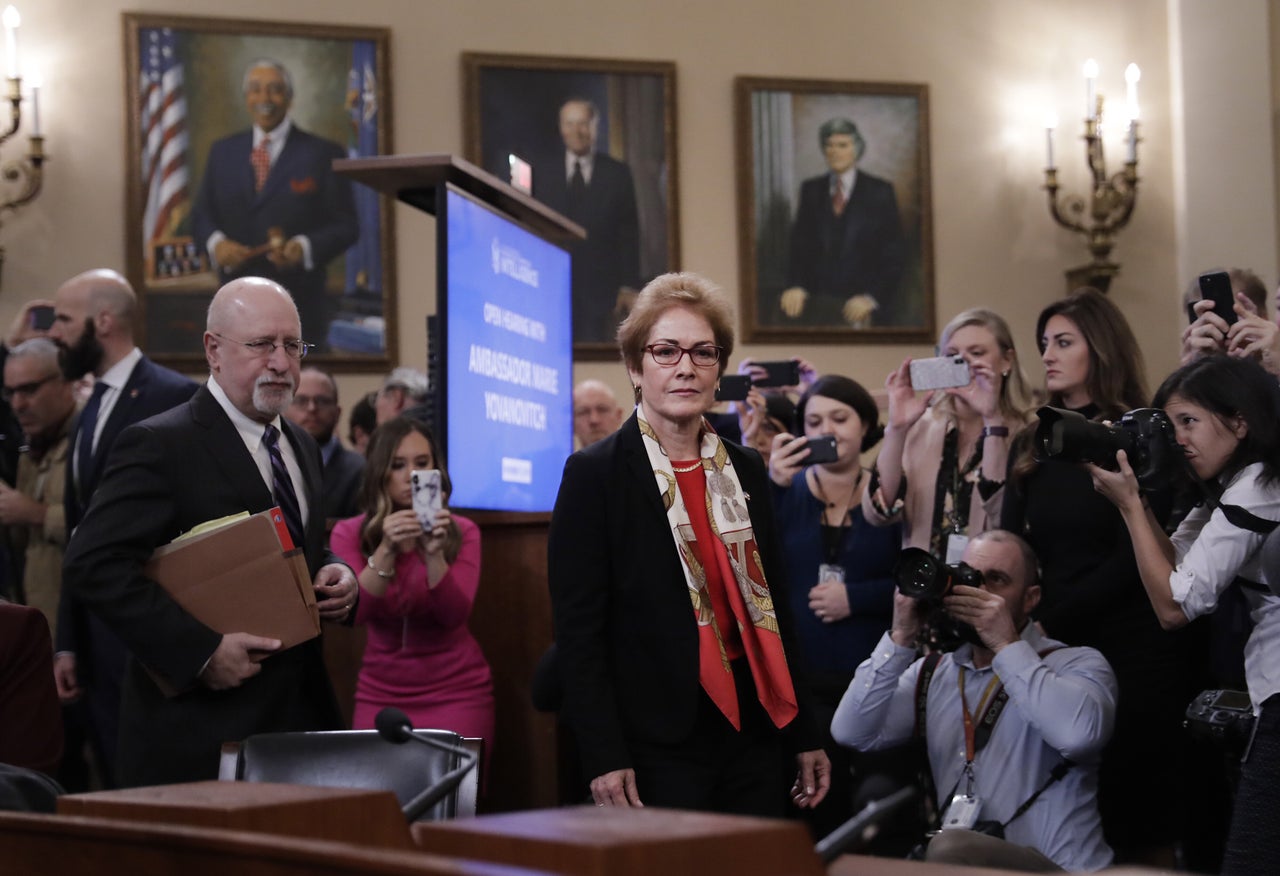
During Trump’s first term in the White House, members of his administration, including a national security council member, a U.S. ambassador and an inspector general for the intelligence community, were so fed up with abuses of power that they became whistleblowers who helped impeach Trump.

“[Administration officials] rely more on loyalists now so it’s not clear whether there will be as many people so well-positioned to be whistleblowers or share information, but I do think Democrats can be very effective in using their oversight powers to create political momentum and to create some heat,” Shaub said.

Lawmakers can also leverage contempt powers — through inherent, civil or criminal contempt — to take control of investigations.

These approaches are not created equal, and Democrats will need to choose wisely, said Fernandes from the Constitutional Accountability Center.

Inherent contempt — when Congress uses its powers to have its Sergeant-at-Arms take someone into custody and bring them to trial on the House or Senate floor — hasn’t been exercised in over a century. (Republicans tried using it in 2024 against former Attorney General Merrick Garland but didn’t have the votes.)

“It is a legal possibility, but it is not really a practical thing,” Fernandes said.

Criminal contempt would also be hard to employ. It requires the full House or Senate to vote on a referral for prosecution — which goes straight to the DOJ for consideration. And although criminal contempt can carry a misdemeanor charge, fines, or jail time, any actors who think Trump’s DOJ may back them up probably won’t be scared of getting in trouble.

“Under the current leadership of the Department of Justice, it seems unlikely that criminal contempt will be the easier thing for Congress to pursue,” Fernandes said.

Then there’s civil contempt, which would mean going through a court system that is not inherently loyal to the president.

“If you do not think that the Department of Justice is going to enforce [a subpoena] through the U.S. attorneys office or through a criminal referral or a criminal contempt referral, then Congress can sue to have a court enforce its request,” Fernandes said.

And that’s how the power starts shifting.

“That civil enforcement mechanism does not rely upon the Department of Justice, which is headed by somebody who used to be Trump’s personal attorney,” Fernandes added. “It’s civil contempt that is available to enforce lawful oversight requests and Congress can sue for that information [they seek].”

And the lower courts and appellate courts are likely to give lawmakers that assistance. These courts have kept an important check on the administration. Judges have often ruled against the president’s efforts to unilaterally expand his authority, have pushed the Justice Department to reveal information about the administration, and have forced Trump officials to testify when they might not otherwise.

The court system has a “fact-finding and truth-telling aspect,” Fernandes said. If the administration won’t cooperate and investigations get tied up in court, Fernandes said Congress can consider exercising the power of its purse.

“Congress should be able to say, ‘Actually, if we are not going to get accurate information about, for example, how this program is working at DHS, or about the gross violations that occurred in a division of DHS, we’re going to make appropriation decisions accordingly,’” he said. “That, too, is a form of accountability.”

There are also paths to accountability outside the federal government, Fernandes pointed out. States can be valuable partners when the DOJ is so politically aligned with the president.

“Whether it be state attorneys general, state governmental agencies or state legislatures, they can be powerful forces for accountability,” he said.

Dozens of coalitions of state attorneys general have already shown their willingness to stand up to Trump, including by suing his administration for attempts to control state elections, trawl voter rolls for private or sensitive data, impose tariffs, or freeze funding grants. Attorneys general have won the bulk of their cases, and could work with Democrats who need states to share info about the administration’s conduct, share communications or other information and provide testimony.

Democrats’ control of the House or Senate, or both, would leave little doubt that the administration would become even more obstinate and secretive. The courts may expose the administration or force compliance, but the experts think Democrats should think bigger.

For example, Shaub said legislators could set up a multi-member commission dedicated to White House investigations. The group, which would fall under the executive branch but be statutorily independent of the DOJ and White House, would serve as an alternative to the special counsel system that has become highly politicized in recent years.

“We have seen these escalating battles between Congress and the president, and a lot of this has been based on norms and politics,” Shaub said.

The commission’s members would be people chosen for their expertise and objectivity, and they would have the authority to subpoena people and recommend sanctions. The subpoenas would be cloaked in confidentiality rules similar to those given to grand juries. The commission’s only focus would be to inspect the White House and tell Congress or the DOJ what to do.

Whatever comes after November, Fernandes said the onus is on Democrats to make their next moves about accountability for specific abuses of the system, not just punishing Trump or the GOP.

“That’s the way opponents have started: ‘We want to punish ‘x, y, and z,’ rather than ‘we want accountability for x, y, or z misdeeds,’” he said. “Investigations must be done in a rigorous way, following the facts and the law, and then we can determine properly which individuals or entities need to be held accountable.”
Comments
You must be logged in to comment.