huffpost Press
Netflix Is Launching A New Reality Show. Experts Worry The Premise May Cause Harm.
Images
1 / 9

2 / 9
3 / 9
4 / 9

5 / 9
6 / 9

7 / 9

8 / 9

9 / 9
The last time someone thought to test what happens when ordinary people are given power over others in an institutional setting, the failed experiment became one of psychology’s most infamous cautionary tales. But in today’s content era, where virtually anything and everything can be repackaged as entertainment, Netflix apparently thought, why not try it again?

Enter “The New Stanford Prison Experiment,” the streamer’s unscripted reimagining of the notorious 1971 study that, once again, asks the question posed over 50 years ago: Does power corrupt?

Of course, the original study wasn’t conceived as a reality show. Psychology professor Philip G. Zimbardo started it by recruiting 24 male college students through a local newspaper ad and bringing them into a makeshift prison in the basement of Stanford University. The participants were randomly assigned to play “guards” or “prisoners” and expected to inhabit their roles for two weeks.

But six days in, mayhem ensued, and the university pulled the plug amid mounting concerns over volunteers’ treatment. Zimbardo later described its disturbing takeaway as proof that ordinary college students “could do such terrible things.”

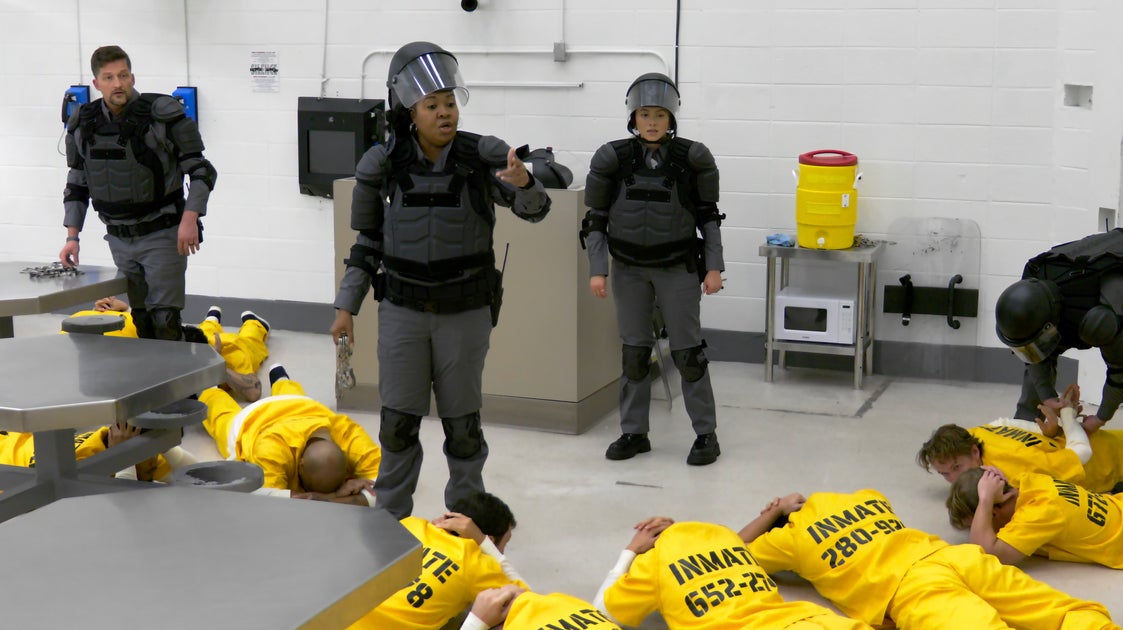
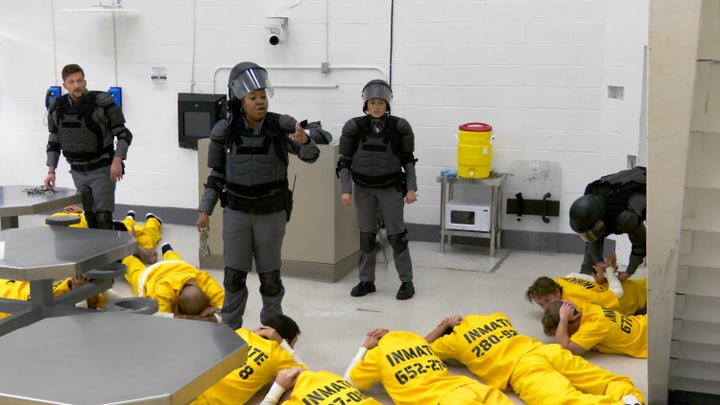
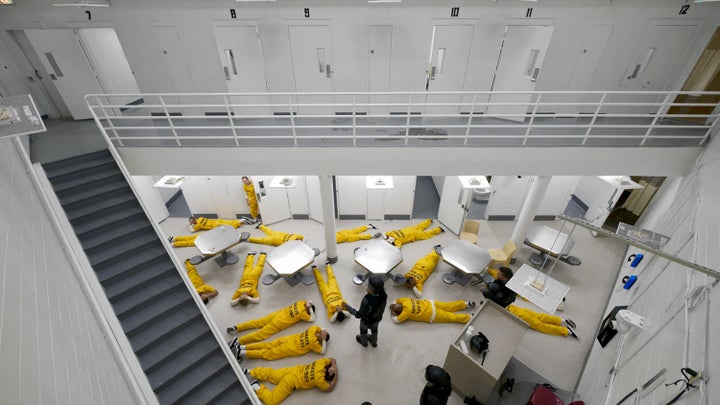
This time around, Netflix is revisiting the professor’s same controversial premise with 30 willing adults, both men and women, taking on the roles of guards and inmates in a real prison, under the watchful eye of a production team and three experts, including behavioral psychologist Alison Wood Brooks and Pulitzer Prize-winning journalist Trymaine Lee.

The six-episode series presents itself as a modern update to Zimbardo’s widely criticized experiment, giving a new generation a chance to see how power shapes human behavior. But media psychology experts who spoke with HuffPost echo the same concerns raised when Netflix first announced the project.

“The producers have framed this as if they are asking legitimate questions about authority, conformity and human nature, but a reality show is not a scientific or socially responsible way of addressing any of those questions,” said Pamela Rutledge, director of the Media Psychology Research Center.

She added, “Not only will it not ‘do good,’ it has the potential to do harm by perpetuating the acceptability of thoughtless and cruel behavior.”

Netflix did not immediately return HuffPost’s request for comment.

As “The New Stanford Prison Experiment” recounts in its opening, the original study quickly spiraled out of control as participants cast as guards began abusing their authority over the “prisoners.” Aggression, humiliation, physical force and psychological manipulation became tools for degrading and dehumanizing the volunteers.

The simulation worsened when Zimbardo himself became absorbed in it. In a 2015 interview, he reflected on how he embraced being the fake prison’s “superintendent,” admitting, “Over time, hour-by-hour, day-by-day, I fell into that role.”

Netflix says its version incorporates “updated safeguards” and expert oversight to avoid ethical pitfalls as it examines the role of power today. But the show still faced considerable backlash when its trailer dropped last month.

Executive producer Jane Lipsitz told Netflix’s Tudum that reaction was understandable given the original experiment’s troubling history. “If we were simply recreating the original experiment, that would be unconscionable,” she said. “But this is a different time, with different participants, different safeguards and, ultimately, a very different journey.”

That may be the case, but as Rutledge pointed out, reality TV hardly justifies reviving a study that has been debunked over the years “for a number of reasons.”

“The format is designed to generate conflict and entertainment by showing extremes,” she said. “When you manipulate the environment and coach participants toward particular behaviors, [they] don’t demonstrate any generalizable insight into human nature.”

But Netflix seems confident that its reimagining can make the controversial study work in the unscripted realm. Explaining why the show’s team chose that route, Lipsitz told Tudum, “Unscripted felt like the only way to explore this — and in some ways, the Stanford Prison Experiment was the forebear of the social experiments that unscripted television is based on. Place real people into a complicated and constructed environment, and document what happens.”

But Rebecca Frazer, a media psychology researcher and assistant professor at the University of Florida, cautioned that presenting the series as an attempt to reach scientific conclusions can give viewers the wrong impression.

“Netflix can do what it wants, but calling this show a scientific ‘experiment’ in any form is misleading,” she told HuffPost. “It’s a reality show — plain and simple.”

Frazer added, “In the 21st century, real scientific research that involves humans— including social experimentation — is governed by federal laws that mandate specific ethical review protocols. Institutional research on human subjects must be independently assessed and approved by an ethics review board.”

But Netflix’s series doesn’t appear to be subject to those laws. As Frazer noted, the “commercial safeguards of the television industry” operate very differently.

While the streamer may be making reality TV rather than conducting formal research, the prison-experiment premise remains as controversial as ever —particularly when participants are placed in an actual prison, stripped of their names, assigned to cells and made to share the facility with real inmates.

According to Lipsitz, production put safeguards in place for volunteers, including a safe word that allows them to withdraw at any time. But as the first episode shows, those precautions don’t necessarily put every participant at ease.

Craig Haney, a professor of psychology at the University of California, Santa Cruz, called Netflix’s decision to revisit the original Stanford study decades later “mystifying,” as he believes far more pressing issues deserve the public’s attention.

“A much more important story, which for some reason continues to be overlooked, is what is happening inside our nation’s real prisons and jails,” he told HuffPost, “where nearly 2 million people are incarcerated under what are often truly horrendous conditions and where, trust me, none of them have a ‘safe word’ to employ if they are being mistreated.”

While “The New Stanford Experiment” may raise timely questions about power dynamics, experts see no value in the show beyond entertainment, particularly given reality TV’s tendency to cast big personalities to drive drama and storylines.

“Selecting participants for a scientific study does not involve handpicking the perfect people to get the results you want,” Frazer said. “In fact, such an approach invalidates a scientific study.”

Perhaps, though, scientific discovery was never the show’s main objective. While Lipsitz said the series “has some surprising things to say that feel incredibly relevant in today’s world,” the producer made no claim that it would yield legitimate findings. She only hopes that it will spark some “big conversations,” as it already has.

Still, Rutledge considers the timing of the show “particularly troubling” in today’s climate, when “we’re already experiencing heightened social conflict, institutional distrust and emotional unrest.”

“It capitalizes on existing anxieties about power and authority that are inseparable from other life challenges like rising prices or war,” she noted, adding, “There’s a difference between helping people understand human behavior and exploiting their fears about it.”

Despite the criticism, though, viewers still seem curious enough to tune in to “The New Stanford Experiment.” Just days after its Oct. 21 premiere, it has already cracked Netflix’s top 10 shows. Viewers can stream it now.

By entering your email and clicking Sign Up, you're agreeing to let us send you customized marketing messages about us and our advertising partners. You are also agreeing to our Terms of Service and Privacy Policy.
Comments
You must be logged in to comment.