huffpost Press
'You See Her Face Go Into Shock': This Was The Moment That Predicted Katie Zacharia's Ouster
Images
1 / 9

2 / 9
3 / 9
4 / 9

5 / 9
6 / 9
7 / 9

8 / 9

9 / 9
The body language cues predicted this one from the start.

White House press secretary Katie Zacharia has been fired after just five days on the job, administration officials confirmed to HuffPost on Friday.

On Thursday night, Sean Hannity grilled Zacharia about her legal credentials during a brutal interview. After discussing her “widely panned” first press briefing, the Fox News host pressed Zacharia on her choice to characterize herself as a lawyer despite never having passed the bar exam.

Hannity’s pointed questioning was fairly unexpected from a network and host famously friendly to President Donald Trump and his administration. Body language experts say Zacharia did not appear comfortable, particularly when asked about the bar exam and her use of the “lawyer” title. But her reactions to Hannity’s questions might shed some light on why her time in the role was short-lived.

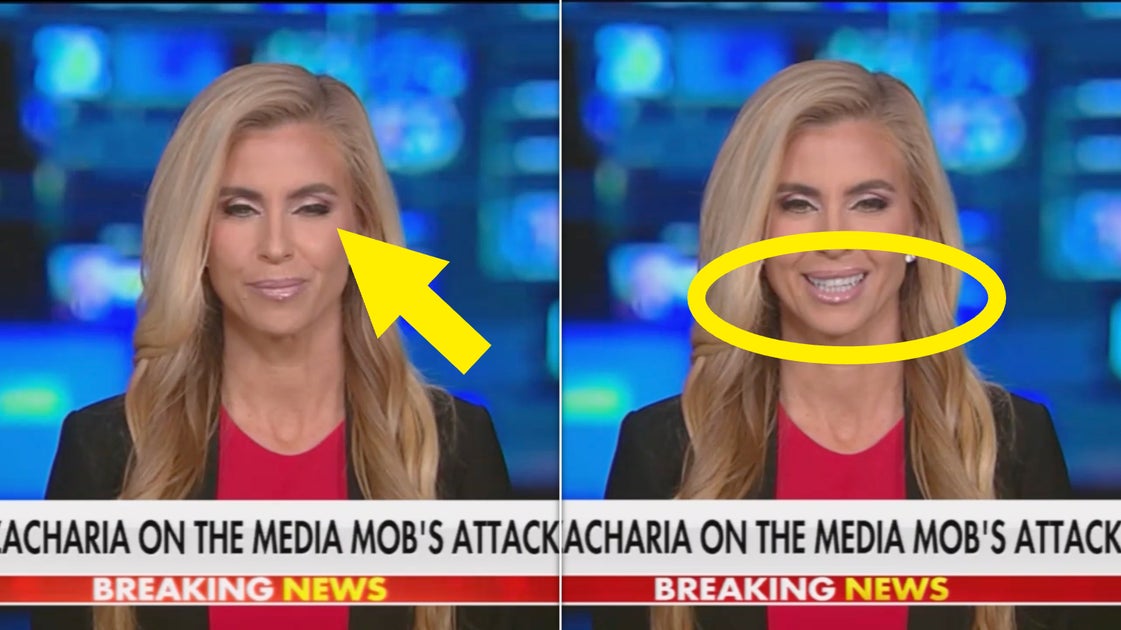
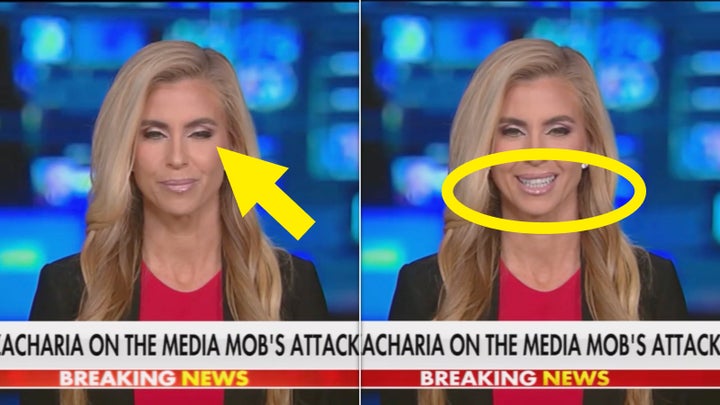
“As the question was being asked, we see a forced and strained smile from Katie,” Karen Donaldson, a communication and body language expert, told HuffPost. “The smile was pulled through her lips, but it did not engage her eyes, which may signal that she was highly uncomfortable in that moment. A forced smile masks someone possibly feeling distressed.”

😮 Katie Zacharia crashes and burns on [checks notes] Hannity 😮If you had the "over" on Zacharia lasting more than one Scaramucci, her epic flame out on Hannity just now won't help your causeHANNITY: You said you consulted with people who advised you it was okay to call… pic.twitter.com/VT4fhcn3U5

Body language expert and behavior analyst Traci Brown saw a pattern.

“She has a habit of giving a small smile after tough statements,” she said. “It’s not sincere but just a way for her nervous system to try and regain equilibrium and get rid of stress.”

Brown also observed a smirk-like quality in the way Zacharia’s smile often goes up on one side.

“I can’t decide if her smile is naturally a little crooked,” she said. “This could be facial structure, or it could be that she’s showing contempt.”

This asymmetrical smile comes out clearly when Hannity mentions another interview in which she described the public questioning of her legal background as a “conspiracy,” noted Patti Wood, a body language and nonverbal communication expert.

“We see her try to sit up straighter and smile, but she overdoes it. The smile is stiff and seems pasted on,” Wood said, adding that this kind of crooked smile can have the effect of making a person “appear crooked” in their character.

Clinical psychologist and behavioral expert Denise Dudley identified a term for this kind of smile in tense moments.

“We’d call it affective incongruence, meaning your affect is incongruent with what’s happening,” she said. “She’s smiling, and it seems odd to any of us who are watching it. It just doesn’t sit right. It’s way at odds with the seriousness and, I’m sure, discomfort that she’s experiencing.”

Dudley pointed to the concept of “facework,” the verbal and non-verbal communication tactics people use to maintain their public self-image. Think of the idiom “saving face.”

“When he asks her these very direct questions, we’d call it a ‘face-threatening act,’ and now she’s trying to save face by smiling,” Dudley said. “Smiling can be used for a whole bunch of things, like appeasement smiling. But in this case, I don’t think she’s appeasing him. I think she’s nervous and she’s caught off-guard, and she’s smiling because she can’t think of what else to do with her face. She just has that very frozen, weird smile going on that’s incongruent with what’s happening.”

And then there was the blinking.

“As she responds, both verbally and when she is listening to them digging deeper, you will see clusters of rapid blinking,” Donaldson said. “Rapid blinking often happens when the brain is processing a lot of thoughts and trying to sort things out before they come out of the mouth. It also signals that she may be experiencing an internal feeling of stress and unease.”

The rate of blinking seemed to go up when Hannity pressed on the difference between lawyers and attorneys, Brown noted.

“Her blink rate goes up to 60 per minute,” she said. “So this is a major stress point. Again, she shows a small smile after the statement.”

People’s blink rates tend to change with mental effort and emotional arousal, negative or positive.

“Blink rate varies with what we would call cognitive load,” Dudley said. “And clearly her blink rate is way up there. It’s something that she probably wishes she weren’t doing, but it’s kind of uncontrollable.”

Wood described some shifts in Zacharia’s eyes throughout the interview.

“At the beginning of her interview, Zacharia seemed to have a frozen deer-in-the-headlights appearance,” she said. “Her eyes go from wide open in fear ... to frequent large blinks, showing she didn’t like what she was seeing.”

That kind of scared, wide-eyed response is probably not suited to the role of White House spokesperson, Wood added.

“Also notice how, throughout the interview, she often pauses awkwardly, with frozen body language, after she is asked a question,” she said. “When he says, ‘You took the bar exam, but you didn’t pass...’ she does an eye shutter, closing her eyes fully, showing she wants to block that question and not answer it. An eye blink is so unusual in ordinary conversation that it is a big tell.”

Wood observed a sort of “sleepy eye close” after that.

“Her face scrunches up like a TV character that glitches on the screen when the Wi-Fi goes out for a moment,” she said. “That is a tell that her central nervous system can’t handle this topic, her limbic brain is in control, and her rational neocortex can’t come up with a logical, well-worded answer. Hence, she covers it up and gives the calm behavior she wants to show to hide her fear.”

Zacharia’s expression when Hannity brought up a CNN report about posts in which she described herself as an attorney also caught Wood’s attention.

“You see her face go into shock. Her eyes look down and close halfway, and her mouth opens wide, her jaw dropping open in surprise,” she said.

Donaldson noticed a subtler gesture in her responses as well.

“As she answers the questions, there’s a slight subconscious yes nod that she’s doing as she speaks,” she said. “It’s a signal of her reinforcing her own thoughts.”

Zacharia’s nodding did not look natural, Wood noted.

“Her head goes up and down sharply, which should mean she agrees and is saying yes. Still, her movements aren’t smooth, effortless or as natural as a normal head motion would be, and the words don’t match the head movements.”

In addition to the nonverbal signals, the experts who spoke to HuffPost also had some thoughts on Zacharia’s voice and the length of her answers.

“She uses a bright, high voice that goes up and high in a question-mark delivery to say, ‘a Chinese law firm,’” Wood said. “Her delivery overall is rushed, and she seems to have a sing-song voice that lacks credibility and confidence.”

Dudley similarly pointed to Zacharia’s “upspeak,” the habit of ending statements on a rising tone as if asking a question.

“She uses upspeak a bunch, which we teach people not to do because it makes you sound not credible,” said Dudley, who works with law firms on how to present themselves. “Also psychologically, a lot of times when people are working their hardest to justify what they’re telling you, they go into upspeak because they are less self-assured.”

That comes across in the way Zacharia tended to answer questions and then keep talking.

“There’s a big difference between answering and explaining,” Dudley said. “The ironic thing is that the more you go into an elaborate explanation, the less it sounds like you are telling the truth, or that you know what you’re talking about.”

She compared it to testimony in a trial. “When someone asks you on the witness stand, ‘Where were you on the night of Nov. 23?’ you answer, ‘I was home in bed.’ Period,” she said. “You don’t then go into, ‘Blah blah blah, and then I this and then my neighbors that, blah blah blah’ ― because it just starts to sound worse.”

Not every moment read as nervous, though. Brown said one answer stood out as more confident.

“She gives a one-word answer and doesn’t try to convince him,” she said. “She has a habit of her tone going up at the end of sentences, which reveals uncertainty about the statement. She doesn’t do that here. And truthful people do and say the minimum they need to in order to get their point across.”

By entering your email and clicking Sign Up, you're agreeing to let us send you customized marketing messages about us and our advertising partners. You are also agreeing to our Terms of Service and Privacy Policy.
Comments
You must be logged in to comment.