huffpost Press
Americans May Soon Witness A ‘Gruesome Spectacle’ The U.S. Hasn't Seen In 90 Years
Images
1 / 10

2 / 10
3 / 10
4 / 10
5 / 10

6 / 10
7 / 10
8 / 10

9 / 10

10 / 10
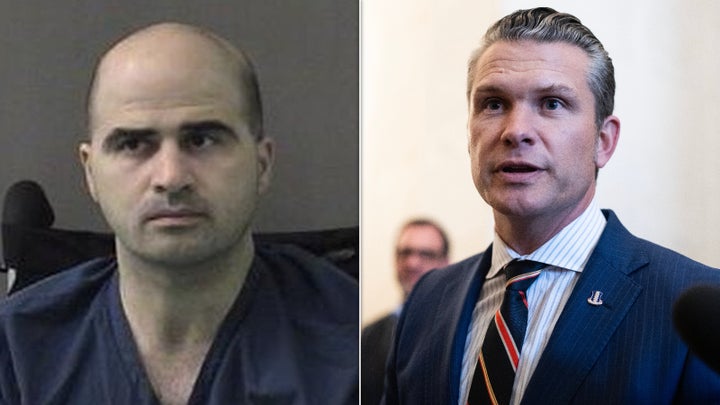
Last week, the Pentagon announced that the it will livestream the execution by firing squad of Army Maj. Nidal Hasan for the 2009 shooting rampage at Fort Hood military base in Texas.

Hasan ― a U.S. Army psychiatrist who fatally shot 13 unarmed American soldiers and injured more than 30 at Fort Hood ― will be the first person to be publicly executed in the United States in nearly a century.

During his court martial in 2013, Hasan said he carried out the attack because he wanted to stop U.S. soldiers from deploying to Afghanistan and killing Muslims and the Taliban.

In an interview with right-wing outlet Real America’s Voice, Defense Secretary Pete Hegseth called it a “no-brainer” to request a firing-squad execution for the former Army major. The execution is scheduled for 1 p.m. local time on Dec. 3 at Fort Hood — the same day of the week and time of day as Hasan’s attack.

The U.S. military has not carried out the death penalty since 1961.

Human rights advocates and a number of Democratic and Republican lawmakers and religion leaders have criticized the planned livestream. Archbishop Paul S. Coakley, president of the U.S. Conference of Catholic Bishops, called the Pentagon’s plans a “promotion of the culture of death.”

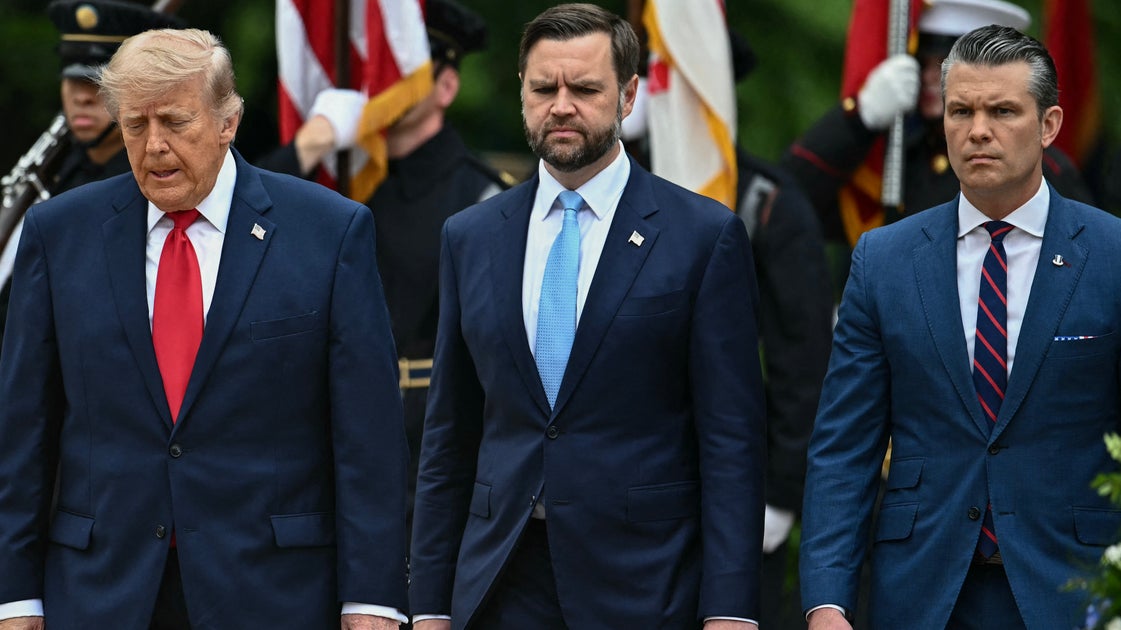
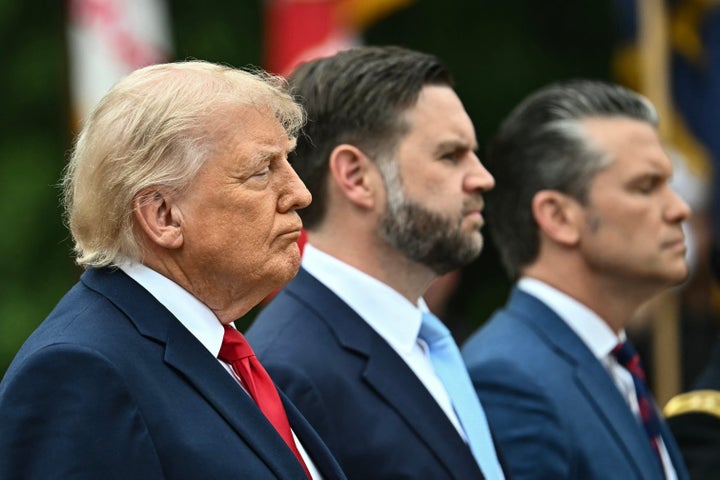
President Donald Trump approved the Pentagon’s unusual execution plans earlier this month, though Axios reported on Monday that four people who’ve spoken to Trump privately say he has misgivings about the livestream. Vice President JD Vance, meanwhile, told reporters he wouldn’t watch it, while casting doubts on whether a livestream would happen.

While U.S. law prohibits recording or broadcasting executions in the federal prison system, military regulations contain no equivalent ban on military executions. Any effort to delay Hasan’s Dec. 3 execution or block the livestream would have to come from Hasan himself, and he has yet to indicate that he plans to challenge either.

The death penalty remains a divisive issue in the U.S. A July Pew Research poll found that while support for the punishment has declined over time, roughly 66% of Americans still favor capital punishment for people convicted of murder, while 32% oppose it.

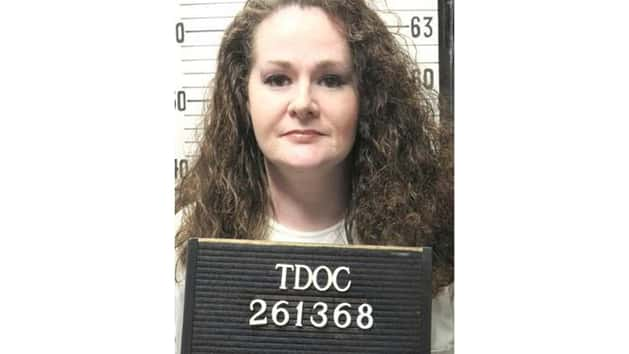
That divide has been on full display in recent weeks, following not just the Pentagon’s announcement but the botched lethal injection of convicted murderer Christa Pike in Tennessee.

What would it mean culturally for the U.S. to resume public executions in 2026? We asked death penalty experts to weigh in on the Pentagon’s plans.

Seeking to make Hasan’s execution by firing squad a livestreamed event harkens back to another time: One of the last public executions in the U.S. was 90 years ago, when a crowd of 20,000 people watched the hanging of Rainey Bethea, a Black man convicted by a white jury of raping a white woman, in 1936. However, the Death Penalty Information Center says that a subsequent public execution, of Roscoe “Red” Jackson, took place in Missouri the following year.

Public executions in the current moment have been confined to authoritarian regimes, said Jordan M. Steiker, an expert on capital punishment and constitutional law, who serves as director of the Texas Law Capital Punishment Center.

Two countries held known public executions last year: Afghanistan and Iran, the only two known countries to execute anyone publicly in the last four years, according to Amnesty International.

“Such displays are intended to inspire fear rather than respect for law,” he said. “They are certainly inappropriate for democratic nations.”

It shows a society where people feel helpless in the face of institutional terror. We are forced to watch it, and we are pressured to comply with it so that we don’t become its targets.

Because Americans’ rejection of public executions has not meaningfully shifted over the past century, this feels like an “off-the-cuff initiative” by Hegseth and perhaps a handful of other administration officials, Steiker told HuffPost.

Hegseth has argued that the public execution is necessary because “people need to understand that there’s serious consequences for these types of things.”

Austin Sarat, a professor of jurisprudence and political science at Amherst College in Massachusetts, doesn’t think there’s much to learn from livestreaming Hasan’s death.

A public execution will teach Americans “very little” other than the fact “that the Trump administration is willing to employ brutal methods to accomplish its goals,” he told HuffPost.

“It will be such a gruesome spectacle that even JD Vance won’t watch it,” said Sarat, the author of “When the State Kills: Capital Punishment and the American Condition.”

In fact, the plans are so unusual, at least six soldiers are reportedly planning to file for preliminary religious exemptions, with more expected to follow, a nonprofit leader told The Washington Sun last week.

Jen Manion, a professor of history also at Amherst College and the author of “Liberty’s Prisoners: Carceral Culture in Early America,” said the Pentagon’s plans would be “un-American.”

While public executions were common in colonial America ― and historian John Bessler has argued that the founding fathers were ambivalent about the death penalty ― Manion said a number of them were appalled by the practice.

For example, Benjamin Rush of Philadelphia sought to move the new nation away from all forms of public punishment, including execution and hard labor.

“Dr. Rush felt that people identified with the suffering of the accused rather than the state and that punishments were best handled behind closed doors, away from public view, with an eye to reforming — not torturing — the person convicted,” the professor told HuffPost.

As newly formed states drafted their own state constitutions, many prioritized revising their penal codes to stop public displays of violence and drastically reduced the number of crimes punishable by death, Manion said.

In 2026, a public execution would be “an example of the worst impulse for celebrating violence, cruelty, and spectacle instead of the principles of criminal justice that our nation was founded on,” the professor said.

Hasan, who was born in Virginia to Palestinian parents, was paralyzed from the waist down after being shot in the back by law enforcement, and he now uses a wheelchair. He’s also a Muslim man who will be put to death on camera at a time when Islamophobia is on the rise throughout the country.

That will make any images from the day even more telling, said Gernaro Waheed, the executive director of the Muslim Anti-Racism Collaborative.

“It shows a society where people feel helpless in the face of institutional terror,” he said. “We are forced to watch it, and we are pressured to comply with it so that we don’t become its targets.”

Acknowledging the harm Hasan caused and the grief of his victims’ families doesn’t require Americans to accept the spectacle, Waheed said.

“Normalizing the broadcast of state killing desensitizes everyone,” he said, even if some people do not watch.

For some Muslim Americans and people with disabilities, witnessing Hasan’s execution could bring up broader fears about discrimination, vulnerability and the use of state power, said Alejandro Sandoval, a therapist specializing in trauma-informed psychotherapy in Pasadena, California.

Sandoval expressed concern about children and adolescents who may inadvertently encounter the footage through social media.

Young people are still developing the emotional regulation skills and capacity to process disturbing experiences, Sandoval said. Repeated exposure to graphic violence can contribute to distress, emotional numbing or desensitization, according to the American Psychological Association.

“I wouldn’t suggest that every American who witnesses this will be traumatized,” he said. “But I do think we need to seriously consider the collective psychological consequences of normalizing violence, especially when the taking of a human life becomes something we can casually watch or scroll past on our phones.”

By entering your email and clicking Sign Up, you're agreeing to let us send you customized marketing messages about us and our advertising partners. You are also agreeing to our Terms of Service and Privacy Policy.
Comments
You must be logged in to comment.