huffpost Press
Once You Learn About 'Hyperselection,' You'll Hear And See It Everywhere
Images
1 / 11

2 / 11
3 / 11
4 / 11

5 / 11

6 / 11

7 / 11

8 / 11

9 / 11

10 / 11

11 / 11
Ever turn on the radio and think every pop song sounds the same? Or guess a horror movie’s ending after watching for just 20 minutes?

You can blame “hyperselection.”

In a new paper published in Frontiers in Psychology, researchers at Singapore Management University and James Cook University in Singapore argue that hyperselection occurs when fierce competition makes us increasingly adept at identifying and optimizing what works, and we keep selecting for the same characteristics instead of toying with alternatives.

The result is a hit to creativity. In an increasingly optimized world, hyperselection may be making everything from music to city planning to soccer games a little more boring.

Jose C. Yong, a research psychologist and the study’s lead author, likens hyperselection to natural selection, the evolutionary process by which individuals with beneficial traits or more effective strategies are more likely to survive and reproduce. Modern technology has made this selection process extraordinarily fast and intense.

“We can now identify what performs best, copy it almost instantly, and keep optimizing it,” Yong said. “This process then gets accelerated when there’s strong selection pressure, such as intense competition or when the consequences for not optimizing are high.”

Optimization is generally useful because it helps us achieve our goals more effectively. But when everyone optimizes for the same thing, alternative features, behaviors, products and strategies can disappear, “resulting in efficiency at the cost of diversity or variability that might actually be adaptive and useful.”

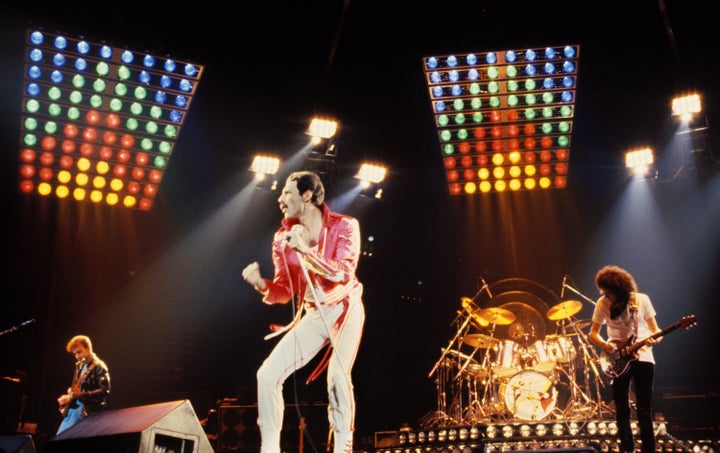
When talking about hyperselection to the unfamiliar, Yong likes to bring up the song “Bohemian Rhapsody” by Queen. While critics in 1975 initially called it a “brazen hodgepodge” and a “pastiche of incongruous musical styles,” the single is now considered one of the greatest songs in rock history, largely because the band took creative risks.

“Bohemian Rhapsody” is the antithesis of hyperselection.

“It’s nearly six minutes long, moves through radically different musical sections, doesn’t have a conventional chorus, and famously includes an operatic section,” Yong said.

Another decidedly un-hyperselected song is Stevie Nicks’ “Edge of Seventeen,” which defies conventional song structure and has an instantly recognizable sound. Yong also pointed to System of a Down, whose songs sound “downright bizarre” to him, but still became chart-toppers “because of how fresh and unique they were.”

Compared to the past, today’s radio hits can be derivative and boring, so much so that Yong struggled to single out one particular song.

“I’m honestly not sure I can name a particular pop song today that exemplifies hyperselection, partly because so much contemporary pop music sounds so similar that nothing leaves a lasting impression,” he said.

But certain genres have hyperselection written all over them, he said. Moody, melancholic pop where the singers whisper-sing, for instance, or the mumble-rap that was ubiquitous a few years back.

Hyperselection is also why Edison Tan, Yong’s co-author and a fellow research psychologist, hardly listens to the radio and seeks out new, lesser-played indie artists.

“My taste didn’t change – the world has,” Tan told HuffPost. “I crave rich and detailed expressions that pop music no longer provides.”

Motivated by metrics like streaming numbers, marketability and limited attention spans on social media, Yong said there’s already a well-documented trend toward shorter, less complex music.

Hyperselection, the demand to optimize and be more efficient, has made almost all parts of our lives more predictable, sterile and humdrum. Yong, Tan and their co-author Simon S. Groome said they see it in sports, too.

In professional soccer, teams are always searching for tactics that give them an edge. Once a strategy proves successful, their opponents quickly follow suit. The game becomes more competitive and strategically sophisticated, but teams also grow more similar in how they play, leaving less room for individual flair.

It happens in our work lives, as well. Given his background, Tan used academia as an example.

“We’re taught as graduate students to be bold thinkers, explore new ideas and find out how the world works,” he said.

In an ideal world, the best researchers are the most creative problem solvers, the ones who dare to think differently. But reality falls far short of these ideals.

“Academics are forced to justify their worth not by the value of their ideas, but by metrics such as publication numbers, citation counts and the amount of money secured through research grants,” Tan said.

“A PhD has long lost the P for Philosophy,” he added. “Once we start seeing the same pattern popping up in every other aspect of life, we wonder whether there is a fundamental force underlying these trends.”

It almost goes without saying that artificial intelligence will accelerate hyperselection. AI is designed to recursively optimize, requires little to no human intervention, and can operate at speeds and scales far beyond what humans or previous technologies could achieve, Yong said.

“We’re already starting to see this in online content, where AI-generated articles, marketing copy, social media posts, images, videos, website designs, and even music feel remarkably similar because they are generated from the same underlying patterns and increasingly optimized according to what works,” he said.

If people consume this content uncritically, there will be very little pressure against AI-driven hyperselection.

Yong stressed that optimization isn’t inherently bad. It can help people achieve their goals and improve their lives. But because the pressure to optimize can be so strong, artists may end up trading away adaptive variation without even realizing it.

“That’s where being aware of hyperselection becomes crucial, and partly why I wanted to articulate the concept because being able to recognize it allows us to think about what to do when it happens,” he said.

The key, Yong said, is recognizing how easily we can fall into the trap of hyperselection and finding ways to foster creativity and preserve diversity.

“Creativity often comes from encountering different things and combining them in new ways,” he said. “If everything starts looking, sounding and functioning the same, we lose both a reservoir of alternative strategies and the raw material from which new ideas can emerge.”

We also need to be more thoughtful about what we consume.

“If audiences can recognize when music, films or other cultural products have become overly formulaic and demand something more interesting, that itself changes the selection pressures acting on what gets produced,” Yong said.

By entering your email and clicking Sign Up, you're agreeing to let us send you customized marketing messages about us and our advertising partners. You are also agreeing to our Terms of Service and Privacy Policy.
Comments
You must be logged in to comment.