huffpost Press
Experts Spot Something Unsettling In Trump's Interactions With Xi Jinping
Images
1 / 9

2 / 9
3 / 9
4 / 9
5 / 9
6 / 9
7 / 9
8 / 9

9 / 9
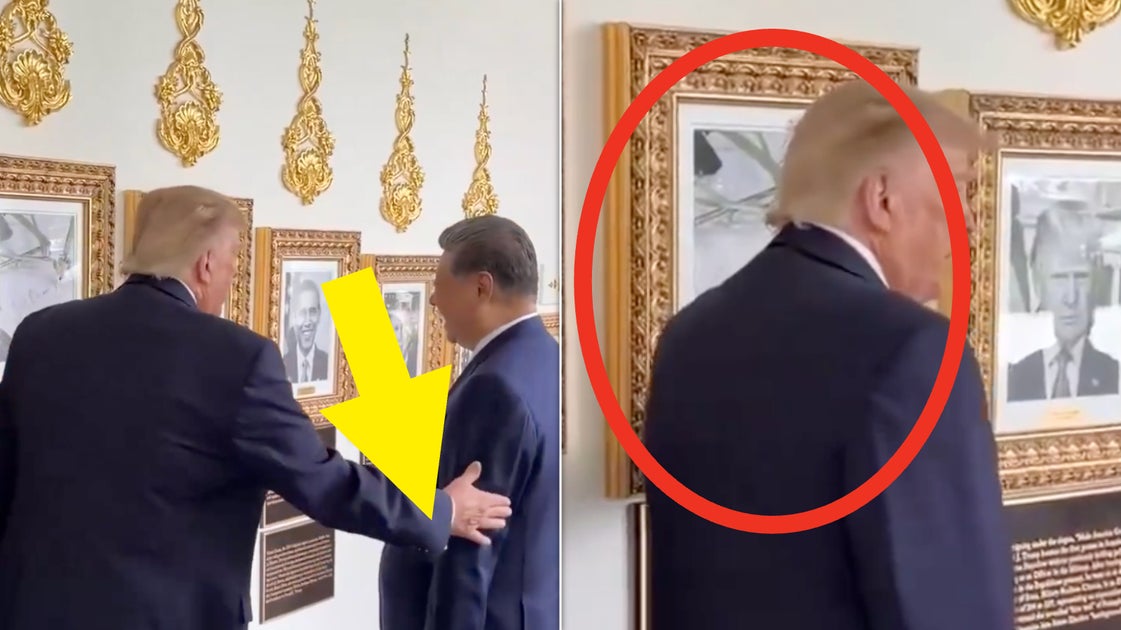
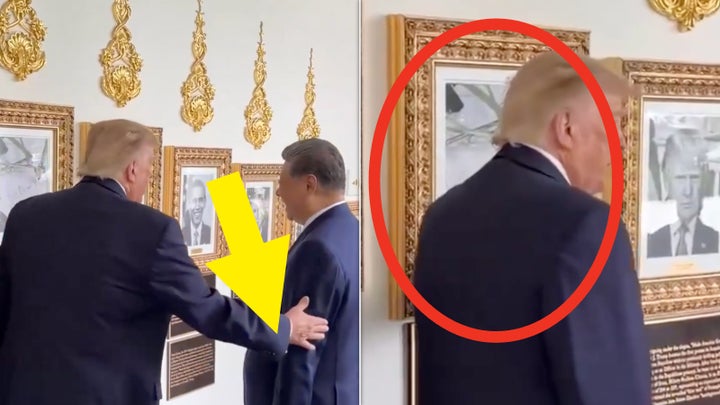
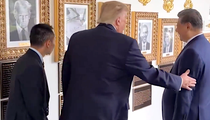
The White House X account shared a video on Thursday of President Donald Trump showing Chinese President Xi Jinping the Presidential Walk of Fame and emphasizing the meme-ification of former President Joe Biden’s portrait, which is a photo of an autopen.

Trump, who implemented the Presidential Walk of Fame along the West Colonnade of the White House in September 2025, had replaced Biden’s photo with an autopen to lean into unproven claims that Biden was so unwell during his presidency that staff used an autopen to sign documents and pardons on his behalf.

“This is the autopen… It’s Biden,” Trump tells Xi in the clip.

"This is the autopen... it's Biden." 🤣President Trump shows off the legendary Presidential Walk of Fame to President Xi. pic.twitter.com/qUQEM6XoLj

Trump has a history of being extremely warm and friendly when it comes to international authoritarian leaders like Xi, Vladimir Putin and Kim Jong Un, while openly disliking domestic leaders who do not align politically with him.

In August, Trump told reporters that he has a “good relationship” with Kim and that Kim “didn’t like Biden, he didn’t like Obama, he didn’t like anybody, but he likes me, and I just got along with him very good.” A year earlier, in August 2025, Trump pulled out a photo he claimed Putin had sent him and told reporters Putin was “very respectful of me and our country, but not so respectful of others.”

While U.S. presidents might not always be fans of other world leaders, they’re not expected to publicly disrespect them — especially while hosting them, Kathleen Hall Jamieson, the director emerita at the Annenberg Public Policy Center at the University of Pennsylvania, told HuffPost.

“There is an expectation that U.S. leaders will engage the leaders of other nations, including those whose foreign policy and domestic policy agendas may be dissimilar or may conflict with those in the United States, but that they will do it with a level of dignity that is appropriate … and that represents the American people in a way that would make us proud,” Jamieson said.

But “denigrating a past holder of the office of the presidency in the presence of one of those individuals is unprecedented and counterproductive,” she said.

The White House did not respond to HuffPost’s request for comment at the time of reporting.

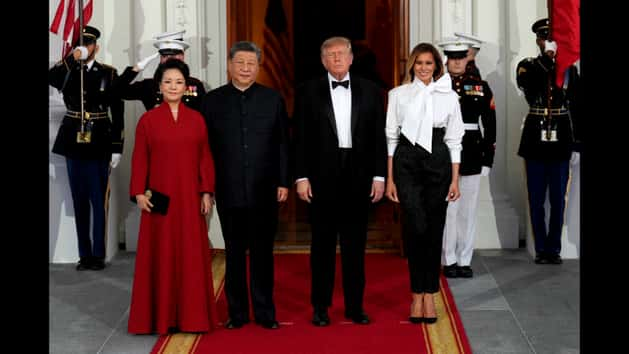
Trump is arguably more preoccupied with how he comes off to these leaders than how he comes off to the American public, Jamieson agreed. Xi, in particular, is a communist leader, and this meeting came within hours of the Trump administration dropping a government-funded ad in which Trump says, “America will never be a communist country.”

“He is offering a contradictory set of images to the American people about his administration’s perspective on communist leaders,” Jamieson said. “When he praises a communist leader and denigrates the former leader of the U.S., that contrast becomes even greater.”

But Peter Baker, a reporter at the New York Times, told HuffPost that the ad’s condemnation of communism could be specifically referring to Democrats.

“When he says he hates communists, he means Americans; he means leftists in America, who he calls communists,” Baker said. “It’s entirely in a domestic context. He does not see the contradiction between having a red carpet ceremony for the world’s leading communists on the very same week he is airing an ad, paid for by taxpayer money, vowing to defeat communism.”

Demeaning and dismissing past U.S. presidents that do not align with him is arguably “Trump’s idea of fun,” Stanley Renshon, a psychoanalyst and professor of political science at the City University of New York Graduate Center, told HuffPost.

“When he does that in front of another leader, he is essentially sending them the signal, which says to them, ‘Look to me for the answers that you want, but don’t carry favor with these people who were before me or their supporters, because you’re not going to get anywhere doing that,’” Renshon said.

Renshon argues that this “schmoozing” with outside leaders is Trump’s way of proving he is up for the job and doing it better than leaders in the opposing party. It is also his way of conveying his respect and admiration to these leaders and how they run their countries.

“He respects people who snap their fingers, who make decisions, and who are strong,” Baker said. “That’s what he sees himself as and, I think, that is how he connects to people like Putin and Xi and Kim Jong-Un.”

Baker co-authored “The Divider: Trump in the White House, 2017-2022,” about Trump’s first term, and said he found that part of what drives Trump’s behavior with other world leaders is his business background.

“He owned his own company … Whenever he made a decision, issued an order, it was carried out,” Baker said. “I think he has found that government doesn’t work quite that way and I think that he had, therefore, kind of an empathy with leaders around the world who don’t have to bother with the messy obstacles of democratic governance.”

“He just seems admiring and almost envious of their ability to get things done as he sees it,” Baker said.

Trump has a highly dominant personality, Aubrey Immelman, an associate professor focused on political leadership and personality psychology, told HuffPost, which is why it’s almost expected that he engages in coercive diplomacy or bullying behavior.

“The conventional wisdom that Trump is, himself, an authoritarian has some basis in truth,” Immelman said. “Authoritarian leaders tend to engage in cognitively simple ‘black-white’ thinking and admire strength while having contempt for weakness.”

“That said … He may be flattering these authoritarian leaders to stroke their egos and help him get what he wants in future negotiations,” Immelman added.

By entering your email and clicking Sign Up, you're agreeing to let us send you customized marketing messages about us and our advertising partners. You are also agreeing to our Terms of Service and Privacy Policy.
Comments
You must be logged in to comment.