huffpost Press
Trump's 'Transparent Authoritarian Play' May Have Frightening Repercussions
Images
1 / 9

2 / 9
3 / 9
4 / 9
5 / 9
6 / 9
7 / 9
8 / 9

9 / 9
In an unprecedented escalation of his war against the media, President Donald Trump barred CNN, MS NOW and Politico from entering White House grounds over the weekend.

On Saturday, journalists from the three ousted outlets were turned away and had their press credentials removed by the Secret Service.

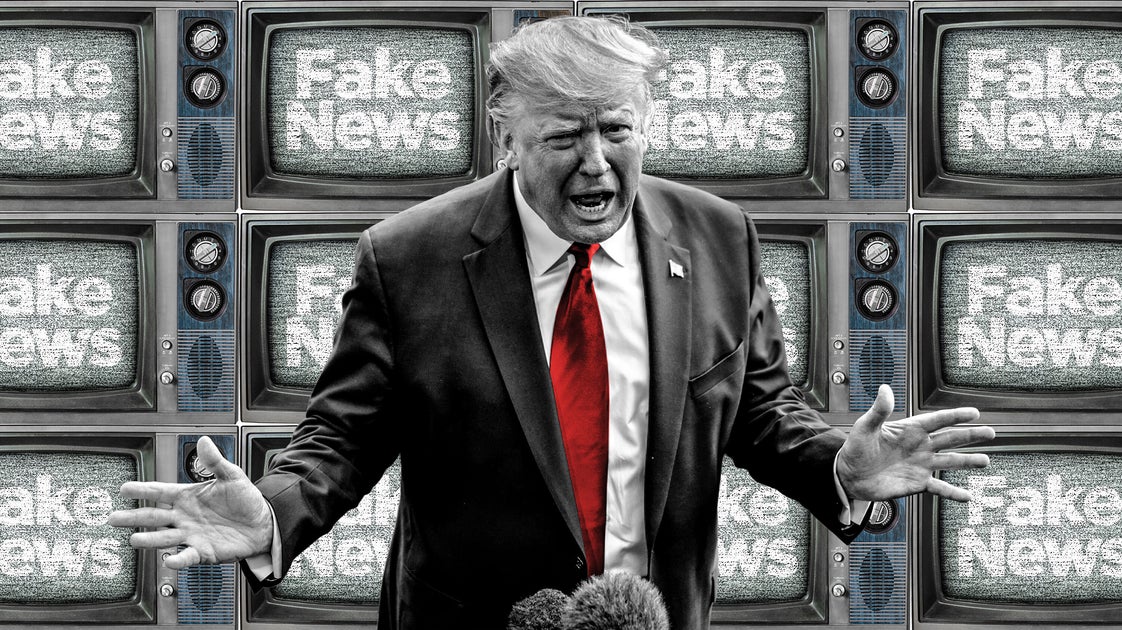
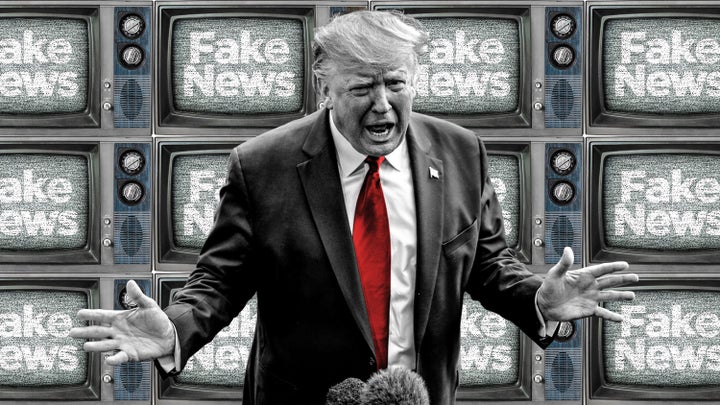
Trump later defended his decision on social media, saying the outlets he was banning were “FAKE NEWS” and “totally out of control.”

To legal experts, Trump’s claims are baseless. “What do you think the First Amendment means? It means the government doesn’t get to control media,” said Adam Steinbaugh, senior attorney for the Foundation for Individual Rights and Expression.

The three targeted outlets filed a lawsuit on Monday to reverse the ban, saying they intend to “protect our First Amendment rights and defend the principle that the government does not decide what the press reports or publishes.”

Under the First Amendment, the government cannot restrict the press — and Trump’s outright ban has repercussions for more than just journalists.

“I’m concerned by the ban itself. I’m also concerned by the downstream effect, particularly if the courts don’t act quickly and clearly to stop it,” said Seth Stern, chief of advocacy at Freedom of the Press Foundation.

“Because if Donald Trump can get away with this, what is the censorial police chief, school board president, local mayor thinking that they might be able to get away with,” he added. “Donald Trump is far from the only thin-skinned and vindictive official in the country. He’s just the one with the highest office.”

Trump’s new media ban is just the latest, most public escalation of Trump’s war against news outlets he disagrees with. He has long labeled certain outlets “fake news,” and in his first term, he tried to revoke two journalists’ press passes, causing lawsuits. But what makes Trump’s media ban “unprecedented” is that it is an outright ban, Steinbaugh said. “It is not a mistake. It is not someone screwing up and then the administration backing down. It is a broad ban coming directly from the top.”

And that should be concerning for us all. What worries free speech legal experts is not just Trump’s unprecedented unconstitutional actions, but also what his disregard for the law suggests about where the country could be going next.

“People other than journalists exercise their First Amendment rights. Whether it’s people recording ICE operations or people speaking out at the school board meeting, we all rely on [the] First Amendment in some way or another,” Stern said. “And there’s a downstream effect when people see a president acting this way. It emboldens others, from school board officials to police officers to local politicians, to act similarly.”

Once you start opening the Pandora’s box of censorship, it’s really difficult to close it.

Stern said Trump’s media ban is unlikely to win in court, but “the second worst-case scenario would be a ruling against him that is unclear in its scope, or that treats this as a legitimate legal dispute.” When Trump was asked whether he would ban more outlets, he responded ominously with, “We’ll see.”

If banning press outlets becomes a more legitimate form of executive action, it could become a new boundary that future administrations will push too, to restrict free speech, Steinbaugh said.

“If the government can engage in viewpoint discrimination, which is to say, you can say good things or positive things, but you can’t say negative things, there’s no reason why that shouldn’t apply to the public at large,” he said.

Steinbaugh outlined a future scenario where gaining access to national parks would necessitate removing anti-Trump bumper stickers from one’s car. “Once you start opening the Pandora’s box of censorship, it’s really difficult to close it,” he said.

Stern said Trump’s crackdowns on public records, his refusal to abide by the Presidential Records Act to preserve his records, his decision to fire public records officers, and his war on leakers and whistleblowers “have just as much, if not far more, of an impact on the news that ultimately gets to the public.”

By shutting journalists out of press conferences, Trump is shutting the front door on information, Stern noted. “When the front door is shut, journalists go to the back door, and that would be public records, that would be whistleblowers ... and now we’ve got a situation where Trump is attempting to shut both the front door and the back door,” Stern said.

The Wall Street Journal reported that Trump’s frustrations with the media “reached a fever pitch” after one of his closest aides, Natalie Harp, showed him clips of TV hosts criticizing him.

“This is supposed to be the leader of the free world, and here we are saying: If you publish negative stories about this administration, then you don’t get access to the main government building in the United States,” Steinbaugh said.

Trump’s media ban is a worrisome sign of “democratic decay,” said Nick Cull, a historian of propaganda and professor of communication at the University of Southern California’s Annenberg School for Communication and Journalism.

“It is a message to all [in] the country that bad things happen to those who step out of line,” Cull said. “It is a transparent authoritarian play and adds to the pressure to ... anticipate the leader’s whims and comply in advance.”

By entering your email and clicking Sign Up, you're agreeing to let us send you customized marketing messages about us and our advertising partners. You are also agreeing to our Terms of Service and Privacy Policy.
Comments
You must be logged in to comment.