huffpost Press
Sotomayor Skewers Fellow Justices For Giving Trump 'Far Greater Power Than Ever Before'
Images
1 / 6
2 / 6
3 / 6
4 / 6

5 / 6

6 / 6
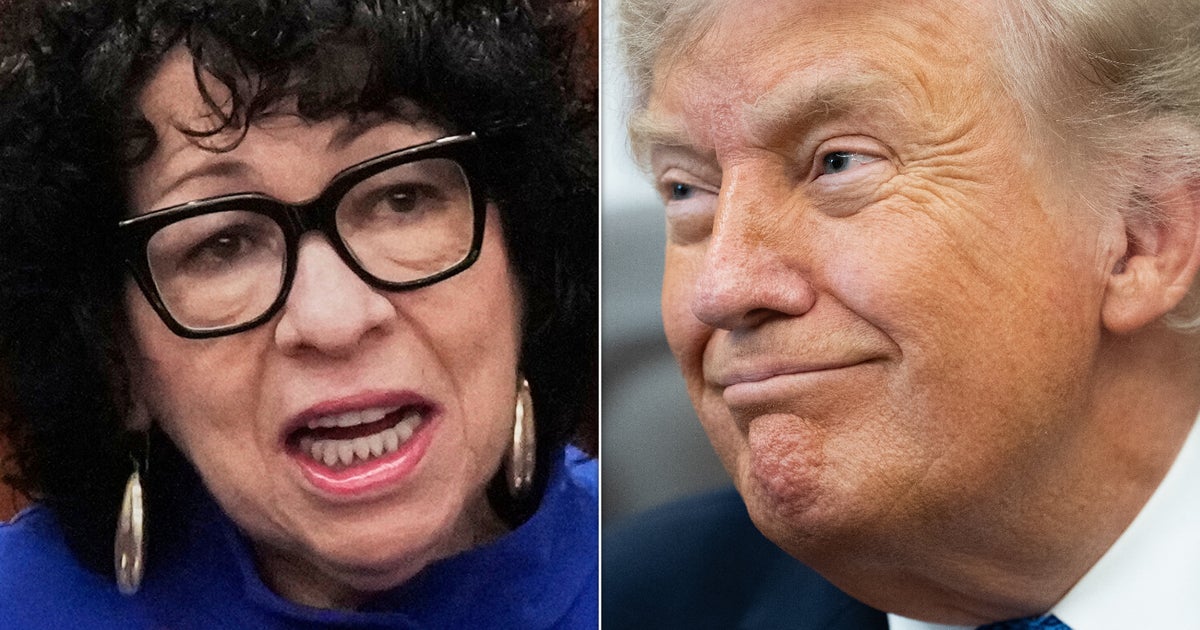
Justice Sonia Sotomayor blasted her right-wing colleagues on Monday for making the “grievously wrong” decision in handing President Donald Trump more power over the executive branch “than ever before.”

In a 49-page dissent read in part from the bench, Sotomayor expressed extreme concern about the majority’s decision to allow the president to fire any member of a regulatory agency under the executive branch for any reason, overturning 90 years of judicial precedent and “upend[ing] … the separation of powers.” She was joined by Justices Elena Kagan and Ketanji Brown Jackson.

“Today, this Court undoes centuries of political practice and concludes that all three branches of Government have been acting in open defiance of the Constitution all this time,” she wrote. “Its conclusion is wrong.”

The case revolved around Trump’s firing of Federal Trade Commission commissioners Rebecca Slaughter and Alvaro Bedoya — both appointees of President Joe Biden who were let go for no stated reason.

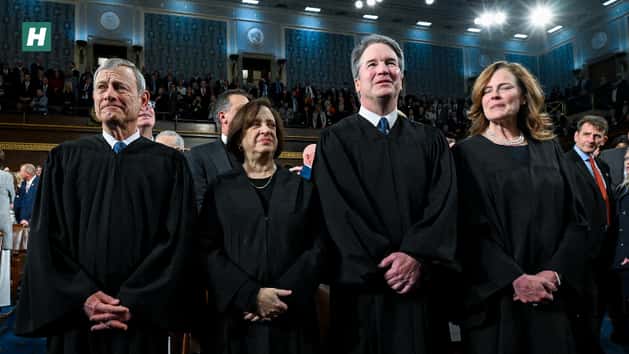
Led by Chief Justice John Roberts, the six justices in the majority reversed a precedent set by the landmark 1935 case Humphrey’s Executor v. United States, which found that Congress can limit the president’s power to fire officials at independent regulatory agencies.

Sotomayor lamented the demise of Humphrey’s, which has now been replaced with what she referred to as “a half-baked theory of executive power” that is both all-encompassing yet limited by undefined exemptions.

“The one thing that does appear to be clear going forward is that chaos will follow,” she wrote.

Sotomayor began her dissent by acknowledging that some functions of government should operate, for practical purposes, “at a distance from partisan politics.”

“Those include the management of nuclear energy; the security of the monetary supply; and the safety of American workplaces, consumer products, and chemical hazards,” she said. The federal agencies that oversee such functions are largely staffed by career officials who may see multiple presidents come and go.

“In these and many other areas, the wisdom of the centuries has taught that some decisions should depend not only on who is in office — much less on who is disfavored or owed a favor by those in office — but also on judgment, expertise, and the public good,” she said.

Later, she wrote that “it is undeniable” that agencies like the FTC “will be transformed in ways that those who created them never could have expected and actively sought to avoid, fundamentally recalibrating the balance of power in this country in the process.”

Not only did the court upend its 1930s-era precedent, Sotomayor argued, but it reversed a stance it took just six years ago, when the balance of the court still favored conservatives. In that recent case, the court determined that, for certain expert officials, the president could only fire them for “good cause.” The FTC commissioners would appear to fit that exemption.

Sotomayor also spent a number of pages arguing that the Founding Fathers had wanted to limit the president’s power to remove other government officials at will, slamming what she termed the majority’s “radical theory of unitary executive power.”

In her view, federal power is more balanced by allowing expert officials their independence and then holding them to account through the political branches of government.

“Today, the Court discards that democratic regime in favor of one that distorts the structure of Government to fit the majority’s theory of unitary, total executive control,” Sotomayor wrote.

“The result is a President who emerges with far greater power than ever before. It is a power, however, that neither the People, nor Congress, nor the Constitution bestowed upon him. In granting the President this unbridled authority, the Court upends its precedent, misconstrues our history, and sheds any pretense of judicial modesty,” she concluded. “I respectfully dissent.”

By entering your email and clicking Sign Up, you're agreeing to let us send you customized marketing messages about us and our advertising partners. You are also agreeing to our Terms of Service and Privacy Policy.
Comments
You must be logged in to comment.