bbc Press
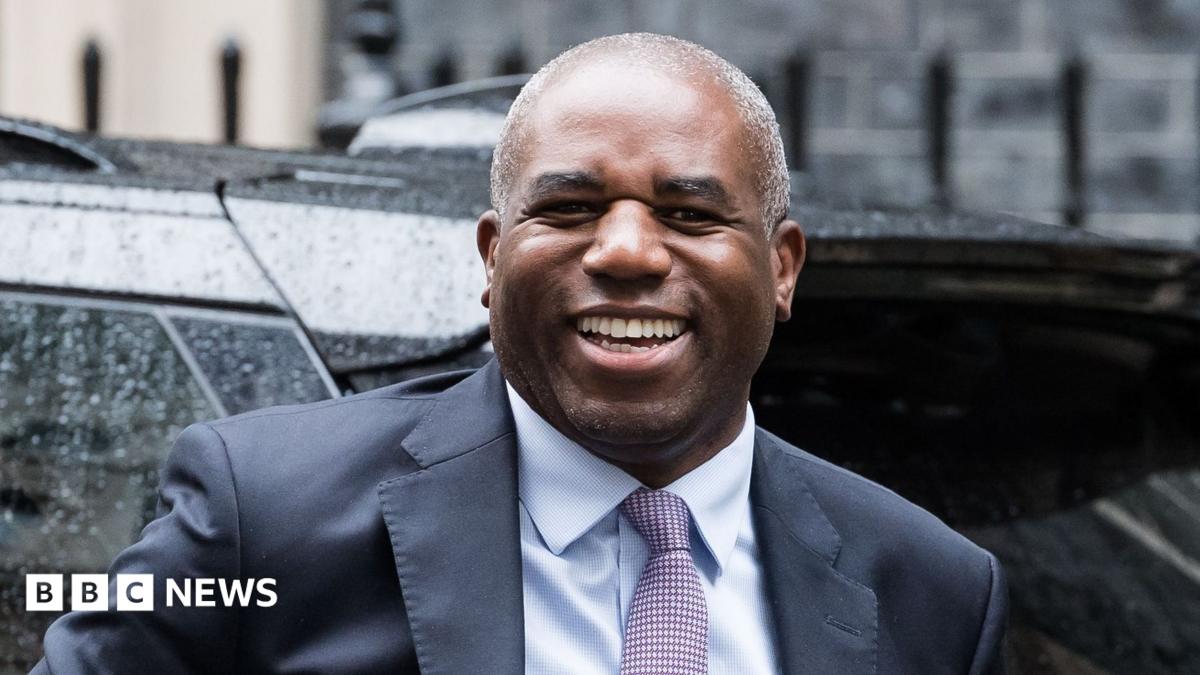
David Lammy urges Andy Burnham to take UK back into the EU
Images
1 / 20
2 / 20

3 / 20
4 / 20
5 / 20
6 / 20
7 / 20
8 / 20

9 / 20
10 / 20
11 / 20

12 / 20

13 / 20
14 / 20
15 / 20

16 / 20

17 / 20
18 / 20
19 / 20

20 / 20
David Lammy has urged Andy Burnham to take Labour into the next general election with a pledge to rejoin the European Union.

The former deputy prime minister's intervention comes as Burnham prepares to reopen a debate on the long-term relationship with Europe in the wake of a summit in Brussels this Friday.

It makes him the latest senior Labour figure to publicly support a future reversal of Brexit, after ex-chancellor Rachel Reeves said she believed Britain's future lies in the bloc.

Burnham confirmed on Tuesday he plans to set out options for a future relationship next month, alongside his blueprint to boost the British economy over the next decade.

The prime minister has held out the possibility he could ask to rejoin at some stage, whilst ruling out major changes before the next election.

In an article earlier this month, Reeves said she believed "Britain's future lies in the European Union", without specifying a timeframe for the move and insisting it was important to "get the next steps right".

But Lammy has now gone further, calling for Burnham to advocate rejoining at the next election, paving the way for a negotiation on a deal to return.

Speaking on BBC Radio 4's Today programme, he added that the public should then be given a vote on whether to accept the new membership deal.

Returning to the bloc's customs union, in which EU member states charge the same taxes on imported goods, would not deliver "enough" economic growth, he said.

He added that rejoining Europe's single market from the outside was "not a runner" as it would mean applying swathes of EU law without a say on the content.

Another cabinet minister under Sir Keir Starmer, Peter Kyle, has also backed this approach, writing on Substack, external that a "complex halfway option" would be "the worst of all worlds".

He added that a promise to rejoin at the next election, followed by a renegotiation and a referendum on the final terms, was the "only way through I see".

He added: "How would I vote? Well, I would want to see the deal before deciding. I want Britain back in the EU, but not at any cost."

Burnham to set out options next month for long-term EU relationship

The EU that Burnham is eyeing up is very different to the one Britain left

Lammy, who is also a former foreign secretary, argued the UK would be able to rejoin the EU whilst staying outside the passport-free Schengen travel zone and without committing to adopt the euro.

But he appeared to concede that Britain's EU budget rebate, first negotiated in the 1980s, could become less financially generous, adding that a "different formula" for financial contributions would be "up for negotiation".

He also revealed he had made an unsuccessful attempt to persuade Sir Keir to "tear up" his red lines on Europe towards the end of his two-year premiership, but the former prime minister had encountered resistance from within his cabinet.

Labour's 2024 election manifesto committed the party to "make Brexit work" whilst ruling out rejoining either its customs union or single market.

Any move away from those red lines by Burnham would set up a huge dividing line with the Conservatives and Reform UK at the next election.

But Lammy argued the prime minister's status as a former mayor from the north of England meant he was "uniquely placed" to convince the public of the need to reverse the decision to leave.

It comes as Burnham prepares to travel to the Brussels this Friday for an EU summit at which both sides hope to unveil new agreements on food, youth visas and re-linking British industry to the EU's carbon trading regime.

The prime minister inherited negotiations on those deals from his predecessor Sir Keir Starmer, who kicked off talks on the agreements last year.

But he has also started a broader discussion over the UK's long-term relationship with Europe, which has been welcomed by some within his own party but seen him accused by critics of betraying the result of the 2016 decision to leave.

Burnham's Conservative predecessor Lord Cameron, who resigned as prime minister after losing the 2016 Brexit referendum, has urged the Labour leader not to start a renewed debate over EU membership.

Speaking last week, he warned a fresh debate over the issue would be "long and painful" and could harm attempts to improve upon the exit deal negotiated under the Conservatives.

He added: "The EU countries will just think: 'Well, these guys are gonna rejoin anyway, so what's the point in giving them a good partnership deal'."

What questions do you have?
Comments
You must be logged in to comment.