bbc Press
Kuwait says it repelled first Iranian attack in two months after US strikes island
Images
1 / 20
2 / 20

3 / 20

4 / 20

5 / 20

6 / 20

7 / 20

8 / 20

9 / 20

10 / 20

11 / 20

12 / 20

13 / 20

14 / 20

15 / 20

16 / 20

17 / 20

18 / 20

19 / 20

20 / 20
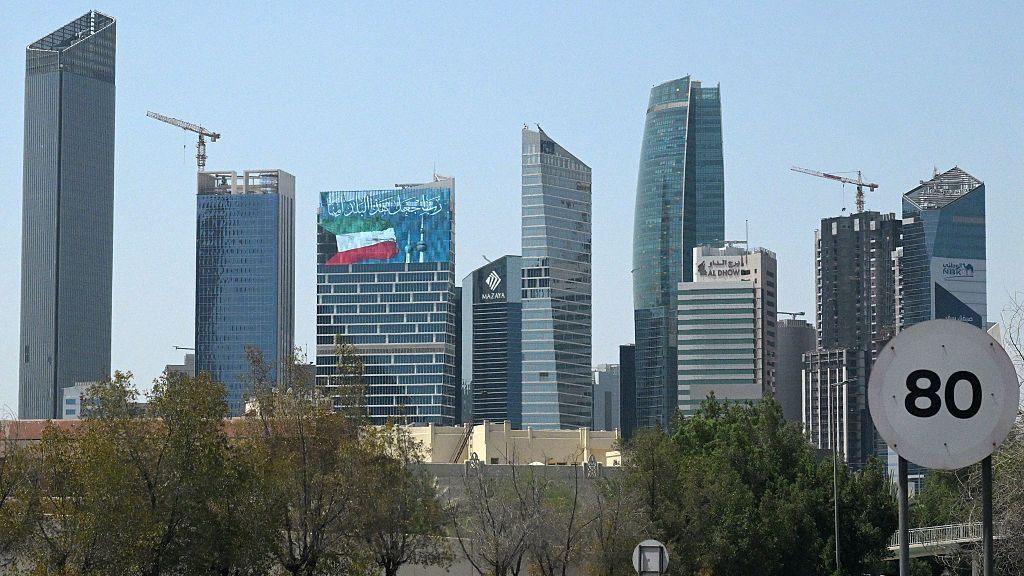
Kuwait condemned the attack, which Iran said targeted an airbase hosting US forces (file photo)

Kuwait and Bahrain have said they repelled Iranian air attacks overnight as hostilities between Iran and the United States rise.

The drone attack on Kuwait was the first in more than two months. The Iranian army said it had targeted the Ali Al Salem Airbase, which hosts US forces, but Kuwaiti authorities did not report any damage.

It came after US warplanes struck an Iranian missile launch site on Qeshm Island in the Strait of Hormuz, according to US military officials.

Meanwhile, the United Arab Emirates' state oil firm said a crew member was missing after one of its tankers was attacked in the Gulf waterway on Tuesday.

The recent exchanges of fire, as well as deadlock in negotiations on a peace deal, have raised fears of a major escalation in the nine-month-old war.

The conflict began when the US and Israel attacked Iran in late February.

Since then, Iran has retaliated for US and Israeli strikes by launching missiles and drones at Israel and Gulf Arab states hosting US military assets and personnel.

It has also attacked dozens of commercial vessels in and around the Strait of Hormuz, through which a fifth of global oil and gas shipments usually pass.

Pakistani man sentenced to 27 years for Iran-backed plot to kill Trump

Trump says US taking 'very seriously' any Iranian plot against Washington

Iran targets US military base in Bahrain with drone attack

On Tuesday night, Kuwait's military said its air defences engaged "drone threats" but did not report any casualties or damage.

The Kuwaiti foreign ministry condemned the attack, saying it "flagrantly violated Kuwait's sovereignty, directly threatened its security and stability, and constituted a grave breach of international law".

"The explosions seemed to be coming from far away, but hearing them again after a period of calm was both surprising and worrying," Hani Mohammed, an Egyptian resident of Kuwait, told AFP news agency.

Bahrain's military also said on Wednesday that its air defence systems had "intercepted and destroyed several Iranian aerial attacks".

The island kingdom, which hosts the US Navy's 5th Fleet, has reported four attacks over the past six days, following a two-month lull.

Qatar, which has mediated in the stalled indirect talks between Iran and the US, said the Iranian attacks on its neighbours were a "dangerous escalation that threatens to complicate efforts aimed at containing tensions".

The Iranian army said its drones had targeted US Patriot air defence systems and drone and missile launch platforms at Ali Al Salem Air Base in Kuwait.

Later, the army's commander-in-chief, Maj Gen Amir Hatami, warned the US and its allies that it would respond more forcefully to any new attacks on Iran.

"If the enemy repeats its mistake... we have the readiness and the plans to confront it and its supporters in a stronger, more crushing way and without geographic limitations," he said.

On Tuesday night, US fighter jets targeted a missile launch site on Qeshm Island "with precision munitions" in response to Iranian "aggression targeting US personnel and assets", US military officials said.

Iranian media reported explosions on the island but cited a local official as saying they had caused no damage to infrastructure.

In a separate development, the Abu Dhabi National Oil Company (Adnoc) said a search-and-rescue operation was under way for a missing sailor following an attack on one of its vessels in the Strait of Hormuz on Tuesday. The rest of the crew were safely evacuated and 11 were receiving medical care, it added.

The UK Maritime Trade Operations (UKMTO) centre reported that a tanker was struck by an unknown projectile about 13 nautical miles (24km) north of Khasab, in Oman's Musandam peninsula. It said the attack caused a fire on board that was extinguished.

Iran said two oil tankers and a ship carrying liquefied natural gas (LNG) had caught fire after hitting naval mines while sailing along an "authorised route".

At least 25 seafarers have been killed across the Middle East since the start of the war, when the Strait of Hormuz was effectively closed due to Iranian missile and drone attacks on commercial vessels and a US naval blockade of Iranian ports.

The US and Iran reached a preliminary agreement to end the conflict and reopen the strait in June, but it collapsed within weeks after Iranian attacks on shipping resumed and the US reinstated its blockade.

Iran insisted it would not give up some measure of control over the waterway and began targeting vessels using a southern route through Omani waters that avoids its preferred route through Iranian waters.

In recent months, the US military has been providing protection for tankers shuttling through the Strait of Hormuz, allowing crude oil exports from Gulf states to reach around 80% of pre-war levels, according to analysts.
Comments
You must be logged in to comment.