huffpost Press
An Unusual Election Threatens To Topple Netanyahu — While Palestinians' Fate Hangs In The Balance
Images
1 / 10

2 / 10
3 / 10
4 / 10
5 / 10
6 / 10
7 / 10
8 / 10

9 / 10

10 / 10
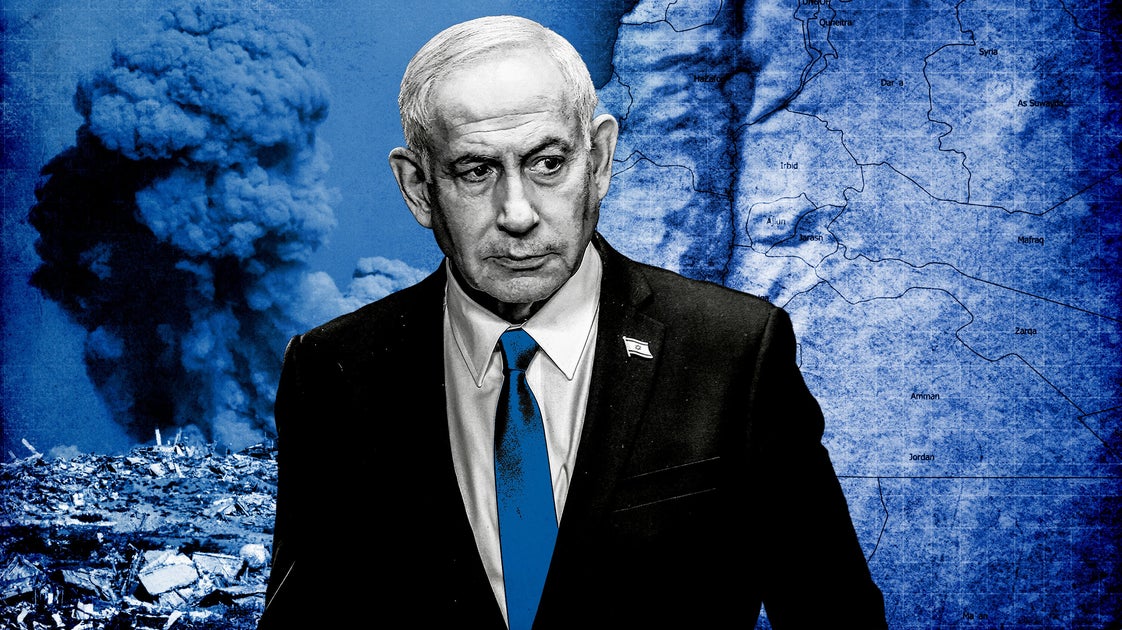
Israel is just days away from holding its first elections since the Oct. 7, 2023 Hamas attack, and voters will determine whether Prime Minister Benjamin Netanyahu and his far-right, ultranationalist government will remain in control — and, by extension, what might happen to the 5 million Palestinians living in Gaza and the West Bank under a system of occupation.

Netanyahu is Israel’s most electorally successful and longest-serving prime minister, having governed off and mostly on for 19 years. Many voters, though, are upset over his corruption scandals, the security failures that led to the Oct. 7 attack, and Israel’s increasingly isolated position on the global stage. An anti-Netanyahu coalition that is considered center-left has been gaining traction, and its leading party, Yashar, could pull off a win next Tuesday.

However, polls show that neither the opposition nor Netanyahu’s coalition is likely to garner the 61 seats required to take control of the 120-seat Knesset, Israel’s parliament. The anti-Netanyahu coalition could win 53 seats to Netanyahu’s 51, according to a polling average from Israel’s top three networks released Wednesday.

This means that despite being historically repressed in the Knesset, Palestinian parties in Israel could serve as kingmakers this election. The anti-Netanyahu coalition increasingly appears unable to govern without a Palestinian party joining it, but has so far refused to publicly agree to it.

In fact, both sides have all but ignored Palestinians — who make up roughly half the population of Israel and the Palestinian territories — and what the election results would mean for them, even as Gaza remains under siege and settler violence in the occupied West Bank continues to rise.

“There is no discussion about the future of how Israel will deal with the Palestinians,” said Tamir Sorek, a Jewish studies professor at Penn State University. “There is no debate because only one side has a clear vision articulated in the program … and [the Netanyahu coalition’s] vision is quite simple: no Palestinians between the river and the sea. The other side, the anti-Netanyahu opposition, they share the same fantasy, but they refuse to articulate it.”

Nearly 2 million Palestinian citizens of Israel have the right to vote, but Palestinians living in the West Bank and Gaza are not allowed the same political participation. Israelis in the West Bank, however, are allowed to vote.

“Even though Palestinians who hold Israeli citizenship are 21% [of Israel’s voters], in this weird way they’re voting for 50% of the electorate, right?” said Palestinian policy analyst and legal expert Diana Buttu. “Like they’re representing the other 30% who don’t have a voice, and that’s the part that is a heavy burden.”

The Israeli government says Palestinians in the West Bank and Gaza are technically governed by the Palestinian Authority and Hamas, respectively, but the reality is that Israel ultimately holds more power over both territories – controlling Gaza’s land, air and sea while retaining influence over most aspects of life in the West Bank, including movement and incarceration.

And so the Palestinian community and world at large are watching to see if Netanyahu and his coalition hold on to power, and if a less extreme government with the same views of Palestinians would make any difference in their oppression.

Many parties are vying for a place in the Knesset, and any one party must pass the electoral threshold of 3.25% of the national vote to qualify for seats.

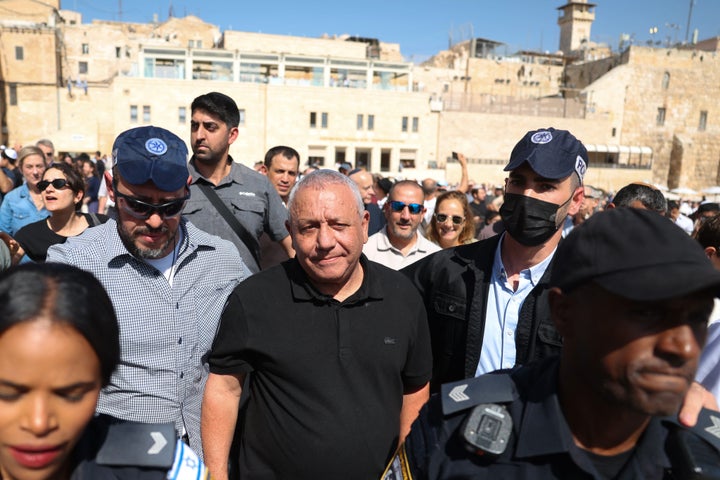
To secure the majority needed to govern, qualifying parties unite to form a coalition, led by the party that wins the most votes in the bloc. There are two main coalitions in this election: Netanyahu’s, led by his governing Likud Party, and that of former Israeli military chief of staff Gadi Eisenkot, led by his opposition party Yashar.

The main differences between the coalitions are largely leadership styles and approaches to domestic reform. Eisenkot positions himself as more pragmatic, has called for an independent inquiry into the security failures that led to Oct. 7, and advocates for ending military draft exemptions for ultra-Orthodox Jews and Palestinian citizens.

However, despite their opposition status, most of the parties in Eisenkot’s coalition — and Eisenkot himself — agree with Netanyahu’s position to continue expanding Jewish settlements in the West Bank, which the International Court of Justice has deemed illegal.

Like Netanyahu, Eisenkot also opposes the idea of a two-state solution and supports continued Israeli control of Palestinians. Yair Golan, who is in Eisenkot’s coalition and is the sole liberal candidate to speak in support of a two-state solution, said earlier this year that such a goal “is unrealistic for the foreseeable future.”

Palestinian citizens of Israel can technically run for office, but Jewish Israelis have long considered their political participation illegitimate and have repeatedly attempted to restrict or deny their representation. Israel’s Central Elections Committee recently tried to disqualify the two main Palestinian blocs in the running — the Joint List and the United Arab List — but the country’s Supreme Court overturned the decision.

The Joint List and the United Arab List mostly differ in how they approach working with Israeli parties in the Knesset. UAL is more willing to engage — making history in 2021 by joining a governing coalition — while the Joint List feels more strongly about aligning itself with a Palestinian national agenda.

The Joint List, made up of three parties, could win about eight seats, while the single-party UAL could get five, according to the polling averages released Wednesday. Thirteen seats would be more representation than is typical for Palestinian parties — though the record was 15 seats in 2020 — but their influence only goes so far without joining a governing coalition.

The UAL is more likely to join such a coalition, and has a chance to do so even after Election Day, as parties continue to form alliances until one coalition reaches 61 seats. Eisenkot said as recently as last month that he does not see any Palestinian party meeting his conditions for joining his coalition, though it’s unclear how he plans to win a majority without one. The UAL’s No. 2, retired Jewish police commissioner Yoav Segalovich, told Haaretz that Eisenkot can only effect the kind of change Israel needs if he works with the UAL.

Netanyahu has appointed several extremist figures to his Cabinet, and together they have overseen and supported the ongoing destruction of Gaza, as well as the illegal and violent expansion of settlements in the West Bank.

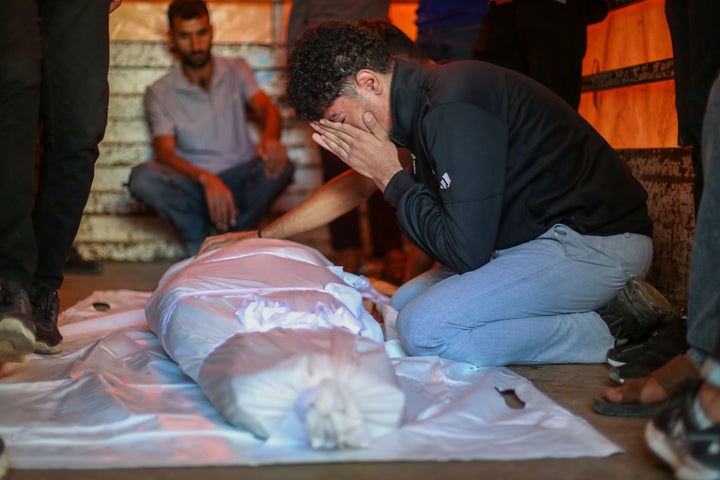
Israel has killed at least 74,000 Palestinians in Gaza over the last three years, continuing to launch strikes and block most humanitarian aid from entering the territory, which is now reduced to rubble despite the so-called ceasefire. But other candidates and the Israeli media have limited their discussion of Netanyahu’s actions in Gaza to the security failure he oversaw that led to the Oct. 7 attack.

The Israeli electorate has shifted to the right since 2023, and calls for ethnic cleansing have become increasingly normalized, according to a series of surveys Sorek conducted last year and published in the journal Ethnic and Racial Studies. A separate poll conducted by Israel’s centrist Channel 12 earlier this year found that Jewish voters ages 18–21 were the most right-wing and religious-nationalist in Israel’s history.

“People who grew up in the ’90s in Israel still remember when there was a public discussion about possible peace,” Sorek told HuffPost. “It does not exist anymore.”

“If it means getting every old lady out to vote, then that's what it means.”

Throughout history, Palestinian citizens of Israel have wrestled with what their vote means in an Israeli election — whether they can effect any change or are simply legitimizing a Zionist regime. Palestinian voter turnout has often been lower, Buttu said, either because Palestinians do not want to legitimize the current system, or simply because they feel their vote doesn’t matter.

“That will always be brewing because Israel defines itself as a Jewish state,” she said. “It doesn’t view [Palestinian] citizenship as real citizenship. It views it as a kind of historic mistake — and in fact, many candidates are now speaking about this openly, about it being a historic mistake.”

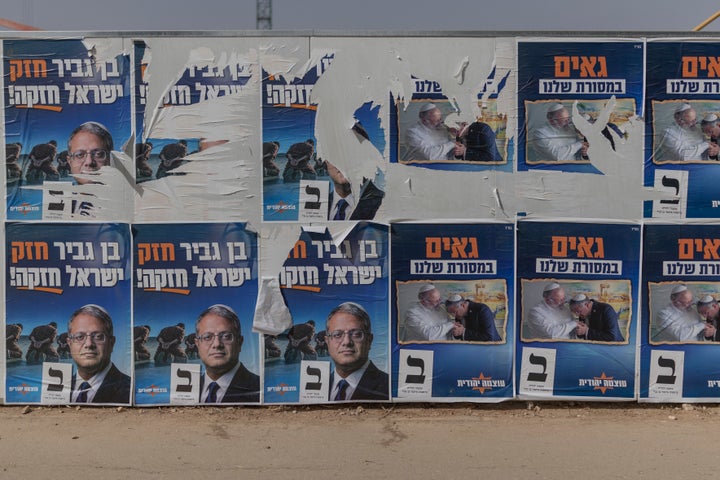
This election, however, might be different as Palestinians in Israel mobilize to get out the vote. Palestinian towns in Israel are now plastered with billboards propping up Palestinian candidates who hope that significantly increasing voter turnout will increase their representation in the Knesset, potentially allowing more influence in the legislative process.

Buttu said the UAL’s message of working from within the Israeli government may be more attractive to some Palestinians than it was in the past because of their desperation to remove Netanyahu and Itamar Ben-Gvir, his hard-line minister of national security, from power.

Ben-Gvir has largely enabled settler militias in the West Bank, championed a law to execute Palestinians convicted of terrorism, and effectively turned Israel’s prison system into alleged torture camps. For many Palestinians, a less extreme leader in charge of security policy could make a real difference.

“Now people are saying, we know that we’re always going to be viewed as like our votes don’t count, and we know that we might be viewed as legitimating the system – but if we can change Ben-Gvir and change Netanyahu, then that’s a good thing,” Buttu said.

Since the current campaign of destruction in Gaza, Netanyahu has faced intense scrutiny on the global stage. The International Criminal Court put out arrest warrants for the prime minister and his former defense minister, Yoav Gallant. Israel is facing accusations of genocide at the International Court of Justice, and human rights groups have concluded that Israel is committing genocide in Gaza and apartheid in the West Bank. Some countries have recently slapped sanctions on settlers in the West Bank for the “ethnic cleansing” of Palestinians.

Most Palestinians know that no outcome, including Netanyahu’s ouster, will lead to foundational change when it comes to broad Palestinian freedom and statehood, given the opposition’s position on Palestinian rights – or lack thereof. But that doesn’t mean Palestinians won’t still fight to get some relief from a particularly cruel government.

“It’s not like they have these huge dreams that somehow magically things are going to change overnight, but they do get a sense that there’s something really at stake here,” Buttu said. “If it means getting every old lady out to vote, then that’s what it means. And that’s where people are right now.”

A less extreme government could feel more pressure from its electorate to abide by international sanctions and improve Israel’s global standing, Sorek said, but real change would require more pressure from the outside.

“If the international community is expecting any drastic change, it won’t happen” without international pressure, Sorek said.

By entering your email and clicking Sign Up, you're agreeing to let us send you customized marketing messages about us and our advertising partners. You are also agreeing to our Terms of Service and Privacy Policy.
Comments
You must be logged in to comment.