huffpost Press
Elon Musk Killed Her Career. Now She Has A Shot At Flipping The Georgia House To Democrats.
Images
1 / 8

2 / 8

3 / 8
4 / 8

5 / 8

6 / 8

7 / 8

8 / 8
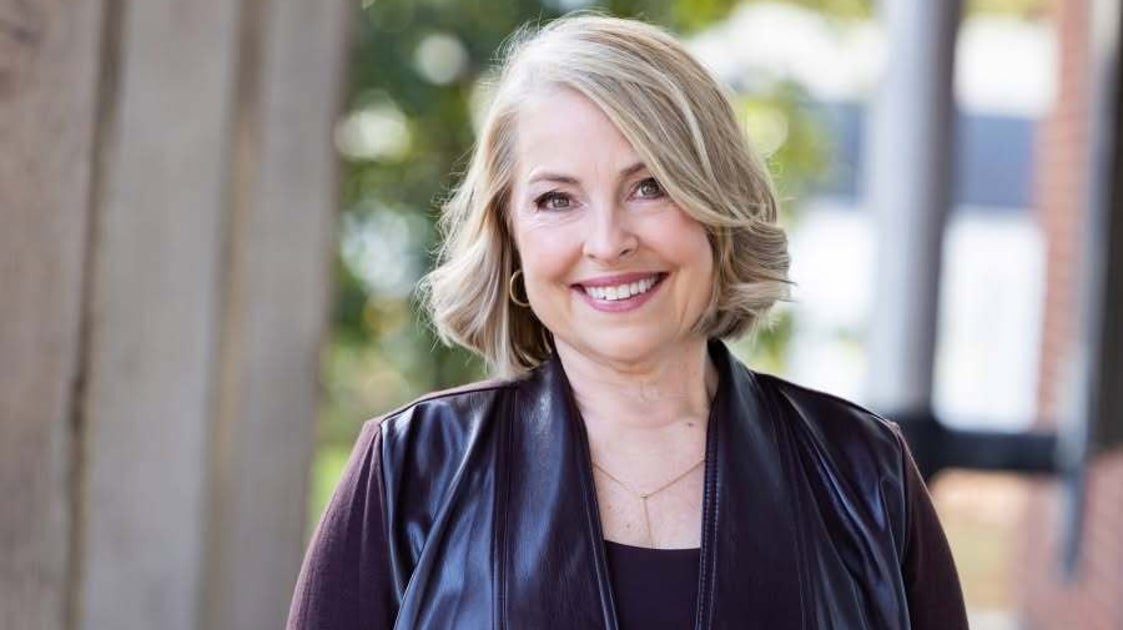
WASHINGTON — Beth Fuller was a contractor for the Centers for Disease Control and Prevention for 10 years — until last year, when the Trump administration’s so-called Department of Government Efficiency, led by trillionaire Elon Musk, abruptly terminated her contract as it haphazardly fired tens of thousands of other federal workers.

A 25-year public health professional, Fuller was devastated. It wasn’t just that she was out of work; it was what was happening to her field. Between his sweeping federal workforce reductions, deep budget cuts and freezing of tens of billions of dollars in grants, President Donald Trump has been breaking down the federal public health infrastructure itself.

“My husband said, ‘Well, you can get another job in public health. You have a lot of experience.’ I’m like, ‘I don’t think you understand,’” Fuller, 58, told HuffPost in an interview. “‘They’re dismantling my field, this field that I love so much.’ It felt like a death.”

She’d been working on a number of CDC projects, including the Policy Academy, a program that teaches employees across the agency how to make their research findings more accessible to the general public. Fuller was still reeling from losing her job when she was approached by Georgia Democratic state Rep. Shea Roberts, who leads an organization focused on building a Democratic majority in the state House.

Roberts encouraged her to apply her talents to a run for public office ― turning a layoff cheered by Republicans into a candidacy in a key swing district that now threatens the GOP’s decades-long grip on total power in Georgia.

Running for office was never on Fuller’s Bingo card. “Politics seems pretty rough right now,” she recalls thinking initially. But things started to click after some coffees with other Democratic state legislators and a kitchen-table talk with her family, which included her 16-year-old son “looking right at me” and telling her this was her chance to teach people she draws a line in the sand when people stop being decent to one another.

“I grew to understand that we shared the same goal of making strong communities,” she said of her talks with Roberts. “I knew from all my work that policy is a great lever for that.”

In December, Fuller launched her bid for Georgia’s State House District 53, a competitive seat in the Atlanta suburbs that encompasses part of Fulton County. She’s taking on Republican incumbent Deborah Silcox, who has represented the district since 2022.

It’s not quite revenge of the nerds, but Fuller sees her run for office as a way to counter the Trump administration’s efforts to reject science and policies being made for the public good, versus for a select few. She was raised to believe this was precisely the government’s role.

“My dad was a judge in Georgia’s Superior Court, so I grew up with his idea that government was there to help people when they need it, and that policies should be based on science and effectiveness,” she said. Watching the Trump administration take a wrecking ball to public health institutions was like seeing “so many norms that I grew up believing in get dismantled.”

Fuller is entering politics at a time when Democrats nationally are looking at a potential sweep in the November elections. Voters are deeply unhappy with the high costs of gas and groceries, the result of Trump’s war in Iran and his tariff fights, and the president’s approval rating is at an all-time low. It’s also just time for a party switch in Washington: Historically, the president’s party usually loses House seats in the midterms.

In Georgia, Democrats are feeling bullish about their chances of taking back the state House. Republicans have controlled all of state government for 21 years, and Democrats would have to flip at least 10 GOP seats to win the House. But they’ve got some polling on their side, a U.S. Senate candidate set to win by wide margins, and party leaders leaning in to forecasts of a blue wave.

Flipping the state House could have real consequences, too, especially if former Atlanta Mayor Keisha Lance Bottoms wins the governorship. Georgia has not fully expanded Medicaid coverage, and Democratic control would potentially give the party a say in redistricting the state in the 2030s.

“We are 10 winnable seats away from a majority for the first time since 2004,” Georgia House Democratic Leader Carolyn Hugley said last month at a press event. Republican state leaders maintain they feel good about their party’s chances.

Silcox, Fuller’s Republican opponent, did not respond to a request for comment.

The Democratic Legislative Campaign Committee, which helps elect Democrats to state legislatures, has singled out Fuller’s race as one to watch. She’s approached many of her campaign priorities through the lens of public health, whether it’s gun safety, Medicaid expansion or affordable health care.

The CDC is based in Atlanta and “revered” by her community, Fuller said, which means most people in this affluent GOP district are eager to talk about things in a reasonable, science-minded way.

“It is a Republican district, but it’s not MAGA. They want policies that work,” Fuller said. “I don’t really care if it’s a Democratic or Republican idea. Does it make people safer? Does it make a better Georgia? I have a broad view of health and who to represent, because it is all of us.”

“We don’t want to have a dictator. People are sick of the corruption.”

What’s stood out the most to Fuller while talking to people in the district, though, is how worried they are about how divided the country has become. Trump’s name doesn’t necessarily come up, she said, but people tell her “over and over” they’re worried about the kind of country their children will inherit. Residents have gotten emotional on several occasions, even crying at times.

“I think, overwhelmingly, my district is very rational, pragmatic and scared about the long-term plan of dismantling democracy. We don’t want to live in a one-party system. Boy, we don’t want to have a dictator,” Fuller said. “People are sick of the corruption.”

Some residents have told her they’ve never voted Democratic before, but they’ve reached a point “where things have to change,” she said. Others have fumed about hospital closures in the area, which they see as the result of Georgia GOP legislators routinely refusing to expand Medicaid: “People are starting to see the effect of the Republicans’ policies,” she said.

Georgia Republicans redrew this district after the 2020 redistricting cycle, flipping it to a GOP seat that Silcox has held ever since. Silcox defeated her 2022 Democratic challenger by 5 percentage points, or 1,496 votes. Her lead narrowed in 2024, when she won by just under 4 percentage points, or 1,351 votes.

Weeks out from the election, Fuller is feeling hopeful about her chances, in part because more Democrats than Republicans voted in the Georgia primaries this year, which was not the case in the 2022 midterms. She said her campaign has also done internal polling that’s shown her in a dead heat with Silcox.

Ultimately, the Georgia native thinks her pledge to restore reason and kindness to political discourse, even when people have different views, is what is resonating the most.

“When I give speeches, people come up after and say, ‘Thank you for reminding us who we are,’” said Fuller. “I do think we’re in this cultural moment of, ‘Who are we as a country?’ It’s OK to care about your neighbor. In fact, let’s do that.”

By entering your email and clicking Sign Up, you're agreeing to let us send you customized marketing messages about us and our advertising partners. You are also agreeing to our Terms of Service and Privacy Policy.
Comments
You must be logged in to comment.