buzzfeed Press
19 Things An OCD Therapist Wants You To Know About OCD, And TBH, I've Never Felt More Informed
Images
1 / 20
2 / 20

3 / 20

4 / 20

5 / 20

6 / 20

7 / 20

8 / 20
9 / 20

10 / 20

11 / 20

12 / 20

13 / 20

14 / 20

15 / 20

16 / 20

17 / 20

18 / 20
19 / 20

20 / 20
“You still deserve care...even if your symptoms ebb and flow!”

As a full-time writer at BuzzFeed, I cover travel, books, relationships, sitcoms, and all things pop culture.

HD had some great insight: "On the fear of being a bad person, I like to remind clients of a couple of things:

1. Asking 'What if?' is a luxury. If my house is on fire, I don't have the luxury of asking 'What if?' — I know it is.

2. 'Being a bad person' is what OCD is afraid you are vulnerable to becoming. It is not what you are. OCD wants to prevent you from becoming something, but that isn't how we live as people. I am not preventing myself from becoming an arsonist. I'm just…not starting fires. There's nothing I have to do to ward off every single thing I never want to be. I can just be who I DO want to be."

HD wrote back: "It sounds like maybe this is an OCD fear in and of itself! Often, OCD will make us afraid that we won't get better, that we'll get worse, that treatment won't work. It sounds like your OCD might be latching onto itself! OCD uses your mental abilities to do cognitive gymnastics."

HD responded: "OCD can show up as a voice, a thought, a physical sensation (a twitch, vibrating, genital arousal, itching, or a feeling of disgust), an urge, or a mental image or movie."

HD went into it: "'Just right' OCD involves trying to ward off things feeling off or wrong and seeking symmetry, perfection, completeness, balance, or, well, that just right feeling.

-Ordering and arranging items in certain or 'right' ways

-Needing the radio volume to be set to a specific number

-Touching something repeatedly until it feels right

-Doing things extremely slowly so they can be perfect

Honestly, the different types can get blurry because they overlap! Ultimately, they all follow the same formula."

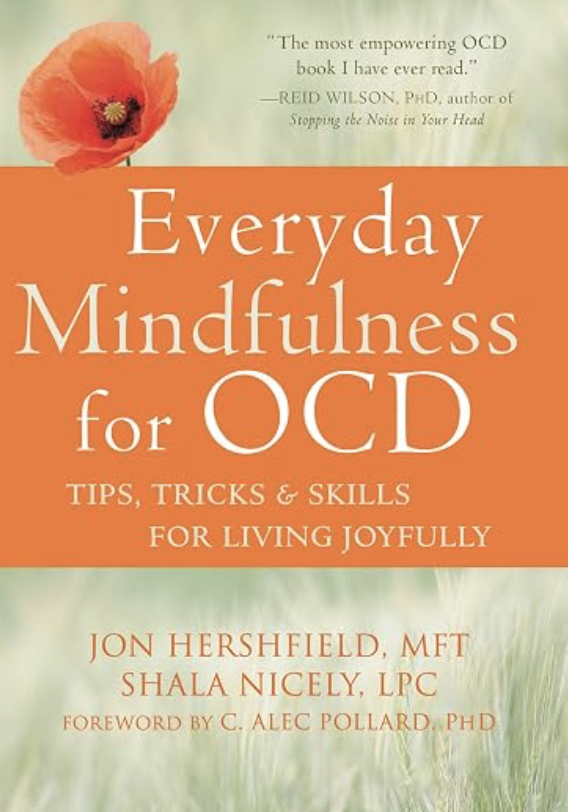
"1. Overcoming Harm OCD by Jon Hershfield.

2. Freedom from Obsessive-Compulsive Disorder by Jonathan Grayson.

3. Getting Over OCD by Jonathan Abramowitz.

4. Everyday Mindfulness for OCD by Jon Hershfield."

1. Acknowledge it, like 'Oh shit, I'm spiraling. OCD is pulling me out of the here and now and down the rabbit hole,'

2. Note that I CAN come back to the OCD-related thought later if need be, like 'That is a very scary movie OCD is showing me. Since it is a movie and not happening in the here and now, I will come back to it later.'

3. Reorient myself to what is happening in physical reality, like 'I feel the floor under my feet and my toes pressing against my shoes. I hear birds chirping. I taste the minty gum I'm chewing. I smell freshly cut grass.' Note: Do not include emotions or sensations from within the body! Only the five senses or 'sense information'

4. Respond to physical reality with a functional activity, like 'I see the trash is overflowing. I'm going to take out the trash. I can take out the trash while OCD plays that scary movie'

HD responded: "People diagnosed with OCD typically 'cope' by using compulsions! Compulsions can help us survive, at least for a while, but they get in the way of thriving.

I do believe there is a subset of people with OCD whose parents respond beautifully or who stumble upon the perfect information, experience, etc., that allows them to shift their symptoms to subclinical levels."

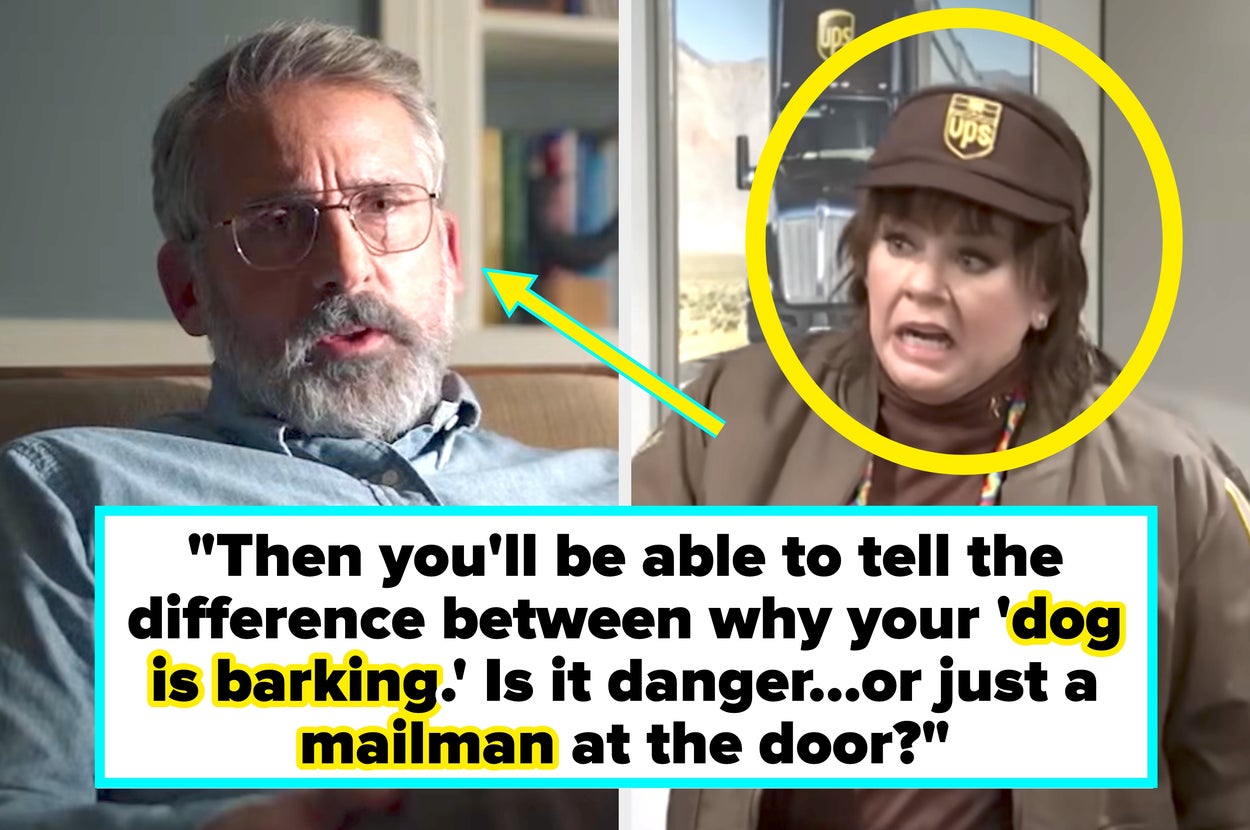
HD said, "Repeat whatever OCD says to you...but in a mocking tone. OCD is like a dog barking at everything.

I get to train my brain to recognize what is dangerous and what is just the mailman. We know! I KNOW IT'S JUST THE MAILMAN, SO STOP BARKING! Be creative! 'That is a very terrifying movie! I could watch the whole thing, or I can check back into the here and now.' or 'It is safe to be in the here and now and respond to my senses.'"

HD responded: "OCD is diagnosed using the DSM-5. It doesn't have levels, but it does have specifiers. For example, you can have poor insight or good insight.

Ultimately, if you meet the diagnostic criteria, you have OCD. However, some people are more impaired by it than others."

HD has some thoughts: "Periods without symptoms are a bit unusual, but not impossible, especially if symptoms flare up with stress (or what she perceived as stress as a little kid).

She could also be hiding her symptoms because they can be embarrassing, or she could be experiencing mental compulsions!"

HD said: "ERP for mental compulsions follows the same premise: increase your tolerance for the distress caused by the thought until it has increased enough that the compulsion is no longer necessary or the thing no longer feels dangerous.

For example, if I'm afraid I will hit someone with my car whenever I drive, and my mental compulsions involve ruminating and replaying memories, the exposure might look something like this: Say out loud, 'Maybe I hit a person on the drive to my session today,' let the anxiety wash over you, read a coping script (something prewritten about OCD and how you can tolerate this feeling), and/or do a functional activity (take out the trash, feed your pet). This shows your brain that you can experience the feeling and survive it!"

HD pulled an anecdote from their own personal experience, saying, "I pretty much have a word or phrase stuck in my head most of the time. The goal isn't to remove the phrase but to decrease the distress, or rather, increase your tolerance for the distress.

So, my honest answer? Embrace it. Lean in! Sing that part of the song 20 more times! Sing the WHOLE song 20 times! Or pick a new song to sing 20 times.  But here's the point: Don't make having something stuck in your head distressing. Embrace it for the next week. Tell yourself, 'Okay, I'm just going to sing this intentionally every time I think of it for the next week.' Your brain will get bored of it."

HD had a great response: "It is normal for the intensity to ebb and flow! Big picture, OCD is chronic if left untreated, but symptoms can get much, much better...or much, much worse. This can be due to life stress, the hormonal cycle, the weather, nutrient deficiencies, lack of sleep, and more. You still deserve care even if your symptoms ebb and flow!"

HD responded: "OCD does mean you have both! You have the compulsion, but also the something driving the compulsion (the thing the compulsion is desperately trying to make go away). The obsession side can look so many different ways."

HD said, "Forgive yourself!!! Your brain is literally three pounds of meat Jell-O with electricity coursing through it. It's not always going to work perfectly, and that's not a reflection of you as a person! The brain is wired to protect us, and with OCD, it thinks it's doing that by looking out for all the scary things. Unfortunately, OCD is inventing the scary things."

HD responded with: "From one human to another, you deserve to be free of OCD. No one deserves this disorder. I wouldn't wish OCD on my worst enemy (because then I'd have empathy for them). The people I know with OCD are some of the kindest, sweetest people. I don't have any evidence that you're an exception."

HD was honest: "It definitely can be kick-started and rooted in trauma!! I find I-CBT therapy to be my approach of choice for better addressing the trauma piece. But ERP therapy can be done in such a skilled, compassionate way that it's absolutely fine to use with trauma!"

HD knew what to say: "A fear of schizophrenia is something I've heard from clients so many times! Something I like to remind people of is: wondering if you have schizophrenia is a luxury.

If you're wondering or worrying that you might develop it in the future, you don't currently have it! Memory gaps and feeling on autopilot can be normal, but they can also be symptoms of OCD, as well as other things. Regardless, you definitely deserve care from a trained therapist!"

HD responded with, "I understand wanting to be conservative with a diagnosis. However, with OCD, I find it very important to know because the treatment is so different from traditional anxiety therapy. And knowledge is power in OCD recovery!

If this were a friend or me, I would encourage them to get a second opinion, either from a new psychiatrist or a new therapist."

Note: Some responses have been edited for length and/or clarity.
Comments
You must be logged in to comment.