huffpost Press
Democrats Could Face A Data Center Backlash Of Their Own
Images
1 / 9

2 / 9

3 / 9

4 / 9

5 / 9

6 / 9

7 / 9

8 / 9

9 / 9
Democrats of all ideological stripes have adopted a progressive push against data centers, turning opposition to the massive projects into a key part of their midterms message as they look to take control of the House and Senate next year.

But opposition to the projects could soon boomerang: Some progressives are now using data centers to undermine permitting reform legislation beloved by many of the party’s moderates, arguing that faster approvals for energy infrastructure projects will inevitably benefit data center bigwigs.

“Data centers have tremendous energy demand, and the permitting bill will facilitate a buildout of the energy infrastructure necessary to build these mega facilities,” Jim Walsh, policy director for Food & Water Watch, told HuffPost.

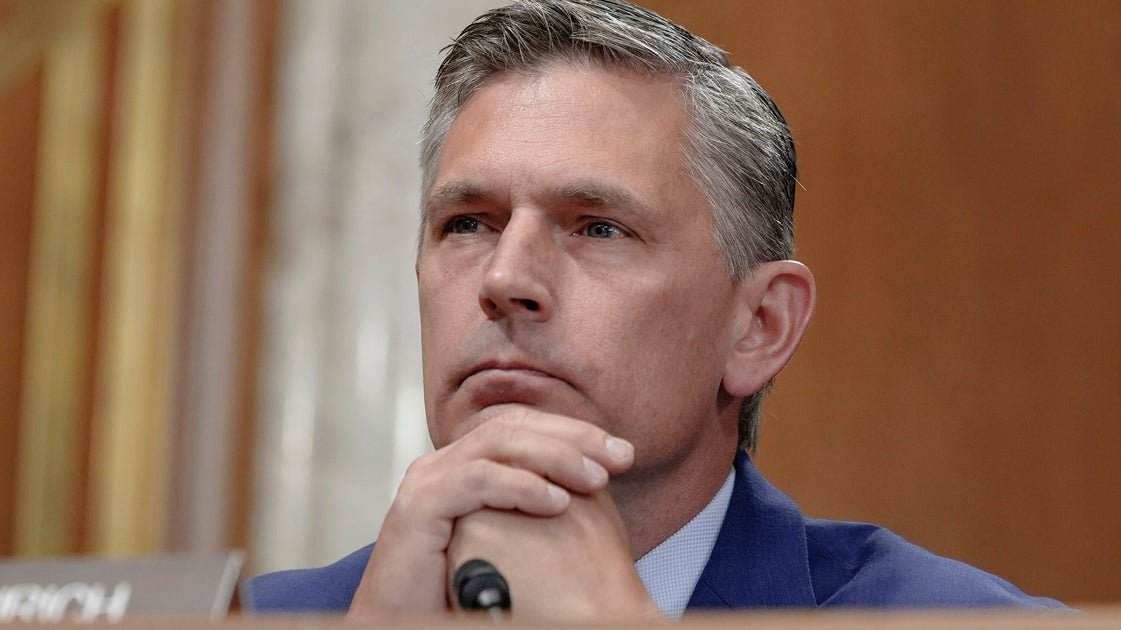
The legislation, the result of a year’s worth of painstaking negotiations between different factions of lawmakers and the White House, is set to be considered during Congress’ lame duck session. Two leading Democratic climate hawks led the negotiation for their party: Sens. Martin Heinrich (D-N.M.) and Sheldon Whitehouse (D-R.I.). They’ve argued the law is necessary to slow President Donald Trump’s administration’s ongoing war on clean energy and give solar and wind power a chance to compete with dirtier sources of energy.

Supporters of the law, dubbed the Bipartisan American Affordability and Jobs Act, scoffed at the idea it was pro-data center, noting it would enact federal requirements for data centers to pay for grid updates and electricity price hikes.

“It’s completely unserious to suggest that BAAJA somehow helps data centers compared to the status quo,” a spokesperson for Heinrich told HuffPost in an email, describing the legislation as “a data center accountability bill,” not an industry giveaway.

While the permitting bill doesn’t explicitly benefit data centers, neither did the tax bill Republicans passed last year, and yet Democrats blasted them for showering data center builders in tax breaks.

“It would be tone deaf if Congress makes it easier to build data centers right after an election with bipartisan rage against shoving them down the throats of local communities,” Rep. Ro Khanna (D-Calif.), a high-profile progressive and possible presidential contender, said Tuesday on social media.

The fight is perhaps the clearest legislative clash yet between supporters of the “Abundance” movement, which argues it has become too difficult to build housing and other infrastructure in the United States, and progressive critics who say the movement would toss aside environmental and due process concerns.

The bill does not speed permitting for data centers themselves, which are built almost entirely on private property. Environmentalists argue, however, that data center developers would be the ultimate beneficiaries of the bill’s provisions facilitating the potential construction of things like interstate power lines, gas pipelines and power plants. In a letter to senators this month, a coalition of environmental groups said there’s more than 189 gigawatts of gas generation being developed specifically for data centers right now, compared to just 4 gigawatts back in early 2024.

“If you wouldn’t have had that energy infrastructure but for a data center, if you wouldn’t have had those pipelines but for a data center, if you wouldn’t have had the litany of impacts happening, you can’t separate those things out from each other,” Walsh said.

The optics of the vote could be awkward: Democrats have spent tens of millions on anti-data-center ads this cycle, with some major candidates — including former Sen. Sherrod Brown (D-Ohio) and Michigan congressional candidate Will Lawrence — building their campaign around opposition to the facilities. The left-wing groups opposing the legislation hope the party is unwilling to even inadvertently help speed construction of the facilities in the wake of a midterm victory.

However, not all environmental advocacy organizations have taken a firm position on the permitting legislation. Major groups like the League of Conservation Voters and the Environmental Defense Fund abstained from joining the anti-permitting coalition without taking a position on the bill. The Natural Resources Defense Council said Monday the bill’s impacts on data center construction are “unknown,” while the broader legislation could produce “modest to significant greenhouse gas benefits.” The group praised the proposed transmission and electric grid reforms.

The bill, which was also written by Sens. Shelly Moore Capito (R-W.Va.) and Mike Lee (R-Utah) faces other hurdles: Tribal organizations are wary of some of the law’s changes to the National Historic Preservation Act, which could be problematic for Democrats who represent states with significant Native American populations.

Much of the data center backlash in politics is driven not by environmental concerns but by voters who don’t want data center projects built in their neighborhoods and pushing up utility rates. The bill includes provisions to prevent such price hikes.

The proposal would require utilities to make “computational load” operators and owners pay the cost of any upgrades done to accommodate facilities built for things like artificial intelligence training, cloud computing or cryptocurrency mining.

The “ratepayer protection” portion of the legislation resembles a symbolic bill the Senate voted on earlier this month that would tell states to “consider” making data centers cover the cost of upgrades. Republicans held the vote to benefit Sen. Jon Husted (R-Ohio), who is in a tough reelection battle against Sherrod Brown. Democrats blocked Husted’s “Ratepayer Protection Act” because it imposed no actual requirements on states. The BAAJA bill, by contrast, would tell the Federal Energy Regulatory Commission to issue new rules requiring states to make data centers pay for grid upgrades.

“This bill not only meets the moment but goes beyond it,” Jane Flegal, a senior fellow at the Searchlight Institute, a self-styled “heterodox” centrist think tank, told HuffPost.

“To the extent the bill helps data centers in any way, it’s literally just by making it easier for our country to build energy infrastructure,” Flegal said. “If you’re going to hold up our entire country’s ability to power itself because there’s a certain customer that uses power that we don’t like, that seems really unwise to me.”

By entering your email and clicking Sign Up, you're agreeing to let us send you customized marketing messages about us and our advertising partners. You are also agreeing to our Terms of Service and Privacy Policy.
Comments
You must be logged in to comment.