huffpost Press
This Is The Scariest Movie Of All Time, According To Science
Images

1 / 8

2 / 8
3 / 8

4 / 8

5 / 8
6 / 8

7 / 8

8 / 8
What if science, rather than opinion, could determine which horror movies are the scariest of them all? And what if data could reveal what makes these films so effective at terrifying audiences?

Well, a recent study by the Science of Scare Project offers a way to measure audiences’ physical reactions to fear, helping researchers rank some of the scariest movies of all time.

Since 2020, the annual experiment has evaluated horror movies’ physiological effects on viewers by monitoring their heart rate and heart rate variability (HRV). As the study explains, participants are hooked up to heart monitors and tracked over several weeks as they watch a curated selection of English-language horror films considered among the most frightening.

The movies come from what the study calls a “Scare List,” drawing on critics’ best-of lists, expert recommendations, major theatrical releases, online forums, subreddits and even audience suggestions.

In the study’s early years, researchers ranked films according to how much they increased their panel’s average heart rate. Since 2023, however, they’ve used a more comprehensive measure called a “scare score” (think “Monsters, Inc.”), which combines three metrics: average heart rate, peak heart rate and heart HRV, which is the natural variation in the time between consecutive heartbeats.

In the context of the experiment, a greater drop in HRV indicates higher stress levels for audiences, making it a useful measure of slow-burn fear and dread.

After collecting these measurements for each film, researchers combine the results to calculate a scare score out of 100, with higher scores indicating a more frightening viewing experience.

In its seventh year, the Science of Scare Project ranked the 20 scariest horror films of all time, featuring only titles released in 2005 or later. The study’s full ranking, however, goes up to 50, including older titles like 1974’s “The Texas Chain Saw Massacre,” 1978’s “Halloween” and 1984’s “A Nightmare on Elm Street.”

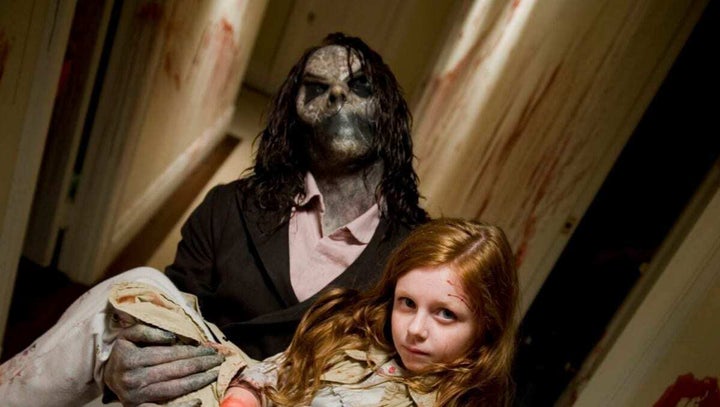
According to science, the 2012 horror film “Sinister” ranks as the scariest movie ever made, holding the top spot for the fourth year in a row, with an impressive scare score of 96. Directed by Scott Derrickson, the first installment in the franchise also topped the inaugural 2020 study before “Host” claimed the title the following year.

Other entries from major horror franchises also landed in the top 10, such as 2010’s “Insidious” at No. 4, 2013’s “The Conjuring” at No. 5, 2022’s “Smile” at No. 8, and its sequel, “Smile 2,” at No. 7. Each had a scare score between 75 and 90.

Meanwhile, five out of 15 new releases this year secured spots in the study’s top 50, including “Insidious: Out of the Further” at No. 41, the runaway hit “Obsession” at No. 35 and “Backrooms,” the feature-film adaptation of director Kane Parsons’ viral YouTube series, at No. 47.

The study also uncovered some notable findings beyond the overall film rankings. For instance, Zach Cregger’s “Resident Evil,” which hit theaters just last month, recorded the biggest jump scare in the experiment’s history, sending viewers’ heart rates flying to 134 beats per minute.

By contrast, “Undertone” — the eerie psychological flick that uses sound and creeping dread rather than jump scares to unsettle viewers — was named the scariest new film of 2026, ranking No. 33 overall with a scare score of 63. Billed as “the scariest movie you’ll ever hear,” it follows a paranormal podcast host who investigates a series of mysterious audio recordings that become increasingly disturbing.

Despite recording the lowest peak heart rate of any film in the top 50, “Undertone” tied with 2022’s “Skinamarink” for the study’s highest recorded stress response, with both films triggering a 22% drop in HRV.

With Halloween just around the corner, horror fans can put the study’s findings to the test by watching some of the top-ranked films themselves. Many of the titles on the top 50 list are available to stream on platforms like Netflix, Hulu, HBO Max, Peacock, Paramount+ and Prime Video.

By entering your email and clicking Sign Up, you're agreeing to let us send you customized marketing messages about us and our advertising partners. You are also agreeing to our Terms of Service and Privacy Policy.
Comments
You must be logged in to comment.