huffpost Press
This Overlooked Problem Is Making Streaming Less Enjoyable — But There’s An Easy Fix
Images
1 / 8

2 / 8

3 / 8
4 / 8

5 / 8

6 / 8

7 / 8

8 / 8
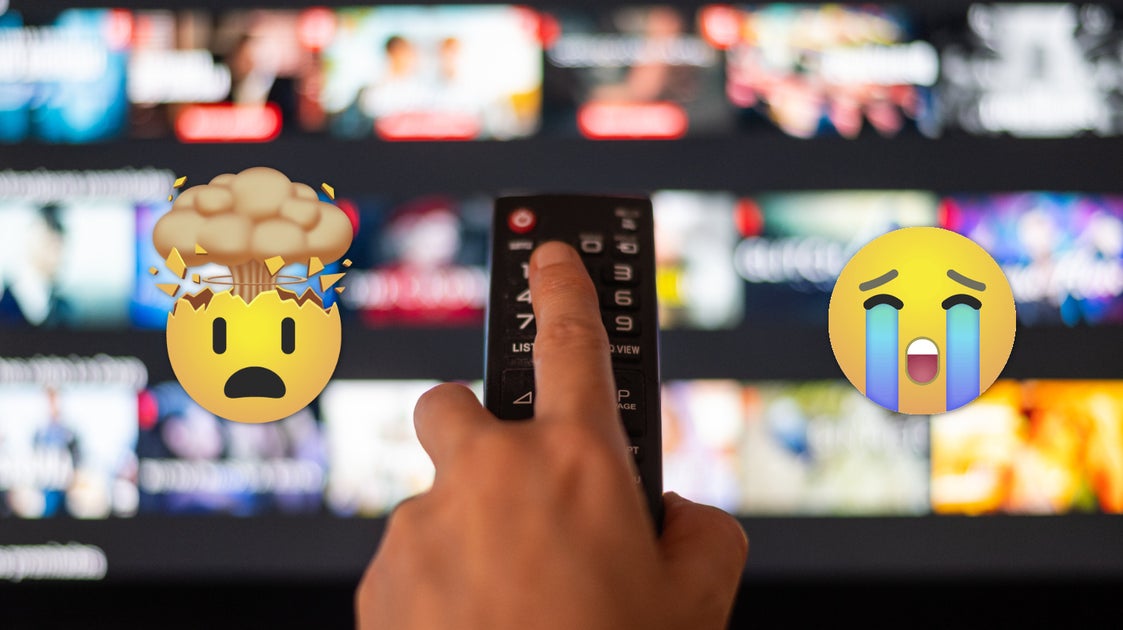
If you’ve found yourself scrolling endlessly through your favorite streaming service lately, struggling to find something worth watching, you’re definitely among friends.

According to a 2024 Talker Research survey on streaming habits, the average subscriber in the United States spends a staggering 110 hours a year — nearly five full days — combing through streaming platforms in search of something worth pressing play on. One in five people said finding something to watch is even harder today than it was a decade ago, pointing to bloated content libraries and a wave of original programming as part of the problem.

It’s a modern entertainment paradox. With more TV shows and movies at our fingertips than ever, choosing what to watch on any given day has somehow become a full-time job of its own. Experts call it content overload, and as streaming platforms keep adding new titles, the abundance of choice has left viewers more exhausted than entertained.

Initially, the promise of what streaming could bring audiences seemed too good to be true: a slate of original offerings alongside seemingly-endless catalogs of beloved movies and TV classics, all just a click away from the comfort of home.

But as Pamela Rutledge, director of the Media Psychology Research Center, told HuffPost, that convenience has come with its own problems, from rising subscription costs to consumers paying for streaming services filled with titles they rarely, if ever, watch.

“Streaming introduced on-demand [options] (vs. scheduled programming) and vastly expanded consumer freedom and flexibility ― but at a cost,” said Rutledge, adding that subscribers’ growing frustrations with the streaming landscape have renewed interest in bundle offerings.

The trend mirrors cable television’s heyday, when providers began offering customers packages of premium channels. While those deals offered viewers a more affordable way to access a wider selection of programming, they didn’t necessarily solve the decision fatigue that has followed audiences into the streaming era.

Science helps explain why choosing what to watch on today’s ever-growing streaming platforms can feel like such a chore. As Rutledge points out, it’s “a trade-off between autonomy and convenience” that can make having more options feel more exhausting than liberating.

“Choice gives people a sense of control,” she said, “but too many options increase cognitive effort and can lead to choice overload,” which usually results in decision fatigue.

Los Angeles-based media psychologist Corey Emanuel, author of “The Empathy Crisis,” describes a similar phenomenon known as “the paradox of choice,” a concept explored in Barry Schwartz’s 2004 book of the same name.

“This is just a new way to describe what we’ve been looking at now for multiple decades,” Emanuel told HuffPost.

In his book, Schwartz argued that having too many options can leave people feeling mentally drained and anxious rather than satisfied with their choices. That overwhelming feeling can extend beyond the way viewers navigate the streaming boom. But there’s a particular irony in the fact that entertainment, often seen as an escape from life’s everyday stresses, has increasingly become another source of frustration in today’s streaming landscape.

“If you’ve had a really stressful day, you sit down to choose something to watch. OK, all of the options are there, but then what is your criteria for evaluating those things?” Emanuel noted.

Whether viewers are drawn to a buzzy show everyone’s talking about, a movie they’ve seen advertised or recommendations generated by their streaming algorithm, experts say they’re already weighing different factors before they can even begin narrowing down their options. By the time viewers settle on something to watch, the decision-making process can already feel taxing.

“After you’ve come off a long day, or dealing with life’s circumstances, that happening all at one time can be really emotionally overwhelming,” Emanuel added.

Rutledge says the constant weighing of options can also cause viewers to second-guess their decisions, ultimately leaving them “less satisfied with what we ultimately choose.”

Sometimes, that frustration is enough to make people give up on finding something to watch altogether, as a 2025 Gracenote study surveying consumers across the U.S., U.K., Germany, France, Brazil and Mexico found that many viewers are reaching that breaking point.

According to the report, 19% of people said they would abandon a viewing session if they couldn’t find something to watch, while 49% said they would consider canceling a streaming service entirely over unsuccessful searches.

With a few practical strategies, though, viewers can make the search for something to watch much less stressful and easier to manage.

Sometimes, the simplest solution is to step away from the screen altogether. A break from TV can offer a welcome reprieve from endless scrolling and the frustration of juggling multiple subscriptions.

“When I find myself too overwhelmed, even by other people’s thoughts and narratives, which is kind of what television and film does, I don’t watch TV,” said Emanuel. “I’m returning to reading books — hard copies vs. always listening to audiobooks. I’m puzzling again; doing things that don’t require me to sit in front of the television.”

However, if you must, the media psychologist suggested turning to decision-making apps to simplify the process. He also recommended taking TV and movie suggestions from trusted friends with similar tastes and outlooks, whose personal reviews can help make the final choice feel less daunting.

Rutledge echoed that advice, noting that “friends, family, critics and online communities act as trusted filters,” so “a recommendation from someone who knows your tastes can be more useful than an algorithm — this includes Google searches for ‘best movies to stream tonight.’”

Another tried-and-true option is to revisit familiar movies or TV shows instead of searching for something new. As Rutledge explained, “Returning to favorite series, genres, actors or franchises simplifies decisions and provides predictable enjoyment.”

Experts say streaming platforms could also do more to help viewers cut through the noise. Emanuel suggested services try introducing features that “could certainly help people narrow their decisions down based on mood or current life themes.”

The good news is that some platforms are already taking steps in that direction. Last month, Tubi rolled out TubiFone, a content discovery tool it describes as a “movie hotline meets mood ring,” designed to help viewers combat decision fatigue. By calling 1-833-605-TUBI and sharing how they’re feeling, users can get personalized recommendations from the platform’s library of 375,000 titles.

Meanwhile, Netflix has implemented an AI-powered search feature that lets users describe the kind of content they’re in the mood for, rather than search for a specific title. Viewers can use everyday language to request suggestions, such as “I want something funny and upbeat.”

Other platforms are also making it easier for users to choose what to watch. Reelgood, for instance, offers a Roulette tool that randomly selects a title from multiple streaming services for viewers who would rather leave the decision to chance. JustWatch, meanwhile, helps users browse movies and shows across platforms and narrow their options by genre, subscriptions and availability.

Still, as experts have noted, decision fatigue remains an unsolved problem for both streaming platforms and their users. Until services find a better way to help cut through the clutter, viewers will have to take matters into their own hands.

By entering your email and clicking Sign Up, you're agreeing to let us send you customized marketing messages about us and our advertising partners. You are also agreeing to our Terms of Service and Privacy Policy.
Comments
You must be logged in to comment.