yahoo Press
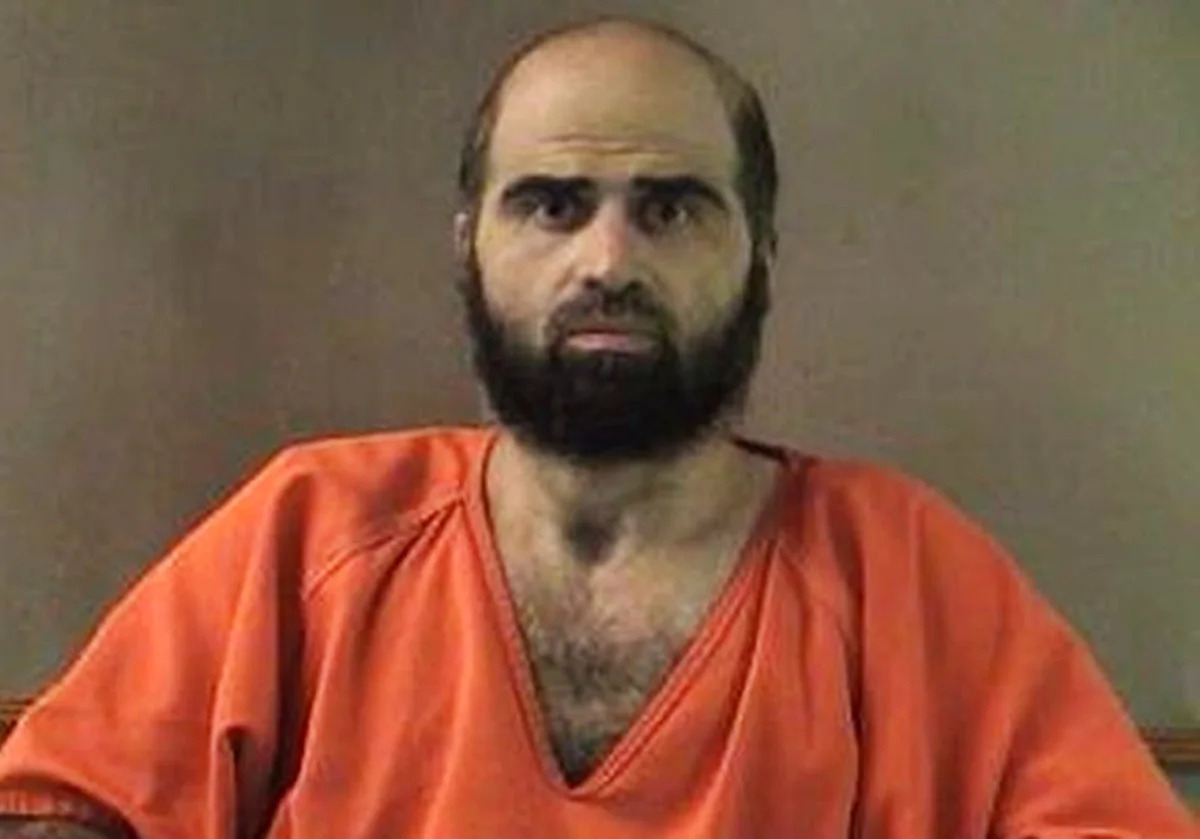
Nidal Malik Hasan, who killed 13 in Fort Hood shooting, will not be executed on livestream, Trump says
Images
1 / 8

2 / 8

3 / 8

4 / 8
5 / 8
6 / 8

7 / 8

8 / 8
President Trump said on Thursday that the execution of Fort Hood shooter Nidal Malik Hasan will not be livestreamed, reversing a plan announced by the Pentagon earlier this month.

The Pentagon announced Oct. 5 that Trump had approved Hasan's execution by firing squad at Fort Hood. Pentagon officials subsequently told the Associated Press that the execution, due to take place on Dec. 3, would be livestreamed.

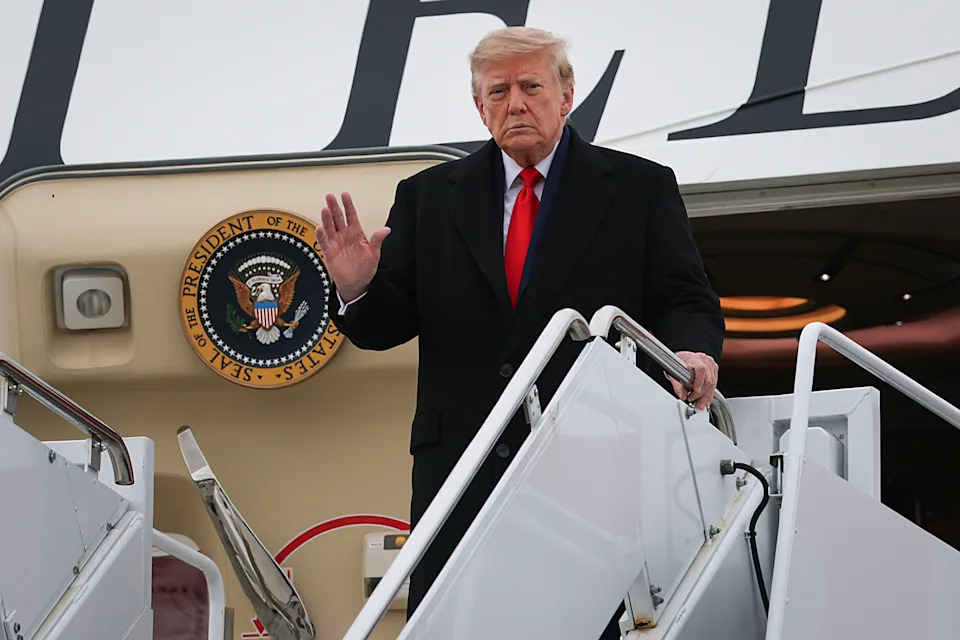
Trump wrote on Truth Social that Hasan "will die, as scheduled, by firing squad, but this event will not be streamed." He said the execution "may be viewed in person by the immediate families of the victims, if they so choose."

He said that streaming the execution "might have been a strong deterrent for the World to witness how America deals with Terrorists and SCUM," but added that "many very good and well meaning people would rather not watch him die, through streaming, or through any other visual device."

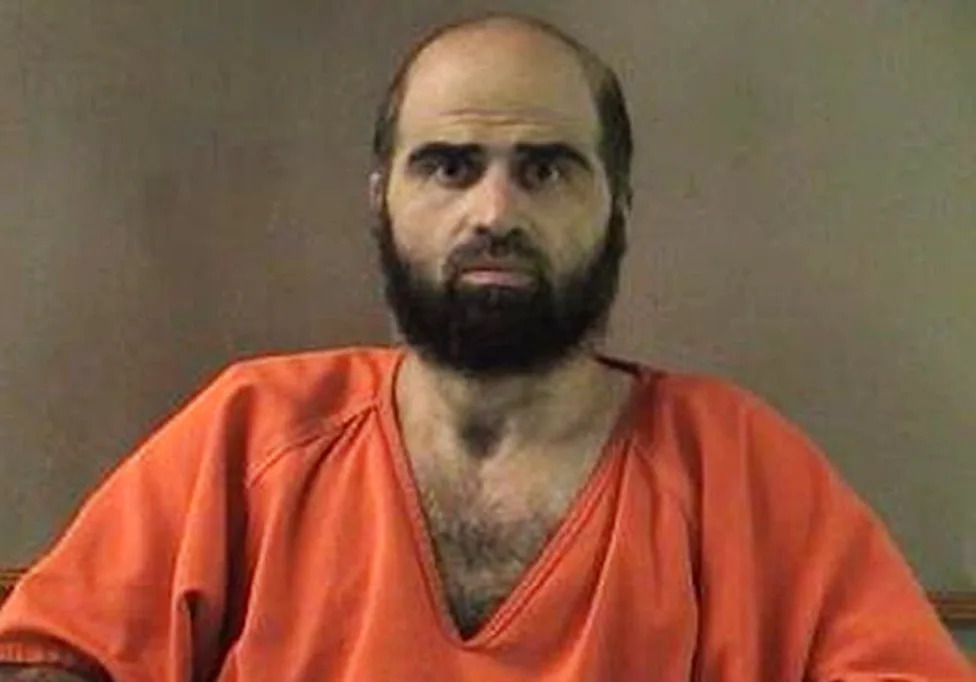
Hasan was convicted of killing 13 people and wounding 32 others in a 2009 shooting at the Texas military base. The U.S. military has not carried out an execution since 1961 and has not used a firing squad to execute a service member since World War II.

Defense Secretary Pete Hegseth told the conservative TV outlet Real America's Voice on Oct. 8 that the execution would be "public."

"He's gonna get a firing squad of soldiers, as it should be," Hegseth said. "We'll make sure that people are able to watch it, that it's public — because people need to understand that there's serious consequences for these types of things."

On Oct. 9, Trump had said he "absolutely" approved the livestream plan, later telling reporters, "We're looking at it."

ABC News reported on Tuesday that some officials had "raised concerns about the optics of broadcasting an execution" and are worried that the footage could fuel anti-American propaganda, particularly among Islamic extremist groups.

CNN also reported that Trump had privately remarked that he initially did not know Hasan was paralyzed from the waist down. Hasan sustained injuries that left him paralyzed during an exchange of gunfire with police in the 2009 attack.

President Trump confirmed that Hasan's execution will not be livestreamed.

Vice President JD Vance said, "I'm not going to be watching" a livestream of the execution, should it be broadcast live, while House Speaker Mike Johnson told CBS News that some colleagues "have concerns," among them the possibility the video "would be a recruiting tool for future terrorists."

Hasan exhausted his regular appeals in 2025. He could choose to challenge his execution and file a habeas petition — a legal request to review the legality of a detention — in civilian court, which could significantly delay the execution beyond the current administration.

The U.N. Office of the High Commissioner for Human Rights told the AFP news agency, "The livestreaming of an execution is tantamount to a public execution and would breach the absolute prohibition of torture."

Hasan, an Army psychiatrist, carried out the mass shooting on Nov. 5, 2009 after walking into the Soldier Readiness Processing Center, at Fort Hood near Killeen, Texas, where soldiers were undergoing medical checkups.

According to the Associated Press, Hasan said he carried out the shooting to stop soldiers from going to Afghanistan and killing his fellow Muslims.

He represented himself at his 2013 court-martial, telling jurors that evidence would show he was the shooter and describing himself as a soldier who had "switched sides."

The Pentagon did not explain why Hasan would be executed by firing squad rather than lethal injection, the method specified in the military's current execution regulations. It also did not say whether those regulations would need to change.

The Army adopted a plan in February for carrying out military executions at the federal government's execution facility in Terre Haute, Ind., ABC News reported in June.

Firing squads have also recently returned at the state level. Five states allow them, according to the Death Penalty Information Center: Idaho, Mississippi, Oklahoma, South Carolina and Utah.

Idaho made the firing squad its primary execution method on July 1 after a law signed in 2025 took effect. South Carolina carried out three firing squad executions in 2025, the first uses of the method in the U.S. since 2010. Condemned prisoners there can choose among authorized execution methods.

Following the high-profile failure of the execution of Christa Pike in Tennessee on Sept. 30, several top Republicans in the state said they want to explore alternative ways of executing condemned prisoners.

Sen. Marsha Blackburn, the state's Republican candidate for governor, told the AP, "If it's lethal injection, if it is electric chair, what we do know is we have to find a way to do this — and do it successfully."

Top legislative leaders have already spoken with Blackburn about potential changes to state execution laws during their 2027 session. "We want to broaden it, include more methods," Tennessee House Speaker Cameron Sexton said. "What those are as of today, I'm not sure. But I don't think there's any method that's off the table at this point."

Death sentences are extremely rare in the military justice system, and executions are even rarer. Four men, including Hasan, are currently on the military's death row at Fort Leavenworth, Kan.

President George W. Bush approved the execution of Army Spc. Ronald Gray in 2008, but a judge put it on hold. Gray remains at Fort Leavenworth.

The last person executed under the military justice system was Pvt. John Bennett, who was hanged in 1961 for the rape and attempted murder of an 11-year-old girl.
Comments
You must be logged in to comment.