yahoo Press
Could this be the year Democrats close the ‘governor gap’ with Republicans?
Images
1 / 17

2 / 17

3 / 17

4 / 17
5 / 17
6 / 17

7 / 17
8 / 17
9 / 17
10 / 17
11 / 17
12 / 17
13 / 17
14 / 17
15 / 17

16 / 17

17 / 17
When people talk about this year's midterms, they tend to focus on whether Democrats will end unified Republican control of Congress by winning the U.S. Senate or House of Representatives (or both). And that makes sense: Congress has the power to check President Trump's agenda, so the national repercussions could be huge.

But on Election Day, there will be something else to watch out for: whether Democrats can emerge with more governors' mansions than Republicans.

GOP governors have outnumbered their Democratic counterparts for the last 15 years straight (and for 26 of the last 30 years overall). That's given Republicans more opportunities to experiment with new policy ideas, approve congressional maps, influence election procedures, fill Senate vacancies and build executive experience.

But this year, Democrats have a real shot at closing the "governor gap." They need to net one governorship to tie Republicans at 25; net two, and they'll secure a gubernatorial "majority" for the first time since 2011. At the moment, 16 of this year's 36 gubernatorial contests are considered competitive, according to the expert race handicappers at the nonpartisan Cook Political Report — and 11 of them are in Republican-held states.

So Democrats are on offense. It remains to be seen, however, whether they will actually overcome decades of GOP gubernatorial dominance in places like Alaska, Georgia, Iowa, Ohio and Texas on Nov. 3. Here are the races to watch.

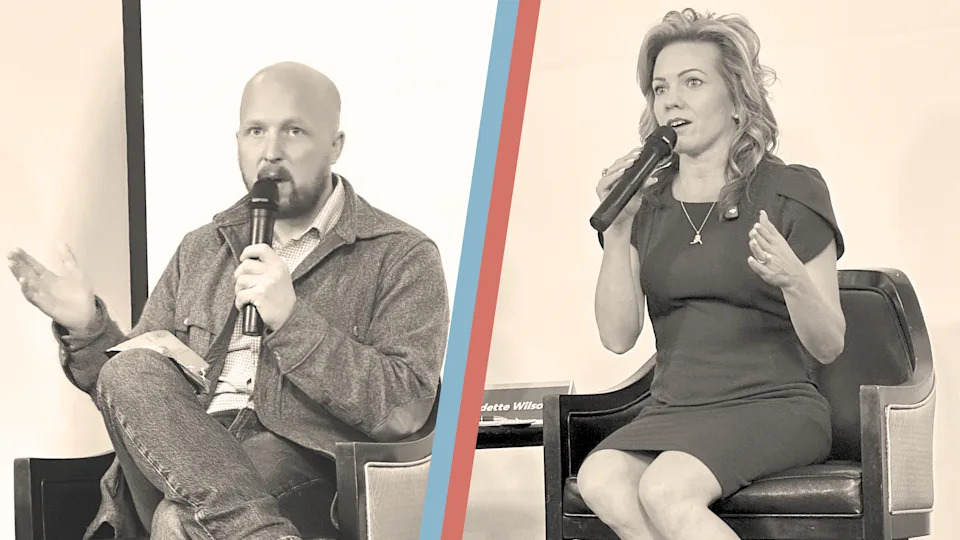
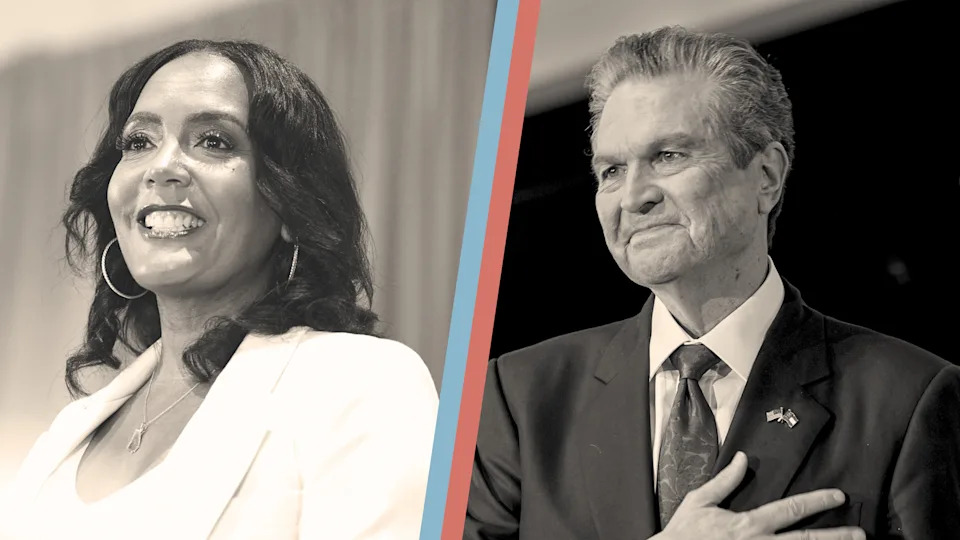
Jonathan Kreiss-Tomkins and Bernadette Wilson.

Party control: GOP

The Republican: Bernadette Wilson

The Democrat: Jonathan Kreiss-Tomkins

Alaska hasn't elected a Democratic governor in 28 years. But that could change on Nov. 3 as Jonathan Kreiss-Tomkins — known locally as JKT — has emerged as the frontrunner to succeed term-limited GOP Gov. Mike Dunleavy. In part, that's due to the Last Frontier's unique voting system, which sends the top four primary candidates to the general election regardless of party — then asks voters to rank them on Election Day in order of preference, from first to fourth. As a result, Kreiss-Tomkins, a 37-year-old former state representative, is the only Democrat competing against three Republicans: conservative activist Bernadette Wilson, former Anchorage Mayor Dave Bronson and former state Attorney General Treg Taylor.

But economic dissatisfaction, Trump's low approval ratings in the state and Kreiss-Tomkins's energetic campaign are also helping to boost Democratic hopes. Recent polls suggest Kreiss-Tomkins could win the first round of ranked-choice balloting with nearly 50% of the vote — roughly twice as much as the second-place candidate (Wilson). On Oct. 13, Cook shifted its race rating from "toss up" to "lean Democrat." Along with Iowa, the outlet wrote, Alaska "may be Democrats' best opportunity to flip a governors' mansion in a red state."

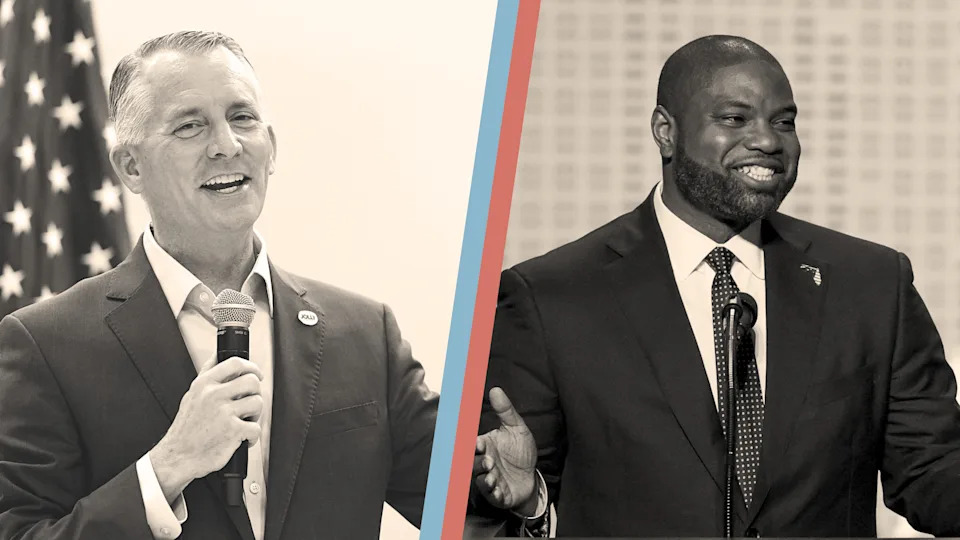
David Jolly and Byron Donalds.

Party control: GOP

The Republican: Byron Donalds

The Democrat: David Jolly

A former swing state, Florida has trended increasingly Republican during the Trump era. The governor's mansion, however, has been red ever since Jeb Bush won the job in 1998. U.S. Rep. Byron Donalds — the third Black Republican in history to represent the Sunshine State on Capitol Hill — is seeking to keep the GOP's streak alive by succeeding term-limited Gov. Ron DeSantis. His opponent is Democrat David Jolly, a former Republican congressman who left the GOP during Trump's first term.

The president endorsed Donalds, a staunch social conservative, before he even entered the race; in Congress, Donalds has closely aligned himself with Trump's MAGA policies, especially on immigration. Meanwhile, Jolly is emphasizing his Christian faith, his conversion from Republican to independent to Democrat and his approach to key local issues like homeowner's insurance (which involves creating a state-backed catastrophe fund to keep costs down).

Recent polls mostly show Donalds — who has raised more than seven times as much money as Jolly — leading by single-digit margins, with less than 50% of the vote; a few suggest a tie. Cook rates the race as "lean Republican."

Keisha Lance Bottoms and Rick Jackson.

Party control: GOP

The Republican: Rick Jackson

The Democrat: Keisha Lance Bottoms

Georgia has become the purplest of purple states in recent years: Trump lost it by 0.2 percentage points in 2020 and won it by 2 points in 2024. But while Georgians have sent two Democrats to the U.S. Senate in recent years — Raphael Warnock and Jon Ossoff — they haven't elected a Democratic governor since 1998.

Former Atlanta Mayor Keisha Lance Bottoms has a chance to break the pattern on Nov. 3. The polls show her within striking distance — anywhere from 1 to 3 percentage points — of health care billionaire Rick Jackson, who won the GOP nomination without Trump's endorsement. Both candidates are promising to lower the cost of living by lowering taxes — a mainstream message in a relatively centrist state. Jackson has a huge financial edge, but Cook still rates the race as a toss up.

If elected, Bottoms would make history as Georgia's first woman governor and the first Black woman governor anywhere in the U.S.

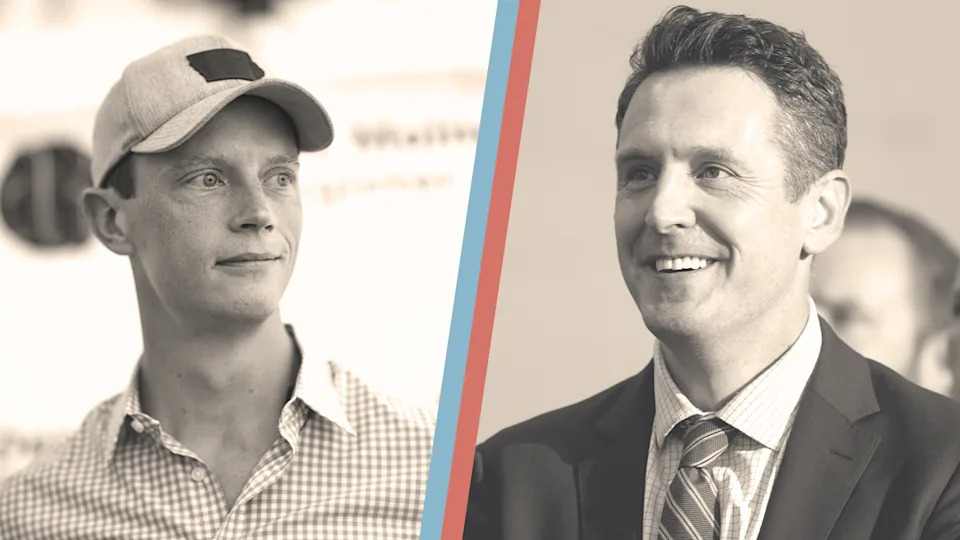
Rob Sand and Zach Lahn.

Party control: GOP

The Republican: Zach Lahn

The Democrat: Rob Sand

Iowa is another state that hasn't elected a Democratic governor in decades — 20 years to be exact. But state auditor Rob Sand, 44, has led in every poll conducted this cycle, often by double-digit margins.

As auditor — and before that, as Iowa's assistant attorney general — Sand developed a reputation as a "happy warrior for nonpartisan technocratic efficiency and anti-corruption," a leading progressive activist recently told the Atlantic. He has also downplayed his allegiance to the national Democratic Party, calling it "the lesser of two evils." Such positioning has made Sand perhaps the most popular politician in a state where registered Republicans outnumber Democrats by almost 200,000.

Sand's opponent, businessman Zach Lahn, narrowly upset Trump's pick, Rep. Randy Feenstra, in this summer's Republican primary. A Kansas resident until 2023, Lahn has struggled to overcome accusations of carpetbagging ever since. Cook says the race "leans Democrat" and describes it as the party's best pickup opportunity.

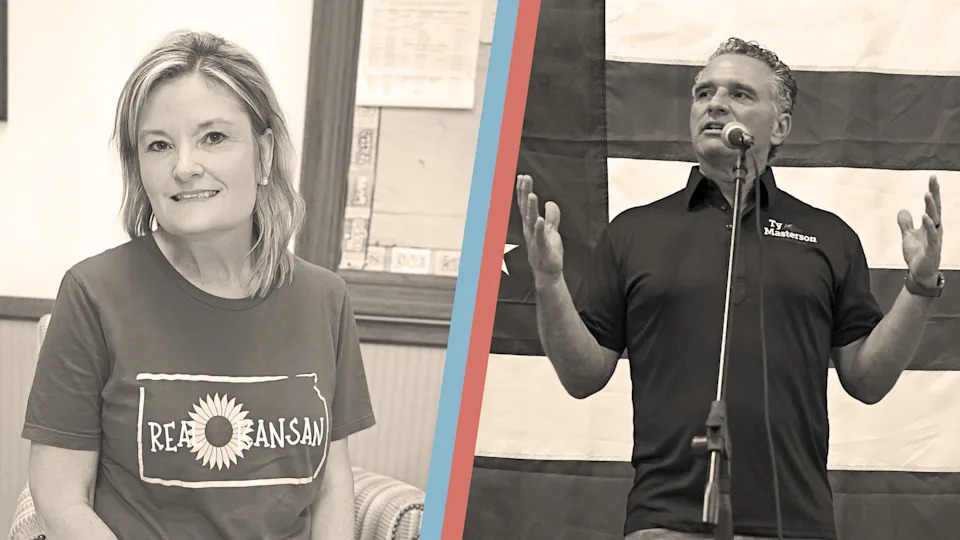
Cindy Holscher and Ty Masterson.

Party control: Democratic

The Republican: Ty Masterson

The Democrat: Cindy Holscher

Kansas is anything but a blue state; since 1940, it has voted Republican in every presidential election but one — Lyndon B. Johnson's 1964 landslide. But the Sunflower State has elected two Democratic women governors in recent years: Kathleen Sebelius (2003-2009) and term-limited incumbent Laura Kelly (2019-2027). State Sen. Cindy Holscher is seeking to become the third.

Holscher has her work cut out for her, though. She's up against Ty Masterson, the president of the state Senate, who leads by a few percentage points in most recent polls. Cook rates the Kansas contest as "lean Republican," making it this year's only potential blue-to-red flip with that rating.

If Masterson does win in November, it wouldn't be particularly surprising. Since 1957, neither major political party has held the Kansas governor's mansion for longer than eight consecutive years.

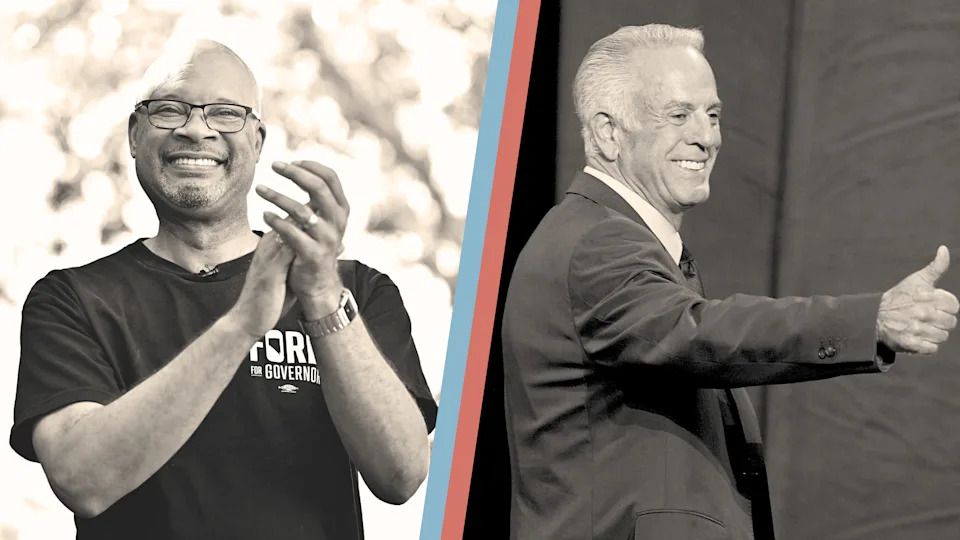
Aaron Ford and Joe Lombardo.

Party control: GOP

The Republican: Joe Lombardo

The Democrat: Aaron Ford

Incumbent GOP Gov. Joe Lombardo — the former sheriff of Clark County — won in 2022 on a law-and-order message. But Nevada is a swing state, and Lombardo's insistence on vetoing a raft of affordability bills passed by the Democratic legislature — to cap the cost of prescription drugs; to provide paid family leave to workers; to prohibit private equity and big banks from buying up housing en masse; to continue universal free breakfast and lunch for K-12 schoolchildren — has become a source of criticism in a cycle often centered on the cost of living. And his previous support for data-center subsidies hasn't helped.

Enter state Attorney General Aaron Ford, who is running on his working-class roots. Only two polls have been conducted since Labor Day. One shows Ford ahead by 2 points; the other shows Lombardo leading by 2. Cook rates the race a "toss up."

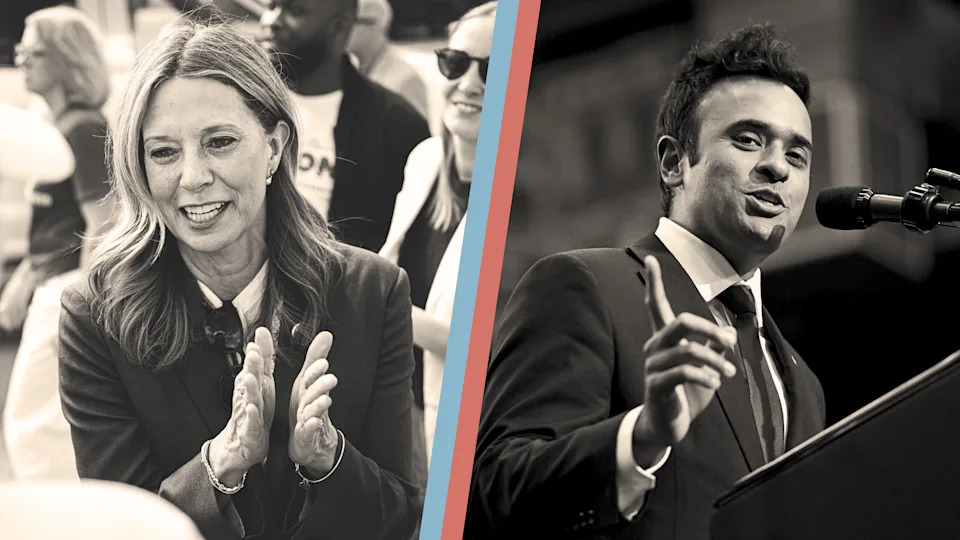
Amy Acton and Vivek Ramaswamy.

Party control: GOP

The Republican: Vivek Ramaswamy

The Democrat: Amy Acton

On paper, the odds are against Amy Acton, a Democrat who previously served as Ohio's chief public health officer. In 2024, Trump won the Buckeye State by the widest presidential margin since Ronald Reagan — more than 11 percentage points — and Democrats have lost all but one gubernatorial contest there since 1990.

But most recent polls have shown Acton leading billionaire pharmaceutical and biotech entrepreneur (and former GOP presidential candidate) Vivek Ramaswamy — often by a decent margin. And while the race has been one of the "ugliest in the country," according to a recent New York Times report — "with exaggerated portrayals of one candidate as a con artist and the other as a drunk" — voters there continue to hold a narrowly favorable view of Acton and a narrowly unfavorable view of Ramaswamy.

Cook rates Ohio as a "toss up."

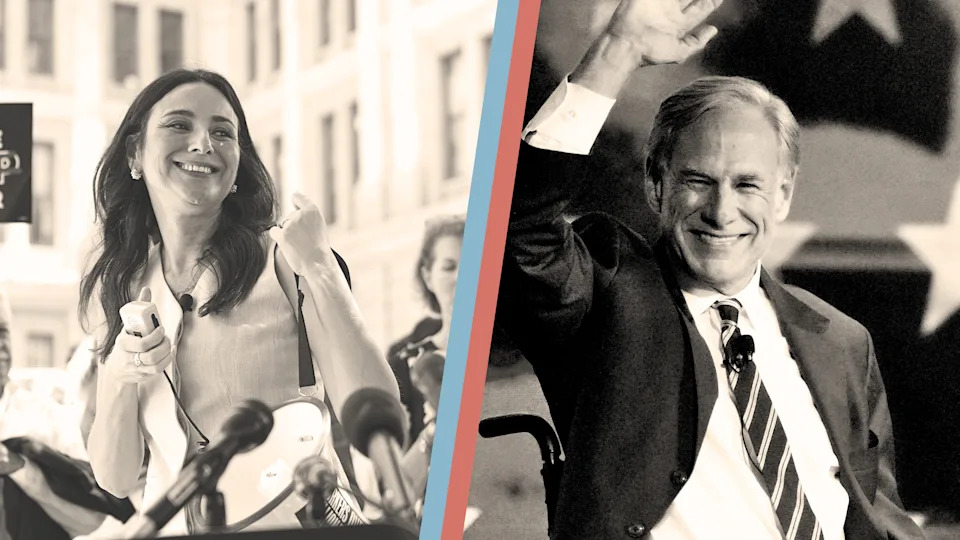
Gina Hinojosa and Greg Abbott.

Party control: GOP

The Republican: Greg Abbott

The Democrat: Gina Hinojosa

Greg Abbott has been governor of Texas since 2015. Before that, he was Texas attorney general for more than a dozen years. He's perhaps the most familiar Republican politician in a state where Republicans have long dominated politics.

But even Abbott is at risk this cycle. Beyond the overall environment — which favors Democrats — the governor has faced backlash over Flock cameras, school privatization, data centers and his close ties to Trump. (Abbott skipped the president's campaign stop in San Antonio last week, saying he had a scheduling conflict.) He's also facing a strong challenger in Gina Hinojosa, who has pitched herself as more "populist" than "progressive."

The latest polls show Abbott and Hinojosa trading small leads ahead of Election Day. Cook says the race "leans Republican."

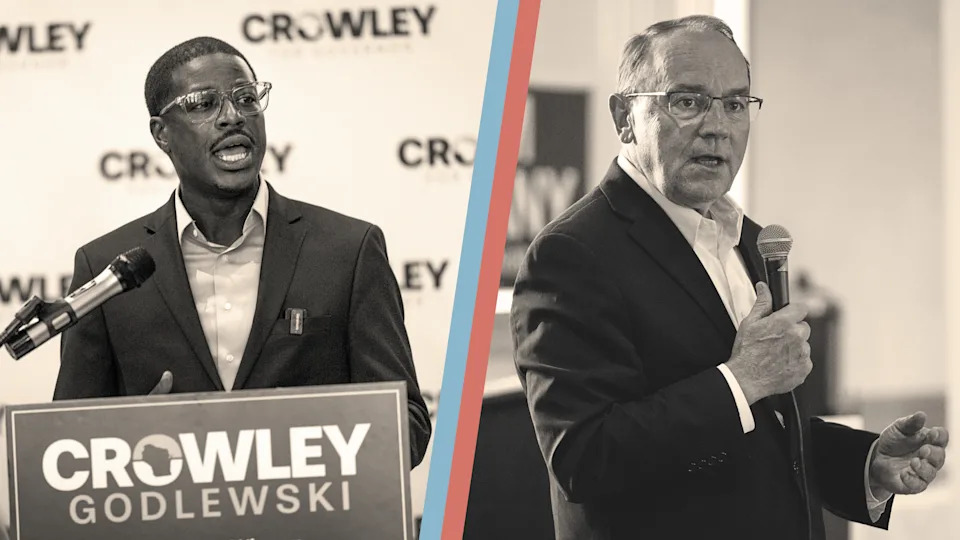
David Crowley and Tom Tiffany.

Party control: Democratic

The Republican: Tom Tiffany

The Democrat: David Crowley

After Gov. Tony Evers declined to seek a third term, democratic socialist Francesca Hong emerged as the frontrunner to win Wisconsin's Democratic primary in August. Milwaukee County executive David Crowley dropped out in mid-July — then re-entered the race 10 days later. With Evers's endorsement, he was able to edge Hong for the nod.

The idea behind Crowley's last-minute comeback was that he would be more electable than Hong, who raised eyebrows with her past statements calling for the U.S. to "cancel" Thanksgiving and "abolish" the police. Recent polling has been consistent with that theory, showing Crowley consistently leading U.S. Rep. Tom Tiffany — but only by single-digit margins. Cook rates the race a "toss up.".

If elected, Crowley would be Wisconsin's first Black governor.

According to Cook, there are three states where Democrats currently hold the governorship that could be considered competitive: Arizona (Democratic Gov. Katie Hobbs vs. Republican U.S. Rep. Andy Biggs); Oregon (Democratic Gov. Tina Kotek vs. Republican state Sen. Christine Drazan); and Michigan (Democratic Secretary of State Jocelyn Benson vs. Republican U.S. Rep. John James). Cook rates all three as "lean Democratic."

Cook also recently moved three states from "solid Republican" to "likely Republican," reflecting movement toward the Democratic candidate. They are Nebraska (Republican Gov. Jim Pillen vs. Democratic former state Sen. Lynne Walz); Oklahoma (Republican former state Sen. Mike Mazzei vs. Democratic state Rep. Cyndi Munson); and Vermont (Republican Gov. Phil Scott vs. Democratic economist Amanda Janoo).

A fourth Republican-held state, New Hampshire, is also in the "likely Republican" category. GOP Gov. Kelly Ayotte is facing Democratic former executive councilor Cinde Warmington.
Comments
You must be logged in to comment.