yahoo Press
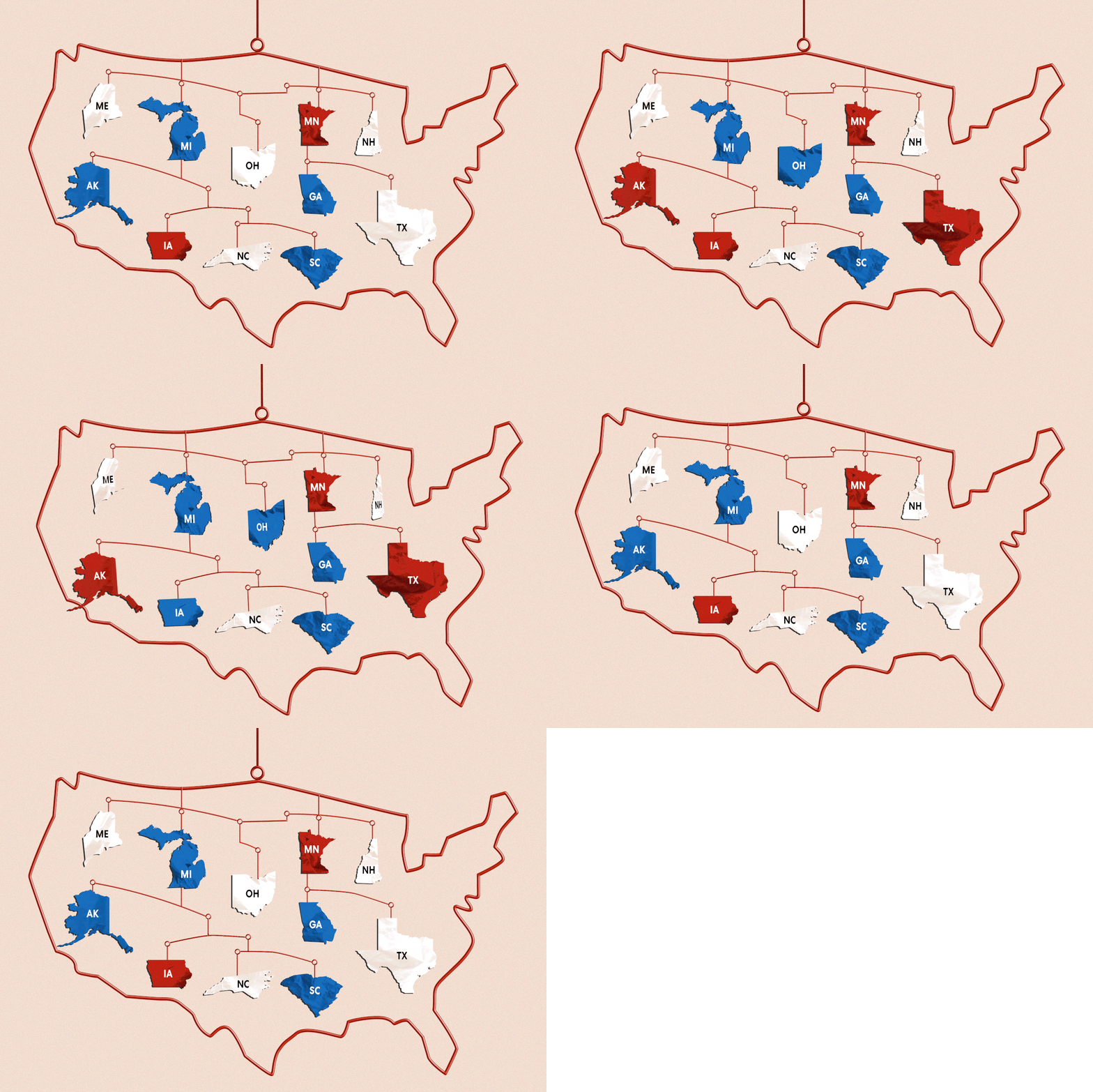
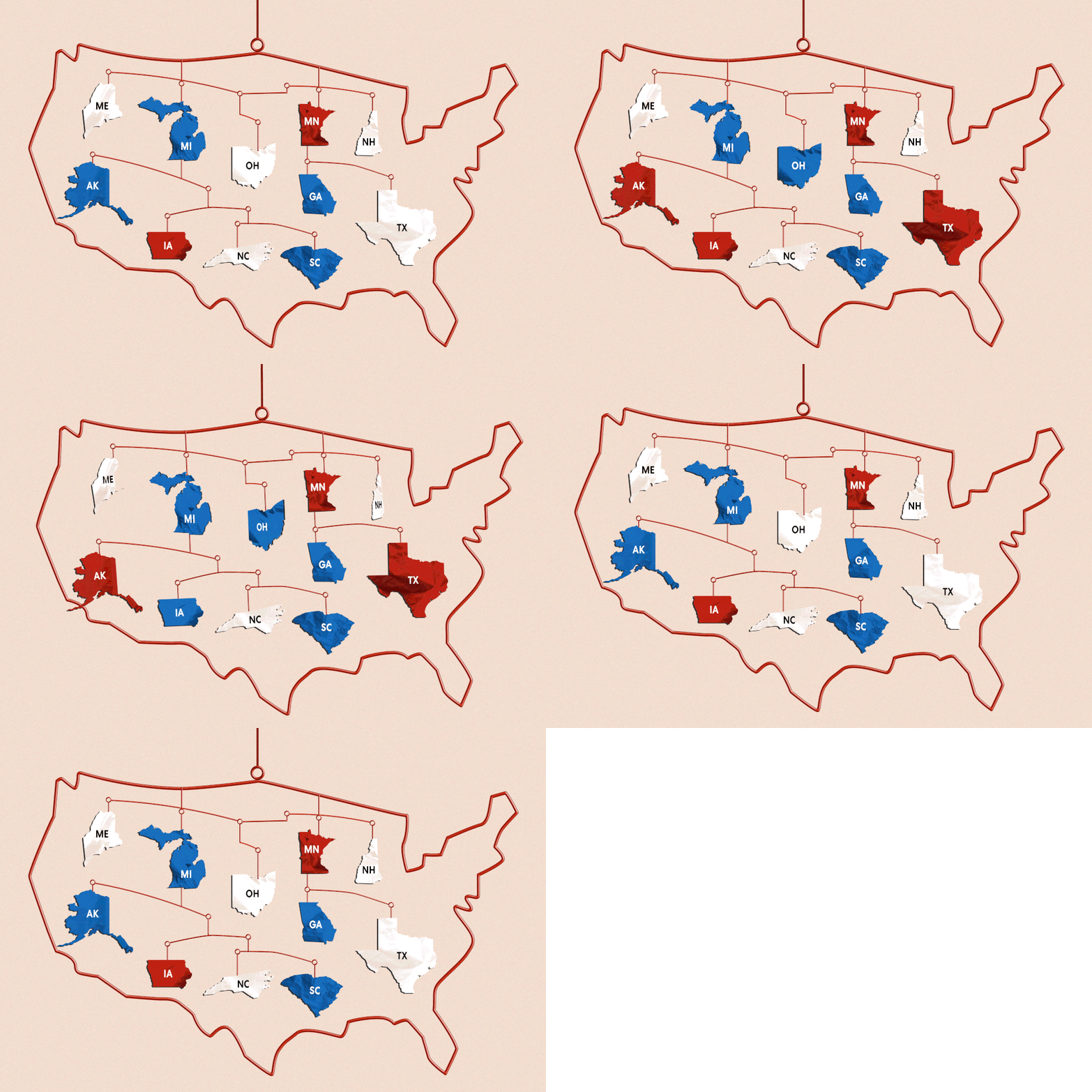
Will Republicans or Democrats win control of the Senate in the 2026 midterms? These are key races to watch.
Images
1 / 20

2 / 20

3 / 20

4 / 20
5 / 20
6 / 20

7 / 20
8 / 20
9 / 20

10 / 20

11 / 20
12 / 20
13 / 20
14 / 20

15 / 20
16 / 20
17 / 20
18 / 20

19 / 20

20 / 20
Control of both chambers of Congress is up for grabs in November's election. But as important as the House of Representatives is, all signs point to the true drama of the midterms being in the battle for the Senate.

There are 35 Senate seats on the ballot this year. Most of those races won't be competitive. The balance of power in the Senate will be decided by the dozen or so states where the outcome truly is uncertain. Republicans currently hold a 53-47 majority, which means they can lose three seats and still maintain control of the chamber — thanks to Vice President JD Vance's constitutionally granted power to break ties in an evenly split Senate.

Forecasters widely expect Democrats to flip the House, but view the Senate as a "true toss-up."

The key Senate battlegrounds include traditional swing states, idiosyncratic areas of the Northeast and historically Republican states where Democrats have rarely been competitive in recent elections.

The outcome will have enormous implications for the final two years of President Trump's tenure in the White House. Democrats only need to gain control of one chamber to have the power to block or reshape Trump's legislative agenda. But a Senate majority would empower them to do much more. They would have an effective veto over Trump's nominees for high-ranking Cabinet positions and could block him from appointing any new Supreme Court justices. Control over key Senate committees would also allow Democrats to launch sweeping investigations into Trump and his administration.

Here's a rundown of the races that will likely decide which party controls the Senate after the midterms.

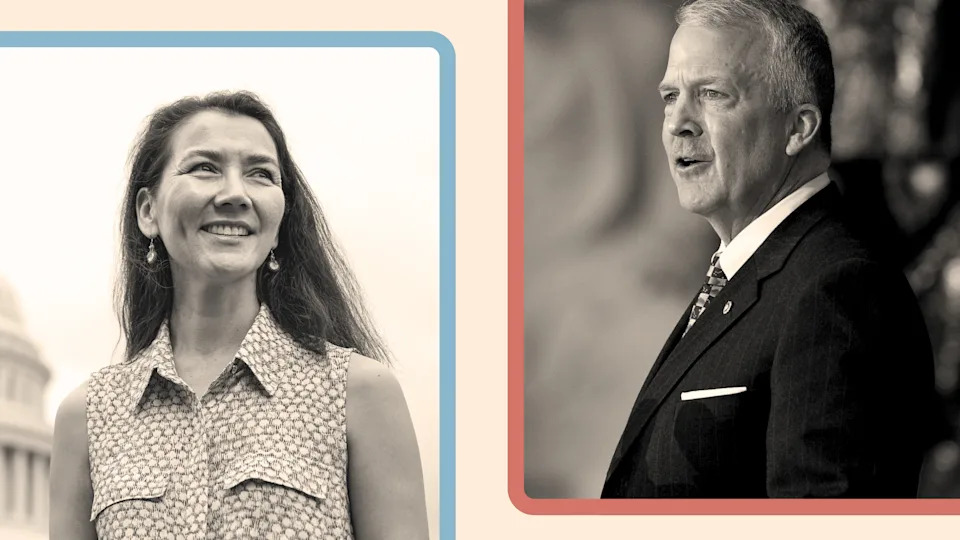
Democrat Mary Peltola and Republican Dan Sullivan

Party control: GOP

The Republican: Dan Sullivan

The Democrat: Mary Peltola

True to the state's image, there's a wildness to Alaska's Senate race that you won't find elsewhere in the country. On paper, incumbent Republican Dan Sullivan should be well-positioned to win a third term in the Senate. Alaska is a consistently red state that has only elected a Democrat to the Senate once in the past 45 years. Democrats' challenges in the state have been so acute recently that they didn't even have a candidate on the ballot the last time Sullivan was up for reelection.

But forecasters expect this year's race to be much closer. Sullivan's main opponent is former Democratic Rep. Mary Peltola, who was Alaska's lone member of the House from 2022 to 2025. Peltola, the first Alaska Native and first woman to represent the Last Frontier in Congress, is a rare Democrat with a record of success in statewide elections.

Sen. Sullivan's path to reelection is also complicated by the presence of a long-shot candidate who shares his name, Dan J. Sullivan, who will also appear on the ballot — potentially creating confusion over which Sullivan voters intend to support.

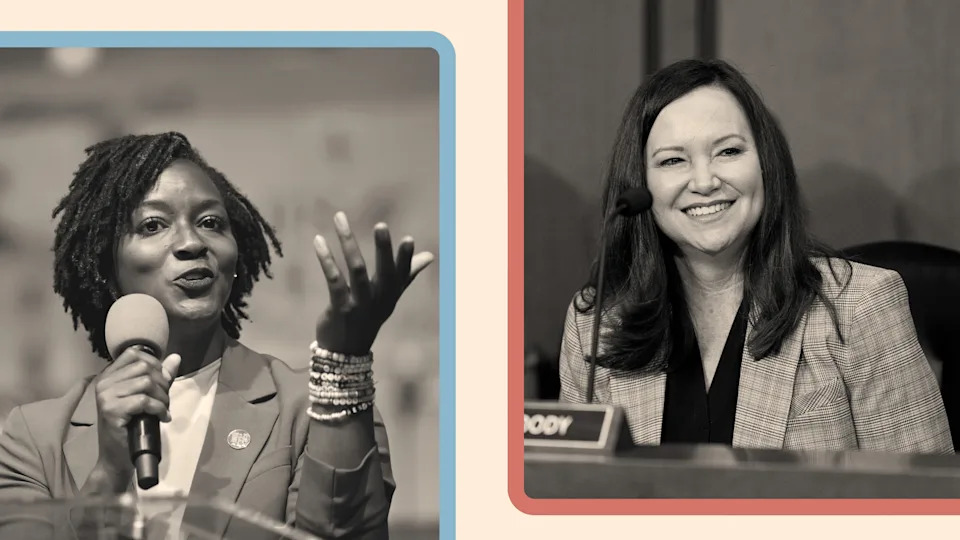
Democrat Angie Nixon and Republican Ashley Moody

Party control: GOP

The Republican: Ashley Moody

The Democrat: Angie Nixon

It would likely take a major blue wave election for incumbent Republican Sen. Ashley Moody to be at a real risk of being unseated by progressive Democrat Angie Nixon. The GOP has won the last two Senate races in Florida by an average of 14 points. Polls have shown Nixon trailing by a smaller margin than that, but still far enough behind for forecasters to rate the race as favoring Republicans.

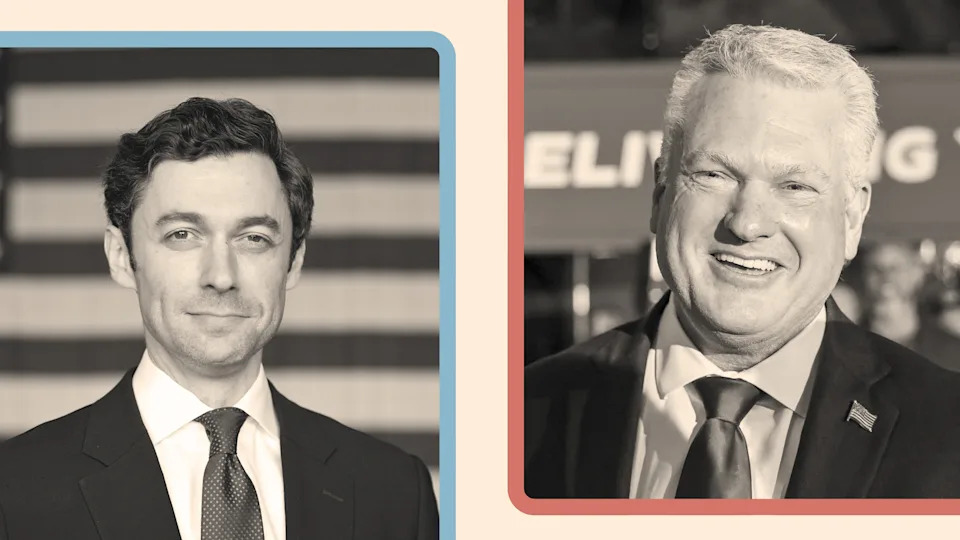
Democrat Jon Ossoff and Republican Mike Collins

Party control: Democratic

The Republican: Mike Collins

The Democrat: Jon Ossoff

On top of flipping a handful of GOP-held seats, Democrats' chances of gaining control of the Senate rely on keeping the ones they already have. One of the most important is in Georgia.

Sen. Jon Ossoff became a rising star within the Democratic Party when he pulled off a stunning upset in the 2020 elections, defeating incumbent Republican David Perdue in an extremely tight runoff. Ossoff is now running for reelection for the first time. His opponent is Rep. Mike Collins, a MAGA-friendly congressman who has created controversy with a series of divisive social media posts during his tenure in the House.

More recently, Collins has faced intense scrutiny over his social media posts and the online activity of people close to him, including his son-in-law.

Polls have shown Ossoff with a healthy lead over Collins, enough of a gap that forecasters at the non-partisan Center for Politics wrote in July that it would be a "true shock" if he isn't reelected.

Democrat Josh Turek and Republican Ashley Hinson

Party control: GOP

The Republican: Ashley Hinson

The Democrat: Josh Turek

It wasn't that long ago that Iowa was viewed as one of the country's quintessential swing states, but the Hawkeye State has shifted significantly to the right over the past decade — to the point where it's no longer competitive in presidential elections.

That said, polls suggest Democrats appear to have a real chance of flipping the Senate seat held by retiring incumbent Joni Ernst. Their nominee is Josh Turek, a state lawmaker and two-time Paralympic gold medalist. A moderate who describes himself as a "prairie populist," Turek has focused heavily on how Trump's tariffs and the war with Iran have affected farmers in his state throughout the campaign.

His opponent is GOP Rep. Ashley Hinson, a former local news anchor who cruised to the Republican nomination after earning Trump's endorsement. Polling of the race has fluctuated significantly, with both candidates showing small leads at different times.

Democrat Adam Hamilton and Republican Roger Marshall

Party control: GOP

The Republican: Roger Marshall

The Democrat: Adam Hamilton

It has been almost 100 years since Kansas elected a Democrat to the Senate, but the state may be in play this year as incumbent Republican Roger Marshall looks to keep the GOP's nearly century-long winning streak alive.

His opponent is Adam Hamilton, a pastor and the founder of the nation's largest United Methodist church. Forecasters are split on whether Marshall is still the favorite to win, or if the race should be considered a toss-up. Either way, the outcome looks to be on track to be much closer than Republicans are used to in the Sunflower State. Independent voters have favored Hamilton by a large margin in recent surveys. Libertarian Party candidate David Graham is also on the ballot and has drawn a small but potentially significant share of support in some polls.

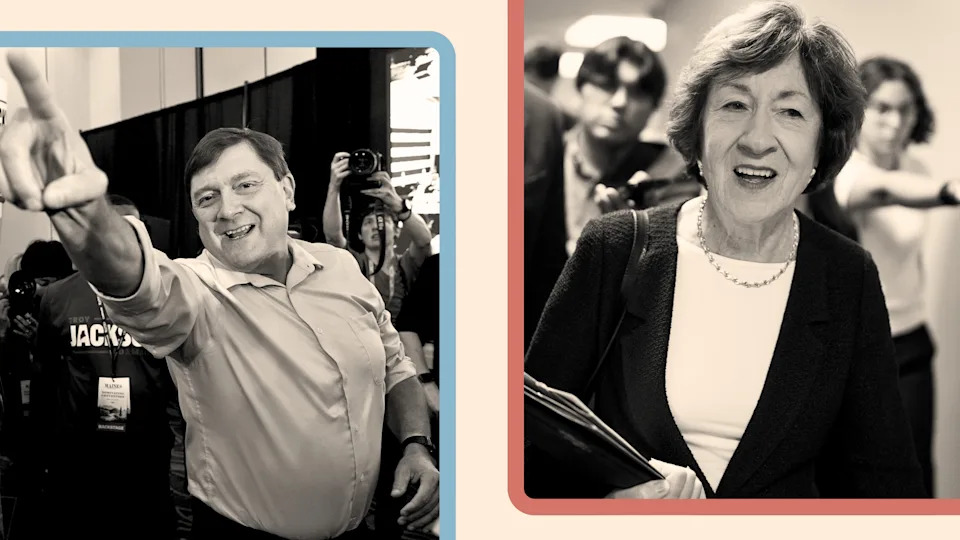
Democrat Troy Jackson and Republican Susan Collins

Party control: GOP

The Republican: Susan Collins

The Democrat: Troy Jackson

Democrats have been eyeing Sen. Susan Collins's seat for decades, but the Republican has fended off every challenger they've sent her way during her 30 years in the Senate. Her opponent this time around will be Troy Jackson, a former logger and longtime member of the state legislature. Jackson was chosen at a hastily planned convention after the party's original nominee, Graham Platner, dropped out of the race following an allegation of sexual assault, which he denied, among other controversies.

Collins has historically managed to outperform other Republicans when she's been on the ballot, even in "blue wave" years like 2020, in part because of her longstanding reputation as a relative moderate within her party. But that image is being tested in this race. Jackson has centered much of his campaign on tying Collins to some of the more high-profile times she's sided with the president on major issues, particularly her votes to confirm Supreme Court justices who later joined the majority in overturning Roe v. Wade.

Jackson faces his own challenges. He is playing catch-up after becoming the nominee so late in the process. He will also face scrutiny over his past conservative positions on issues like abortion and same-sex marriage, which are a far cry from the progressive political views he expresses today.

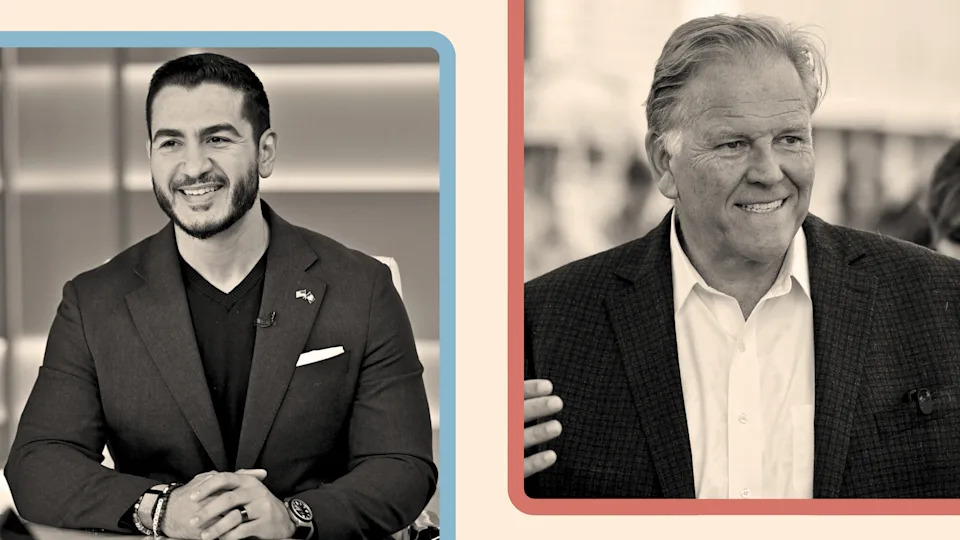
Democrat Abdul El-Sayed and Republican Mike Rogers

Party control: Democratic

The Republican: Mike Rogers

The Democrat: Abdul El-Sayed

One of the nation's few genuine swing states is home to one of the most pivotal midterm matchups. Incumbent Democrat Gary Peters opted not to run for a third term, setting the stage for a nailbiter of a Democratic primary in which progressive physician Abdul El-Sayed narrowly defeated Rep. Haley Stevens, a relative moderate, in a major victory for the party's left wing. There was far less drama on the Republican side, where former Rep. Mike Rogers cruised to the GOP nomination.

Rogers was also the Republican nominee in 2024, losing to Democrat Elissa Slotkin by 0.34 percentage points of the vote in one of the tightest Senate races in the country. El-Sayed, who supports policies like a billionaire's tax and Medicare for All, will need the support of centrist Democrats and swing voters in order to build a big enough coalition to win what polls suggest could be another extremely close general election.

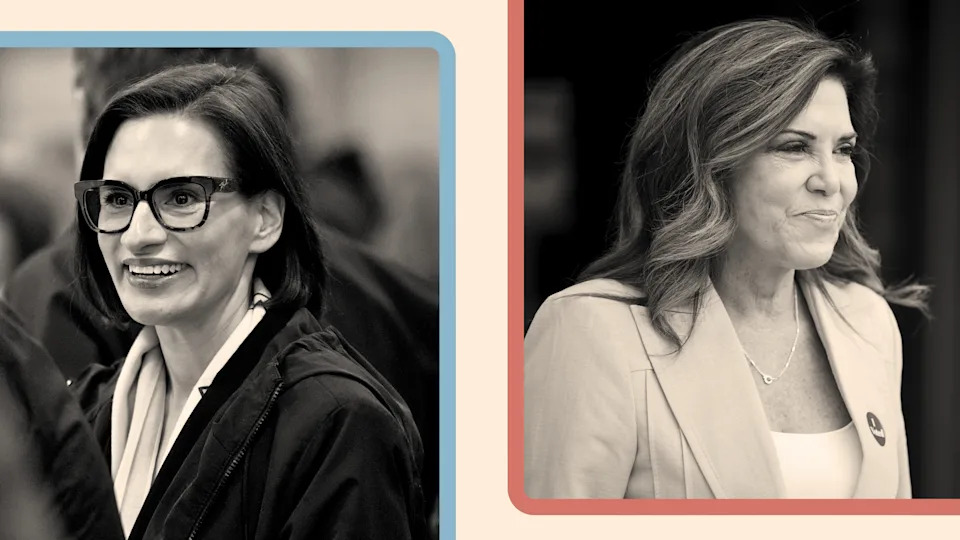
Democrat Peggy Flanagan and Republican Michele Tafoya

Party control: Democratic

The Republican: Michele Tafoya

The Democrat: Peggy Flanagan

Incumbent Sen. Tina Smith has opted not to run for a second term, which could help create an opening for Republicans to break Democrats' longstanding hold on Minnesota's U.S. Senate delegation.

To pursue that goal, the GOP has enlisted a rare political newcomer with widespread name recognition: Former sports broadcaster Michele Tafoya. Her Democratic opponent is Minnesota Lt. Gov. Peggy Flanagan.

The race so far has been defined by the remarkably different approaches of the two candidates. Tafoya has worked to push her party toward the political center, portraying herself as a moderate Republican and mostly focusing on issues like affordability and public safety while steering clear of some of the more divisive parts of Trump's agenda. Flanagan, on the other hand, is a progressive who represents a significant step to the left on policy for Democrats relative to Smith.

Polls have suggested that the race could be extremely close.

Independent Dan Osborn and Republican Pete Ricketts

Party control: GOP

The Republican: Pete Ricketts

The independent: Dan Osborn

In a state as red as Nebraska, rather than fielding their own candidate to challenge incumbent Republican Sen. Pete Ricketts, Democrats have thrown their support behind independent candidate Dan Osborn.

This is the second time that Osborn, a Navy veteran and former labor union leader, has run for the Senate in a race without a Democratic candidate. Two years ago, he finished about 6 points behind GOP Sen. Deb Fisher in the state's closest Senate race in more than two decades.

Osborn has been deeply critical of both parties and says he opposes parts of the Democratic Party's platform. But if he's elected, the GOP would lose a Senate seat it currently holds and one vote that it can comfortably count on in support of Trump's legislative agenda.

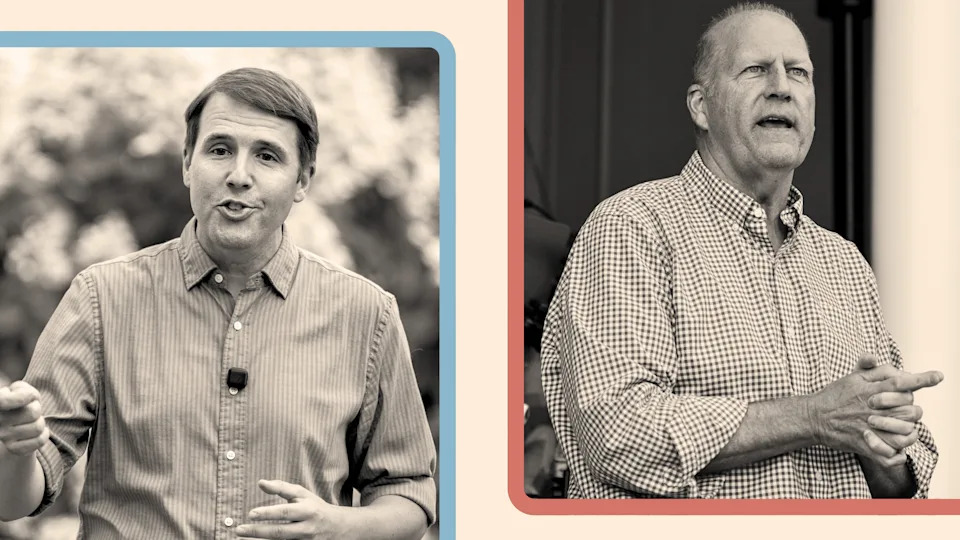
Democrat Chris Pappas and Republican John E. Sununu

Party control: Democratic

The Republican: John Sununu

The Democrat: Chris Pappas

The Granite State is rarely discussed as a swing state because it consistently votes for Democrats in presidential elections. But Senate races are a different story. Several Republicans have been elected to represent New Hampshire in the Senate in recent decades. One of them is John Sununu, who is running to regain the seat he lost in 2008 when he was defeated by Democrat Jeanne Shaheen, the retiring incumbent. Sununu is part of a political dynasty in the state. His father, also named John, and his brother Chris both served as governor.

The Democratic nominee is Rep. Chris Pappas, a moderate who comfortably outpaced a democratic socialist rival in his party's primary. Pappas is the first gay man to represent New Hampshire in Congress and would become the first openly gay male senator in U.S. history if he is elected.

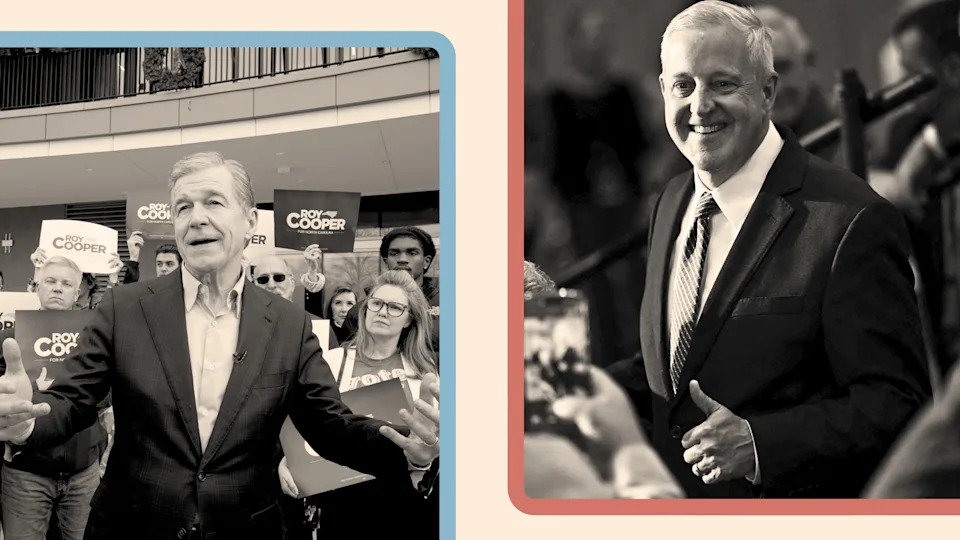
Democrat Roy Cooper and Republican Michael Whatley

Party control: GOP

The Republican: Michael Whatley

The Democrat: Roy Cooper

If polls are accurate, Republicans have a lot of ground to make up if they want to hold on to this seat from the Tarheel State. Incumbent Sen. Thom Tillis, a rare member of the GOP caucus to defy the president in some circumstances, has opted not to seek reelection. The Republican nominee to replace him is Michael Whatley, a former chair of the Republican National Committee.

Whatley has a strong history in North Carolina, having run the state Republican Party for nearly five years, but he lacks the statewide name recognition of his Democratic opponent, former Gov. Roy Cooper.

Both of Cooper's gubernatorial wins were reasonably close, but polls have shown him with a significant lead over Whatley. Forecasters have also shifted the race toward Democrats.

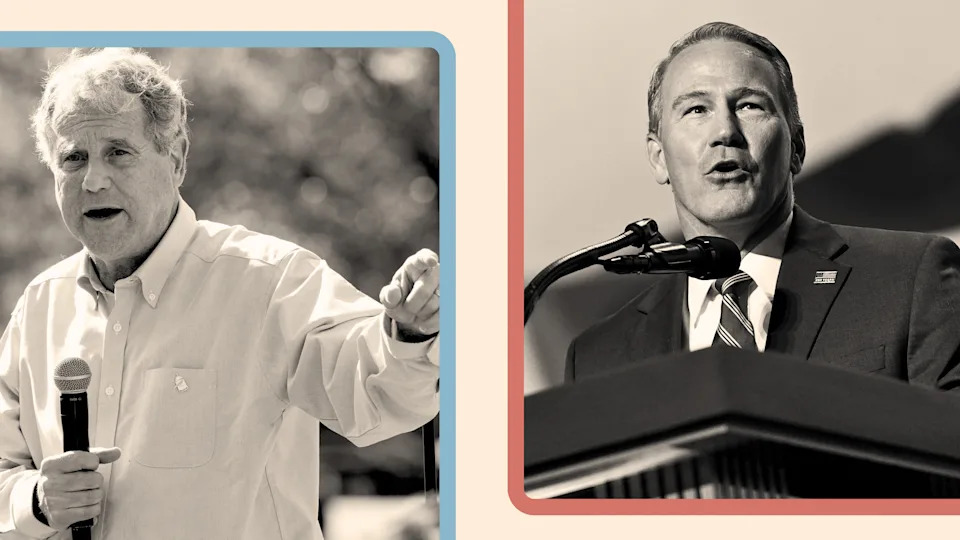
Democrat Sherrod Brown and Republican Jon Husted

Party control: GOP

The Republican: Jon Husted

The Democrat: Sherrod Brown

The Buckeye State has trended to the right over the past decade or so, but a unique set of circumstances has contributed to making this race a genuine toss-up in the eyes of some forecasters. Aside from the Democratic and Republican nominees, Libertarian William Redpath and Greg Levy of the Party for Socialism and Liberation are also on the ballot. These two lesser-known candidates are getting as much as 6% of voters' support in polls, collectively, which is potentially enough to influence the outcome in a very tight race.

Husted is the rare incumbent with less experience than his challenger. He has only been in the Senate since 2025, when he was appointed to fill the vacancy created when JD Vance became vice president. Brown, on the other hand, served three full terms in the Senate before losing his seat to Republican Bernie Moreno in 2024. Brown also has a massive cash advantage, which has allowed his campaign to spend more than four times as much as Husted's so far, according to Federal Election Commission filings.

Despite all of that, Brown is still swimming upstream in a state that has become solidly red over the past few election cycles.

Democrat Annie Andrews and Republican Darline Graham

Party control: GOP

The Republican: Darline Graham

The Democrat: Annie Andrews

The word "competitive" is rarely used to describe statewide races in a place as red as South Carolina, but the death of longtime incumbent Sen. Lindsey Graham in July has set up what could be the Palmetto State's first tight Senate race in a generation.

Graham's sister, Darline Graham, was appointed to finish the rest of his term and is now running for a full six-year term. Her opponent is Democrat Annie Andrews, a pediatrician who has staked out several policy positions that reflect the state's conservatism, including support for the Second Amendment, tax cuts and strong immigration enforcement.

Republicans have comfortably won every Senate election in South Carolina since the early 2000s, but Trump's declining approval rating in the state and apparent concerns about Graham's lack of experience have likely contributed to making this a much closer race. Recent polls have shown Andrews trailing by as little as a single point, though forecasters still list the state as a likely Republican victory.

Democrat James Talarico and Republican Ken Paxton

Party control: GOP

The Republican: Ken Paxton

The Democrat: James Talarico

Republicans haven't lost a statewide election in the Lone Star State in more than three decades, but forecasters say Democratic state lawmaker James Talarico has a chance of ending that streak in November.

His Republican opponent is Texas Attorney General Ken Paxton, who defeated longtime incumbent Sen. John Cornyn in a tightly contested and often contentious Republican primary. Paxton has faced serious legal issues during his tenure as Texas's top law enforcement official, including accusations of corruption that led the state House to impeach him in 2023. The state Senate later acquitted him on all articles it considered.

Polls have consistently shown a tight contest, with a good number finding Talarico leading by a small margin.
Comments
You must be logged in to comment.