yahoo Press
Katie Zacharia calls herself a lawyer. Legal experts aren't sure.
Images
1 / 6

2 / 6

3 / 6
4 / 6

5 / 6

6 / 6
Katie Zacharia made her debut as President Donald Trump's new White House press secretary Tuesday morning, breaking news (announcing that Kimberly Guilfoyle had been asked to resign as ambassador to Greece) and sparking commentary about her performance (Trump, for one, said he "thought she was very good").

But Zacharia has also made news, regarding how she has represented herself and her résumé in public appearances.

Subscribe to The Post Most newsletter for the most important and interesting stories from The Washington Post.

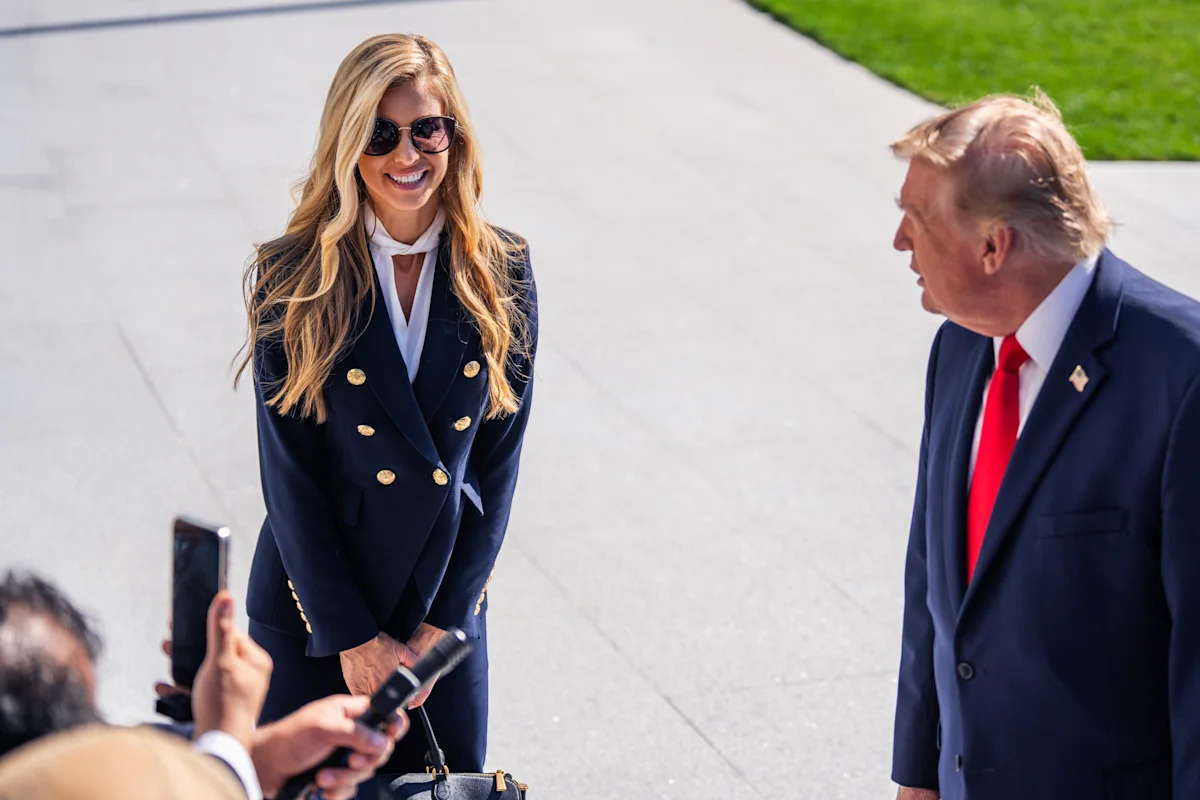
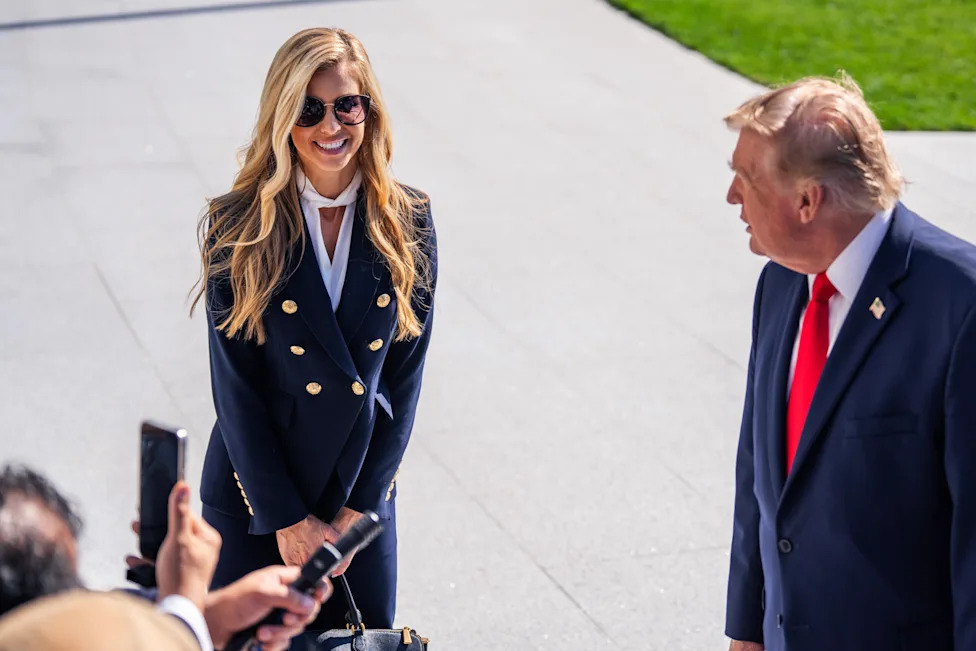
"What state did she pass the bar exam in?" a journalist shouted at Trump on Tuesday morning as he walked to Marine One. The president leaned in. Zacharia stood behind him. "She said she's an attorney," the journalist repeated. "Where did she pass the bar exam? Which state?"

Trump stepped aside to let Zacharia answer: "When I moved to China," she appeared to say through muffled audio.

Journalist Judd Legum, who writes the Popular Information newsletter, identified numerous occasions when Zacharia appeared on national media outlets citing her credentials as a lawyer. He counted 18 appearances on Fox News Channel when she made such mentions, and he found that she also called herself a lawyer on her social media accounts.

Zacharia graduated with a law degree from Pepperdine University, but Legum wrote that he could not find that she passed any state's bar exam, which is almost always a requirement for practicing law in the United States.

The Washington Post conducted its own review and also could not find any active or expired bar admissions under Zacharia's name, including her maiden name, Black.

Zacharia graduated from Pepperdine with a bachelor's degree in 2007 and a law degree in 2011, the university confirmed in an email Tuesday. She then worked as an associate on the international practice team at the law firm Zhong Lun in Beijing, from 2011 until 2013, according to her LinkedIn profile.

Her only other legal role was as general counsel of Fix California, a group started by Trump administration official Richard Grenell, from 2024 to 2025. Representatives of Zhong Lun and Fix California did not respond to requests for comment.

The White House did not provide evidence that Zacharia has been a licensed lawyer in the United States, but said in a statement that she "worked on international transaction law" in China and "practiced international transactional law, with all the appropriate credentials."

Several legal ethics experts said that if a person is not a licensed lawyer but is identifying as one, that presents serious ethical and legal problems.

"A J.D. degree does not make you a lawyer," said Stephen Gillers, a professor at New York University School of Law.

Bruce A. Green, the director of the Louis Stein Center for Law and Ethics at Fordham University School of Law, agreed. "A law school graduate is just that - a law school graduate," he said.

A person is considered a lawyer or an attorney only after being admitted to practice law, Green said, adding that in most states, this requires passing a bar exam and demonstrating proper character.

Leonard M. Niehoff, a professor at the University of Michigan Law School, said that there is a "world of difference" between having a law degree and being a licensed attorney. And, he said, there could be consequences for falsely claiming to be a licensed attorney.

"Many, if not all, states have statutes that prohibit the unauthorized practice of law, which commonly includes falsely holding oneself out as a licensed attorney for purposes of monetary gain," Niehoff said. "Making false or misleading statements about being licensed as an attorney therefore raises not just serious ethical issues but legal ones."

Even if Zacharia were licensed in another country, Green said, her public statements in U.S. media would still be misleading if she did not say that she's not licensed in the United States.

"Someone in the U.S. who just flat-out calls themselves a lawyer, without further qualification or explanation, will mislead listeners or readers to think that they are permitted to practice law here in the U.S. - which they are not," he said.

Zacharia resides in California, according to public records. In a statement Tuesday, a spokesman for the State Bar of California said that it "has no record of Kate Sharon Zacharia or Kate Sharon Black having been licensed to practice law in California." The spokesman also said there are no records under Katie, her nickname.

The spokesman said that as a general matter, "California Business and Professions section 6126 makes it unlawful for anyone who is not an active licensee of the State Bar, or otherwise authorized pursuant to statute or court rule to practice law in California, to advertise or hold themselves out as practicing or entitled to practice law in California."

And even if Zacharia worked for a law firm in China, she probably would not have been admitted to the bar there, given that country's requirements, experts in Chinese law said.

"She could not have passed the PRC [People's Republic of China] bar exam, either, since you have to be a PRC national to take it," said Donald C. Clarke, a professor at George Washington University Law School who specializes in Chinese law.

Clarke said that firms like Zhong Lun, which he called reputable, can hire foreigners to do certain tasks and can determine whether to require an employee to have passed a foreign bar exam.

"But the person still would not be allowed do anything that required a PRC or foreign bar qualification to do," he said, including representing clients in Chinese court.

Lester Ross, senior counsel at the law firm WilmerHale, also said the Chinese bar exam is available only to Chinese citizens. "A foreign national who has passed the bar in a foreign jurisdiction may practice the law of such jurisdiction in China and provide his or her understanding of Chinese law, but may not practice Chinese law," he said.

Isaac Arnsdorf and Aaron Schaffer contributed to this report.

Related Content
Comments
You must be logged in to comment.