yahoo Press
Bessent says inflation and bond yields will drop when the Iran war ends. Others aren't so sure.
Images
1 / 5
2 / 5

3 / 5

4 / 5

5 / 5
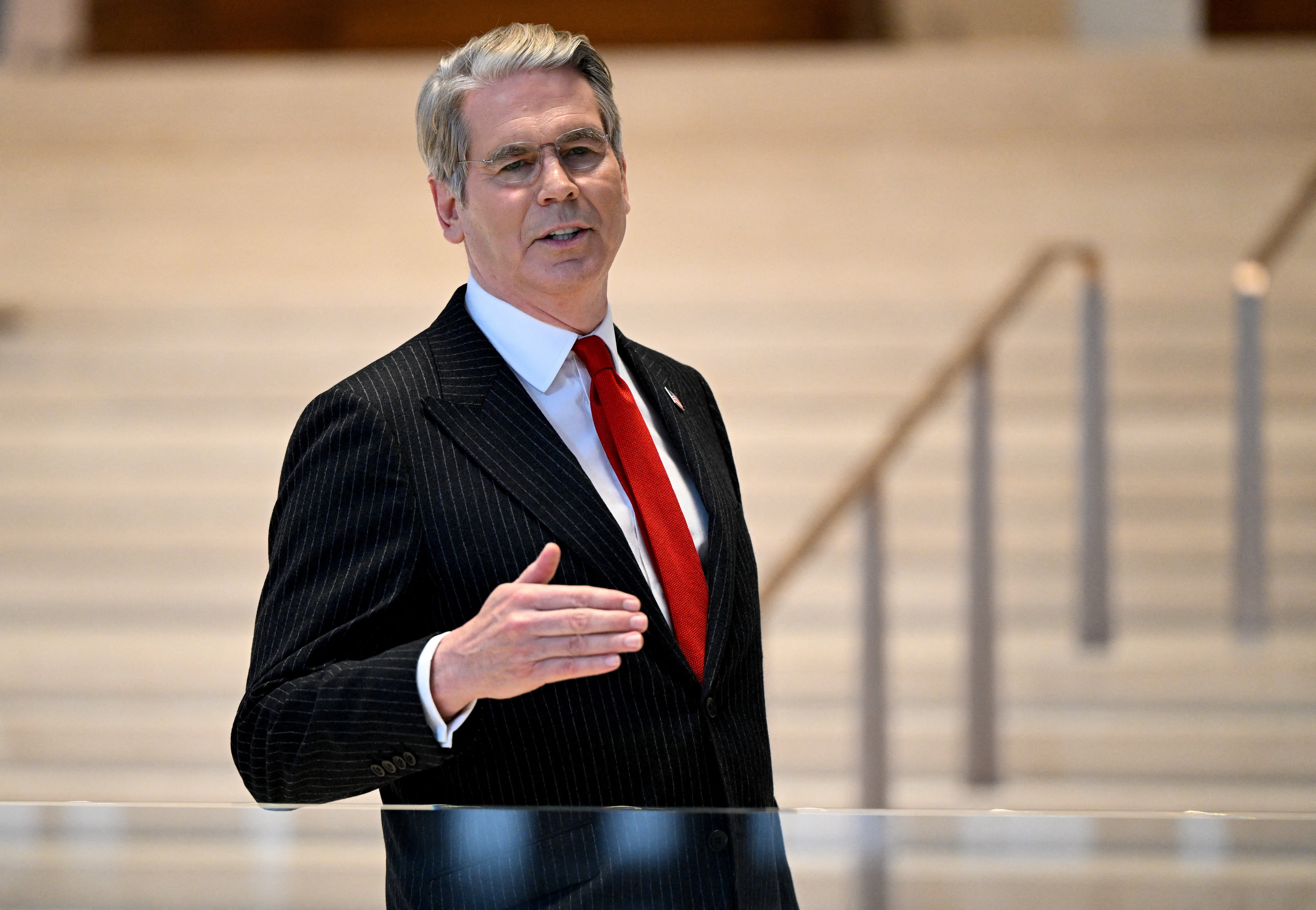
Treasury Secretary Scott Bessent says the economy is "accelerating" and inflation, along with bond yields, will come back down once the conflict in Iran ends.

"Right now, we have this energy shock that's generated by the Iran conflict, and headline inflation is about 3.5%. But my message is underlying inflation — core inflation — is down to about 2.3%," Bessent said at the Pennsylvania Chamber of Commerce on Monday night.

He asserted that median wage growth is in line with headline inflation, and that "we will get to the other side of this Iran conflict. Energy will come back down, and the wage growth will continue."

Read more: How oil price shocks ripple through your wallet, from gas to groceries

He said 1 million private sector jobs have been created this year, while government jobs have been trimmed by 300,000.

"Real wage growth comes from private sector jobs, and I think we're just starting to see the acceleration here," he said.

But not everyone sees the wage picture the same.

Gregory Daco, chief economist for EY, notes that average hourly earnings rose at an annualized pace of 3% in September, marking the slowest pace of the post-pandemic cycle. He said he expects inflation in September, as measured by the Consumer Price Index, to clock in at 3.6%, and as a result, he anticipates that wages adjusted for inflation will likely fall 0.6% year over year, marking a sixth consecutive month of contraction.

"While strong wealth effects from stock market gains continue to support solid aggregate consumer spending, the growing income squeeze affecting households is likely to cap spending growth heading into 2027," Daco said.

Joe Brusuelas, chief economist for RSM, agrees that the economy accelerated into the third quarter, but he asserts that inflation is not easing, pressuring wages and purchasing power.

Brusuelas maintains that the CPI report due out next week will show that wage growth adjusted for inflation has been flat to negative since the start of the Iran war.

"It's far more likely that declining real wages begin to act as a mild drag on growth heading into the final quarter of 2026 and early 2027," he said.

Bessent also addressed the spike in long-term Treasury yields, saying he believes the run-up is a function of headline inflation and higher energy prices stemming from the war. Once the conflict ends, he said, longer-term bond yields will come down to levels seen in mid-February before the war.

"I don't know if this conflict's going to end next week, next month, in two months, but I believe on the other side of this, energy prices will be much lower and interest rates, mortgage rates will come back down," he said.

Read more: When will mortgage rates go down again?

While Bessent thinks much of the increase in bond yields can be chalked up to higher energy prices, top Federal Reserve policymakers view the strength of the economy as a main driver. Federal Reserve Chairman Kevin Warsh noted at a recent press conference that economic strength is the primary driver of long-term yields.

Cleveland Federal Reserve president Beth Hammack said recently that she thinks a number of factors are driving up yields, including a strong economy.

"I think that the growth numbers have come in in a pretty solid way," she said. "I think that expectations of continued performance, if you look at earnings and profits for various public companies, they've been coming in above expectations, and there have been signs of resilience that I think the markets are starting to price in."

Philadelphia Federal Reserve president Anna Paulson also said recently that she sees a resilient economy that's showing some signs of increased momentum despite tariffs and higher oil prices. She noted that consumer spending has been strong, the AI build-out is driving investment, and the labor market is stable.

Meanwhile, Fed Vice Chair Philip Jefferson sees the economy as likely to show continued resilience, despite higher prices, and he anticipates investments in AI will continue to support growth this year. He said he expects near-term real GDP growth to remain roughly the same as in the first half of the year.

The upshot? If bond yields have risen in large part because of stronger growth, then the war ending and oil prices falling may mean yields drop somewhat, but still remain high.

Jennifer Schonberger is a veteran financial journalist covering markets, the economy, and investing. At Yahoo Finance, she covers the Federal Reserve, Congress, the White House, the Treasury, the SEC, the economy, cryptocurrencies, and the intersection of Washington policy with finance. Follow her on X @Jenniferisms and on Instagram.

Click here for the latest economic news and indicators to help inform your investing decisions

Read the latest financial and business news from Yahoo Finance
Comments
You must be logged in to comment.