huffpost Press
'Something To Hide': Congress Looks To Subpoena Controversial Surveillance Company
Images
1 / 2

2 / 2
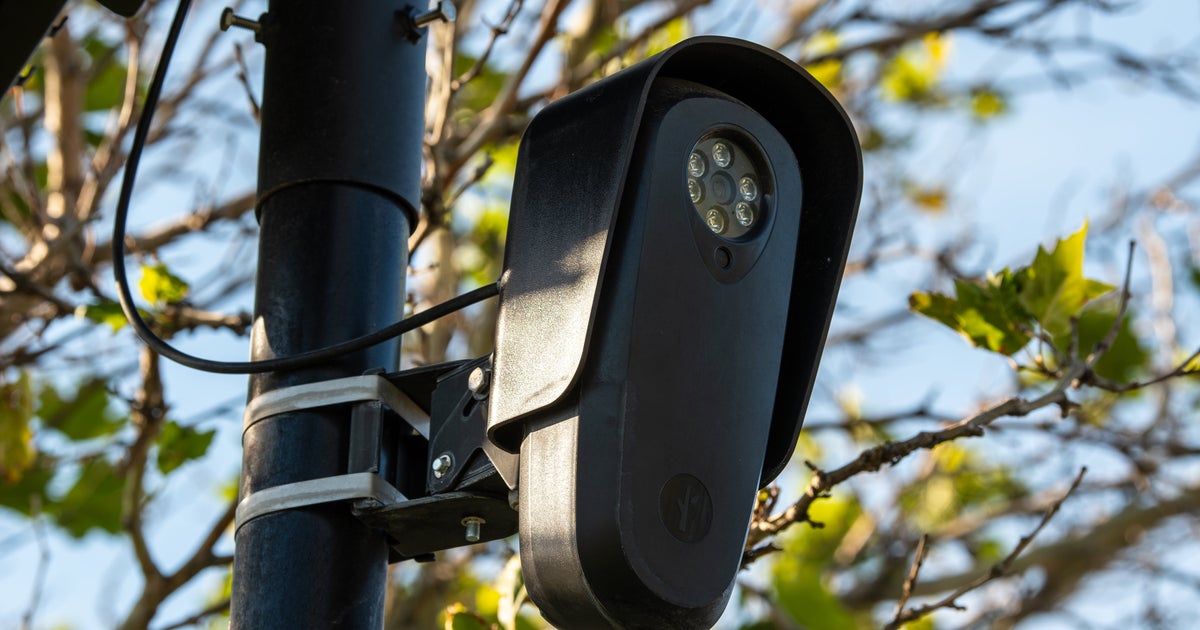
Executives from a group of surveillance companies, including the firm behind the controversial Flock cameras, may soon face a legal summons to appear before Congress after dodging testimony at a Senate hearing Wednesday afternoon.

As backlash to the artificial intelligence-powered Flock cameras that were deployed widely across the country reaches Capitol Hill, left- and right-wing privacy advocates have united against the surveillance technology, claiming the data Flock devices capture is prone to abuse and is sparking debates, some of which have led to the elimination of the cameras in cities across the country.

Sen. Josh Hawley (R-Mo.), who chaired the hearing, left the door open to a subpoena against Flock Safety and a group of other companies who declined his invitation to testify before a Senate Judiciary Committee subpanel on Tuesday. The committee instead heard from civil liberties experts and a woman who was wrongfully accused of a crime thanks to a Flock camera report.

“I would hope that after today, I hope that they would come in,” Hawley said of the tech companies. “If they feel like they want to correct the record on something, great — we’d love to hear from them.”

Sen. Richard Blumenthal, the subcommittee’s top Democrat, was even blunter: “Their refusal to come forward and answer questions is a sign that they have something to hide, and they are refusing to be accountable.”

Ultimately, subpoena power rests with Sen. Chuck Grassley (R-Iowa), the Judiciary Committee chair. Hawley told HuffPost on the sidelines of Tuesday’s hearing that he hadn’t yet spoken to Grassley about such a legal summons but that he planned to meet with the chairman and “compare notes.”

A spokesperson for Grassley’s office did not return a request for comment on the possibility of a subpoena for Flock Safety or the other surveillance tech companies — including Motorola Solutions, Axon and Verkada — which skipped the hearing.

Flock sent a letter to the committee, penned by Flock chief legal officer Dan Haley and obtained by HuffPost, which sought to assure the senator that the surveillance company supported “durable legislation and legal standards” governing its technology.

“We would welcome the enactment of a coherent federal framework, and we stand ready to work with your office and with Congress on its efforts to help protect privacy without depriving communities of tools that solve crimes and save lives,” Haley wrote.

Blumenthal, for one, said there were “clear potential solutions” for the privacy threats posed by the technology, suggesting a ban on a national database of surveillance information and rules limiting how long Flock cameras retain data.

Media reports have demonstrated dozens of instances in which law enforcement officers improperly used Flock surveillance data to stalk people, including romantic partners. Flock Safety in August updated its safety standards to cut down data retention periods and implement multi-factor authentication, among other things.

Lindsey Isaacs, a Florida woman who was arrested and jailed on accusations that she’d been involved in a fatal crash, said a Flock camera had erroneously flagged her car miles from the scene of the crime.

“That piece of information became part of an investigation that ultimately led to my arrest on three counts of vehicular homicide and 13 days in jail for a crash I had nothing to do with,” Isaacs told the committee. The state dropped her case in May.

Cybersecurity engineer Benn Jordan testified he’d probed Flock’s system in 2025 after learning the company did not require clients to use multi-factor authentication. He ultimately discovered that Flock law enforcement accounts were on sale on the dark web from a Russian vendor.

“I want to use my time here to ask our legislators to take this rare bipartisan agreement to view Flock as a canary in a coal mine and understand that this doesn’t go away by removing one company from the equation,” said Jordan, who noted that Axon and Motorola were also pursuing similar surveillance technologies.

Spokespeople for Flock Safety, Motorola Solutions and Axon did not return requests for comment.

Virginia Ramsey, a spokesperson for California-based security company Verkada, said the firm’s CEO Filip Kaliszan was “unable to attend” Tuesday’s hearing, but Verkada had provided the subcommittee with information about its product.

“As we’ve explained to the subcommittee, none of our customers can search a national Verkada network — because none exists. Our customers can only access the data in their own systems,” Ramsey told HuffPost.

By entering your email and clicking Sign Up, you're agreeing to let us send you customized marketing messages about us and our advertising partners. You are also agreeing to our Terms of Service and Privacy Policy.
Comments
You must be logged in to comment.