yahoo Press
Trump demands 1% rates because the US has the ‘Best Credit in the World’ — the Fed hiked rates anyway. So who’s right?
Images
1 / 4
2 / 4

3 / 4

4 / 4
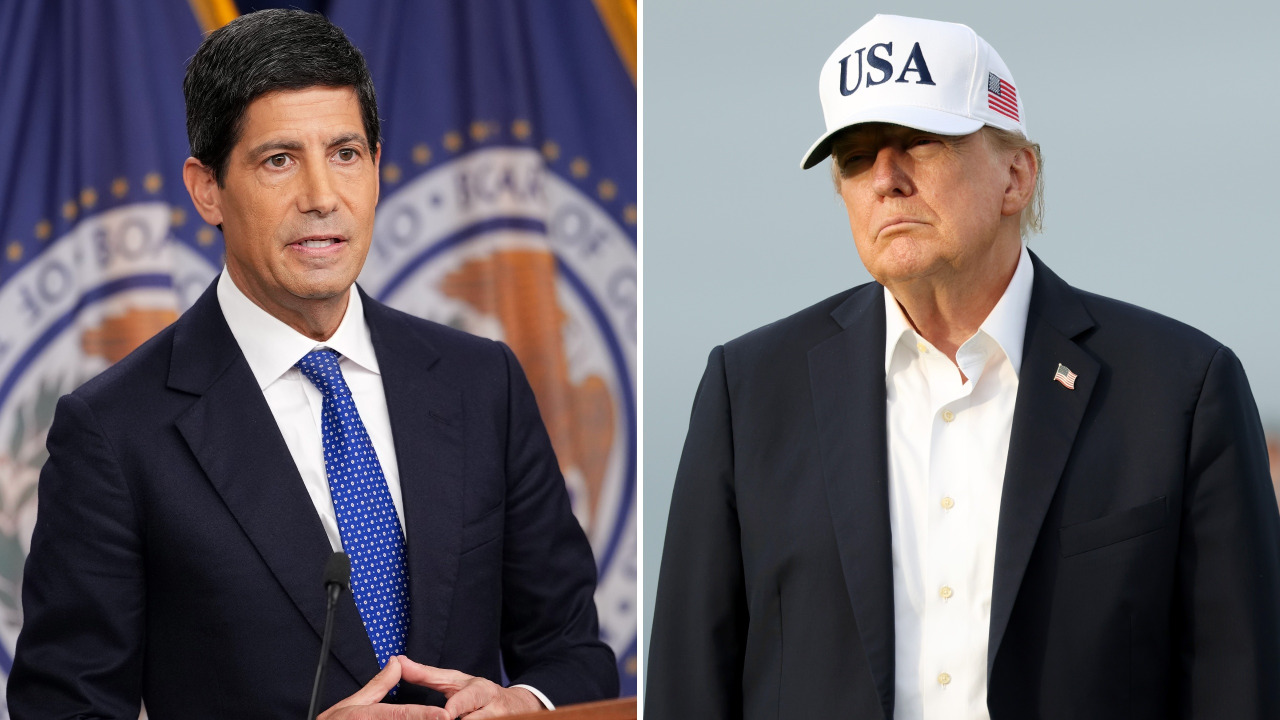
When the Federal Reserve recently raised interest rates by a quarter point to a range of 3.75% to 4.00%, many wondered what President Trump's response would be.

After all, Trump has been calling on the Fed to cut borrowing costs for more than a year, even before his pick to lead the Federal Open Market Committee (FOMC), Kevin Warsh, was confirmed by the Senate this spring.

Jeff Bezos backs a platform that lets anyone invest in rental homes for as little as $100 — 6 ways to build wealth like a landlord without actually being one

Dave Ramsey warns nearly 50% of Americans are making 1 big Social Security mistake. Here's what it is and 3 simple steps to fix it ASAP

The tax breaks in Trump's 'big beautiful bill' expire after 2028. Here are 4 moves to make before the window closes

In short, Trump was not happy, and he took to Truth Social on Sept. 16 to voice his discontent. The White House then reposted his message on X the same day.

"Interest Rates in the United States should be 1%, or less, because we are the Best Credit in the World — BY FAR," Trump said. "LOWER THE INTEREST RATES FOR THE UNITED STATES OF AMERICA, AND FAST!"

Trump all but expected the Federal Reserve to cut interest rates quickly under Warsh's leadership. Instead, the Fed opted to hold rates steady in both June and July before deciding unanimously to raise rates for the first time since the summer of 2023.

In a press conference following the Fed's decision, Warsh said inflation is the main priority as it remains above the Fed's target of 2%. The latest Consumer Price Index for August recorded inflation at 3.4% year-over-year.

"For more than five years, inflation has been running above target," Warsh said. "The plain fact is that inflation is too high and has been for too long."

In his Truth Social post, Trump said the U.S. is booming with new investment, seemingly pointing to the hyperscalers' investment in AI. Lowering borrowing costs for businesses could incite more investment in the American economy.

The same is true for the everyday consumer, as borrowing costs on credit cards, student loans and car loans would also be influenced by the Federal Reserve lowering its rates. The Fed additionally plays a role on mortgage rates indirectly.

Lowering interest rates would even drop yields that the U.S. Treasury would need to pay out to borrowers on their debt, as investors demand better returns amid high inflation, high national debt (currently over $40 trillion) and competition from corporations diving deep on AI issuing their own corporate bonds.

Read More: Vanguard reveals what's coming for U.S. stocks — and it could be bad news for this group of investors

While Trump views high interest rates as a deterrent to economic growth, experts have said lowering them, even gradually, would incite even more inflation.

More significant cuts, like Trump's proposed 1% interest rate, would be incredibly unpredictable. A federal funds rate at that level is meant for periods where consumer and business spending is low and the FOMC is looking to boost the economy. The Fed's decision during the pandemic, when it held rates at 1% or less for more than two years, is a prime example of this.

"The impact would be disastrous," Jonathan Portes, a professor of economics and public policy at King's College in London, told Newsweek. "Partly because it would be highly inflationary to have interest rates at 1% when inflation is over 3% and unemployment relatively low."

The Fed decided to raise interest rates because the U.S. economy, to Trump's point, has strengthened, albeit with some notable caveats.

In his press conference following the FOMC's decision, Warsh touted that job openings, unemployment rates and business capital investment, including in AI, have improved.

"Consider the geopolitical landscape of shocks and uncertainty and you'll begin to appreciate the resilience of the U.S. economy," he said.

Apart from the Fed's mandate to maximize employment, it also has to keep inflation low and prices steady. Positive employment data has opened the door for the Fed to tackle stubborn inflation at a time when numerous polls and studies point to many Americans struggling to keep up with rising prices.

And even as the economy expands, annual growth in average wages has not kept up with inflation for five months, according to Bureau of Labor Statistics data cited by CNBC.

"A substantial number of Americans are worse off, their incomes are not keeping up with the price increases right now," Heather Long, chief economist at Navy Federal Credit Union, told the publication.

Arguably the biggest current culprits of high inflation are the ongoing wars in Iran and Ukraine. Both have driven up the price of oil, leading to higher consumer prices on gas, diesel, groceries and more. Even the AI buildout that's currently boosting the U.S. economy has led to a shortage of chips and workers. Apple has even said it's going to raise some prices to help offset the costs.

All these factors have helped create a "K-shaped" economy where more affluent consumers continue to spend no matter the sticker shock, while others pull back in the hopes of making ends meet.

Millionaires under 43 hold only 32% of their wealth in stocks. Here's where their money is actually going

Here's the average income of Americans by age in 2026. Are you keeping up or falling behind?

A single line on your car insurance policy could be inflating your premium by up to 30% — here's what to change

This fund has historically paid 8% or higher for 25 months — 4 ways to grow your cash without the stock market

Join 250,000+ readers and get Moneywise's best stories and exclusive interviews first — clear insights curated and delivered weekly. Subscribe now.

This article originally appeared on Moneywise.com under the title: Trump demands 1% rates because the US has the 'Best Credit in the World' — the Fed hiked rates anyway. So who's right?

This article provides information only and should not be construed as advice. It is provided without warranty of any kind.
Comments
You must be logged in to comment.