yahoo Press
‘I just want out’: Billionaire Jeffrey Gundlach says you should have ‘almost nothing’ in AI stocks — what to buy instead
Images
1 / 4
2 / 4

3 / 4

4 / 4
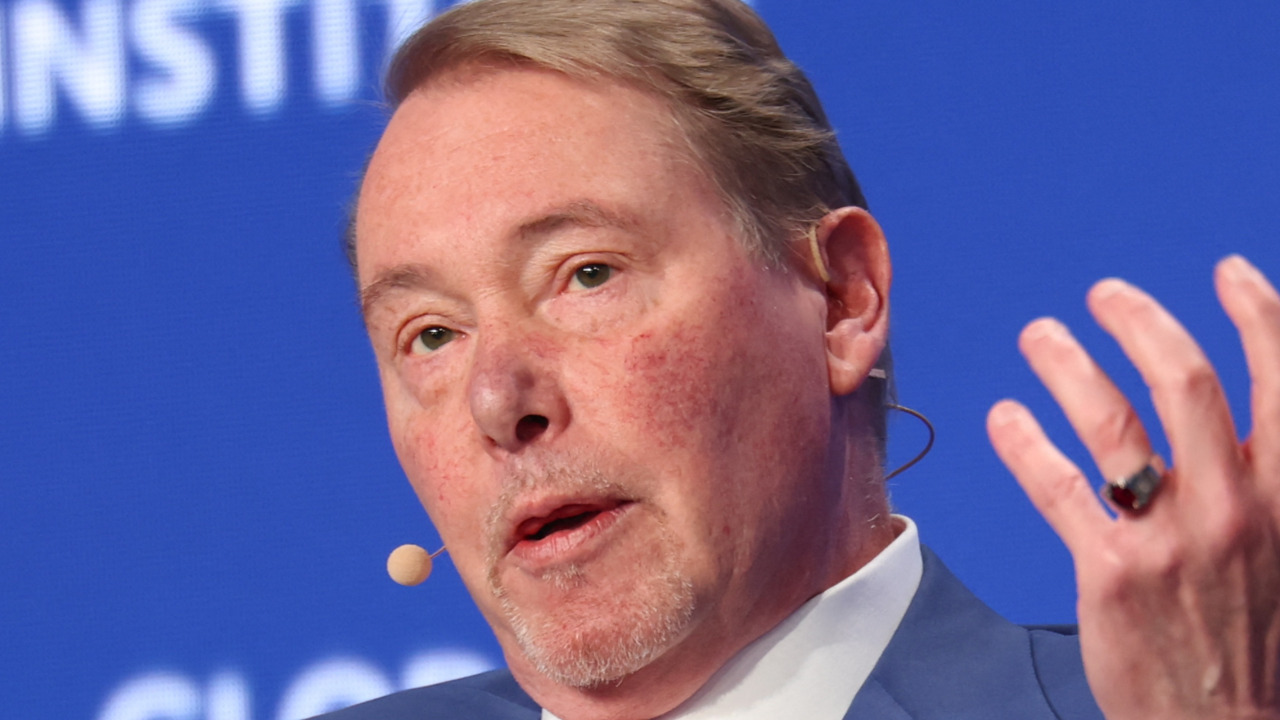
Even if AI doesn't "kill us," Jeffrey Gundlach thinks it'll "kill" your portfolio. The founder and CEO of DoubleLine Capital — who famously predicted the housing bubble of 2007 — is now forecasting a major fall for AI-related stocks. Although there are many reasons why Gundlach sees the AI boom collapsing, he focused on the recent narrative shift spurred by former Anthropic researcher Jacob Coxon's viral X post. Jeff Bezos backs a platform that lets anyone invest in rental homes for as little as $100 — 6 ways to build wealth like a landlord without actually being one Dave Ramsey warns nearly 50% of Americans are making 1 big Social Security mistake. Here's what it is and 3 simple steps to fix it ASAP The tax breaks in Trump's 'big beautiful bill' expire after 2028. Here are 4 moves to make before the window closes In an interview on the Julia La Roche Podcast, Gundlach said he was "perfectly fine owning some AI by using other types of equity vehicles" in the past. However, with the concerns over AI's capabilities and calls for a slowdown, he says, "I want out." For Gundlach, "cracks" in the AI narrative have already begun to show. "This is sort of strange behavior where something's rolling along, and there's great belief in it and a lot of money being made in it, and then the narrative changes in a fairly radical way: That this is going to kill us all," he said. To illustrate his point, Gundlach used the analogy of a steel mill in his hometown of Buffalo, New York, in the early 1900s. At first, the press had only positive things to say about the opportunities for the local economy. Fast-forward to the Panic of 1907, and people started talking about the plant's dark side, like rising injuries and deaths. Gundlach sees the same mood shift happening in AI. "It went from, 'Let's look at the bright side of things,' to 'Wait a minute, it isn't all perfect,'" he said. "And that's sort of where we are, but we're doing it at a very high valuation. While Gundlach isn't stopping anyone from getting into AI, he warns the rose-tinted glasses have already come off. "We're past that point where everything's viewed as beautiful," he said. "They might even be finding problems that aren't there, it might be going to that." Gundlach admitted he didn't know when the AI trade will collapse, but he said it's probably sooner rather than later. He pointed to the incredible expected addressable markets companies like SpaceX are touting, which CEO Elon Musk reportedly puts at $28.5 trillion. With one company supposedly gobbling up so much of AI's market share, Gundlach believes there won't be enough wealth that can spread evenly. "You're going to have fallout and losers in the AI race to the holy grail," he said. "It's going to happen. And that's what's going to be what leads to the next very significant drawdown in the risk assets." Even though Gundlach isn't ready to say we've reached the tipping point, he says we're "close enough to there that I want to be out of the epicenter of that." "I'm not selling everything. I'm not short anything," he noted. "But I want to be further and further away from the areas that are going to suffer the most." Gundlach also said he'd be "surprised if there wasn't some sort of a shock — maybe it's an inflation shock, maybe a supply shock — sometime in the next year," adding that what makes him so afraid is that "the reckoning day and the reaction that's going to be required is going to affect us a lot." Read More: Vanguard reveals what's coming for U.S. stocks — and it could be bad news for this group of investors Just because Gundlach isn't investing in AI doesn't mean he's sitting in cash. He's still invested in a broad array of assets — he's just careful to avoid overexposure to the high-flying hyperscalers and chipmakers. In his interview with Julia La Roche, Gundlach said he now recommends investing 30% in equities, but only in an equal-weighted Fortune 500 index. Unlike more traditional stock market ETFs that size each share by a company's market cap, every stock has the same allocation in an equal-weighted index. For Gundlach, the point of this strategy is that "you don't have 40% of your portfolio in AI. You have almost nothing. You're getting as far away from that as you can. So everything that I'm recommending is completely separate from AI exposure." Outside of stocks, the next largest allocation in Gundlach's portfolio is 30% for fixed income products, which includes half in low-risk bonds and the other half in riskier (but higher-yielding) debt in emerging markets using local currencies. The next 20% goes into real assets, which Gundlach splits evenly into gold and his company's DoubleLine Commodity Strategy ETF (DCMT). As for the final 20%, Gundlach called this "dry powder," which includes real-estate exposure in his DoubleLine Commercial Real Estate Debt ETF (DCRE) and the fixed-income assets in his DoubleLine Flexible Income Fund (DFLEX). For anyone overcautious about overconcentration in AI, Gundlach's ideas may offer a more attractive alternative. A single line on your car insurance policy could be inflating your premium by up to 30% — here's what to change Millionaires under 43 hold only 32% of their wealth in stocks. Here's where their money is actually going This 20-year old lotto winner refused $1M in cash and chose $1,000/week for life. Now she's getting slammed for it. Which option would you pick? Need to grow your cash? Get monthly checks from this real estate income fund — it has historically paid a consistent annualized dividend of 8% or higher Get Warren Buffett's best investing lessons, free. Join 250,000 readers getting Moneywise's sharpest money reporting every week. Subscribe and we'll send you our guide to the ideas that built Buffett's fortune as a welcome gift. This article originally appeared on Moneywise.com under the title: 'I just want out': Billionaire Jeffrey Gundlach says you should have 'almost nothing' in AI stocks — what to buy instead This article provides information only and should not be construed as advice. It is provided without warranty of any kind.
Comments
You must be logged in to comment.