yahoo Press
How a sanctuary outside LA has cared for rare, endangered gibbons for a half-century
Images
1 / 9
2 / 9

3 / 9

4 / 9
5 / 9
6 / 9
7 / 9
8 / 9
9 / 9
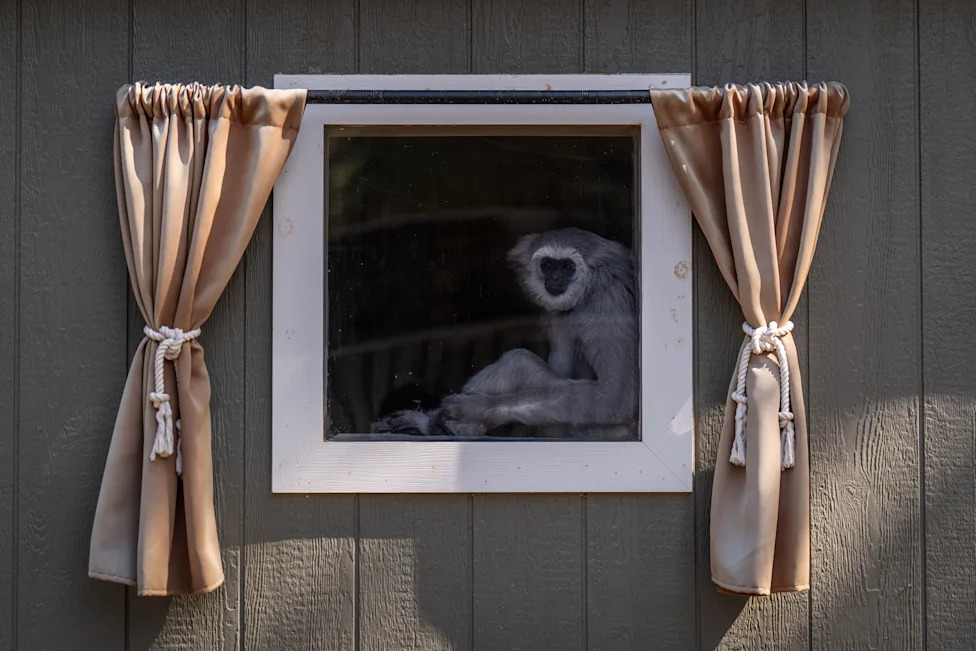
LOS ANGELES (AP) — In between morning feedings, the gibbons begin to sing — loudly.

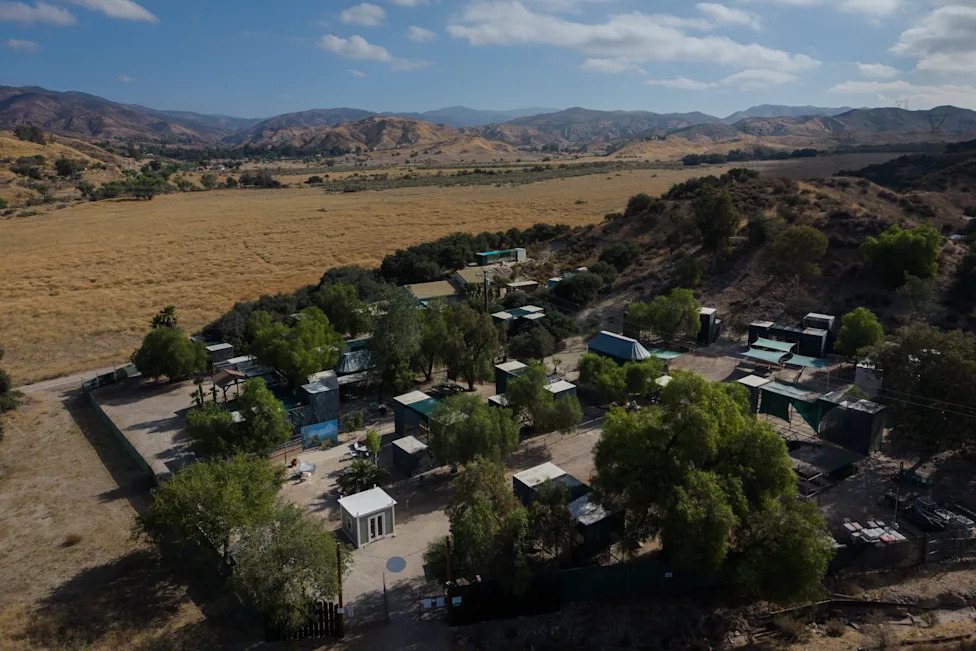
Ranging from the sound of emergency sirens and birds screeching to low grunts and guttural hoots, their vocalizations reverberate from a sanctuary in the hot, dry hills of the Santa Clarita Valley, north of Los Angeles.

Over the past 50 years, the Gibbon Conservation Center has transformed from housing a small assortment of animals to becoming a globally recognized institution dedicated solely to the care and well-being of gibbons. Known for their signature singing, they are among the rarest and most critically endangered primates on Earth.

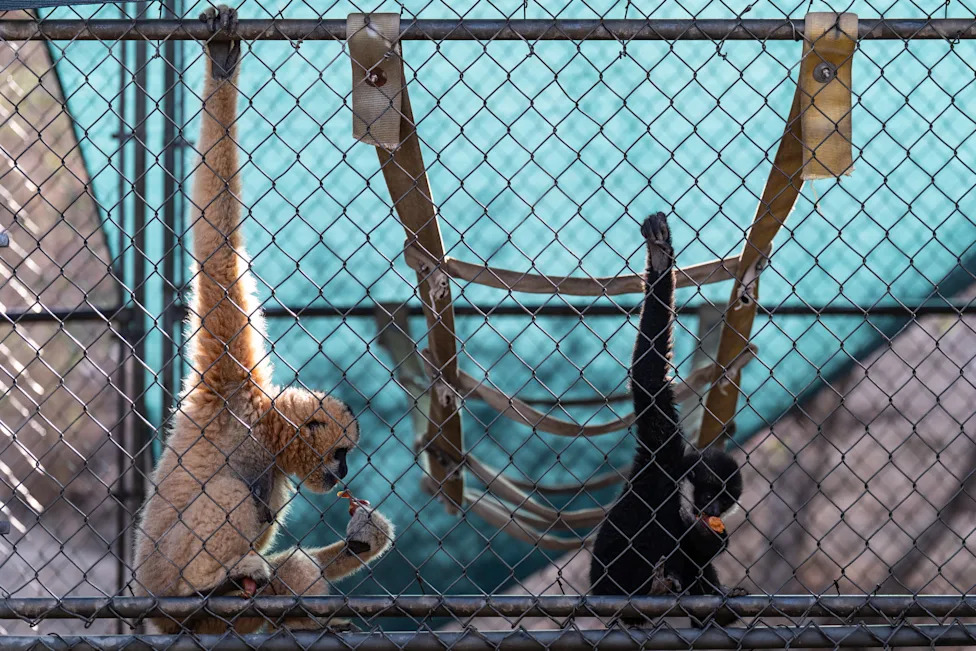
Today the center cares for some 40 gibbons across five species. Their singing can sometimes be heard a mile away by the few neighbors in the sparsely inhabited outskirts of Santa Clarita.

The center was founded by the late Alan Mootnick, a self-taught primatologist who would go on to become a leading expert on gibbons, all while running a home painting and remodeling business. He published papers in scientific journals, hosted researchers from around the world, and fielded questions from other scientists about gibbon care and identification.

"Sometimes they would just send him a picture of a rescued gibbon asking what species, or they will play him a vocalization," Director Gabi Skollar said.

Skollar moved from Hungary to the U.S. in 2005 to learn from Mootnick and work at the center. She has carried on his mission since his sudden death from heart surgery complications in 2011.

Skollar, who had initially planned to leave the job to continue her education, said there was no way she could abandon the gibbons.

"We have to keep going and take care of this place," she said.

Now, she lives on-site with another caretaker, waking up every morning to the cacophony of gibbons at sunrise. They're her children, she said.

The gibbons are full of personality and individual quirks, and Skollar knows them well after decades at the center. A young, northern white-cheeked gibbon named Pepper always leads the group in beginning their singing, and a pileated gibbon named Violet finishes the chorus with her partner Truman. Pierre, a rescued gibbon, does not like men.

The small apes sing three to four times a day for 20 to 30 minutes at a time.

"There's a lot of things that we can learn in a captive setting that can be shared with conservationists in the field and also with people working in sanctuaries rescuing gibbons," said Skollar, who is studying gibbon vocalizations in a doctorate program at the University of California, Los Angeles.

Gibbons face increasing threats from habitat destruction where they're normally found, in the tropical rainforests of Southeast Asia. Wildlife trade is also a threat, with gibbons being captured from their parents as babies and sold as pets.

Mootnick acquired his first gibbon, named Spanky, in 1976, when he responded to a newspaper ad of someone selling a pet. Some gibbons at the conservation center were born there; others were traded with different institutions to ensure diversity in breeding programs.

Some of the species at the center have a population of less than 2,000 in the wild.

The center was the first to successfully breed Javan gibbons, an endangered species only found on the Indonesian island of Java, and they are soon sending a pair of northern white-cheeked gibbons to the Pittsburgh Zoo.

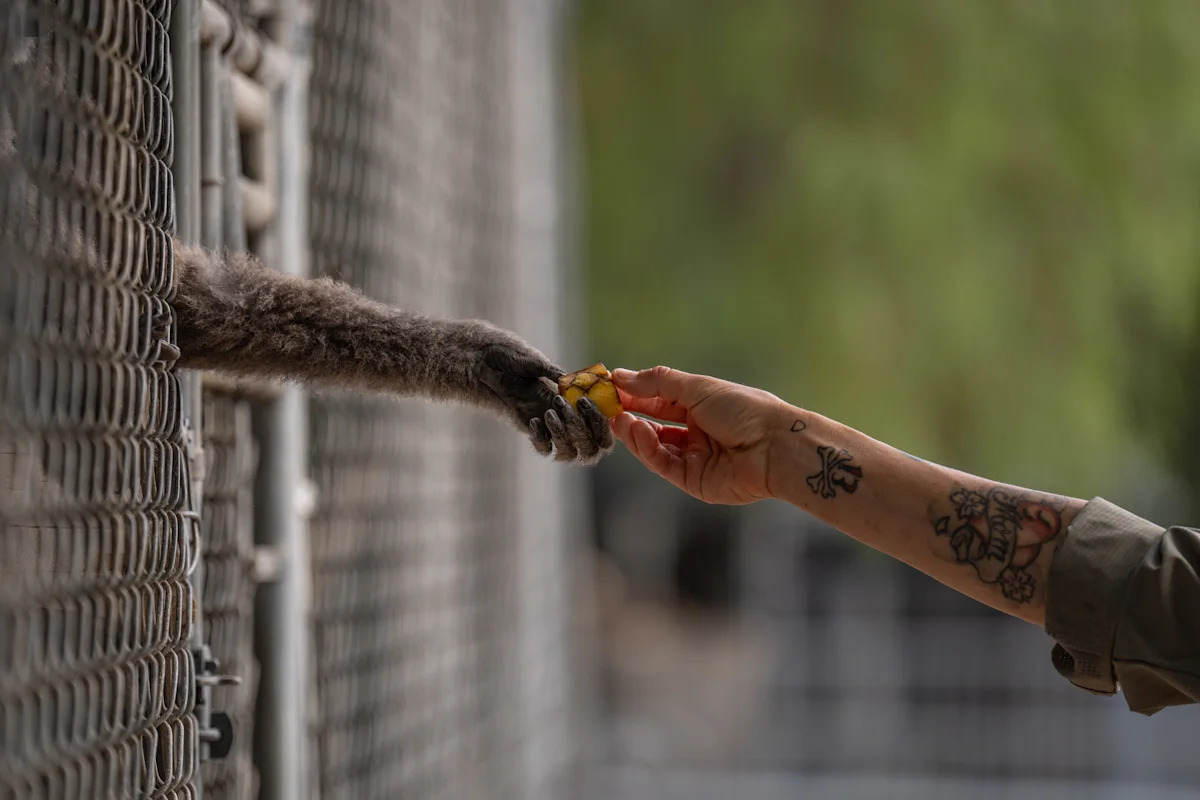
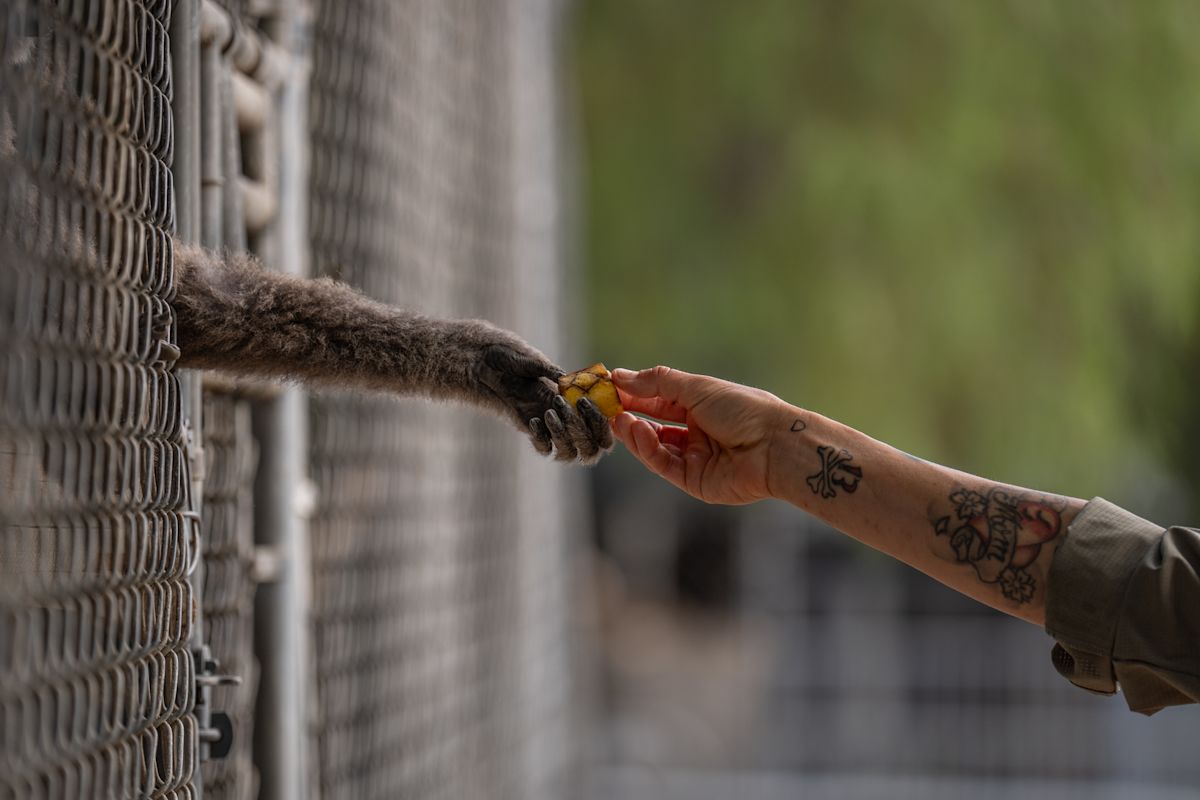
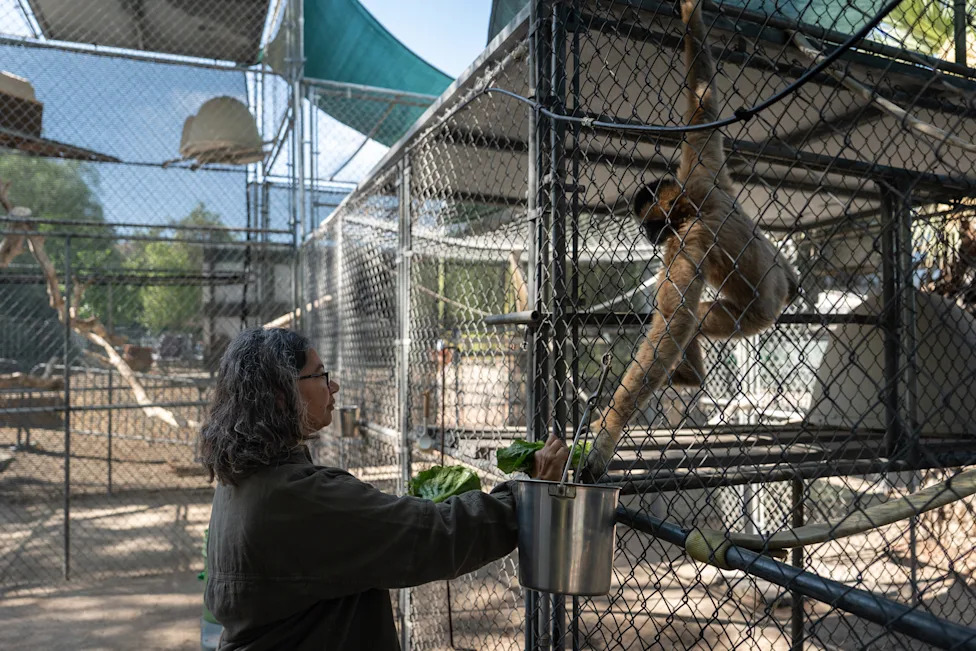
On a recent morning, on-site caretaker Jodi Kleier was making the rounds with buckets of washed lettuce, steamed sweet potatoes and bananas. She handed a young gibbon, Rocky, a piece of chopped banana as he reached out through the fence.

Rocky was hand-reared by Kleier after being abandoned by his mother after birth at the center, which can happen with first-time mothers if they went through a difficult birth.

Kleier has worked at the center for a decade, and started out as a volunteer. She has a tattoo of Rocky on her thigh.

She fell in love with gibbons after coming to the center for a primatology course in school.

"I love watching any primates play, because I think they're so natural to us, we kind of see ourselves in them," she said.

Kleier and volunteers who come by during the week are constantly washing and cooking produce because they feed the gibbons five to six times a day to imitate the pace of their foraging behavior in the wild.

"The Javans, they're my favorite species and the male Javan is singing … one of my favorite songs," Kleier said of a ghostly vocalization. "In Javanese folklore, they're known as these spirits that live in the forest because you can always hear them."

While the center is only open to visitors for guided tours on the weekends, they receive steady interest from schools, tourists and senior centers. They also work with local organizations such as The Teaching Zoo at Moorpark College to help students receive hands-on experience in animal care. The college takes first-year students on a field trip to the Gibbon Conservation Center every year, and many have gone on to work there after they graduate.

"When I went out there for the first time in the 1990s, I didn't know what a gibbon was," said Mara Rodriguez, a development coordinator who's been with the zoo for decades. "Now I've raised four gibbons in my career."

Anyone who visits "will leave with a lasting impression and begin to care about the species," she said.

Skollar's long-term goal is to raise more money to build larger enclosures for the gibbons and construct an education center for visitors. She hopes to continue honoring Mootnick's legacy and dedicating her life to the gibbons — one of which is named after him.

"When he passed away, I just felt that he's around and helping us keep this center going," she said.
Comments
You must be logged in to comment.