huffpost Press
Teen Tradwives Are On The Rise. Women Who Lived It Have A Warning.
Images
1 / 11

2 / 11
3 / 11
4 / 11
5 / 11
6 / 11

7 / 11

8 / 11

9 / 11

10 / 11

11 / 11
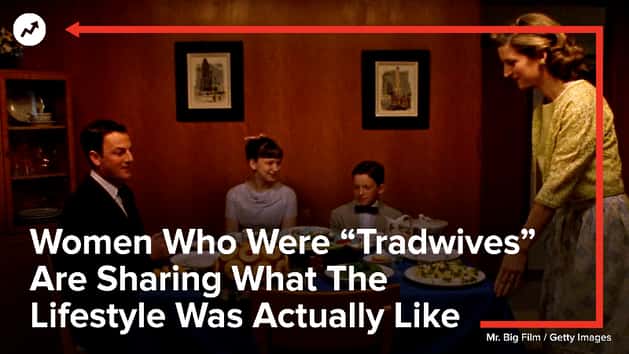
No, you’re not imagining it: Tradwives are getting younger and younger.

Like the tradwives who came before them — Estee Williams; Hannah Neeleman, known online as Ballerina Farm; and Nara Smith, who now pushes back on the label ― the current crop of TikTok tradwives make elaborate, from-scratch meals, cater to their husbands and families, and happily tidy up the home.

The difference? Many of them are just 18 or 19 years old.

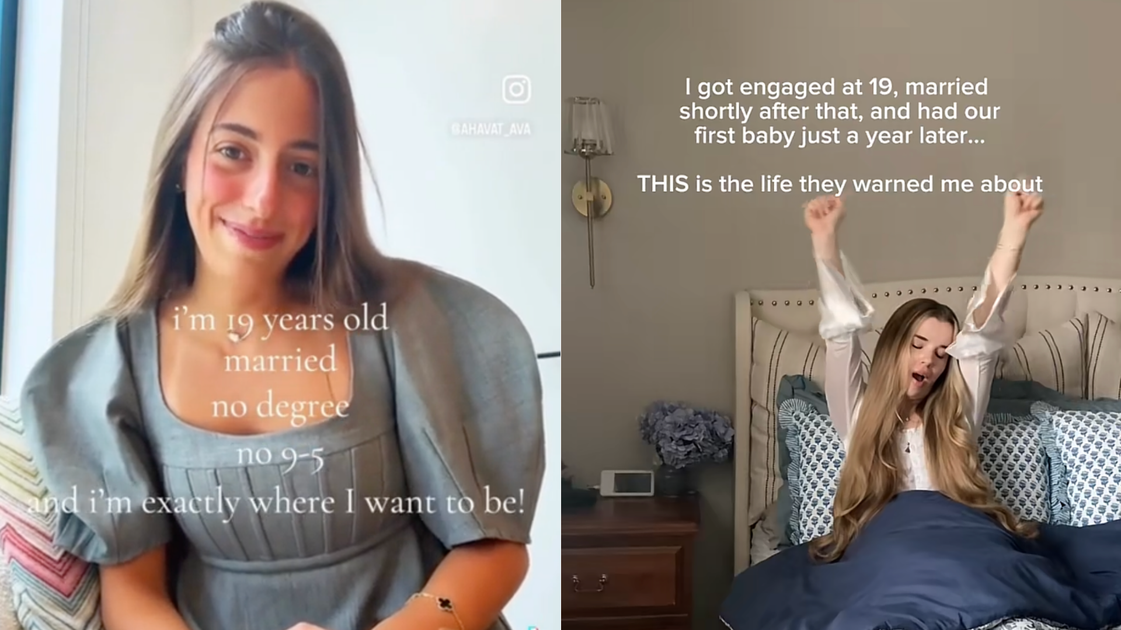
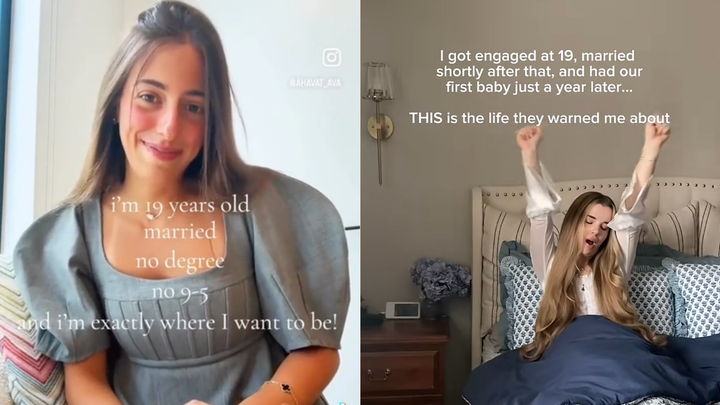
“I’m 19 years old, married, no degree, no 9 to 5, and I’m exactly where I want to be,” said Ava Ahavat in a TikTok that went viral earlier this summer. The video was viewed almost 17 million times before Ahavat deleted it amid the online controversy that ensued.

“She’s one argument away from being homeless,” one Redditor wrote in response to the video.

But Ahavat sure looks like she’s living well and happy at the moment, wearing a smart puff-sleeved dress and a pricey Van Cleef bracelet, and smiling big throughout the clip.

Another tradwife teen on TikTok, Lily (@xoxo.lilyyy_alexa), posts picturesque videos of herself cooking and caring for the baby she and her husband had last year, when she was 18. Even if the domesticity she portrays is genuine, some of her content is clearly designed to rage bait.

“Make me a sandwich… Yes, sir!” reads the overlay on one video, which shows Lily flouncing around the kitchen in a cotton sundress as she cheerfully prepares a roast beef sandwich entirely from scratch.

Others actively encourage others couples to marry young and raise a family as soon as possible.

“Marry YOUNG. Cute outfits. Baking/cooking. Pregnant at 19. Baby by 20. 4 Kids. All in Gods will,” @faithdauph writes in one video showing off her ring to strains of Lana del Rey.

HuffPost reached out to all three influencers but did not hear back.

Understandably, some parents are worried about their teenage daughters falling for this kind of glossy, aspirational content on TikTok. The concern isn’t necessarily that young women will aspire to be stay-at-home mothers, but that social media can present financial dependence on a partner as an idyllic, consequence-free choice while glossing over the risks and trade-offs.

While tradwife content in general can sell women a false bill of goods, young tradwife influencers — particularly 18- and 19-year-olds — may be especially dangerous for young girls who encounter their videos in their feeds, said Lori Bindig Yousman, a professor of communication and media at Sacred Heart University in Fairfield, Connecticut.

“Without education and life experiences, these young women are totally dependent on their husbands financially,” Yousman told HuffPost. “They are young wives and mothers who are focused on fulfilling the needs of others before they ever had a chance to figure out who they are, what they want, and fulfill their own needs and desires.”

Equally worrisome for parents are videos from “soft life” creators, who nix talking about Biblical accurate marriages, but subtly encourage women to pursue a life of ease and husband-provided luxury: Pilates classes, a G-wagon, no need for work. Like the “tradwife” content before it, “soft life” videos are just the latest right-wing pipeline for younger women trying to find their place in the world.

Caroline Kline, a research assistant professor at Claremont University in California whose academic work focuses on gender and feminist theology, said she’s struck by how performative this genre of videos can be.

“They’re short, soothing and visually appealing,” she said. “The home is calm, and often the woman is soft-spoken. No signs of conflict, exhaustion and boredom.”

Kline pointed to a video that highlights a young mom twirling around in a frilly dress as she does domestic labor and vacuums like she’s a Disney princess dancing at a ball. Like much of this type of content, the influencer’s caption has an edge of defensiveness to it: “I got engaged at 19, married shortly after that, and had our first baby just a year later…THIS is the life they warned me about.”

“It’s not reality,” Kline said. “This is an attempt to monetize her social media account and get followers, so that she can make money while promoting tradwife content.”

There’s an irony there, the professor said. Monetization is key for these influencers: Even as they flout husbands they claim are taking full financial care of them, they know how to cultivate an audience, work the algorithm for maximum payout, and put hours into producing and editing these videos. They’re working women, even if they don’t care to admit it.

To be clear, being a stay-at-home mother is not inherently a bad thing; a core tenet of feminism is that a woman’s place is wherever she wants it to be ― farmhouse style kitchen with a baby on her hip included.

But tradwife content too often romanticizes stay-at-home-mom life while downplaying the realities of parenting, housekeeping and forgoing financial independence, said Kate Scott, a researcher who studies gender and digital spaces at the University of Sydney in Australia.

Scott believes tradwife content is especially potent right now because it offers young women an escape from economic precarity, burnout and an exhausting work culture. The movement offers a stark rejection of the “girl boss” culture many millennial women were sold — the promise that professional success and financial independence would bring fulfillment. For young women coming of age amid a far-less-rosy financial reality, the appeal of opting out can be especially powerful.

“Amid rising childcare costs, political fatigue, and weakening labour markets, these online content creators are portraying a romanticized life in which a job or money troubles are not your responsibility,” she said.

The division of labor is tidy all answered for: Tradwives, at least as portrayed on TikTok, trust their breadwinning husbands to “look after the finances,” while they clean their home’s gleaming marble countertops and make their babies homemade puree with native ingredients.

“While many others can see how this renders women vulnerable to financial abuse or weakens their ability to leave unfulfilling relationships, others may see this as a relief to quit a rather hyper-competitive and stressful labour market or find a supposed loophole to increasing childcare issues,” Scott explained.

Your husband earns for you, provides for you, thinks for you and frees you to pursue life’s simple pleasures — or at least, that’s the escapist fantasy tradwives are often selling, Scott said. “In a lot of ways it’s a farce: for most people living on a single income is simply no longer feasible.”

The reality is, many of these tradwives either come from or marry into exceptional wealth, as Ballerina Farm did, or they at least have full-time careers as influencers. In other words, Scott said, they’re constructing a fantasy that’s largely untouched by the economic realities most women face.

For parents concerned about this content, it’s worth linking teens to countless blogs and videos former tradwives have made about how difficult it is to start over without an education, employment history or income stream independent of a partner. In an ideal world, such clips would queue up on TikTok after a gauzy, glamorous tradwife video appears in a feed.

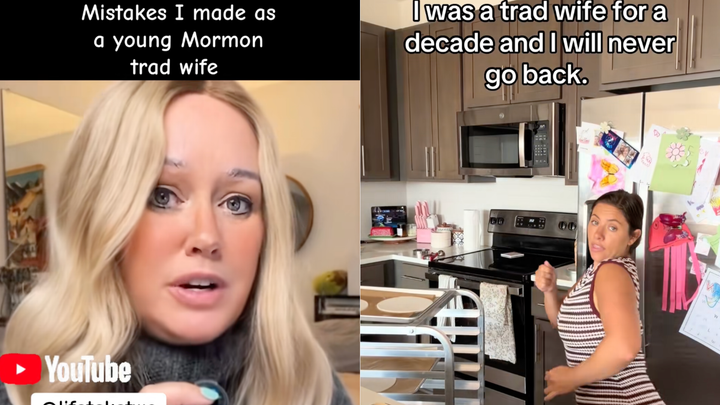
Samantha Tumberger, a baker and TikTok creator, is one of the former tradwives sharing what happens when the dream goes sideways. She said it’s jarring to come across videos from younger and younger tradwives.

“After looking at some of the new teen ‘tradwife’ content on TikTok, I honestly pity them in some ways because that was me,” said Tumberger, who was financially dependent on her husband for a decade before he left her.

“I lost everything. I lost my marriage, my pets and my whole identity,” she said. “I had also been suppressed in many ways, from financial control to having intimacy and sex used as another form of control in my marriage.”

Tumberger, who now runs her own small business, stressed that she doesn’t believe having a traditional marriage or being a stay-at-home mom is inherently bad.

“If you have a good man who genuinely supports you and wants to see you become the best version of yourself, that can be a beautiful thing,” she said. “But there is a huge difference between choosing that lifestyle and giving someone complete control over your life.”

“I strongly believe every young girl needs to find herself first,” she said. “Figure out who you are, what you want, and what you’re capable of before you spend your entire life taking care of everyone else.”

Jennie Gage is another former tradwife creating TikTok and YouTube content to counter the pro-tradwife videos she sees on social media.

“When I was 19 and got engaged, I believed that I had secured a happy future for myself,” she said. “Fast-forward to age 44 when my godly provider husband literally left me for a 19 year old, abandoning me and our children.”

“We all think we will be the exception to the odds, and most of us are not,” she said.

Her message to young women is simple and similar to Tumberger’s: “Build your life, save some money, figure out who you are, then fall in love if you want,” she said. “A man is not a plan.”

By entering your email and clicking Sign Up, you're agreeing to let us send you customized marketing messages about us and our advertising partners. You are also agreeing to our Terms of Service and Privacy Policy.
Comments
You must be logged in to comment.