huffpost Press
Bribery, Sex Crimes And Stock Trades: Republicans’ Corruption Problems Go Beyond Trump
Images
1 / 7

2 / 7
3 / 7

4 / 7

5 / 7

6 / 7

7 / 7
President Donald Trump’s corruption scandals are well-documented: his family’s cryptocurrency company; his acceptance of a Qatari-owned jet to serve as Air Force One; the delayed opening of a bridge between the United States and Canada to help a campaign donor.

Democrats plan to run against these scandals in November, but as their candidates and incumbents return to their districts for August recess, the party’s hopes of winning back control of Congress’ upper chamber may rest on reminding voters about local-level scandals and everyday Washington corruption GOP Senate candidates have engaged in rather than the industrial-scale self-dealing in Trump’s White House.

This isn’t to say those scandals are small. There’s a massive bribery scandal involving an Ohio utility company, a House ethics investigation into hiring a former chief of staff’s girlfriend in Georgia, a generous plea deal for a well-connected sex offender in Texas. The GOP candidates in both Michigan and New Hampshire made fortunes traveling through the revolving door.

The party has run corruption-focused campaigns before, with mixed levels of success. But from Georgia to Alaska, the party’s nominees are counting on being able to turn voters’ belief that widespread corruption in Washington is contributing to higher grocery, healthcare and energy costs down into votes against the individual Republicans they’re facing in November.

“This is something that can mobilize voters at the primary level and especially at the general election level, when you’re bringing in those swing voters,” said Sen. Andy Kim (D-N.J.), who has pushed Democrats to run harder against corruption. “That message appeals to people who are not just diehard tribal political voters, but to people who have real concerns about both parties and are uncertain about who to vote for.”

The challenge for Democrats will be connecting these scandals to voters’ preexisting concerns about the cost of living, something Kim acknowledged the party has struggled to do in the past. He pointed to the party’s work to highlight the corruption involving a Trump-owned hotel in D.C. during the Republican’s first term.

“It didn’t connect with the broader electorate,” Kim said, because they didn’t see how Trump’s moneymaking hurt their pocketbooks. He said the party has done a better job of showing voters how Trump’s various schemes have distracted him from key issues like the rising cost of living. “I think that’s where the message has started to really crystalize this year.”

Republicans, of course, scoff at the idea these messages will be effective. They argue many Democratic candidates are vulnerable to the same arguments: New Hampshire Rep. Chris Pappas is married to a lobbyist; the Democratic candidates in Maine and Ohio are career politicians; basically every Democrat in America is linked to megadonor Reid Hoffman, who has admitted to twice visiting deceased pedophile Jeffrey Epstein’s private island.

“Whether it’s shielding a spouse’s company from liability, accepting donations from Epstein-linked elites they condemn or skirting tax obligations, Democrats like Pappas, Ossoff, Talarico and Brown have zero credibility leading an anti-corruption campaign,” said Bernadette Breslin, a spokeswoman for the National Republican Senatorial Committee.

Republicans have a 53-47 advantage in the Senate, meaning Democrats need to pick up four seats in November to capitalize on a favorable midterm political environment and flip the chamber. The party feels best about its chances in North Carolina, but it’s also targeting Maine, Texas, Ohio, Iowa and Alaska. Republicans are targeting Michigan and Georgia, though Democrats are favored in the latter.

The attacks are clearly part of the Democrats’ broader strategy. Shortly before Congress left for the August recess, Senate Minority Leader Chuck Schumer introduced legislation which would combine existing anti-corruption agencies into one Anti-Corruption Bureau and give citizens and state attorney’s general the ability to sue government officials who defraud the public.

“We see a new grift every day,” Schumer said during a speech introducing the legislation at the National Press Club. “But the scheme is always the same. Trump profits, Americans pay.”

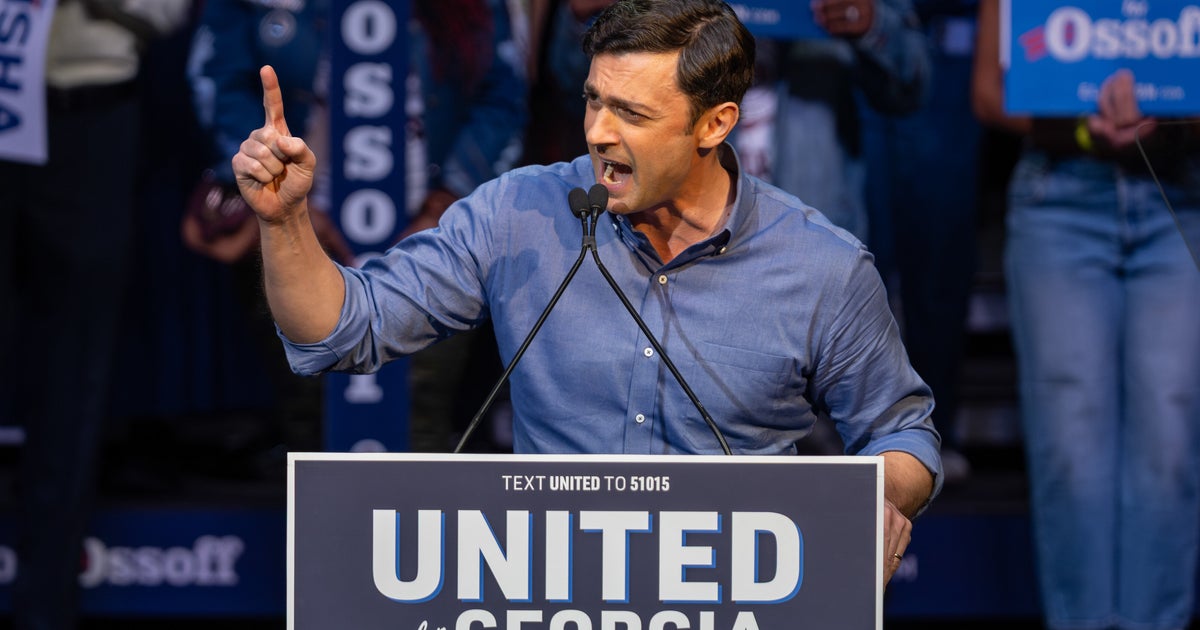
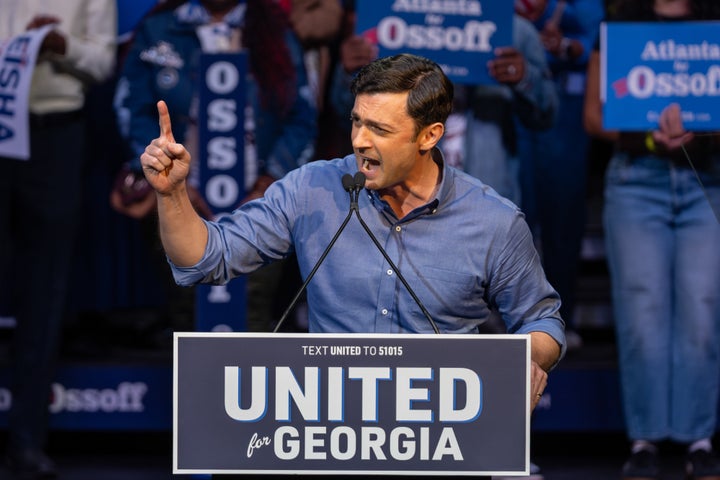
Capitalizing on the Republican scandals comes more naturally to some candidates than others. For both Sen. Jon Ossoff and state Rep. James Talarico, inveighing against corruption is a key part of their political identities, with their broadsides against Trump and the broader political system key to their viral popularity among liberals.

Both have also been gifted opponents who make for target-rich environments. Ossoff is favored to defeat Rep. Mike Collins, the target of the aforementioned House Ethics investigation who made a fortune in the trucking industry and has backed policies helping it. Talarico is running against state Attorney General Ken Paxton, who handed out the plea deal to a sex offender, faced an indictment on securities fraud charges and was once impeached by the Texas House of Representatives.

What’s notable is how even comparatively moderate Democrats are joining in: In one of Rep. Chris Pappas’ first ads in New Hampshire’s Senate race, he slams his Republican opponent, former Sen. John Sununu for voting for tax cuts for the pharmaceutical and health insurance industries before making “$35 million” working for them.

“In Washington, I’m taking on this kind of corruption,” Pappas says.

📺 NEW:John Sununu has been selling out New Hampshire since 1996.It's time to pull the plug on corruption in Washington once and for all. pic.twitter.com/cM6LfRf5FS

At a campaign appearance last week, North Carolina Gov. Roy Cooper attacked former RNC Chair Michael Whatley as a “longtime lobbyist for big oil and utility companies” and pointed out his opponent owned stock in Duke Energy.

“He’s been fighting for them for years,” Cooper said while campaigning in Vance County.

The line of attack is also expected to be prominent in Maine, where the party is trying to convince voters longtime Sen. Susan Collins has changed over her decades in Washington ― an argument which largely fell flat in 2020. Troy Jackson’s campaign is highlighting Collins’ marriage to a longtime lobbyist, and the reward she received at a “lobbyist prom” this year. (Republicans have pushed back by noting Jackson’s son worked as a state-level lobbyist when the Democrat was the president of Maine’s state Senate.)

And in Michigan, the race which Democrats are sweating the most at the moment, a super PAC controlled by allies of Schumer is up with a new ad slamming Rogers for his post-congressional activities.

“Mike Rogers stayed in Washington, cashed in on the favors he did for big special interests, pocketing millions from corporations doing business before his old committee,” a male narrator says. “Rogers got so rich he bought himself a Florida mansion, complete with two luxury yachts.”

Rogers’ opponent, progressive Abdul El-Sayed, is ready to level similar attacks. He’s holding a press conference on Wednesday to attack Rogers. The topic? The Republican’s “pattern of corruption and serving corporate special interests.”

By entering your email and clicking Sign Up, you're agreeing to let us send you customized marketing messages about us and our advertising partners. You are also agreeing to our Terms of Service and Privacy Policy.
Comments
You must be logged in to comment.