huffpost Press
Trump’s Obsession With Certain ‘Dirty’ Cities Is Spiraling — And Experts Warn It’s A Dog Whistle
Images
1 / 8

2 / 8
3 / 8
4 / 8
5 / 8
6 / 8
7 / 8

8 / 8
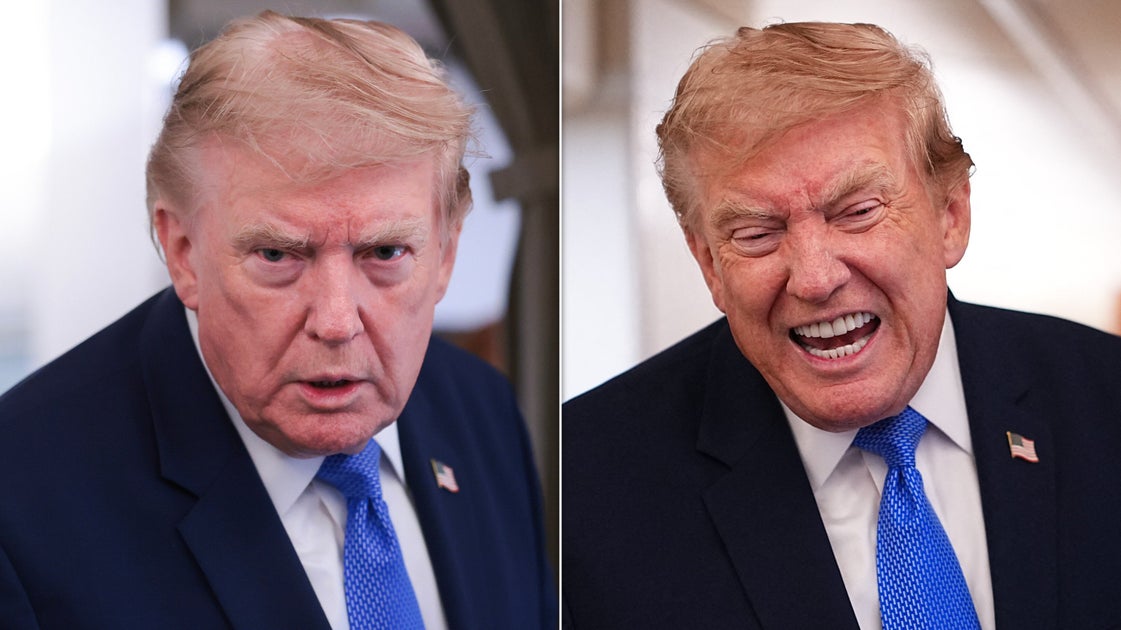
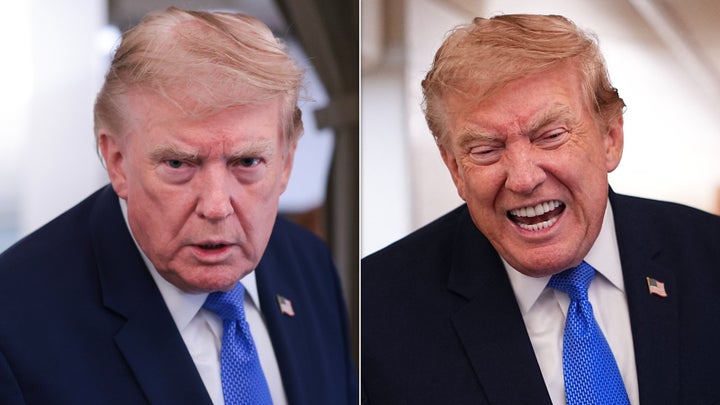
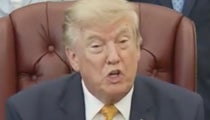
President Donald Trump slammed “blue cities” again during an Oval Office press gaggle on Monday, claiming that Democratic-dominant cities are “dirty” and filled with crime.

“The blue cities have something in common: crime, high crime, vicious, violent crime,” Trump said. “But what do they have in common? They’re all dirty. They’re filthy dirty.”

He went on to claim that blue cities “smell” with “broken” storefronts and “gross” trees. He never named a specific city.

“Everything about the place is dirty,” he said, adding that any city led by a Democratic official is “disgusting.”

Trump’s crime claim is contested. A 2024 Third Way analysis found red states had 33% higher murder rates than blue states in 2021 and 2022, and higher rates over the past two decades. (The Heritage Foundation, a right-wing think tank, has disputed these findings, and argues that, per county in blue states, the crime is higher than in red states.)

Crime fell nationally in 2025, however, including in blue cities that Trump has singled out in the past, like Chicago, which he called “the most dangerous city in the world,” as its violent crime rate declined substantially.

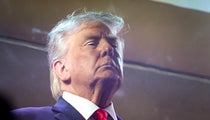
This is not the first time Trump has expressed repulsion over blue cities in recent weeks. While speaking at Milford, Michigan, on July 27 ahead of the state primaries, he said blue cities are “not clean” and have “dirty sidewalks” covered in “you-know-what” with a “terrible smell.”

“I’m just thinking about it now, when they take something over, it’s always dirty,” he said. “The sidewalks are dirty. The people are, I hate to say this, not clean. OK? The curbs are loaded with you-know-what. The smell is terrible. I mean, I see it happening to cities, blue cities. They’re all blue. They’re all blue. We don’t have problems with the Republican-run cities, I mean, for the most part.”

Trump does not get any more specific in his dismissal of blue cities, but linguists and political theorists suspect there could be another layer to it, especially with the upcoming midterm elections. Trump, who has a low approval rating as of June, has been heavily campaigning with numerous candidates in swing-state close elections — much more so than he did in 2018 during his first term, according to NPR data.

“Trump isn’t describing cities — he’s triggering voters,” Ian Haney López, a Chief Justice Earl Warren distinguished law professor at the University of California, Berkeley, and author of “Dog Whistle Politics,” told HuffPost.

“When Trump besmirches blue cities as filthy, he’s activating that history, seeking to transmute latent racial disgust into votes,” López said. “‘Dirty’ evokes the strong emotion of disgust, which for centuries has been affixed to supposed racial inferiors.”

Karrin Anderson, a professor of communication studies at Colorado State University, agrees that this is likely a voter tactic.

“As the midterm elections approach, Trump and the rest of the Republican Party want to send the message that Democrats are poor managers. So, suggesting that a city is dirty implicitly indicts the leaders of that city,” she told HuffPost. “It’s important to remember, however, that these comments are often made without evidence and relate more to partisan goals rather than to actual conditions in the city.”

Anderson’s read focuses on partisan strategy rather than race — but some linguists suggest there could be a deeper, more racial connotation within Trump’s wording.

“‘Dirty’ is yet another racist dog whistle, which really makes it feel like Trump whistles more than he speaks,” University of Arizona research scientist Megan Figueroa told HuffPost. Figueroa co-hosts the “Vocal Fries” podcast, which focuses on linguistic discrimination.

“The obvious thing it does is reference literal filth,” she continued. “On the surface, Trump could argue he is talking about the lack of or underfunding of infrastructure that, for example, keeps trash from piling up on the streets or toxins out of the drinking water supply.”

But Figueroa argues that the “dirty” usage links cleanliness to whiteness, a concept that has been linked together historically and sociologically.

When asked if the White House disputes that characterization, it didn’t issue an official response and referred HuffPost to the president’s comments.

In the past, Trump has called nations like Somalia, Haiti and Afghanistan “hellholes” and “shithole countries” that are “filthy, dirty, disgusting, ridden with crime.”

It’s not just Trump, either. In 2007, former President Joe Biden, then a candidate, kicked off major backlash after he called his then-rival, former President Barack Obama, “the first mainstream African American who is articulate and bright and clean and a nice-looking guy.”

Whether intentional or not, experts say the pattern is one to watch as Trump escalates his campaign travel ahead of midterm elections, where his party is bracing for losses.

By entering your email and clicking Sign Up, you're agreeing to let us send you customized marketing messages about us and our advertising partners. You are also agreeing to our Terms of Service and Privacy Policy.
Comments
You must be logged in to comment.