yahoo Press
Peter Schiff called the 2008 housing market crash — now he warns a 'housing emergency' is coming. Are you ready?
Images
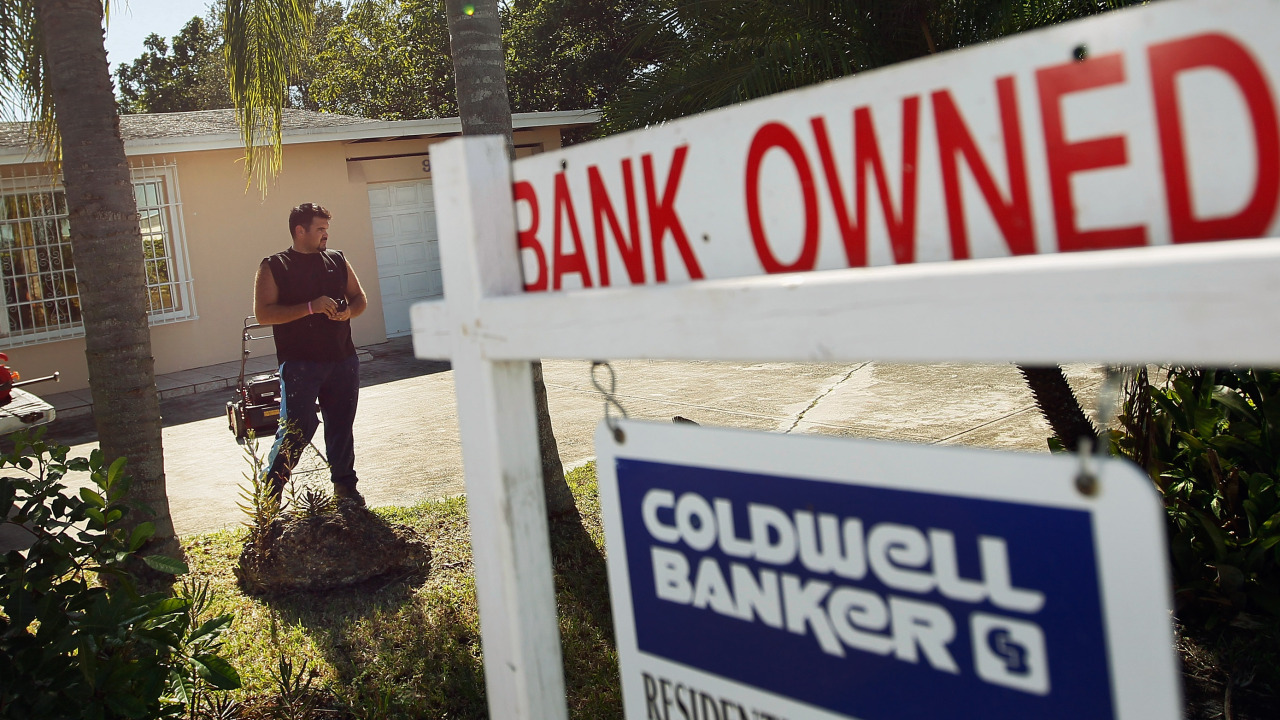
1 / 4
2 / 4

3 / 4

4 / 4
Moneywise and Yahoo Finance LLC may earn commission or revenue through links in the content below. Economist Peter Schiff made his name by predicting the 2008 housing crash. Now he's ringing the bell for another potential crisis in America's housing market — and it could see a wave of homeowners mailing back their keys. "Why are housing prices so high?" Schiff asked in a YouTube Short last September (1). "Because for a long time, the Fed kept interest rates at zero, and so a lot of people were able to get really low mortgages, 3% mortgages, 4% mortgages." Jeff Bezos backs a platform that lets anyone invest in rental homes for as little as $100 — 6 ways to build wealth like a landlord without actually being one JPMorgan still sees gold hitting $5,000/oz by Q4 — and savvy investors are protecting their wealth with a tax-advantaged Gold IRA. Learn more with a free guide from Priority Gold The tax breaks in Trump's 'big beautiful bill' expire after 2028 — and experts say most people won't act in time. What to do before the window closes He went on to explain why this is such a problem. "And because homes are bought — not based on what the home cost — but based on the monthly payment, the lower the monthly payment, the more somebody could pay for a house. Now you have a problem where housing prices went way up, but then mortgage rates went way up, and home prices never came back down to levels consistent with more expensive mortgages." Schiff believes prices will "eventually" fall to match today's higher rates — a painful adjustment that, he warns, could trigger "a housing emergency." "It's going to create a bunch of defaults and a lot of people are going to walk away and mail in their keys because they can't sell their houses for more than they owe," he said. So, are Schiff's predictions really about to come true? Here's a closer look at what he's saying — and how you can protect yourself against any potential market shocks. Schiff is right about one thing: Mortgage rates have indeed surged. The average rate on a 30-year fixed mortgage has climbed from a low of 2.65% in January 2021 to a peak of 7.79% in October 2023, before falling to about 6.55% as of July 2026 (2). Normally, higher borrowing costs can cool down the market, but prices remain stubbornly high, with the median price of a new home above $405,300 (3). According to Schiff, these conditions could cause a cascade of defaults if house prices adjust suddenly and owners are left owing more than their homes are worth. It could even trigger another housing crash like the one in 2008, when many underwater homeowners simply mailed their keys to the lender and walked away. But today's market is also different. Lending standards are tighter than during the subprime mortgage era, making widespread negative equity less common. Supply constraints are also a factor: Realtor.com estimates that the deficit in housing widened from an estimated 3.8 million homes in 2024 to 4.03 million in 2025 (4). Either way, other real estate gurus are still warning potential homebuyers to stay away in this tough market. In an interview posted on his social media in March 2026, billionaire Grant Cardone said, "Homes, going forward over the next 30 years, will prove to be an even worse investment than the last 30 years (5)." "My advice to all young people: Never buy a home until you're super wealthy." Read More: Millionaires under 43 hold only 25% of their wealth in stocks. Here's where their money is actually going While Cardone doesn't advocate buying a single home as an investment, he is a titan of real estate: He claims to own $4 billion in real estate assets, including several apartment and office complexes in Florida, where he is primarily based (6). However, buying up apartments is not available to everyone — but there still are ways to tap into the income-generating engine that is real estate without becoming a landlord. This is where platforms like mogul come in. They offer fractional ownership in blue-chip rental properties, which gives investors monthly rental income, real-time appreciation and tax benefits — without the need for a hefty down payment or late-night tenant calls. Founded by former Goldman Sachs real estate investors, the mogul team handpicks the top 1% of single-family rental homes nationwide for you. Simply put, you can invest in institutional quality offerings for a fraction of the usual cost. No midnight maintenance calls. No burst pipes, No angry tenants. Each property also undergoes a vetting process, requiring a minimum 12% return even in downside scenarios. Across the board, the platform features an average annual IRR of 18.8%. Their cash-on-cash yields, meanwhile, average between 10% to 12% annually. Offerings often sell out in under three hours, with investments typically ranging between $15,000 and $40,000 per property. Getting started is a quick and easy process. You can sign up for an account and then browse available properties. Once verified, it takes only a few clicks to invest. Like Cardone, Schiff is cautious about owning a single-family house. He argues that many homeowners are staying put only because they are locked in ultra-low mortgage rates, which are now limiting the number of homes for sale. "But at some point, there are people that have to sell their houses for whatever reason and if they have to slash the prices to do it, they may not have enough money to repay the mortgages. And so this could have a cascading effect," he warned. According to July 2026 report from the National Association of Realtors (NAR), pending home sales were down 2.4% month-to-month, but up 2.8% year-over-year (7). Despite some positive sales volume the NAR warned that median home prices were at an all-time high. The report added that the only reason sales were up was a result of wages outpacing home price growth — not a softening market. So, if you haven't recently received a wage increase, this might not mean much for you home buying aspirations. Moreover, there are hundreds of thousands of American households underwater on their mortgages. In their February 2026 First Look, Intercontinental Exchange reported that 878,000 households were either in a state of "severe" delinquency, meaning that they were 90 days or more behind on payments, or in foreclosure as of the end of January 2026 (8). While Schiff is wary of the U.S. homeownership market, he has acknowledged one persistent trend: "Rents go up every year," he noted on his show (9). America's housing affordability crisis is, in part, a reflection of broader cost-of-living pressures — and it underscores how real estate can serve as a hedge. As inflation drives up the cost of materials, labor and land, home values tend to rise as well. Rental income often follows suit, giving landlords a stream of cash flow that adjusts with inflation. In fact, investing legend Warren Buffett has pointed to real estate as a prime example of a productive, income-generating asset. In 2022, Buffett remarked that if you offered him "1% of all the apartment houses in the country" for $25 billion, he would "write you a check (10)." Of course, you don't need billions of dollars — or even a mortgage for buying a house outright — to benefit from real estate investing. Real estate platforms like Arrived offer an easier way to get exposure to this income-generating asset class without taking on a hefty mortgage. Backed by world-class investors, including Jeff Bezos, Arrived allows you to invest in shares of rental properties, earning a passive income stream without the extra work that comes with being a landlord of your own rental property. To get started, simply browse through their selection of vetted properties, each picked for their potential appreciation and income generation. Once you choose a property, you can start investing with as little as $100, earning any monthly dividends. And the best part? For a limited time, when you open an account and add $1,000 or more, Arrived will credit your account with a 1% match. Another option for real estate investors is investing in multifamily properties. However, finding and sourcing these properties yourself can be cumbersome, capital-intensive and full of headaches. But there are plenty of real estate investment opportunities out there, so long as you know where to look. Plenty of opportunities are marketed to accredited investors, but not all opportunities are created equal. In fact, a 2025 report published by JPMorgan Chase quoted Vice Chair of Commercial Banking Al Brooks as saying, "I think multifamily housing is absolutely where you want to be as an investor (12)." For accredited investors looking to diversify beyond public equities, Bonaventure offers access to institutional-grade multifamily real estate investments in high-growth markets with a minimum investment of $25,000. Bonaventure focuses on income-producing apartment communities, offering potential tax advantages through structures like 1031 exchanges and UPREITs, allowing you to build passive income and wealth while the company manages the properties. Plus, Bonaventure has a fully-loaded resource center that teaches you everything you need to evaluate multifamily investments. Sign up today, explore your options and construct your real estate portfolio. Here are the 7 top habits of 'quietly wealthy' Americans. How many do you follow? 'Gold still crashing!': Robert Kiyosaki admits he was wrong — but doubles down on his $35K prediction When he dies, Warren Buffett said 90% of his wife's inheritance will go into a single investment. Here's why (and how you can do it too) Are you paying too much for car insurance? Here are 3 clever ways to slash your monthly bill Join 250,000+ readers and get Moneywise's best stories and exclusive interviews first — clear insights curated and delivered weekly. Subscribe now. We rely only on vetted sources and credible third-party reporting. For details, see our editorial ethics and guidelines. @peterschiff (1), (9); Federal Reserve Bank of St. Louis (2); Yahoo Finance (3); Realtor.com (4); @grantcardone (5); The Real Deal (6); National Association of Realtors (7); Intercontinental Exchange (8); CNBC (10); JPMorgan Chase (11) This article provides information only and should not be construed as advice. It is provided without warranty of any kind.
Comments
You must be logged in to comment.