yahoo Press
What Restaurant Leaders Must Get Right About Integrating Acquired Brands
Images
1 / 5
2 / 5

3 / 5

4 / 5

5 / 5
When a restaurant group acquires another concept, it makes news headlines.

But behind closed doors, the integration process—aligning systems, culture, marketing, and long-term strategy without eroding what made the brand valuable in the first place—is where success or failure is determined.

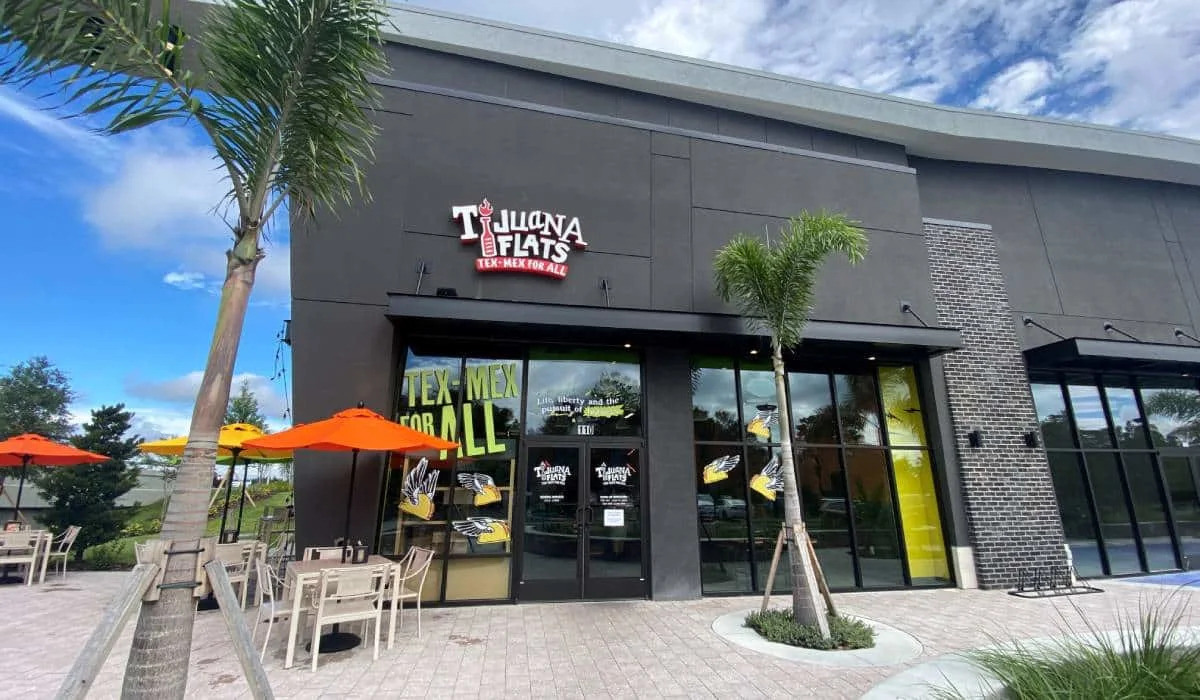
For Sergio Perez, that challenge is playing out in real time at Latitude Food Group (LFG), formed after &pizza acquired Tijuana Flats.

A few months into his tenure as CMO, Perez is helping shape a platform designed to scale multiple brands while strengthening the fundamentals that matter most to operators and franchisees.

"I think the overarching North Star has been to really build a platform for franchise growth and really make sure that we're identifying culturally relevant, bold brands that have a unique food story and building a portfolio of like brands to be able to achieve that," Perez says.

Perez says a shared services model helps streamline overhead by consolidating functions like HR, IT, and supply chain, making the business more efficient. Those savings can then be reinvested to strengthen unit-level economics and create a more attractive foundation for franchise growth.

"Franchisees are not just looking to invest in hot brands, but they're more importantly looking to invest in brands that are going to return on that investment," Perez says.

While the back end may consolidate, the front end cannot. One of the biggest risks in integration is overcorrecting and imposing uniformity on brands that succeed precisely because they are different.

Perez is acutely aware of that tension, particularly in marketing. Rather than pursuing a traditional rebrand or sweeping overhaul, his approach centers on refinement.

"The traditional playbook has tended to be around acquiring brands and quickly leaning into a rebrand or a revolution of the brand," he says. "The way I'm thinking about this exercise is really about optimizing the brands and evolving those from a modern perspective."

Perez says restaurant groups must respect each brand's identity.

&pizza and Tijuana Flats, while distinct in cuisine and geography, carry strong personalities.

"I think both brands have very unique DNA," he says. "&pizza is about community, culture, hospitality, and food while Tijuana Flats is a little bit more colorful but really rooted in a real Mexican Tex-Mex heritage around bringing people together."

Preserving that DNA means resisting the urge to standardize too quickly. Perez focuses on boosting what already works.

"How do we amplify the volume in the places where both brands are winning? Where do we bring those brands home to their roots to make sure that we're delivering on the promise that consumers who know those brands know that we are not changing the things that they love about the brand?" he says.

That restraint is important in marketing, where the temptation to centralize can be strong. Although there are clear advantages to scale—in media buying and vendor relationships—Perez draws a firm line when it comes to the customer-facing experience.

From a supply standpoint, integration is an opportunity. The CMO said LFG is using its larger ecosystem to draw better rates. But from a consumer standpoint, separation often makes more sense.

Geographic realities can dictate strategy. &pizza operates primarily in northern markets, and Tijuana Flats is concentrated in the South, limiting overlap between customer bases.

As a result, LFG is taking a measured approach to shared marketing infrastructure. Media buying may converge, but loyalty programs, customer data, and digital ecosystems remain largely brand-specific. For now, at least.

That duality—shared where it makes sense, separate where it matters—extends into how campaigns are executed.

Even when two brands are activating around the same moment, the work is deliberately split.

"I think it's important to think about moments like 4/20 or other joint marketing effort events as kicking those off as an internal brief with the whole team," Perez says. "Then individually go and tackle each individual promotion because again, the consumers are quite different in each brand."

Culture, meanwhile, is perhaps the most complex layer of integration and the hardest to quantify. Perez describes the challenge in human terms.

"I think of these brands as individual people who might have a shared value system but operate and behave a little bit differently," he says.

LFG's goal is not to erase those differences, but to unify around core principles: hospitality, culinary credibility, and speed. Perez says &pizza and Tijuana Flats share a core DNA as challenger brands that punch above their weight.

Still, building a holding company culture requires more than defining values—it requires inclusion. Perez emphasizes listening to legacy teams, many of whom have lived through years of success and struggle.

"You will be surprised by how many answers are actually in-house," he says. "It's about building that big table to ensure that everybody's participating in that building process."

That same philosophy carries into franchising, where LFG sees long-term growth. The objective is not just to operate multiple brands, but to create a system that encourages multi-brand ownership.

"Our goal is to become a franchise of choice for potential franchisees," Perez says, noting that the platform is being created so operators can "plug and play" across concepts while diversifying their portfolios.

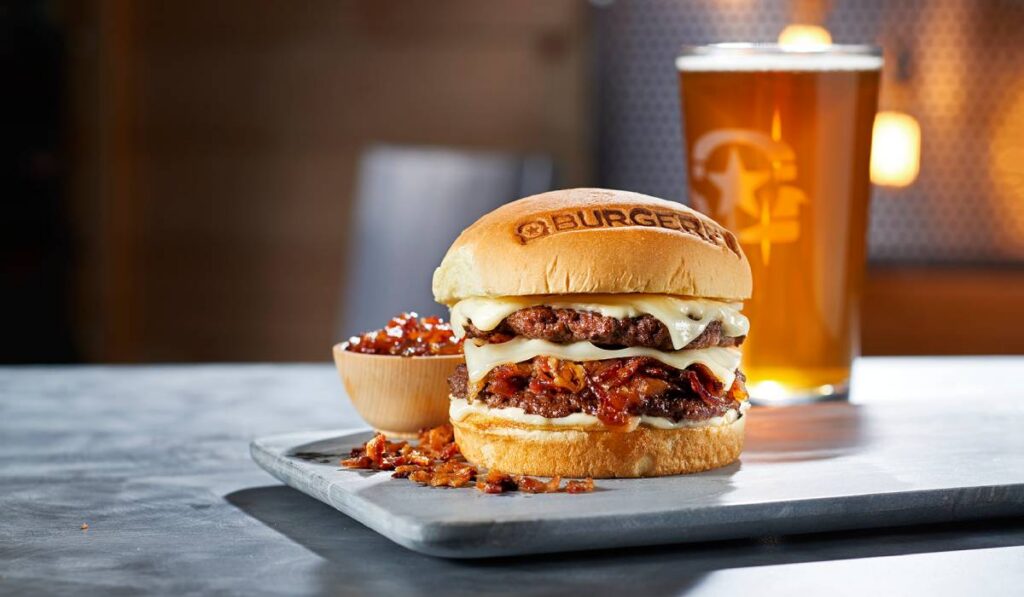
Happy Group president Casey Biehl is quite familiar with restaurant integration as well, given his company's acquisition of Fat Boy's Pizza and BurgerFi in recent years. The group also operates Happy's Pizza and Savvy Sliders.

Unlike LFG's more deliberate platform build, Happy Group's portfolio evolved organically.

"The truth of the matter is there was never a true strategic architecture or roadmap on how we landed at where we are today," Biehl says.

The discovery of Fat Boy's Pizza came through a trademark conflict that was eventually resolved. BurgerFi, which went bankrupt as a publicly traded company at one point, entered the picture initially as a potential conversion play before the team developed "a strong, strong admiration for the brand, the product, and the legacy components that made the brand successful in the first place."

The entry points for Fat Boy's and BurgerFi may have been different, but the integration philosophy has become increasingly pragmatic.

Step one, according to Biehl, is stabilizing the business.

That first phase of integration is about understanding unit-level performance, identifying operational gaps, and restoring consistency, especially in brands that may be distressed.

"We're a family-owned business. It's relatable for us to understand the impact that the livelihood of the store level has on these people's financial health—it's critical. Then really fixing operational gaps, going, 'All right, how do we fix these gaps,' and the structure reporting accountability," Biehl says.

Like Perez, Biehl stresses restraint when it comes to the customer experience. Integration may happen quickly behind the scenes, but changes in the dining room come slowly.

"Most of these brands had success and something happened along the way, and I think it's critical that we maintain the integrity of the brand," he says.

Happy Group also spends much time looking for synergies.

"Whenever we're looking at the evaluation of past acquisitions and/or future acquisitions, the synergy piece is critical," Biehl says. "And that's what gets us very bullish on our ability to double in size in the next 12 months."

Biehl says one of the most immediate opportunities lies in the supply chain, where the company can leverage its existing distribution and manufacturing relationships. By comparing its established vendor network—spanning key ingredients like proteins and produce—with those of newly acquired brands, the group can identify efficiencies and optimize sourcing.

In terms of leadership structure, Happy Group chooses not to duplicate roles across the brand. It prefers to centralize the expertise. For instance, the company isn't looking to have a CMO for each of its concepts.

Even though one C-suite may sit atop all the brands, that doesn't mean the chains lose their identity. Biehl isn't willing to cross that line.

"The goal for us is never to turn every brand into the same brand," Biehl says. "The customer should still feel that same personality, menu positioning, guest experience, and emotional connection that made the concept relevant in the first place."

Perez and Biehl also agree on the importance of taking into account past experiences of employees.

Biehl is well aware that Fat Boy's and BurgerFi came with teams that endured periods of instability, making trust-building essential.

"We need to take time to gain the respect of the legacy employees," Biehl says. "They have families, they have livelihoods that are on the line."

That requires transparency and humility.

"They have a wealth of knowledge. What's worked, what hasn't worked. It would take us years and years of failures to try to uncover what we can just get from them almost immediately," he says.

For Perez and Biehl, the integration playbook ultimately converges on the same principle, which is to protect what makes each brand special while building a system that makes them stronger together.

Most importantly, each leader agrees on what integration is not.

"The number one lesson for me is that the integration is not a spreadsheet exercise," Biehl says. "You can model synergies all day, but if the guest experience gets worse, then the model won't matter."

The post What Restaurant Leaders Must Get Right About Integrating Acquired Brands appeared first on QSR Magazine.
Comments
You must be logged in to comment.