yahoo Press
New NASA space telescope images reveal the universe in stunning red, white and blue for America 250
Images
1 / 11
2 / 11

3 / 11

4 / 11
5 / 11
6 / 11
7 / 11
8 / 11
9 / 11

10 / 11

11 / 11
When you buy through links on our articles, Future and its syndication partners may earn a commission.

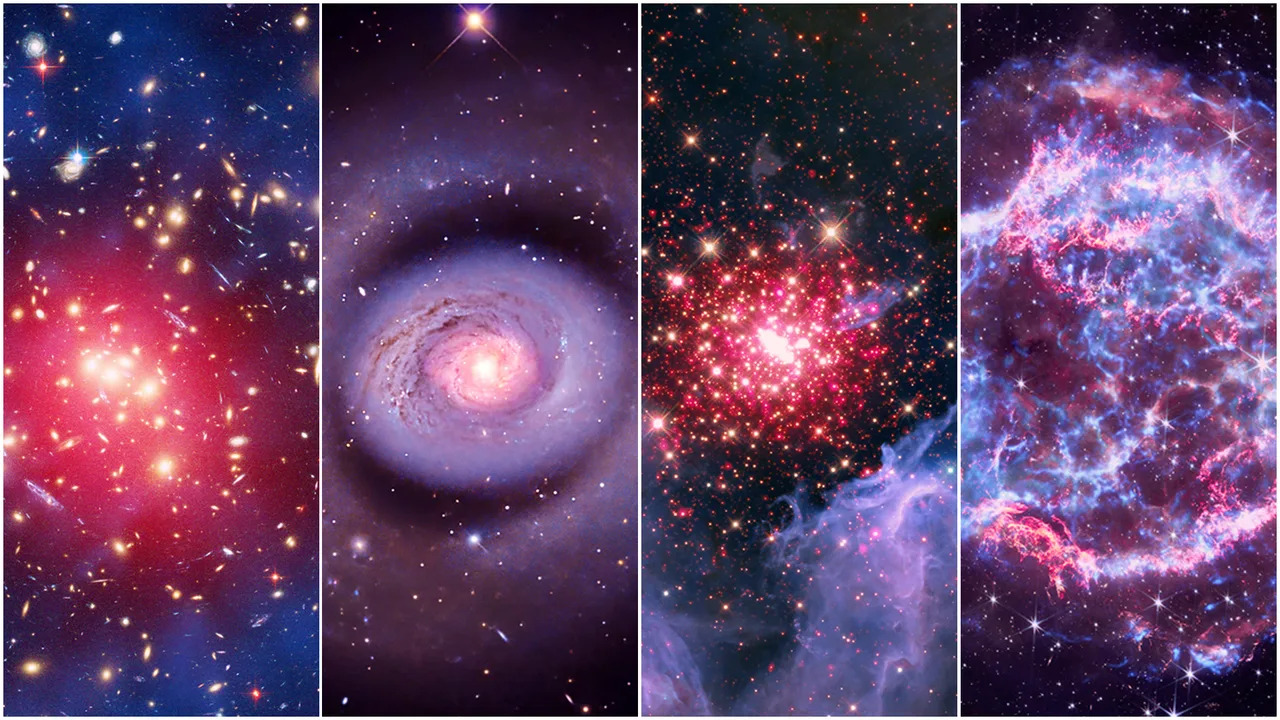
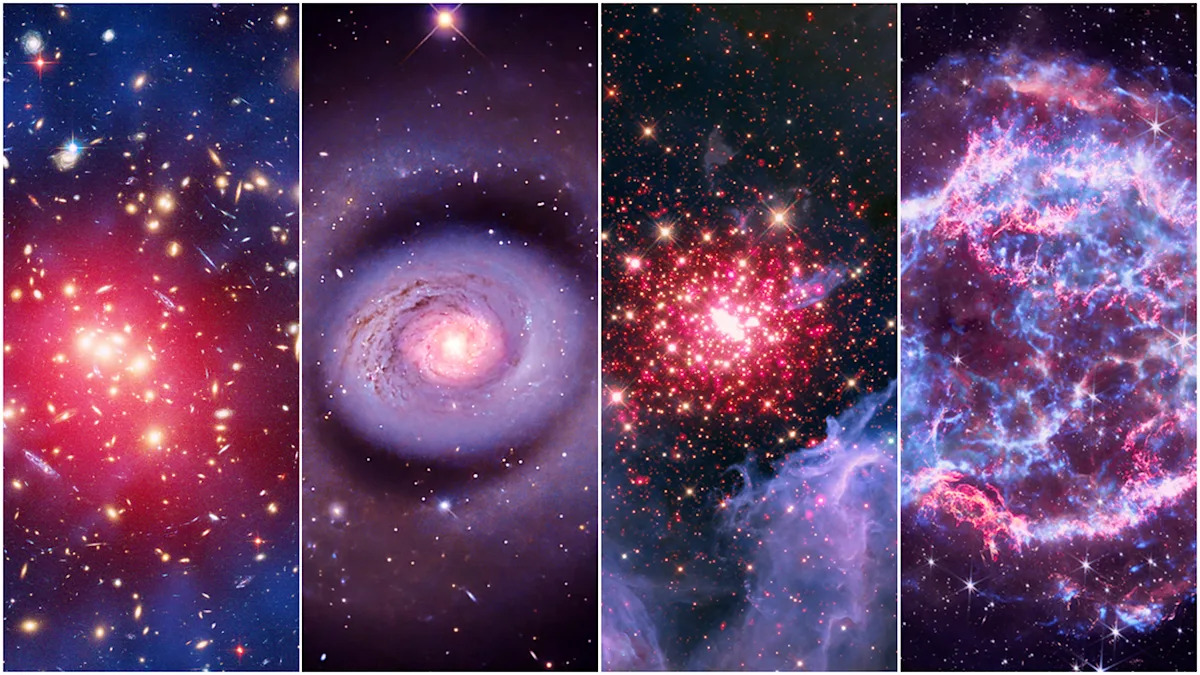
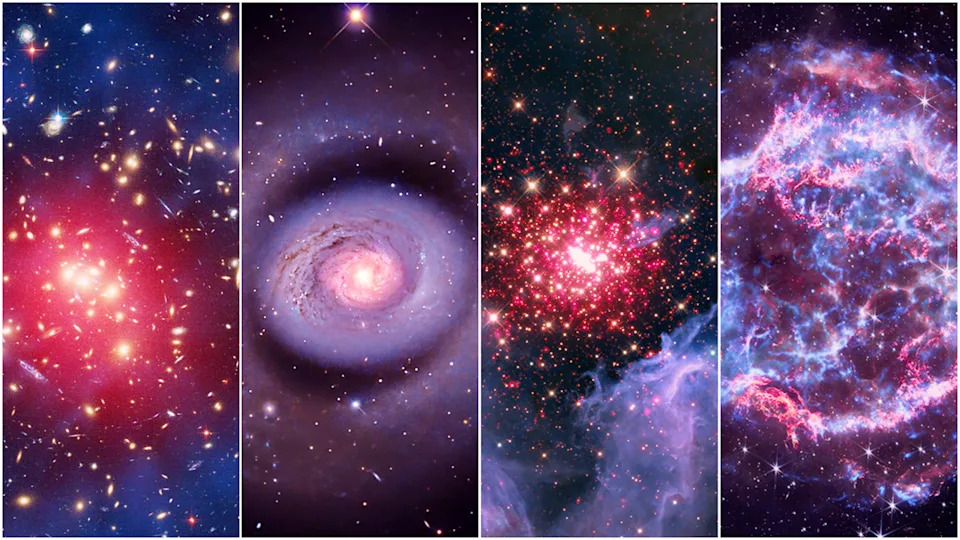
NASA's Chandra X-ray Observatory has released four stunning images of cosmic wonders, depicted in red, white and blue to coincide with the United States' 250th anniversary on July 4.

The four images reveal superheated gas in a distant galaxy cluster, the swirling spiral galaxy known as Messier 94, a glowing nebula found in our own Milky Way galaxy, and the Cassiopeia A supernova remnant, respectively.

Along with the colorful cosmic images, the Chandra team produced sonifications in which the data collected by the powerful X-ray telescope was translated into sound. In this case, the sonifications turn these images into celestial music, mapping X-ray data into different audio frequencies and musical instrument sounds.

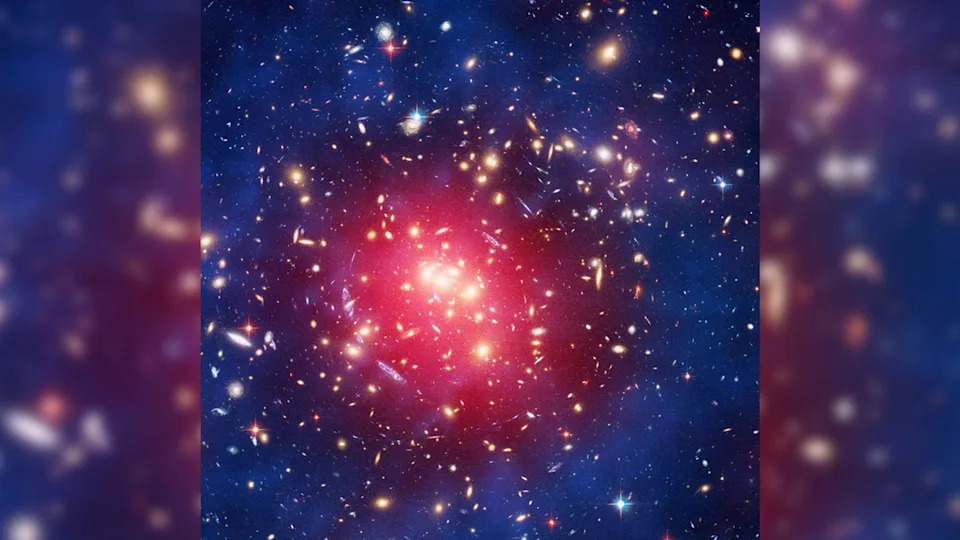
In this image, the galaxy cluster ZwCl 0024+1652 comes alive in vibrant blues and reds. The red in the image is produced from X-ray data collected by Chandra, revealing vast amounts of superheated gas surrounding these galaxies, found some 4 billion light-years from Earth in the Pisces constellation.

This image combines X-ray data from Chandra along with optical data from the Hubble Space Telescope, depicted here in blue. The Hubble data reveals the presence of dark matter, according to a statement from NASA.

Because dark matter does not interact with light, astronomers can't image it directly; its presence can be detected through the gravitational influence it has on surrounding matter that does interact with light.

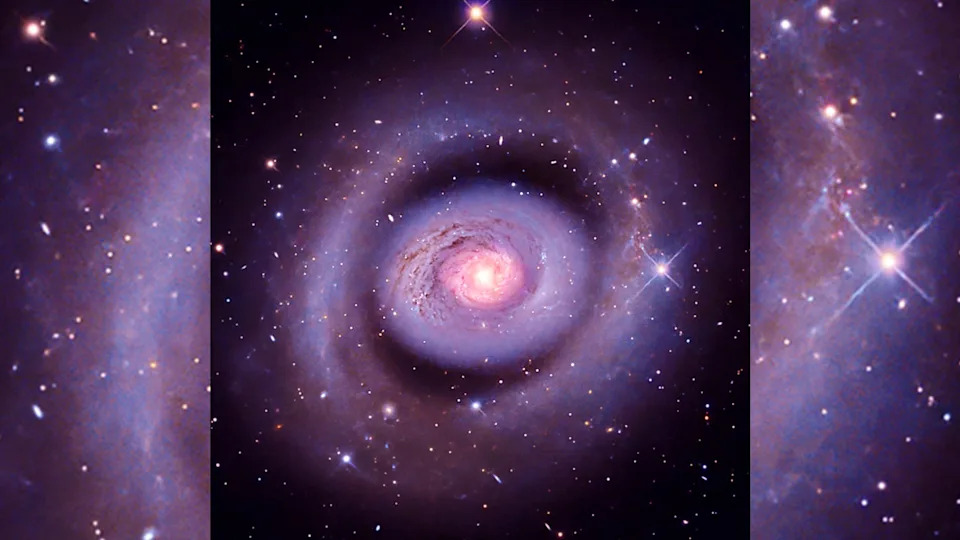
Chandra also peered deep into the 'eye' of the spiral galaxy Messier 94 (M94, or NGC 4736), sometimes colloquially referred to as the Cat's Eye Galaxy. This galaxy is found some 16 million light-years away in the constellation Canes Venatici, the "Hunting Dogs."

In this swirling image, X-ray data collected in space by Chandra was combined with visible light photography taken by telescopes here on Earth. The images show the distinctive inner region of Messier 94, known as a starburst ring, in which new stars are being born.

M94 is also notable for its curious lack of dark matter, according to NASA. "Astronomers do not know why it lacks the normal amount of dark matter, but the galaxy has been the subject of extensive study as a result," the agency wrote in a statement.

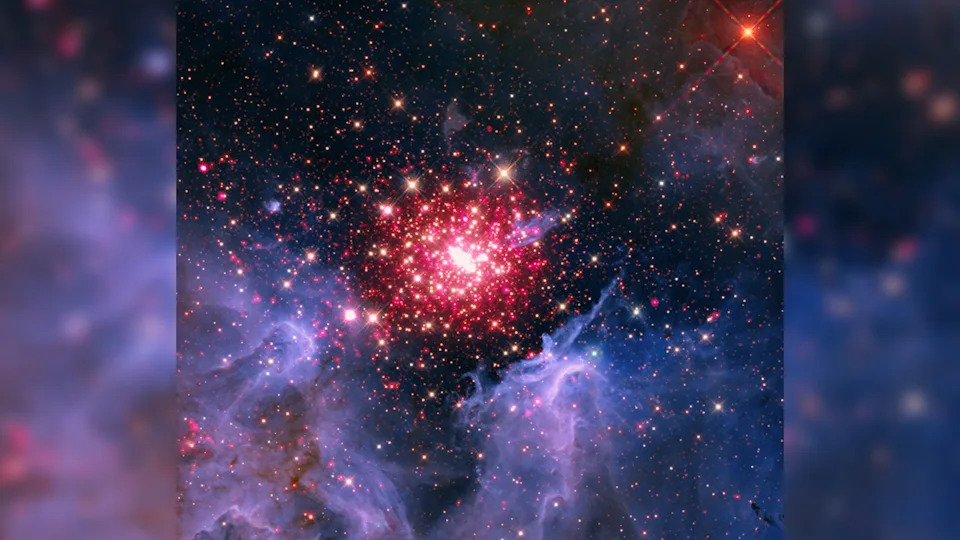
This image combines X-ray data from Chandra with optical, infrared, and ultraviolet light from NASA's Hubble Space Telescope to reveal the twinkling cluster of gases and thousands of stars known as NGC 3603.

This nebula, found in our own Milky Way galaxy, is a vast region of gas and dust surrounding a dense concentration of massive stars. NGC 3603 is located 20,000 light-years away from our solar system in the Carina constellation, a Southern Hemisphere constellation named after the Latin word for a ship's keel.

NGC 3603 contains some of the most massive stars in the known universe, according to NASA. "These huge stars live fast and die young, burning through their hydrogen fuel quickly and ultimately ending their lives in supernova explosions," the agency pointed out in a prior statement about the nebula.

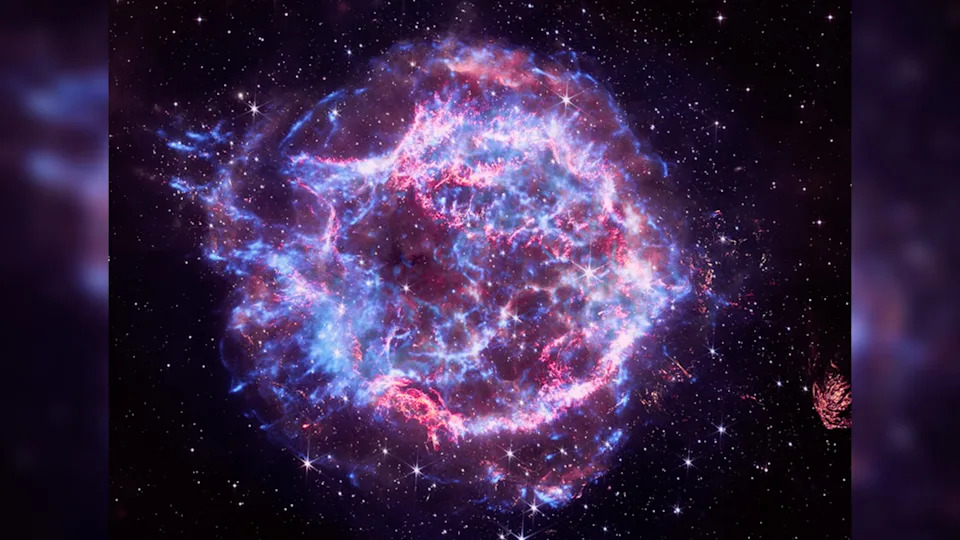
When some stars die, they explode in massive events known as supernovas. The light from one of the most well-known examples of a supernova reached Earth in the 17th century, appearing as a bright point of light in the Cassiopeia constellation. But because this exploded star is located some 11,000 light-years away from Earth, it means that the supernova actually occurred over 10,000 years ago, according to NASA.

Today, the leftover gases from that supernova are known as Cassiopeia A. Astronomers believe the star that produced the supernova was somewhere in the neighborhood of 15 to 25 times more massive than the sun.

In the image below, Chandra's X-ray data was combined with infrared light gathered by the James Webb Space Telescope to help visualize the luminous shell of gas in reds, whites and blues.
Comments
You must be logged in to comment.