huffpost Press
The Democratic Insurgency Just Took Out A Major Democrat’s Bid For Governor
Images
1 / 7

2 / 7
3 / 7

4 / 7

5 / 7

6 / 7

7 / 7
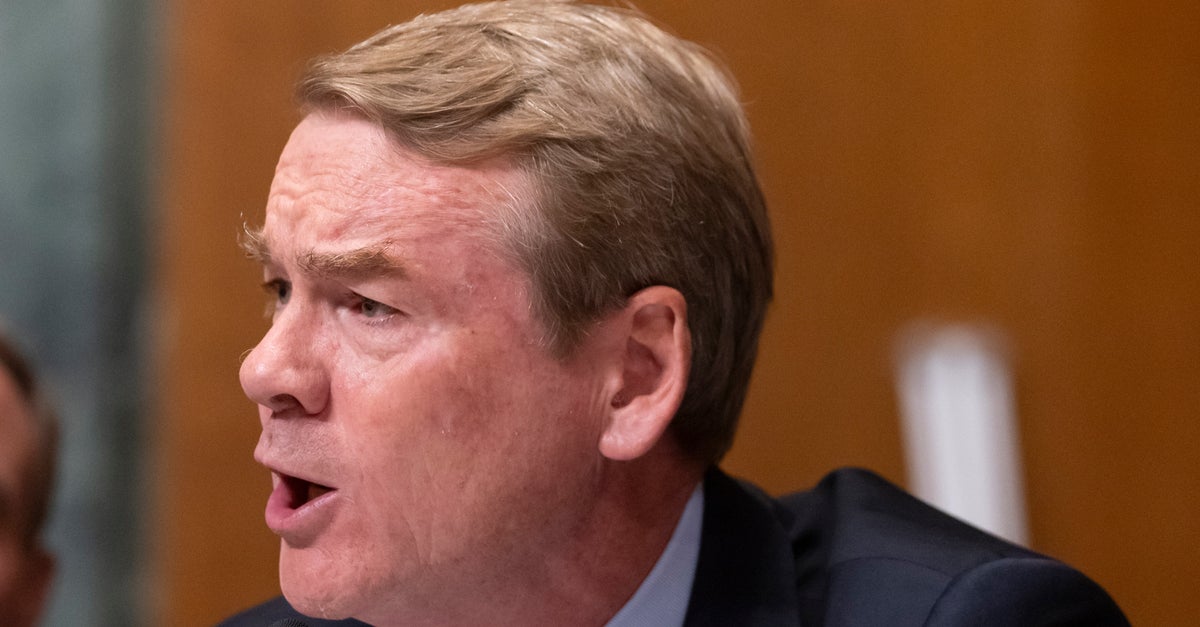
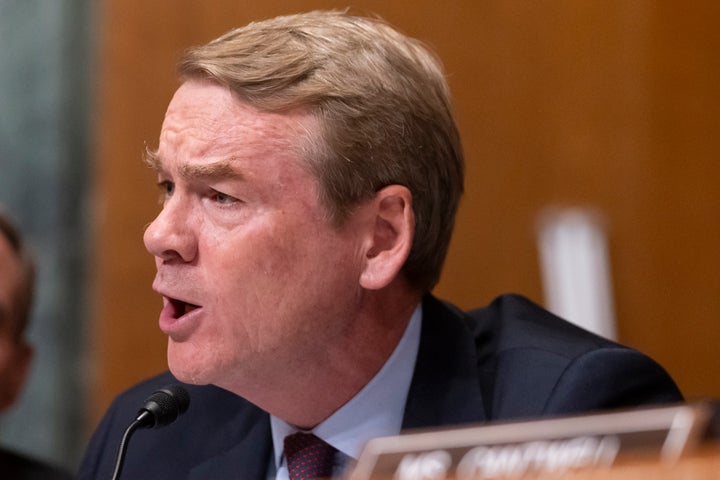
State Attorney General Phil Weiser won the Democratic nomination for governor of Colorado, upsetting Sen. Michael Bennet in the latest example of Democratic voters rebelling against the party’s establishment.

The triumph makes Weiser a strong frontrunner to win the governorship in November in a state which has become reliably Democratic at the presidential level.

Weiser led Bennet by a 55% to 45% margin with about 83% of the vote counted around 11 p.m. Eastern on Tuesday night.

Weiser’s victory, alongside other primary results in Colorado on Tuesday night ― including State Rep. Manny Rutinel’s victory over a more centrist opponent in a primary in the state’s 8th District and 29-year-old democratic socialist Melat Kiros’ lead against 15-term Rep. Diana DeGette in the Denver-based 1st District ― show how the insurgency against Democratic Party leadership continues to grow in strength.

“In America, we the people, and not establishment politics, choose our leaders,” Weiser told a crowd of supporters on Tuesday night. “Tonight, Colorado, you choose fresh, energetic and bold leadership.”

Compared to high-profile profiles earlier this year in states like Maine and New York, the gubernatorial race was not particularly ideological: both Weiser and Bennet are broadly mainstream liberals.

But Bennet’s loss is likely to be seen as further evidence the party’s rank-and-file are fed up with the establishment following Trump’s 2024 election victory, with Weiser successfully using Bennet’s membership in a Congress largely seen as an ineffective check on the president against him.

Bennet, a former schools chief in Denver who made an ill-fated bid for the presidency in 2020, was seen as the frontrunner at the start of the race, at one point uncorking a 31-point lead in polling last summer. History was on his side as well: U.S. Senators nationally had not lost an open gubernatorial primary since 1942.

But Weiser was able to keep pace with the senator’s fundraising and contrasted Bennet’s record of voting eight times for Trump’s cabinet nominees with his own record of suing the administration more than 60 times over immigration, environmental and other policies. He also hammered Bennet for relying on a super PAC heavily funded by former New York City Mayor Michael Bloomberg.

“So many pundits thought this wouldn’t be a race at all, they thought it would be a coronation,” Weiser said. “You all sent a very clear message: The future of Colorado will not be decided by out-of-state billionaires.”

It became clear an upset was possible in the final weeks, when Bennet loaned his own campaign $1 million and a pro-Weiser super PAC released a poll showing him with a substantial lead.

If Weiser wins, he’ll replace outgoing Gov. Jared Polis, a Democrat whose libertarian leanings often led him to take a softer line towards the Trump administration on some issues. He spoke fondly of parts of Robert F. Kennedy Jr.’s MAHA movement, and commuted the sentence of Tina Peters, an elections official-turned-conspiracy theorist whose freedom became a personal cause of Trump’s.

Colorado, in particular, seemed ripe for a progressive or anti-establishment uprising. The state’s electorate has been transformed by decades of young, liberal-leaning transplants, setting up a seemingly inevitable clash with the Democratic Party establishment, which takes pride in its moderate, often business-friendly outlook.

The most explicitly ideological battle in the state was in the 1st District, which remains uncalled, though Kiros is considered a strong favorite. She leads DeGette by a 49% to 45% margin with 73% of the votes counted, according to the Associated Press. The remaining votes, however, are expected to tilt towards younger and more progressive voters, giving Kiros a leg up.

The battle between Kiros, an Ethiopian immigrant who lost her job as an attorney for writing an op-ed defending the rights of students protesting the War in Gaza, and DeGette is closer to the left-wing triumphs seen in New York City earlier this month: While DeGette has a solid progressive record as a supporter for Medicare-for-All and is a high-ranking member of the House Commerce Committee, younger voters in the district seemingly wanted a more activist approach to politics.

A win for Kiros, who has the backing of Sen. Bernie Sanders (I-Vt.) and the progressive group Justice Democrats, would also be another loss for the American-Israel Public Affairs Committee, whose affiliated super PAC gave money to a group which spent heavily backing DeGette in the final week of the race.

Not every progressive challenger romped in the state, however, with Sen. John Hickenlooper defeating progressive Sen. Julie Gonzales, albeit with a relatively tight margin: he had 57% to Gonzales’ 43% shortly before 11 p.m. Eastern, with the margin expected to shrink. Hickenlooper outraised Gonzales by more than a 10-1 margin.

By entering your email and clicking Sign Up, you're agreeing to let us send you customized marketing messages about us and our advertising partners. You are also agreeing to our Terms of Service and Privacy Policy.
Comments
You must be logged in to comment.