yahoo Press
Between silence and shouts, rescuers dig for Venezuela twin quake survivors
Images
1 / 12
2 / 12

3 / 12

4 / 12
5 / 12
6 / 12
7 / 12
8 / 12
9 / 12
10 / 12

11 / 12

12 / 12
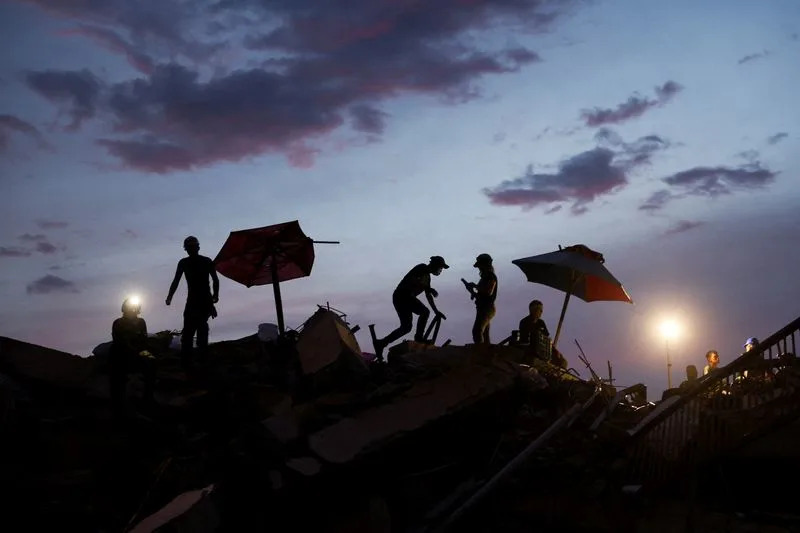
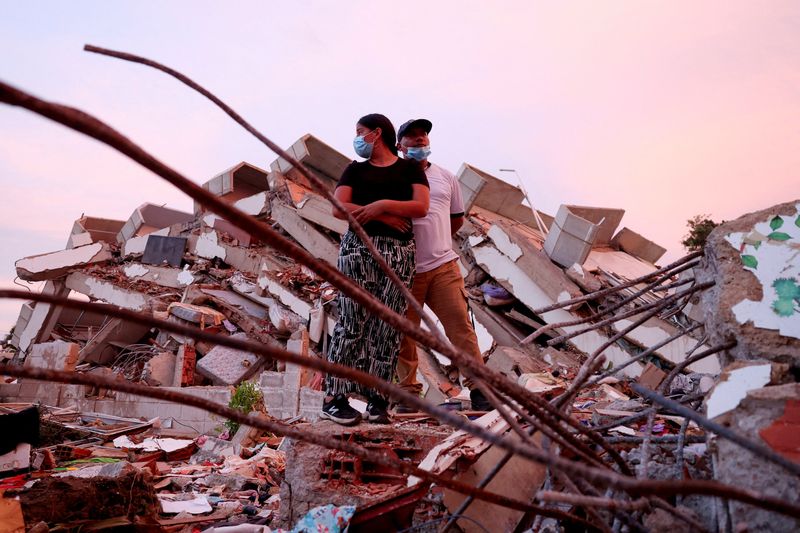
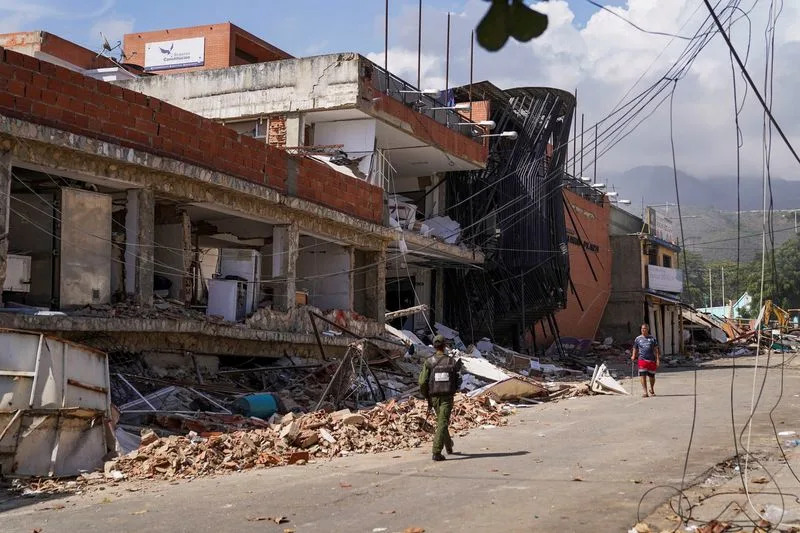
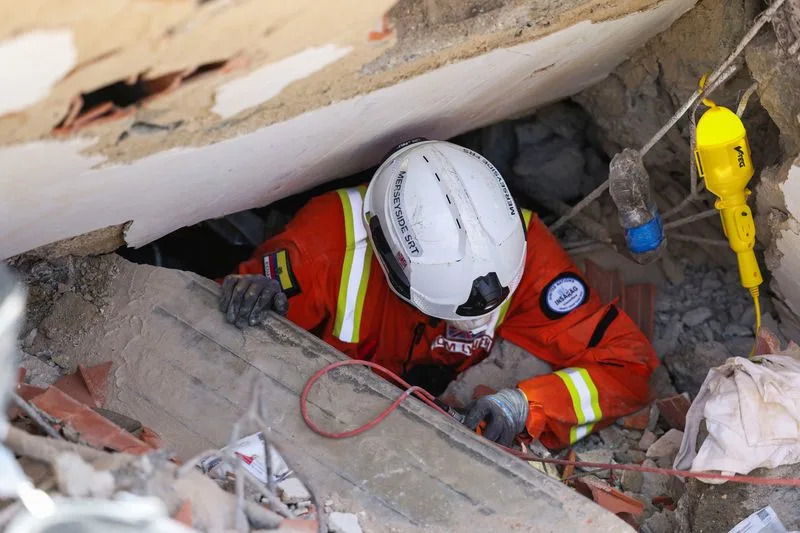
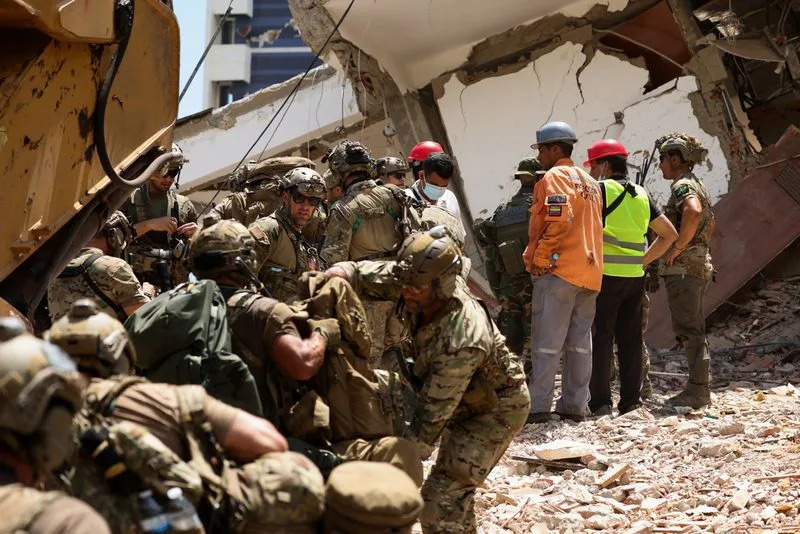
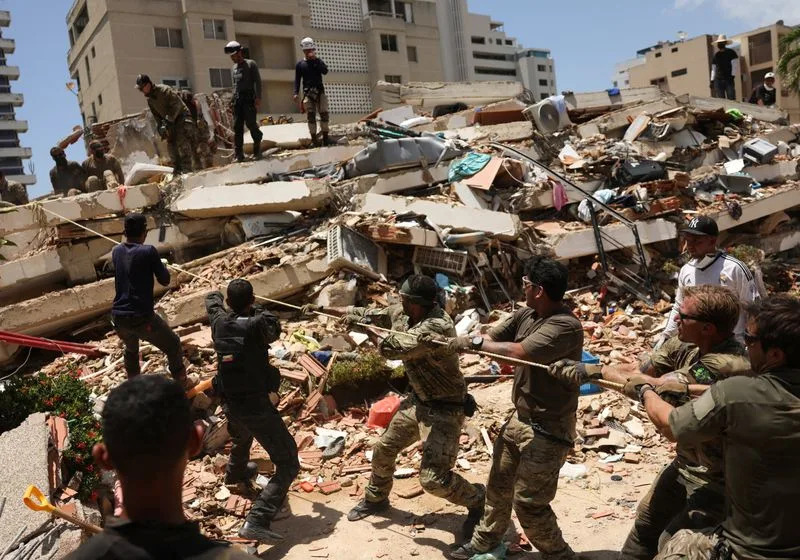
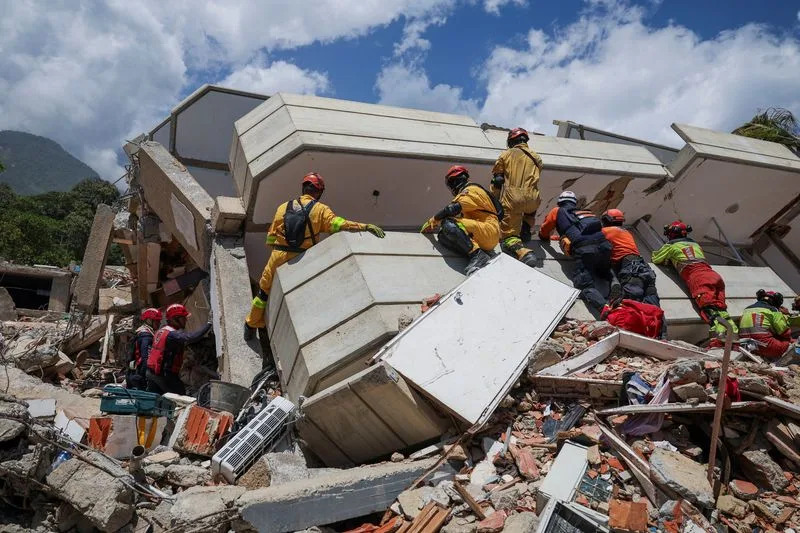
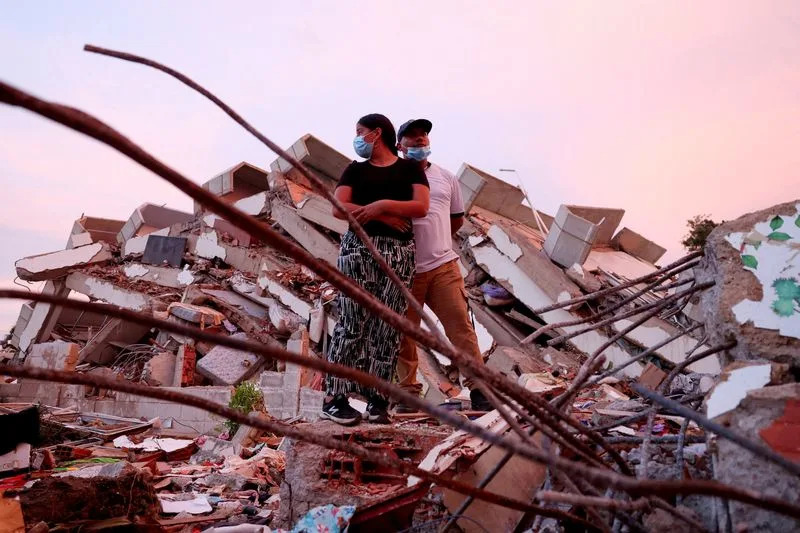
(Corrects June 30 story to reflect attribution of data for damaged buildings in paragraph 23 and second bullet point to researchers, not NASA) By Julia Symmes Cobb and Leonardo Fernandez Viloria LA GUAIRA, Venezuela, June 30 (Reuters) - More than 100 people stood silently on Tuesday in the road alongside what used to be the Los Cocos public housing complex in Venezuela's La Guaira state. For 10 minutes, interrupted only by the occasional cellphone ring or shout from a rescuer, people strained their ears for any sound of survivors of the twin earthquakes that last week destroyed six of the eight towers that made up the Hugo Chavez complex, known colloquially as Los Cocos. Then a horn sounded, and pickaxes and voices sprang to life, as the arduous search began anew. Rescuers at Los Cocos hope there are still survivors to be found on what used to be the ground floor, but they were also seeking the dead. In one area, national police and a paramedic pulled the blackened body of a woman free from the rubble, wedging out her legs as her dark curly hair hung into the debris below her. A family member stood nearby, trying by phone to find a relative to accompany the body to the morgue. At what used to be Building 27, rescuers, including those from Mexico's Topos team, tunneled through debris to the bottom floor, helped by young olive-green-clad cadets from Venezuela's army. "Silence!" a voice rang out from another nearby tunnel and fists shot into the air — a signal for quiet. After a few minutes, a man at the top of a mound shouted, "There are people!" The digging resumed. LOSING HOPE Rescue teams from Ecuador and the U.S. halted operations in the early hours of Tuesday at a site in Macuto, a town in La Guaira, when they stopped receiving responses from a mother and her three children trapped beneath a nine-story building after more than 40 hours of trying to get them out. "In the end, we believe the days have already passed and that what we will find now is death," said Major Jorge Montanero, leader of the EQ11 team from Guayaquil, located on Ecuador's Pacific coast. "Unfortunately, things haven't developed favorably," he said as he stood amid rubble after cutting through four concrete slabs of the building in an effort to locate the four victims. Tens of thousands of people remain missing two days after the critical 72-hour survival window, the International Rescue Committee (IRC) said in a statement. After that period, survival chances drop sharply. “The scale of the response does not meet the scale of humanitarian need,” the IRC said. At a makeshift morgue in La Guaira, at what is usually the state's major port, Andrea Montilla sat in a plastic chair awaiting family members who were inside formally identifying the remains of her cousin and his grandmother. The 14-year-old cousin was found in the rubble of an apartment building overnight, Montilla said. "It's been so painful, a very long wait," she said, adding her cousin's mother is still missing. Empty coffins were stacked throughout the port and bodies were laid out along a stretch of concrete in body bags. An official at the site, who was not authorized to speak to the press, told Reuters they were from La Guaira and had lost multiple family members in the quakes, adding they did not have an estimate of the number of bodies already handed over to families or the number awaiting identification. Jordanian emergency workers did rescue a child early on Tuesday, the only reported survivor on the sixth day of rescue efforts, according to Venezuelan authorities. SURVEYING THE DAMAGE Some 59,000 buildings were damaged or destroyed by the twin earthquakes — which hit seconds apart with magnitudes of 7.2 and 7.5 — according to a analysis by Oregon State University researchers using satellite images. The widespread devastation can be seen from space. Not all collapsed buildings have had professional rescue teams on site, with relatives and neighbors working to remove debris to pull out survivors or bodies, according to residents from various areas. "There is no doubt we are facing a figure higher than what has already been reported. I can offer an estimate: we are procuring — and this has been agreed with local authorities — 10,000 body bags," Gianluca Rampolla, the United Nations' resident coordinator in Venezuela, said on Monday from his Caracas office. The government of acting President Delcy Rodriguez says at least 1,943 people have died and thousands have been injured. About 16,000 people were left homeless. A website promoted by the country's political opposition puts the number of people missing at around 43,000. Venezuela's state-run energy company PDVSA and private gas distributor Domegas said they are inspecting gas lines to some 600,000 consumers in Caracas to detect and repair leaks. Specialized equipment to detect leaks has arrived in the country, they said. UN WARNS OF LOOMING HUNGER, DISEASE United Nations agencies warned that survivors would face hunger and disease in the earthquakes' aftermath. The World Food Programme is appealing for $50 million to provide emergency food assistance to up to 500,000 people over the next three months, the agency said, adding that it has the capacity to feed up to 1 million people if sufficient funding is secured. The WFP has delivered a month’s worth of food, including cereals, dry beans, lentils and vegetable oil, to 1,200 people in La Guaira and has set up temporary feeding centers. Earlier on Tuesday, the World Health Organization warned that Venezuela’s healthcare system was under strain, with at least three health centers critically damaged and six others damaged or only partially functional. The thousands of people displaced by the quakes are also at risk of diseases such as yellow fever and dengue, especially given low vaccination coverage, said WHO spokesperson Christian Lindmeier. The U.S. military has established a robust footprint of U.S. forces in and around Venezuela to support relief operations, with more than 900 personnel inside the country and another roughly 800 in Caribbean hubs Puerto Rico and Curacao, the top U.S. general for Latin America told Reuters. (Reporting by Julia Symmes Cobb and Leonardo Fernandez Viloria; additional reporting by Alvise Armellini and Marianna Parraga; Writing by Julia Symmes Cobb, Vivian Sequera and Oliver Griffin; Editing by Paul Simao, Nick Zieminski, Rod Nickel and Lincoln Feast)
Comments
You must be logged in to comment.