yahoo Press
AI's next bottleneck is power: Chart of the Day
Images
1 / 6
2 / 6

3 / 6

4 / 6
5 / 6

6 / 6
The above button links to Coinbase. Yahoo Finance is not a broker-dealer or investment adviser and does not offer securities or cryptocurrencies for sale or facilitate trading. Coinbase pays us for certain activity generated through this link. Prices displayed are informational.

The AI trade started with chips. Now it's running into the electric grid.

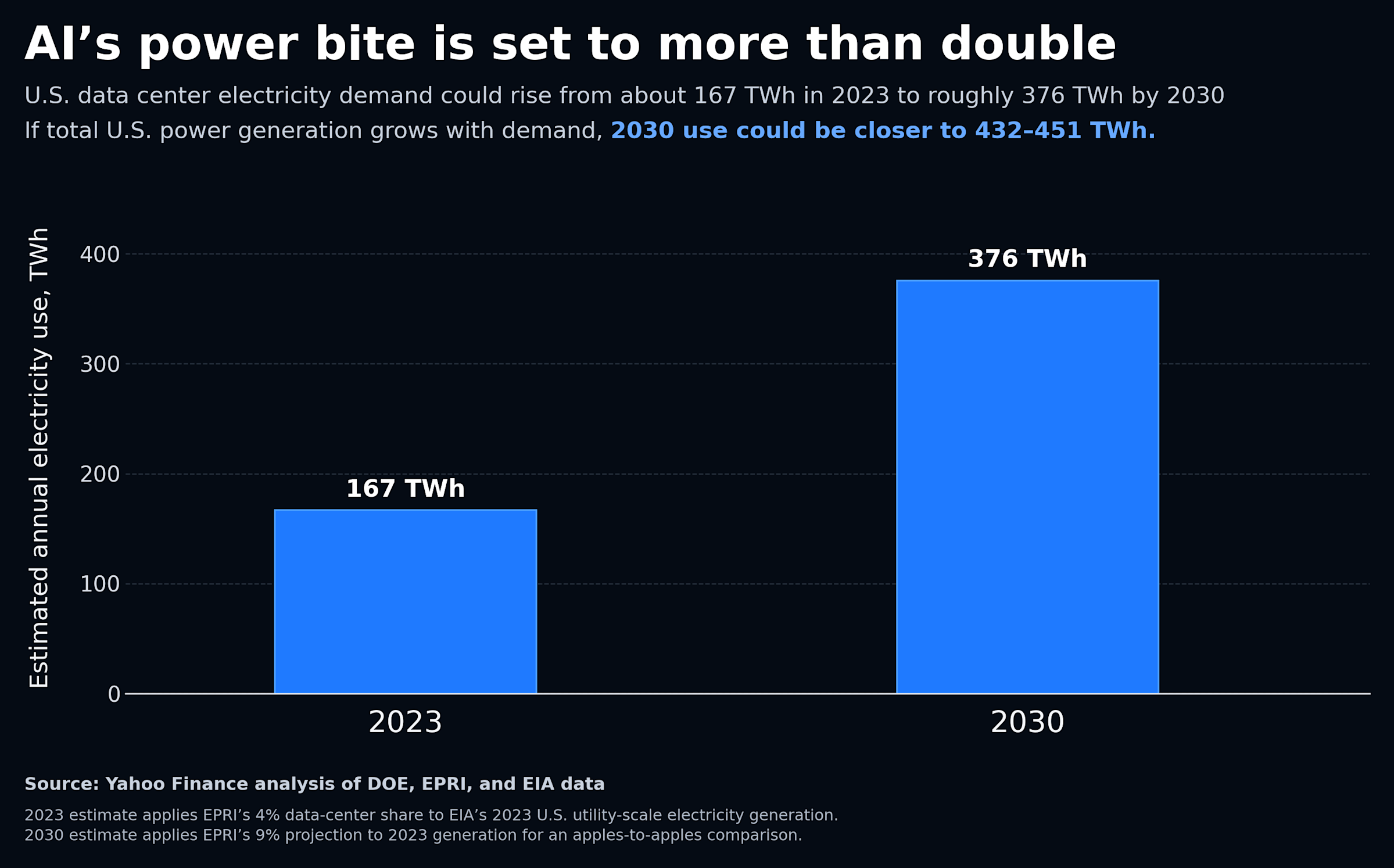
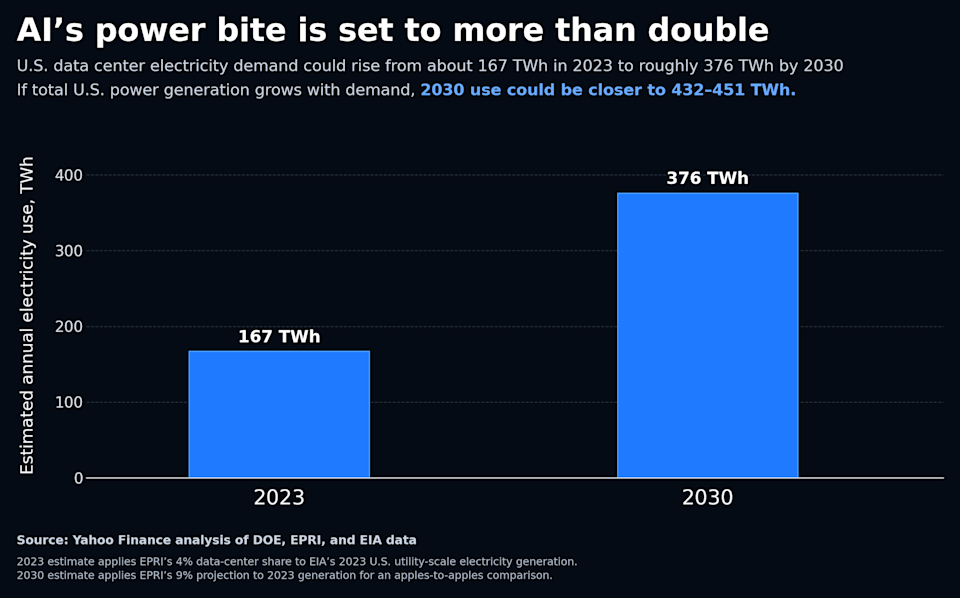
US data center electricity demand could more than double by 2030, rising from roughly 167 terawatt-hours in 2023 to about 376 TWh by the end of the decade, according to a Yahoo Finance analysis of government and industry data.

The increase alone is roughly enough electricity to power 20 million average US homes for a year — and closer to 25 million to 27 million homes if total power generation grows with demand.

That shift is turning power from a background cost into a frontline constraint — and making battery storage part of the AI infrastructure story.

Brett Conrad, Fixx Energy chair and a member of the founding team of Lululemon (LULU), sees storage as part of the answer.

"Energy storage is just such a critical component to American manufacturing and AI data centers and just providing consistent power for even consumers," Conrad told Yahoo Finance at the June ETP Forum hosted by ETFGlobal.

The reason is simple: Storage acts as a "buffer between all the producers of energy and then all the consumers of energy," he said.

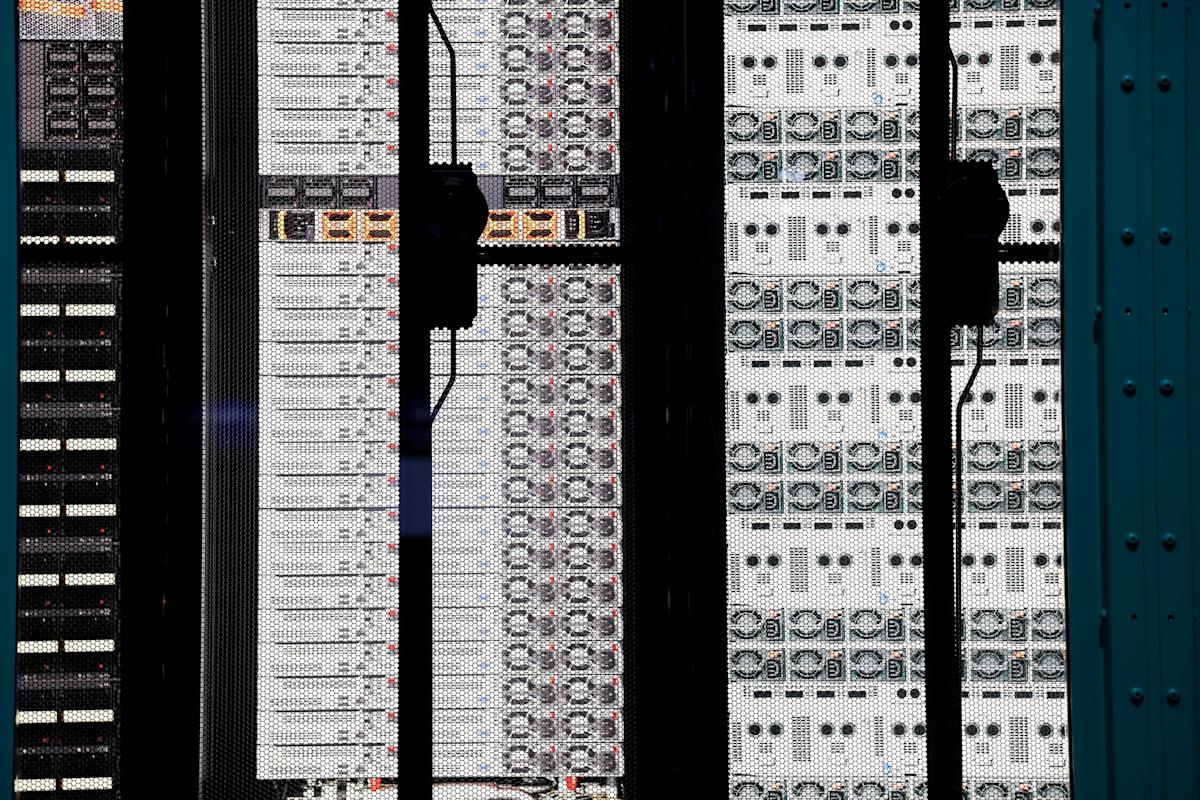
That buffer matters because AI doesn't really run in the cloud. It runs through a physical chain of servers, cooling systems, data centers, transmission lines, substations, and electricity, arriving at the right place at the right time.

Batteries don't create electricity. They move it through time — charging when power is available and releasing it when demand spikes, prices jump, or the grid gets tight.

That makes storage less of a green energy side story and more of a reliability tool for the AI age.

The AI trade has already spread beyond chips into servers, software, and storage. Ford (F) is one example of how the story is spilling beyond pure tech. Investors recently treated the automaker's EDF battery storage deal as part of the same AI infrastructure chain, even though storage is not yet a major line item in Ford's business.

Conrad's point pushes the chain one step further. If compute demand keeps rising, power flexibility becomes part of the stack.

The build-out is already showing up in planned grid additions.

Developers plan to add 24 GW of utility-scale battery storage in 2026, second only to solar, according to the US Energy Information Administration. That puts storage ahead of wind and natural gas among planned utility-scale capacity additions.

Batteries don't solve AI's electricity problem. They can make power more usable at the times and places where demand is rising fastest. In a grid built for steadier loads, that flexibility has value.

For investors, that means the AI trade is no longer just about the parts of the build-out that glow on a screen.

Conrad put it more simply: "Look a couple levels below what you're seeing on the surface."

Jared Blikre is the global markets and data editor for Yahoo Finance. Follow him on X at @SPYJared or email him at jaredblikre@yahooinc.com.

Click here for in-depth analysis of the latest stock market news and events moving stock prices

Read the latest financial and business news from Yahoo Finance
Comments
You must be logged in to comment.