yahoo Press
The hidden reality behind Britain’s homegrown nuclear age
Images
1 / 5

2 / 5

3 / 5

4 / 5

5 / 5
When Rolls-Royce was chosen to build the country’s first mini nuclear power plants, Labour ministers promised the scheme would help to “revive Britain’s industrial heartlands”.

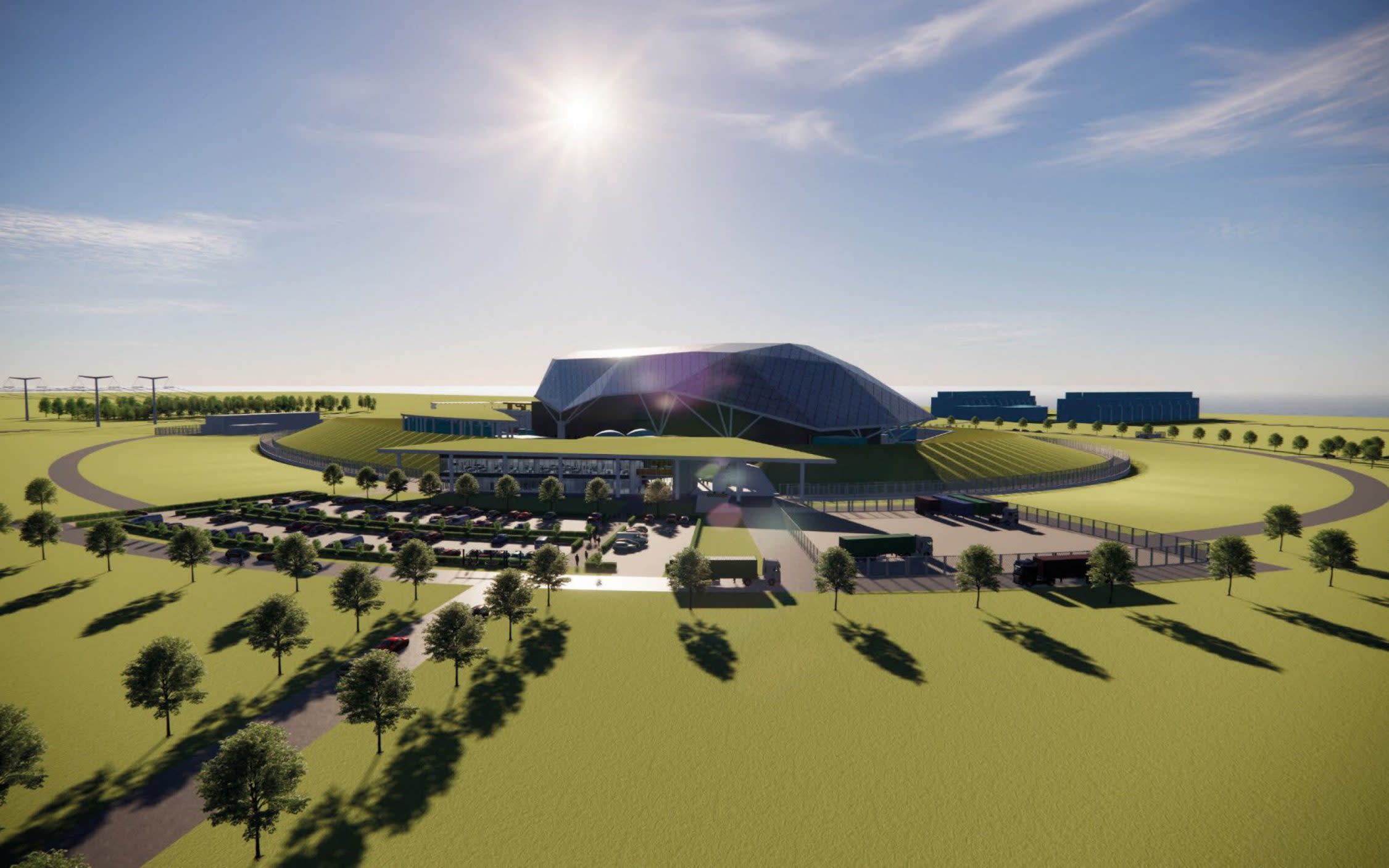
Three small modular reactors (SMRs) are expected to be built in Anglesey, Wales, by the mid-2030s – proving the concept and triggering what could become a massive global industry.

But a year later, exactly just how British those SMRs will be is turning into a thorny subject.

Senior backbench MPs have claimed there were “serious questions” for Rolls-Royce to answer after the company began a process to buy “key nuclear island components” – including reactor pressure vessels – from either South Korea or the Czech Republic last month.

Nuclear plants are usually divided into two parts: a reactor “island” housing the most sensitive nuclear equipment and a separate site where the conventional turbine sits.

The companies in the running for the nuclear island contracts are Korea’s Doosan and CEZ, the Czech state energy giant that has its own nuclear programme and is an investor in Rolls-Royce SMR.

Insiders say the lack of a British bidder was inevitable, because only a handful of businesses in the world can make the specialist equipment and because of a need to begin construction within the next five years.

The contracts with Doosan and CEZ are for detailed design and pre-production only and there is still potential for Sheffield Forgemasters, the state-owned British manufacturer of forgings and castings, to play a role, they add.

But Sheffield’s potential involvement was previously trumpeted by Rolls-Royce and the fact it is now in doubt looks like a downgrade. UK Steel, the industry lobbying group, said the award of contracts overseas was “extremely disappointing”.

Rolls-Royce insists it is committed to “maximising localisation for its customers in the UK and the Czech Republic”.

There is still plenty of value to be captured in Britain. It is understood that the reactor island makes up about 20-25pc of the SMR’s production value. Moreover, the pressure vessel represents less than 0.5pc.

Yet the company’s decision has stirred fears that even more of the work to build what was ultimately a British design could end up going overseas.

Bosses previously suggested it was possible to build the reactor pressure vessels in the UK and even shortlisted locations for a £200m factory before dropping the idea in summer 2024.

The decision to procure them abroad is now expected to trigger greater political scrutiny of the rest of Rolls-Royce’s plan.

That matters because the company is not in the driving seat when it comes to building the first SMRs.

In the UK, it is technically a contractor – a technology supplier – to Great British Energy Nuclear (GBEN), the quango that is responsible for running the Government’s SMR programme.

A person familiar with the GBEN process says sourcing reactors from inexperienced British suppliers at the beginning would “add risk needlessly”, but that Rolls-Royce will be expected to help “build UK competence” over time.

“You want to make the best choice for the first unit, but to have in place deals to build up UK partners for the future,” they add.

“We need to support the UK supply chain properly to build competence and capacity.

“It’s something the Government needs to ensure happens. They need to be monitoring important national capabilities and ensuring they grow properly.”

SMRs are seen as a potential breakthrough because of their modular nature and lower overall cost compared to larger nuclear plants.

It’s envisaged that their modules will be mass produced in factories, before being transported by truck and then clicked together like Lego pieces on site.

Rolls-Royce has predicted there could be demand for 400 SMRs globally in the coming decades, making it a potentially huge industrial programme for the UK – just as its jet engines are today.

The company estimates this could create up to 40,000 domestic jobs and £50bn of economic benefits by 2050, with the Government separately saying the GBEN project alone could create up to 3,000 jobs.

In the UK, ministers have set a target for at least 70pc of the Anglesey SMRs to be made domestically.

What else could still be done in Britain?

Although a pressure vessel factory is off the table for the time being, there is still potential for domestic companies to make other parts for the reactor island as well as for the other parts of the power plant complex.

A major signal will be where the steam turbines for the SMRs are made. Currently, these are not produced in Britain.

Rolls-Royce has selected Siemens Energy as its strategic partner, but says it expects the German giant to leverage its UK manufacturing base to create domestic jobs and opportunities.

It isn’t clear what that means in practice yet. But it’s understood that executives are pushing for the reshoring of the capability, a move that would ensure Britain produced turbines for the SMRs that Rolls-Royce sells around the world.

On top of this, Rolls-Royce has brought in Dorset-based Curtiss-Wright to make reactor protection systems.

There is also a potential second major factory for SMRs that could be worth further hundreds of millions to the British economy.

This would be where various parts and components are assembled into repeatable, finished modules that can be transported to sites.

Rolls-Royce is currently experimenting with how to do this at the Sheffield Advanced Manufacturing Research Centre, as part of a £15m package of work it is doing with the academic institution.

It has also been on the lookout for potential places to set up the proper factory. These could include locations such as Sunderland, Teesside or Deeside, in Wales, that previously lost out on the reactor vessel work, as well as others such as Carlisle; Grimsby, Lincolnshire; and Catterick and Ferrybridge in North Yorkshire, according to reports.

Rolls-Royce confirmed in April that it was looking for a site of about 20 acres and expected to pick one later this year.

There is political pressure for the factory to be in Wales, close to where the first SMRs will be built.

But here as well, bosses are involving a foreign company. Aker Solutions, an Oslo-based oil and gas supply chain company, will be the “primary module partner”.

Rolls-Royce says this will “generate project management and engineering design work” at Aker’s offices in Chiswick, west London, and Aberdeen, while oil and gas supply chain companies that currently work on projects in the North Sea may also stand to benefit.

On top of this, there will be plenty of work on more prosaic aspects of the plant such as steel structures, electrical systems, tanks, valves, pumps, cables and buildings.

It means there is still plenty to play for if Britain wants to make SMRs the export success story politicians have promised.

But as with any such investment, other factors will also be at play: energy costs, taxes, employment laws, skills and infrastructure.

Lord Vallance, the minister for nuclear, said: “Great British Energy-Nuclear is making excellent progress against its ambition for 70pc of British built content across the small modular reactor fleet, and we fully support their work with Rolls Royce to unlock UK supply chain benefits providing thousands of jobs in our community.

“This is part of our commitment to delivering a golden age of nuclear and developing world leading-nuclear expertise and UK supply chains, supporting thousands of jobs in our community.”

Try full access to The Telegraph free today. Unlock their award-winning website and essential news app, plus useful tools and expert guides for your money, health and holidays.
Comments
You must be logged in to comment.