aljazeera Press
‘I prefer Burnham’: Starmer’s future hangs in balance after UK by-election
Images
1 / 13
2 / 13
3 / 13
4 / 13

5 / 13

6 / 13

7 / 13

8 / 13

9 / 13

10 / 13

11 / 13

12 / 13

13 / 13
Ashton-in-Makerfield, a town few knew of until recently, has potentially chosen the UK’s next prime minister.

Save

Share

UK By-Election: Andy Burnham Secures Key Win as Labour Party Faces Leadership Questions

Ashton-in-Makerfield, United Kingdom – Sue Hailwood has felt exhausted since May, when the date of a critical by-election in her town was announced.

For weeks, Ashton-in-Makerfield, the suburban northern ward whose by-election looks set to determine the UK’s next prime minister, has been visited by swarms of activists and journalists.

Political party volunteers have been busy knocking on doors, while protesters have been arguing with one another.

It’s been “absolutely horrendous”, said Hailwood, a charity shop worker.

Vinyl record shop owner Peter Thompson said the attention on the area nestled between the post-industrial northern town of Wigan and the glass skyscrapers of nearby Manchester was “stupidly hectic”.

“There have been Americans, a French magazine, a TV crew from Sweden and a TV crew from Denmark,” he said. “It’s the most important by-election in the history of this country.”

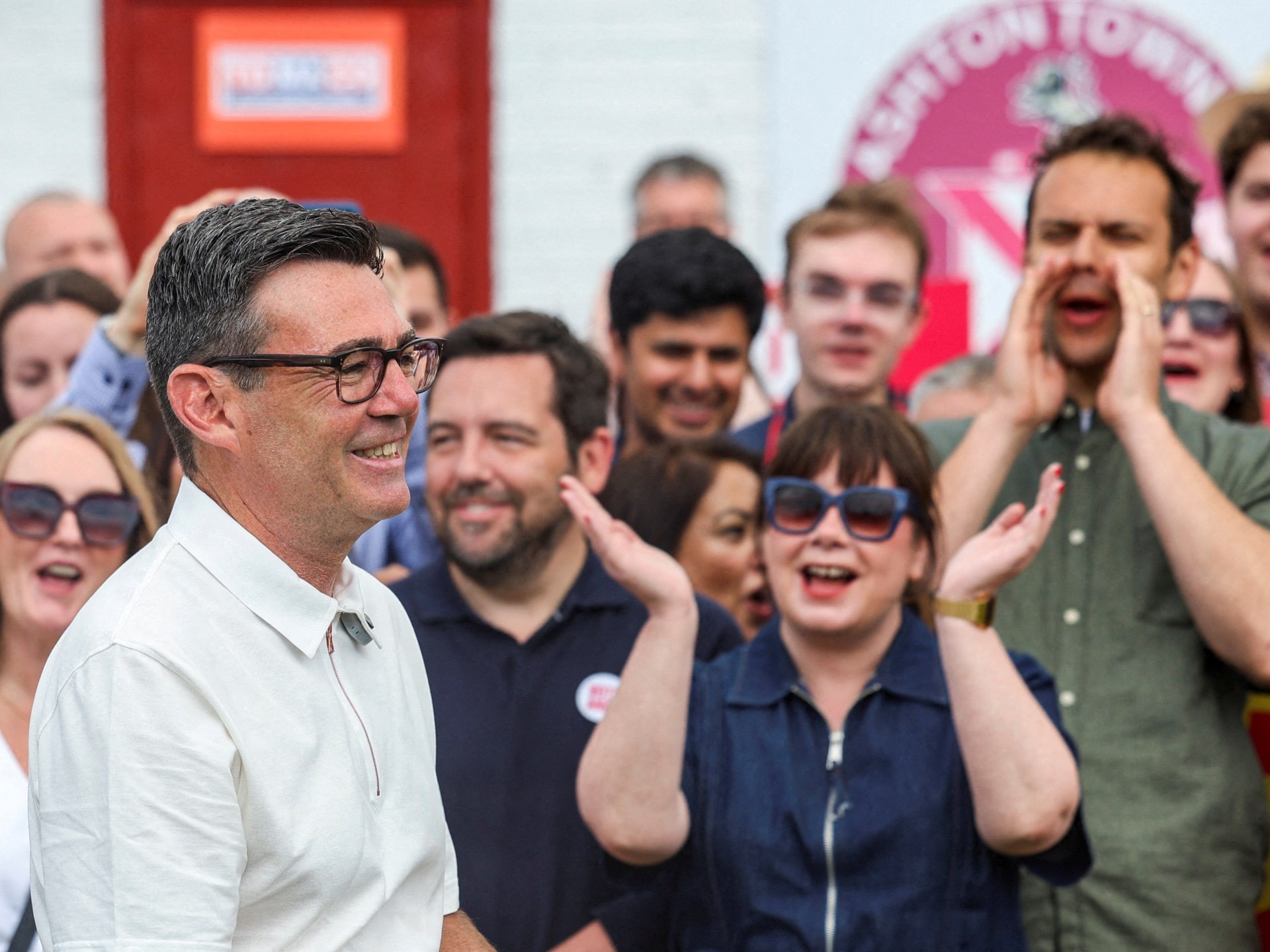
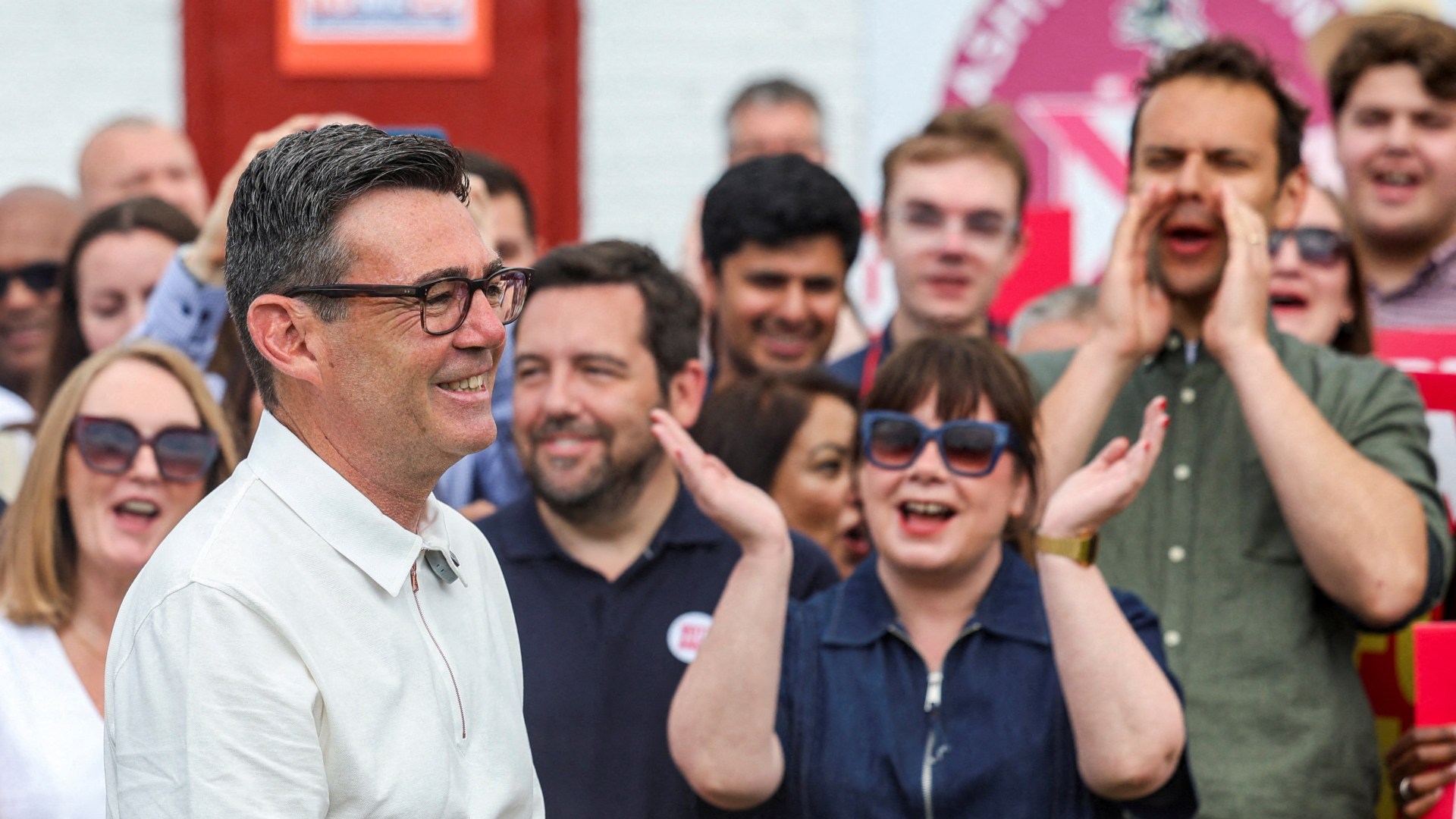
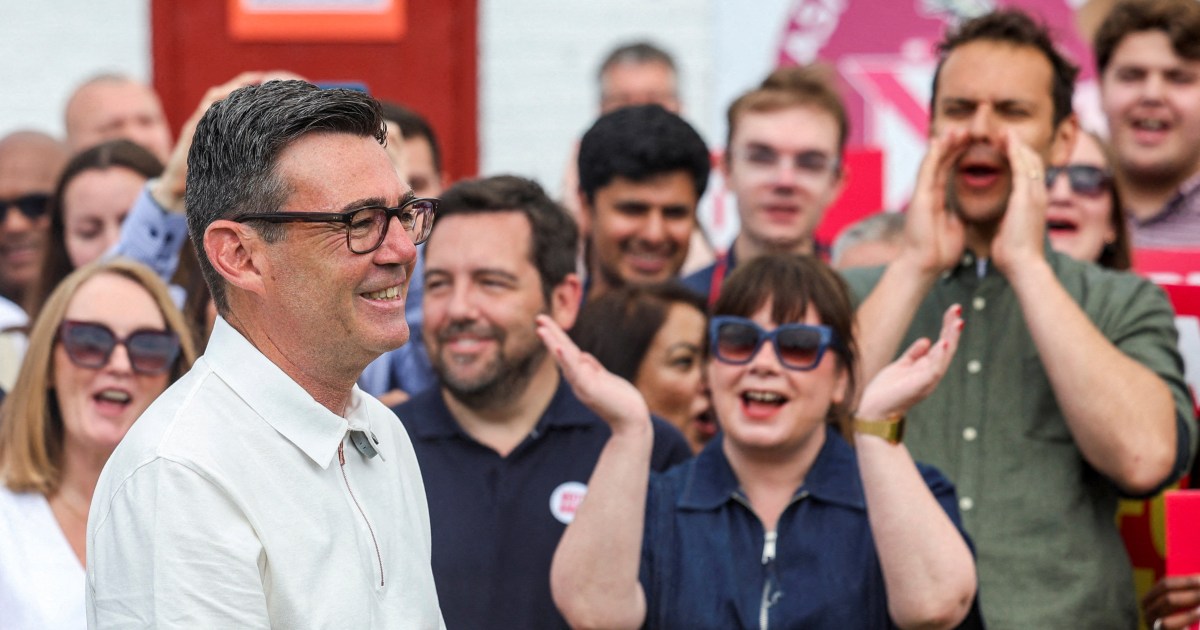
The stakes were high, and in the end, Andy Burnham easily won Thursday’s vote, viewed as a prelude to a Labour leadership contest.

Burnham, 56, has said he plans to challenge 62-year-old Prime Minister Keir Starmer. On Friday, the premier said he will stand in any race and will not “walk away”.

How the next few days and weeks play out remains to be seen.

Under the Labour Party’s rules, an MP who wants to challenge a leader must secure nominations from 20 percent of Labour MPs. In Burnham’s case, this means he would need 81 Labour legislators to nominate him. He would also require the backing of a few local party branches and organisations such as trade unions.

If Starmer continues to dig his heels in or if others throw their hats into the ring, the process would be slower.

Burnham, until recently the Labour mayor of Manchester and nicknamed the “king of the north” by his supporters, tried unsuccessfully for the job of party leader in 2010 and 2015.

In a speech early on Friday, he said “people here have voted for change. They have voted for more power for the north and everywhere forgotten by Westminster.”

Starmer won a wide but shallow victory in the 2024 general election, which saw Labour gain the most MPs, but each winning by narrow majorities. Since then, his shine has dimmed.

He has been beleaguered by missteps and embarrassing U-turns and stalked by constant pressure from the right-wing Reform Party, led by former city trader Nigel Farage. According to most polls, Starmer is the most unpopular leader in the UK since surveys began.

In the by-election, Burnham won 24,927 votes, beating his main competitor, Reform candidate Robert Kenyon, by more than 9,000 votes.

For many Labour voters, the vote was about their party’s survival and choice of leader.

Cameron Graham, a 31-year-old factory worker and dedicated trade union member, said his vote for Labour in 2024 was to back the party, not the leader.

“I’d definitely prefer Burnham to Starmer,” he said.

Howard Bond, a recently retired sales manager, told Al Jazeera that he and his family are lifelong Labour voters, but he has felt unsure of Starmer.

“I think Burnham would do a better job,” he said outside a polling station during his third media interview of the day. “We got a leaflet through the door from Reform saying (Burnham) doesn’t live around here… That’s nonsense. His house is just over there. His kids went to school here. He plays at Ashton Football Club.

“He knows what he’s doing. He’s very articulate and I think he genuinely means well for the community.”

Bond, who is married to an expatriate, said he “can’t stand” anti-immigration Farage.

Reform and Restore, a far-right party backed by Elon Musk, bused in activists from across the country. A few had even flown in from overseas.

Immigration has long been a through-line in British politics, especially on the right. In recent weeks, it has dominated headlines as agitators in Belfast and Southampton collectively punished ethnic minority communities for crimes they did not commit.

Across from the polling station, 74-year-old John Van Dusen sat on his lawn chair, a flask of tea in his hand and a Reform flag flying overhead.

“Mass immigration is not good for this country. Illegal immigrants coming over on boats are not being stopped, and the French are helping them come across,” he said, from a ward where statistics show 97 percent of residents had been born there.

While Reform lost in Makerfield, several polls have suggested that if a general election were held tomorrow, it would win.

Van Dusen said he believes Labour and the Conservatives “have done nothing” to stem undocumented migration.

While Labour has put forward stricter migration rules and offered a policy on legal immigration that is expected to reduce numbers later this year, Starmer is a “poor communicator, and one who messed up his first few months in office”, said Tim Bale, professor of politics at Queen Mary University of London. “He also doesn’t appear to have a vision that he can use to inspire either his MPs or the public.”

Burnham, in contrast, “can connect with the public and appears to have a clear sense of where the country needs to go”, he added. “He’s proven that he can beat Farage in a seat that, under normal circumstances, would have fallen easily to Reform.”

The rise of Reform has alarmed many in the UK’s more traditional political sphere.

However, the direction of travel is not only to the right.

Under their newly elected leader, Zack Polanski, the Greens have enjoyed strong gains on the left, including handing Farage a setback when they won the Gorton and Denton by-election against Reform’s candidate in February.

“The UK has really become a five-party country, with each drawing between 17 and 27 percent of the vote share, meaning they’re all essentially minority parties,” the respected pollster Professor Sir John Curtice told Al Jazeera before Thursday’s vote.

Those five parties are the right-wing Conservatives, leftist Greens, centrist Liberals, centre-left Labour and hard-right Reform.

“There are two things driving this. Firstly, we saw demography – race, social class and age – detach from typical voting choices after the Brexit vote. Secondly, we’ve seen culture-war issues reach equal prominence to traditional political and economic issues. So, the socially conservative are likely to be drawn to Reform, irrespective of their economic offering.”

Back in Makerfield, a woman watched on as the cavalcade of activists, camera crews and journalists buzzed around the high street.

“Well, at least we’re going to get our town back after this,” she said with a laugh.
Comments
You must be logged in to comment.