aljazeera Press
Israel continues attacks on Lebanon despite agreeing to ceasefire
Images
1 / 4

2 / 4

3 / 4

4 / 4
At least 47 people killed in Israeli attacks on Lebanon since midnight as US-Iran talks stall.

Save

Share

Israel has continued to attack Lebanon after the new ceasefire with Hezbollah was reported, raising fears that Tel Aviv is trying to wreck the fragile agreement tied to wider efforts to end Middle East hostilities.

On Friday, officials and diplomats from the United States and the Gulf separately told news agencies that the two sides agreed that a ceasefire would start at 4pm local time (13:00 GMT).

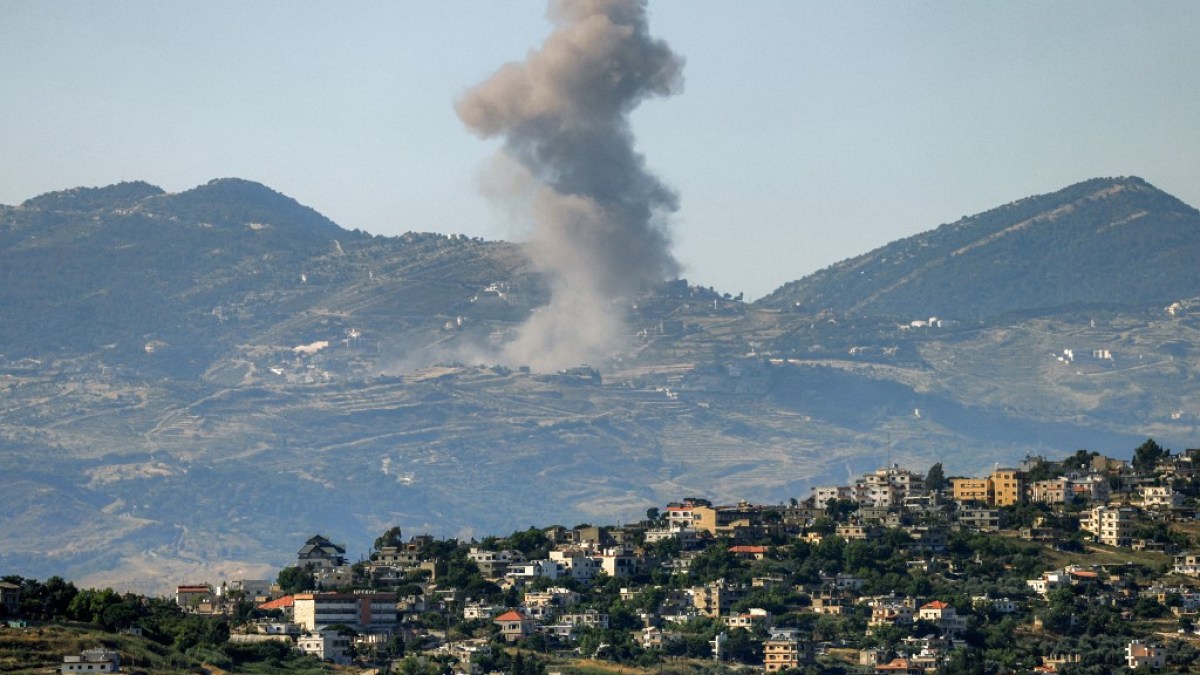
Despite the ceasefire, at least 12 Israeli air raids and continual artillery shelling hit southern Lebanon after the deadline, according to reports from the ground.

Israel and Hezbollah reportedly “agreed to halt hostilities” after Qatar, the United States and Iran brokered the ceasefire, a Gulf diplomat told the AFP news agency, requesting anonymity to discuss sensitive matters. He said the ceasefire aimed to stop the escalation in Lebanon from derailing a broader push to turn the interim US-Iran agreement into a lasting regional peace deal.

The Israeli military killed at least 47 people and wounded 97 in attacks on Lebanon that began at midnight and continued through Friday, according to the Lebanese health ministry.

Shortly before the ceasefire began, a senior US official said that the agreement had been reached through US and Qatari mediation, with Iran’s help. “We understand that after the exchange of fire earlier today, Israel and Hezbollah are now in a ceasefire,” the official told the Reuters news agency.

A Hezbollah official told Al Jazeera that the ceasefire would hold if Israel abided by it. Israel’s ambassador to the US, Yechiel Leiter, also said on X: “Israel remains firmly committed to an immediate ceasefire. If Hezbollah honours the agreement and ceases its hostilities, they will be met with quiet.”

But Israel’s attacks continued almost immediately, leaving residents in southern Lebanon questioning whether the ceasefire had any meaning.

“It doesn’t feel much like a ceasefire,” said Al Jazeera’s Heidi Pett, reporting from Tyre in Lebanon after the Israeli attacks.

“Instead, there is a sense of deja vu. Each time a ceasefire is announced, we see a renewed burst of military activity on the ground.

“That has left many people here questioning what a ceasefire actually means,” added Pett.

The next round of Lebanese-Israeli talks are due in Washington from June 23 to 25, the US state department said on Friday.

The announcement came after US Secretary of State Marco Rubio and Lebanese President Joseph Aoun spoke by phone.

Aoun said a “comprehensive ceasefire” must serve as a “fundamental basis” for any direct negotiations with Israel. The Lebanese president also thanked Rubio for “the support of the United States for Lebanon”, according to his office.

Hezbollah Secretary-General Naim Qassem struck a defiant tone earlier on Friday, denouncing “the criminal Israeli war on Lebanon, which disregards all rules in killing civilians and children, destroying property and committing every imaginable atrocity, all in an attempt to force the resistance to its knees.”

Qassem said the “project to eliminate Hezbollah and consolidate the occupation has failed, and the Israeli will leave every last inch of our land”.

He also accused Israel and the US of walking back a ceasefire-type agreement after the fall of Syria’s Bashar al-Assad, believing the balance of power had shifted in their favour.

At the UN, spokesperson Stephane Dujarric welcomed reports of a ceasefire between Israel and Hezbollah.

“Turning to Lebanon, I can tell you that we are, of course, aware of the reports indicating that Israel and Hezbollah have agreed to a ceasefire, and we welcome such developments,” Dujarric said.

“We continue to call on the parties to cease hostilities, respect existing ceasefire arrangements, and pursue dialogue as the only viable path to a long-term security and stability on both sides of the Blue Line,” he added.

Separately, Pakistan and Iran said they were seriously concerned about Lebanon, including reported ceasefire violations. Pakistan’s foreign ministry said Deputy Prime Minister and Foreign Minister, Mohammad Ishaq Dar, discussed the situation with Iranian Foreign Minister, Abbas Araghchi, in a phone call.

According to the Iranian foreign ministry, Araghchi stressed that the US bears responsibility for ending the war on all fronts, including Lebanon, warning that any violation of the commitments outlined in the memorandum of understanding (MoU) signed this week would fall on Washington and could have consequences.

Talks between the US and Iran to discuss the MoU were called off on Friday after intense fighting between Israel and Hezbollah in southern Lebanon, officials said.

Iranian officials did not travel as planned to Switzerland, insisting that the fighting in Lebanon must stop before talks can happen, three regional officials and a fourth person familiar with the matter who spoke on condition of anonymity told the Associated Press.

US Vice President JD Vance also postponed his trip.

Esmaeil Baghaei, the spokesperson for Iran’s Ministry of Foreign Affairs, said on Friday that the necessary consultations are being carried out through mediators, and that if the conditions for starting negotiations are met, an official announcement will be made.

Earlier in the day, Araghchi, said Israel’s only interest is “permanent war”.

He was responding on X to far-right Israeli National Security Minister, Itamar Ben-Gvir, who called for Lebanon to be “burned” after four Israeli soldiers were killed in southern Lebanon.

Araghchi said Ben-Gvir’s comments were “not a rant by a random genocidal lunatic” but “a public post by the national security minister of the Israeli regime”.

“The genocidal death cult headquartered in Tel Aviv is a threat to all of humanity,” Araghchi wrote. “It threatens all humans. Its only interest is permanent war.”

Ben-Gvir urged a massive escalation after the Israeli army announced the deaths of four soldiers in combat.

“With all due respect to the Americans, Israel must make it clear to the entire world that the blood of our sons and the security of our citizens are not forfeit. All of Lebanon must burn,” Ben-Gvir wrote on X earlier in the day.

He added that he told Israeli Prime Minister Benjamin Netanyahu “even in our private meetings” that “for every tear of an Israeli mother, a thousand Lebanese mothers must weep”.

“Enough with the ping-pong. In the Middle East, you don’t win with measured responses and restraint – you need to go berserk. To obliterate. To crush the terror,” Ben-Gvir said.
Comments
You must be logged in to comment.