huffpost Press
Many Of The Christians You Know Aren't Actually Going To Church Anymore. Here's Why, In Their Own Words.
Images

1 / 11

2 / 11
3 / 11

4 / 11

5 / 11
6 / 11
7 / 11

8 / 11

9 / 11

10 / 11

11 / 11
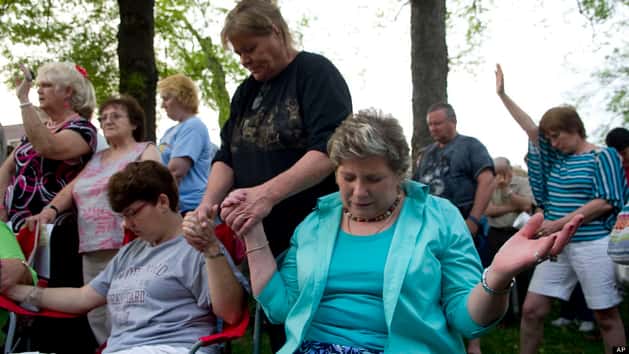
According to research from Pew Research Center, about 60 to 64% of Americans identify as Christians. Since 2007, that number ticked steadily downward each year (though it seems to have leveled out last year, at least temporarily).

Some identify but don’t attend traditional church services. According to Pew, around 49% of U.S. adults seldom or never attend physical services. Increasingly those who do segue younger. While older Americans once dominated congregations, young adults ― Gen Z and millennials ― are now statistically the most frequent churchgoers. (Interestingly, young men in the U.S. now surpass young women on importance of religion and attending church.)

Around 2016, the term “exvangelical” emerged to describe people who left evangelicalism, whether to join other Christian traditions, adopt other religions or leave organized religion altogether.

What’s led some former churchgoing Christians to step away from traditional places of worship? As several former evangelicals recently told us, many grew uncomfortable with the blending of religion and politics: Too often, many of them said, conservative political goals started to be framed as a divinely ordained religious fight.

Exvangelicals’ reasons for leaving are complicated, though. Below, in their own words, they share why they walked away and what their spiritual status is now.

Responses have been edited and condensed for clarity, and some last names have been excluded to protect identity.

“I became a believer at 28-years-old and attended various non-denominational evangelical churches for almost 35 years, the last seven at my last church, which was Evangelical non-denominational, aka non-accountable and personality driven.

At some point, the preaching became more and more ‘us vs. them’ focused with the church’s fight in culture wars becoming a central topic more often, and always alluded to no matter what was being preached. I have always believed the culture war is a scam perpetrated on the public by unscrupulous people seeking power who are willing to manipulate and screw over our entire civilization to meet their ends.

The church stayed open through much of the pandemic lockdown, and I never saw a single mask worn in the church, ever. Because of this and the pastor preaching the high profile memorial of a local state trooper who was murdered, the church more than tripled in size from ’21 to ’23, mostly by people from other churches who were pissed that those churches were following pandemic protocols.

They quickly built a new building to accommodate. Men wearing red MAGA hats in the sanctuary, our auditorium, was the last straw for that place. I finished my service commitment, and I was out of there for good.

If I have to put a label on it, I’m most closely aligned with Taoist philosophy. I’ve dug into Zen Buddhism as well but even that feels a bit restrictive to the free ‘being’ the Wu Wei flow with the Tao delivers. I’m now happily just 62-year-old me without any self-appointed authority telling me the way I ought to be living and thinking. My church is my beautiful back porch with chimes and birds and flowers and a fountain and sunshine on a Sunday morning.

I see the Bible as a sacred book, but one written by men trying to explain their immediate reality. Jesus was an enlightened individual ― a Buddha ― that expressed his enlightenment in terms of his Jewish culture and understanding.

I see God in everything, and no longer presume to know the mind of God, and no longer believe that God is an individual personality making arbitrary decisions about everyone’s daily life. I just seek to perceive the Tao in all things and my natural place in the flow of it.” ― Patrick from Southern Illinois

“I had been raised a Christian and had committed my life to Christ around 20 years ago. I had been active in a few Baptist types of churches through early adulthood. The most recent church we attended was a non-denominational church, and we had been there for about eight years when I left.

A big part of why I left was actually how apolitical they were. Even as Trump and his followers were doing and saying heinous things, they just kind of sat on the fence and let congregants continue down that path without opposition. I know several people who are deeply MAGA that still attend this church, and I know several people who publicly support LGBTQ rights and are pro-choice that also still attend this church. I had also started to notice how, in a lot of messages, the language was coded in a way where it could be palatable to a wide variety of people. A statement like, ‘You must be strong in your faith, for the enemy is always planning their next step’ seems innocuous at first, but the meaning changes greatly depending on who the listener defines as the enemy.

The straw that broke the camel’s back was finding out that in the church bylaws there were several points that staff and volunteers must agree to: a statement affirming that marriage is between one man and one woman. A statement about abortion. There were a few others, but those were the big ones. So it seems that in a church where ‘everyone is welcome,’ everyone, indeed, was not welcome to serve in the full capacity. Learning this was really what tipped me off to consider everything. I realized I needed to stop serving on the worship team, at that point, and also decided that I really didn’t want to go to church anymore.

After leaving, I took a lot of time off to evaluate my status. I read ‘Jesus and John Wayne,’ ‘Star Spangled Jesus,’ ‘The Kingdom, the Power, and the Glory,’ as well as listened to some testimonies from people like Rhett McLaughlin and Link Neal. I started looking into evolution, which I had largely ignored, out of fear, and opening my mind to other worldviews. I consider myself to be an agnostic atheist, at this point.” ― Albert from Kentucky

“Though I always had issues with the church’s thoughts on LGBTQIA+, what pushed me out fully was a discussion about Matthew 19 regarding divorce, which is essentially forbidden except for ‘sexual immorality.’ A question was posed among my congregation about women in abusive marriages, and the answer was that the woman would be able to find safety, but ultimately, reconciliation would be the goal, and divorce is not allowed. I argued against this and was in tears; I had been in an abusive relationship in the past.

I shared information in a group chat with my Sunday school class about my history and even cited scripture, and everything blew up. I was reprimanded, brought into meetings where I was told Satan had a hold on me and that I believed in science and statistics more than faith. I was told that social media posts I made about what happened were disparaging God and should be taken down. My senior pastor was in the room when they said all this to me, and he said nothing, except that I couldn’t be in choir until this was resolved. I had been at this church for four years, when I was newly saved as a Christian.

I left in August of 2025. I am not currently attending a church. It’s hard to find affirming churches in my area, and I’m still so hurt about what happened, and the discourse with Christian nationalism currently. So many ‘Christians’ are showing their true colors, and I don’t want to be around that. My faith is not doing great, but I try to stay close to Him. I pray, I listen to praise music, I read my Bible though even those things are severely lacking. I can’t think of Him without thinking of the pain. I do miss my church. I miss being with others who worship, I miss giving advice and having others give advice to me. I miss that community, and I miss singing in choir so much.” ― Noelle Giuliano from Texas

“Ultimately, it was a lack of accountability with the church leadership team that caused me to leave. Typically, a church has elders and deacons that collectively advise the other leaders of the church that are voted in by members of the congregation. The last church I was a part of didn’t have that because they didn’t answer to any higher echelon within a denomination. What they had instead was a hand-picked team of members that were chosen by the husband and wife co-lead pastors. From my perspective by the end of my time at that church, the people on that team seemed to only be there based on their ability to conform to the wishes of the co-lead pastors, not their accountability or dedication to serving a congregation and the local community.

Additionally, there were people within the leadership team that were given the title of ‘Pastor’ despite having no formal education in theology, while other members of the leadership team, who did have formal theology educational backgrounds were simply called ‘directors’ or other frivolous titles. The church was desperate to grow, which I fully understand, but I was not on board with the methods that were used.

Lastly, and most importantly, I was being told of firsthand accounts of high school-aged young women being made uncomfortable in youth group settings from senior members of the church after the regular youth leaders were pushed out for personal issues with the lead pastors. The girls experienced the kinds of things that are early stages of harassment.

Leaving was a mix of resentment, frustration and relief. I was at odds with the time, effort and money that my spouse and I had invested in with the church just to walk away instead of providing input and help shape the church. I realized that I needed to shift my priorities directly to my wife, my kids, my parents, the aspects of serving my community that I was enthusiastic about, and at the time my education. I had no desire to be a tokenized believer in groups where I was with non-believers.

I am no longer attending church and not actively seeking one. My faith comes and goes. The tenets of Christianity are still within me as far as loving my neighbor and following Jesus’ example.” ― Vinny Kopilow from Northern California

“I left the church in 2015, in part because they treated women as second-class citizens, though I was also having doubts about the Calvinist doctrine of predestination. Women could not lead men in my church. I was a co-group leader with my spouse and another couple. My Bible and doctrine education was far better than that of the man in the other couple, but I would have had to be a subordinate to him when my husband’s job had him missing meetings. I was not going to be a subordinate to someone half my age with a quarter of my knowledge, so I left the small group. I also simply did not like how I was treated as a woman and a woman with a disability. When I left leadership, I was treated like a pariah. It was Houston, Texas, so public transit was nonexistent in the evenings, but there were no more rides to women’s events for me. The last straw was when someone made a snide remark about my service dog well within my hearing.

I tried another church. It was even worse than the one I left. They got up every week and told us how they weren’t perfect people, then tried, in individual and small groups, to get you to confess your sins, weaknesses and guilty pleasures to them. I couldn’t help but wonder if they wanted the knowledge for blackmail or something. They didn’t hold a collection; they put the credit card information on the video so you could pay that way. I wasn’t about to give them my credit card.

Both churches were beginning to support Trump, and I couldn’t see how they could call themselves Christians and do that. I still believe in God, though I do not believe the Bible is the word of God. I think it is a book with some wisdom and too many flaws to be acceptable guidance ― except for the Gospels. To draw people back, churches need to be more open-minded and open-hearted, and don’t treat people with disabilities like charity cases.” ― Alice in Northern Illinois

By entering your email and clicking Sign Up, you're agreeing to let us send you customized marketing messages about us and our advertising partners. You are also agreeing to our Terms of Service and Privacy Policy.
Comments
You must be logged in to comment.