yahoo Press
Ex-Google engineer turned $7.2 billion AI CEO gets thousands of job applications a day but still can’t find candidates with a strong work ethic
Images
1 / 5
2 / 5

3 / 5

4 / 5
5 / 5
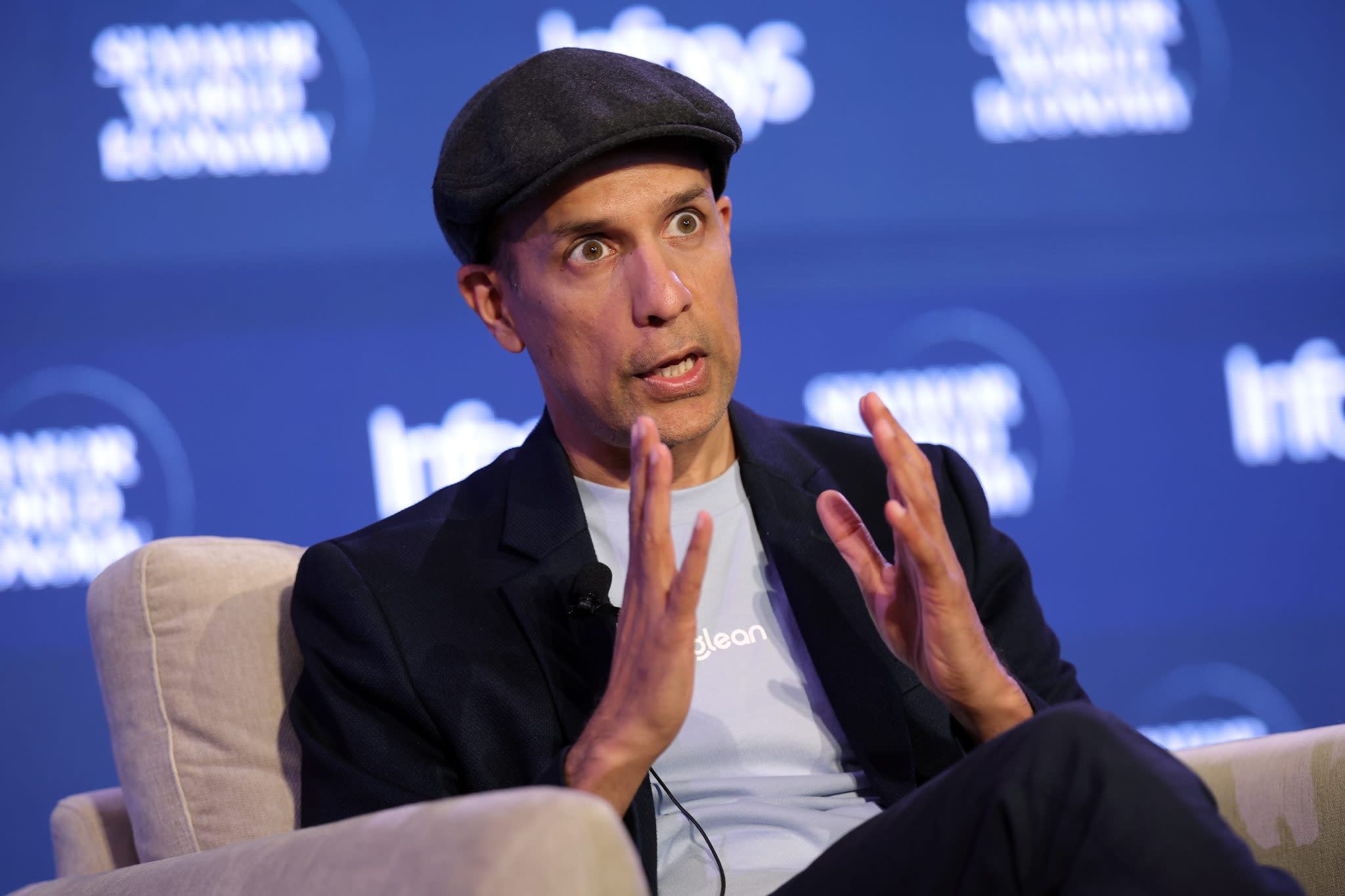
Millions of Gen Z graduates are convinced they’ve drawn the short straw of the labor market: ghosting is rife in recruiting, entry-level roles feel scarce, and predictions of an AI job apocalypse are making it all worse. Yet Arvind Jain, ex-Google engineer and Rubrik co-founder, says he’s facing the opposite problem.

“Students think it’s hard to find jobs, but we think it’s hard to find them,” he told Fortune. And it’s not because the applications aren’t coming in.

In fact, Jain said his $7.2 billion AI startup, Glean, is receiving thousands of job applications every day. And the no.1 thing that separates the handful who hear back is not a degree, a skill set, or even an impressive CV—but a strong work ethic.

“I have a firm belief that hard work solves all the problems,” Jain said. “The yardstick for me is that when I work in a group, I want to be known as the person who gives in the most.” That, he said, is the quality separating the candidates his team can’t stop chasing from the ones whose applications never get a second look.

The only issue is that the candidates who have that drive are in high demand.

“If you work hard, you always have lots of choices. Every company wants to work with you.” The best people he talks to have five companies chasing them simultaneously. The problem isn’t a shortage of applicants. It’s a shortage of the ones who are truly committed.

CEOs consistently share that the secret to success isn’t a one-off lucky break or even an impressive network, but sheer hard work.

Goldman Sachs CEO David Solomon had 2 part-time jobs as a teenager: one at Baskin-Robbins and a second flipping burgers at McDonald’s. He juggled all of that with 3 sports and school. Even now, that he’s running the $291 billion investment bank, the CEO still finds time to DJ on the side.

He recently told Gen Z graduates that his dad drilled that work ethic in him—and it was a lesson he was keen to pass on to the class of 2026 as they enter one of the most brutal job markets in history.

Likewise, Khozema Shipchandler, CEO of the $30 billion cloud communications platform Twilio, previously credited his career success to hustling from 4:30 a.m. to 9 p.m. every day, even back in college.

By the time he was 31, Shipchandler was already CFO of a multi-billion-dollar GE business—and he told Fortune that there was a direct correlation with the hours he put into his work. “If you were willing to put in the effort, they were willing to give you the opportunity,” he said. “So I got a lot of opportunities there.”

“If you want to work eight-to-five, coach your kids sports teams, have the evenings for yourself, and maybe another hobby or interest, that’s awesome,” Shipchandler added—but he caveats that he’s “never spoken to a peer” who doesn’t follow a similarly strict routine to him.

NBA champion Metta World Peace, previously known as Ron Artest, bluntly broke down why simply logging more hours than the person next to you is the most reliable way to get ahead.

World Peace once showed up to the gym at 8 a.m.—what he considered early—only to find Bryant already showered and on his way out. “He was all showered up. He was done,” World Peace told Fortune. “And I thought I was working hard.” The next day, he went back at 5:30 a.m. to catch a firsthand glimpse of just how far Bryant was willing to go to be one of basketball’s greatest players.

The takeaway? High performance is relative. No matter how early you start or how many hours you put in, someone else will be willing to do more.

Or as World Peace put it: “There’s always somebody out there working harder.”

Jain isn’t dismissive of the structural challenges facing young job seekers today. In the U.K. alone, more than 1.2 million applications were submitted for fewer than 17,000 graduate roles last year. Meanwhile, Americans report that the probability of finding a job right now has hit a record low. One graduate with a maths degree spent more than a year applying to over 1,000 roles in the U.K. without landing a single offer, before moving his job hunt to Austria.

And as AI and automation replace many entry-level roles, the competition for what’s left is only getting fiercer.

And as AI and automation replace many entry-level roles, the competition for what’s left is only getting fiercer. Roles are so oversubscribed that even at Glean, the team can only get through around a fifth of the applications they receive. “We’re waiting for people to come to our website to apply,” Jain said. “We don’t have the resources to go out there.” Which means the burden is firmly on the applicant to make themselves impossible to ignore.

His most concrete advice? Master AI—and do it now.

“This is the time of opportunity,” he said. “You have this phenomenal tool, and it allows you to do so many cool things.” In his view, a candidate who has genuinely embraced AI can work at ten times the speed of one who hasn’t—and that gap is only going to widen. “If you’ve mastered these tools, you can create amazing software, systems, applications, imagery, videos. Show your creativity with it.”

The good news, he says, is that getting started is easier than most people think.

“AI is not a difficult thing. You don’t have to sit through 10 hours of a course. Just go into one of these AI tools—whether you want to use Gemini or ChatGPT or whatever—and talk to them like a colleague. Ask them to do things for you.” And the advice can be applied to whatever industry or job function you’re in. “You can be the new age marketer or paralegal if you embrace AI in a big way.”

This story was originally featured on Fortune.com
Comments
You must be logged in to comment.