yahoo Press
GameStop Stock: Trying to Make Sense of It All as Investors Head for the Exit
Images
1 / 4
2 / 4

3 / 4

4 / 4
The above button links to Coinbase. Yahoo Finance is not a broker-dealer or investment adviser and does not offer securities or cryptocurrencies for sale or facilitate trading. Coinbase pays us for certain activity generated through this link. Prices displayed are informational.

GameStop (GME) shareholders are no strangers to controversy or outrageous corporate decisions. Staying true to this reputation, GameStop CEO Ryan Cohen announced in January that the company was looking at a “very big” acquisition. While I previously wrote about speculation around Best Buy (BBY) as the target company, we now know that the name on Cohen’s watchlist was eBay (EBAY). Yes, a company with a $47.8 billion market capitalization is the acquisition target of a firm that itself has a market cap of just $10.8 billion. Sounds crazy, doesn’t it?

Well, wait until you hear how the CEO explained the move in an interview. When CNBC presenter Andress Ross Sorkin laid out the math for Cohen, all he got in return was that the deal was “half cash, half stock." With GameStop's market cap at nearly $11 billion, $9 billion of cash on the balance sheet, and a $20 billion financing letter from TD Securities, there’s still about $16 billion needed to reach the $56 billion that Cohen is offering for eBay.

Broadcom Hits a Bottleneck as OpenAI Revenue Concerns Claim Their First Casualty

Palantir Stock Has a ‘High-Class Problem’: Demand for Its Software Is Far Outpacing Supply

Tesla Stock Is on a Winning Streak with China-Made EVs. Its Imports to Europe Are Increasing.

Stop Missing Market Moves: Get the FREE Barchart Brief – your midday dose of stock movers, trending sectors, and actionable trade ideas, delivered right to your inbox. Sign Up Now!

Cohen's refusal to answer the question led many to speculate about whether he is just playing some other game and isn’t a serious contender for buying eBay. This sentiment worsened when the CEO started flooding social media with pictures of items he would sell on the platform, resulting in eBay permanently suspending his account. Other than the announcement of the acquisition, nothing points to the proposed deal actually going through.

Wedbush Securities analyst Michael Piccolo has called it a publicity stunt, but apart from losing support on Wall Street, Cohen has also lost a fellow shareholder. On May 5, Michael Burry announced that he had completely exited his stake in GameStop. Burry had previously said that GameStop’s dealmaking strategy could turn it into a version of Berkshire Hathaway (BRK.A). Charlie Munger would have turned in his grave at that comment, especially now that Burry himself has given up on the thesis after looking at the ridiculous eBay offer, which can’t possibly be explained by anyone on Wall Street.

Interestingly, GME stock has reacted exceptionally well after the initial selloff. Either the stock has enough shareholders with “diamond hands” to sit this episode out, or the market has already priced in the notion that this is all just a publicity stunt — and that GameStop’s $9 billion cash pile is safe from an outrageous bet like the one on eBay.

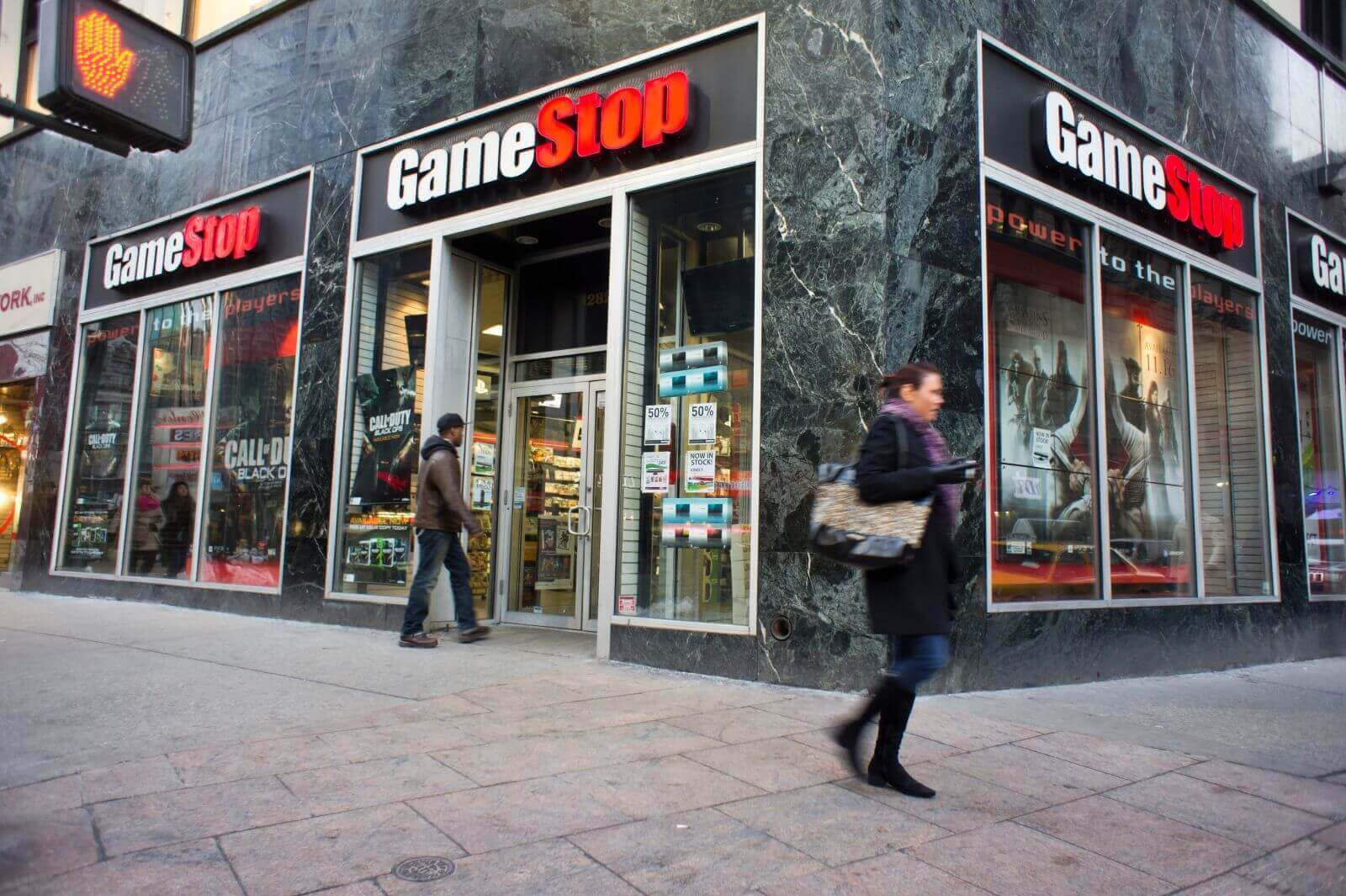
GameStop operates as a specialty retailer engaged in the sale of gaming and entertainment products through both e-commerce platforms and physical stores. The company’s product range includes new and pre-owned gaming consoles, accessories, and video games. Alongside gaming products, it sells collectibles like apparel, trading cards, toys, gadgets, and more. Founded in 1984, GameStop is headquartered in Grapevine, Texas.

Over the last year, the S&P 500 ($SPX) has performed well, surging roughly 31%. In contrast, GameStop has underperformed the broader market, falling by about 14% over the same period. However, 2026 has been a different story and GME stock is outperforming the broader index on a year-to-date (YTD) basis. So far this year, GME is up more than 17% compared to the S&P 500’s gains of about 8%.

GameStop posted its fourth quarter fiscal 2025 results on March 24 with mixed top-line performance. Revenue fell 14% year-over-year (YOY) to $1.1 billion. The company also posted non-GAAP EPS of $0.49 for the quarter, while net income came in at $127.9 million, slightly lower than the $131.3 million reported in the same quarter last year. However, adjusted net income rose sharply to $291.4 million from $136.4 million. On the profitability side, operating income rose to $135.2 million from $79.8 million a year earlier, and increased to $147.7 million from $84.4 million on an adjusted basis.

GME stock continues to trade on factors that have nothing to do with valuation. Other than the $9 billion cash pile, there is hardly anything to talk about with GameStop. This time, the theatrics have signaled the market that the acquisition won’t go through. That's why GME stock has remained relatively stable, judging by its own standards and history.

This is not the type of stability investors are attracted to, however. For traders, it now comes back to waiting for the next trigger.

On the date of publication, Jabran Kundi did not have (either directly or indirectly) positions in any of the securities mentioned in this article. All information and data in this article is solely for informational purposes. This article was originally published on Barchart.com
Comments
You must be logged in to comment.