yahoo Press
How Republicans are winning the war over US congressional redistricting, state by state
Images
1 / 8
2 / 8

3 / 8

4 / 8
5 / 8

6 / 8

7 / 8

8 / 8
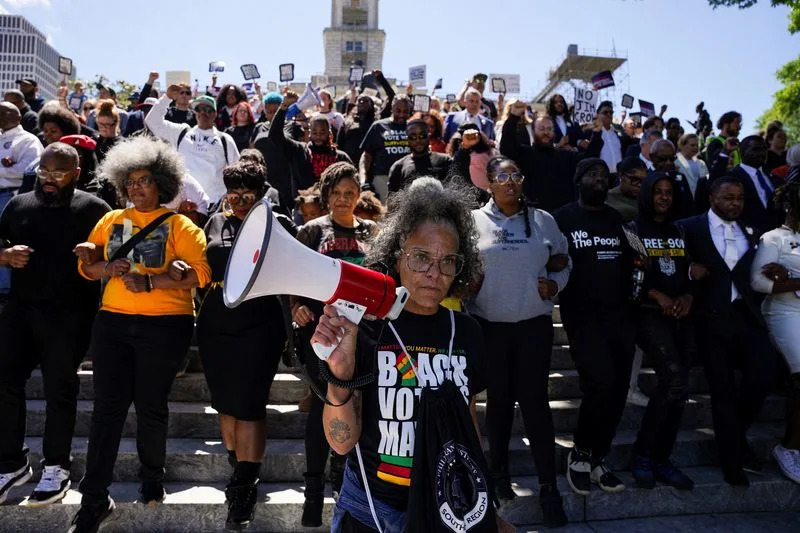
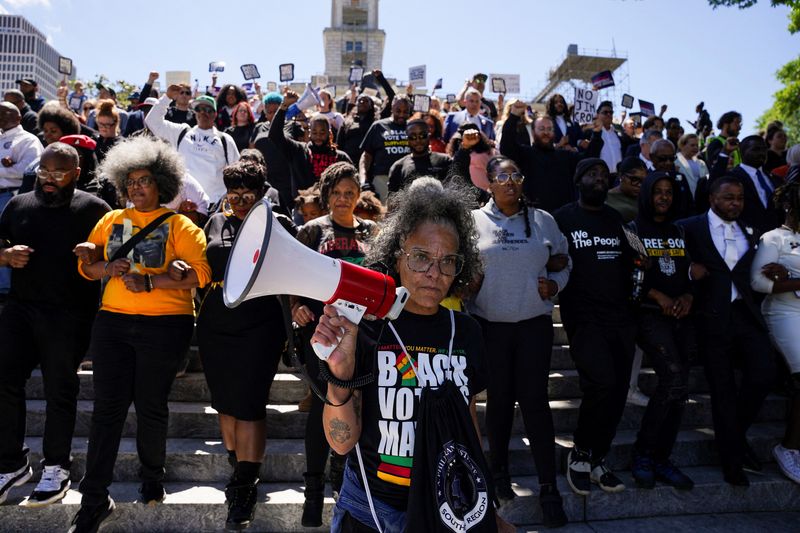
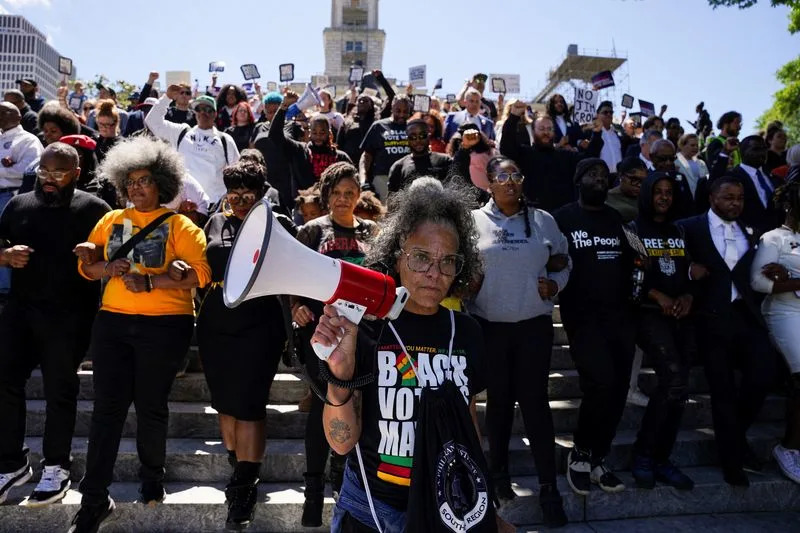
By Joseph Ax May 11 (Reuters) - Several Republican-led states across the South are rushing to redraw their congressional maps ahead of November's midterm elections in a bid to help save their party's narrow majority in the U.S. House of Representatives, the latest round in a year-long national fight over redistricting. The political war began last summer, when U.S. President Donald Trump pushed Texas Republicans to install a new map targeting five Democratic-held seats. California Democrats responded with their own map taking aim at five Republican incumbents, and other states soon followed suit. As of this spring, the two parties had fought roughly to a draw. But a pair of court decisions - a U.S. Supreme Court ruling that eviscerated protections for majority-Black districts, and a Virginia Supreme Court decision overturning a Democratic-backed map in that state - have given Republicans a decided advantage. Republicans now appear poised to end the cycle having increased their edge in close to a dozen House seats nationwide. Democrats need to flip only three Republican-held seats from 2024 to win a majority, so every district could prove pivotal. Here is how the conflict is unfolding across the country: REPUBLICAN GAINS TENNESSEE - ONE SEAT Tennessee Republican lawmakers on May 7 approved a new congressional map dismantling a majority-Black district centered in Memphis, becoming the first state to take advantage of the U.S. Supreme Court decision that hollowed out the Voting Rights Act. The move will likely oust the state's lone Democratic U.S. representative, Steve Cohen, and give Republicans a clean sweep of all nine districts in the state. SOUTH CAROLINA - POSSIBLY ONE SEAT Republican lawmakers are weighing a new map that would target the district represented by longtime Democratic U.S. Representative Jim Clyburn, though it is not clear whether there is enough support to approve it. A new map would likely require the legislature to postpone the June primary nominating election. Republicans currently control the state's other six U.S. House districts. ALABAMA - POSSIBLY ONE SEAT The U.S. Supreme Court on Monday cleared the way for Republican lawmakers to install a new map that would take aim at one of the state's two majority-Black districts, which are both represented by Democrats. In anticipation of the court's order, Republican lawmakers had already approved legislation that would permit them to cancel the May 19 U.S. House primary elections and set a new date. Alabama's current map had been subject to a court order requiring it to remain in place until 2030. But the U.S. Supreme Court granted a Republican request to lift the injunction, which could allow lawmakers to return to an older map that has only a single Democratic-leaning district. Republicans already control the state's other five House seats. TEXAS - UP TO FIVE SEATS The U.S. Supreme Court cleared the way in early December for a new Republican-backed map that targets five Democratic-held seats. The court's decision overturned a lower court ruling that had concluded the map likely discriminated against minority voters. Republican Texas Governor Greg Abbott signed the map into law in August. Weeks earlier, more than 50 Democratic lawmakers fled the state, temporarily preventing a vote, but ultimately returned. Republicans already control 25 of Texas' 38 seats under a Republican-drawn map from 2021. FLORIDA - UP TO FOUR SEATS Republican Governor Ron DeSantis drew a new map aimed at flipping four Democratic-held seats and called a special legislative session in late April, where the Republican majority passed it into law. Democrats have vowed to challenge the map in court, citing a state constitutional provision that expressly bars the legislature from drawing districts purely for partisan gain. Republicans already control 20 of the state's 28 seats, after DeSantis and the legislature passed a new map in 2022 that flipped four Democratic seats. MISSOURI - ONE SEAT Republican Governor Mike Kehoe signed a new map into law in September that dismantled a Democratic-held seat based in Kansas City, giving his party the advantage in seven of the state's eight congressional seats. Opponents are attempting to force a voter referendum on the map, while several organizations have filed lawsuits challenging its legality. OHIO - UP TO TWO SEATS A quirk in state law required a new map for 2026 because the previous one was approved with no Democratic votes. The state's redistricting commission, which includes five Republicans and two Democrats, unanimously approved a compromise map in October that boosted Republican chances of flipping two Democratic-held seats but did not go as far as Democrats had feared. Republicans hold 10 of the state's 15 seats. NORTH CAROLINA - ONE SEAT The state legislature's Republican majority approved a new map in October designed to flip a Democratic seat, which would give Republicans control of 11 of the state's 14 U.S. House seats despite its status as a divided swing state. Under state law, Democratic Governor Josh Stein had no say in the process. LOUISIANA - UP TO TWO SEATS Republican Governor Jeff Landry suspended the state's May 16 primary election for the U.S. House after the U.S. Supreme Court found Louisiana's map was an unconstitutional racial gerrymander. The postponement gives the Republican-majority state legislature a chance to weigh several possible new maps, including one that would dismantle both of the state's majority-Black, Democratic-held districts. Republicans currently hold four of the state's six seats. INDIANA - EFFORT FAILED Indiana's Republican-controlled Senate rejected a new map aimed at flipping the state's only two Democratic House seats, a rare rebuke to Trump from members of his own party. Republicans control seven of the state's nine U.S. House seats. KANSAS - EFFORT FAILED Kansas Republicans abandoned a Trump-backed effort to redraw the state's congressional map after the state House speaker, Republican Dan Hawkins, said in January there was not enough support in his chamber to overcome a veto threat from Democratic Governor Laura Kelly. Republicans already hold three of the state's four U.S. House seats. DEMOCRATIC GAINS CALIFORNIA - UP TO FIVE SEATS Voters overwhelmingly approved a new map backed by Governor Gavin Newsom and Democratic lawmakers designed to flip as many as five Republican-held seats in direct response to Texas. Democrats currently hold 43 of the state's 52 districts. VIRGINIA - EFFORT BLOCKED BY COURT Virginia voters on April 21 approved a new Democratic-drawn congressional map in a special election that could have flipped four Republican U.S. House seats. But the state Supreme Court on May 8 threw out the results, ruling that Democratic lawmakers did not follow proper procedures when they passed the proposed referendum and put it on the ballot. UTAH - ONE SEAT A state judge threw out a Republican-drawn map as illegally partisan and implemented an alternative that is likely to flip one of the state's four Republican-held seats to Democrats. MARYLAND - EFFORT STALLED Democrats in the state House advanced a new map in February that targeted the state's only Republican member of Congress, a move championed by Democratic Governor Wes Moore and national Democratic leaders. Democrats hold the state's other seven House districts. But the state Senate president, Democrat Bill Ferguson, opposed the bill, likely dooming the effort. NEW YORK - EFFORT BLOCKED BY COURT A New York judge in January ordered the state's independent redistricting commission to redraw a Republican-held congressional district centered on New York City's borough of Staten Island, potentially giving Democrats a chance to flip the seat in November. However, the U.S. Supreme Court's conservative majority put that decision on hold on March 2, granting a request from the incumbent Republican, Nicole Malliotakis. Democrats hold 19 of the state's 26 seats. Democratic Governor Kathy Hochul has vowed to pursue a new map in response to Trump's efforts, but New York law makes it impossible to advance a statewide redistricting effort until 2027. (Reporting by Joseph Ax; Additional reporting by Andy Sullivan: Editing by Paul Thomasch, Lisa Shumaker and Rosalba O'Brien)
Comments
You must be logged in to comment.