yahoo Press
Bharti Airtel May Be About to Take Airtel Africa Private
Images
1 / 5
2 / 5

3 / 5

4 / 5
5 / 5
The above button links to Coinbase. Yahoo Finance is not a broker-dealer or investment adviser and does not offer securities or cryptocurrencies for sale or facilitate trading. Coinbase pays us for certain activity generated through this link. Prices displayed are informational.

Our analysts just identified a stock with the potential to be the next Nvidia. Tell us how you invest and we'll show you why it's our #1 pick. Tap here.

Airtel Africa shares surged to record highs on Monday after parent company Bharti Airtel said it was considering a major restructuring of its subsidiary shareholdings. The market read that as a buyout signal, and it is not hard to see why.

Bharti Airtel announced over the weekend that its board will meet on May 13 to consider a reorganization of the shareholding framework across its subsidiary companies, including Airtel Africa. The filing said the restructuring could involve consolidation or acquisition of shares in those subsidiaries, with any consideration potentially funded through new equity issued on a preferential basis or cash.

Markets did not need to read between many lines. Airtel Africa shares surged as much as 15% in London on Monday, hitting an all-time high of around 422 pence and leading the FTSE 100 risers. The stock is now up around 17% year to date. Bharti Airtel currently owns approximately 63% of Airtel Africa, leaving a meaningful free float on the London Stock Exchange that a consolidation move would likely absorb.

The May 13 meeting will also consider a dividend recommendation for the financial year ended March 2026, alongside the full-year results. Bharti Airtel paid a dividend of ₹16 per share to shareholders in July 2025 and is expected to consider a further payment at the same meeting.

Airtel Africa declined to comment on the announcement.

This is a story about a business that has been quietly becoming one of the most compelling growth plays in emerging markets, and a parent company that appears to have decided it wants more of it.

One stock. Nvidia-level potential. 30M+ investors trust Moby to find it first. Get the pick. Tap here.

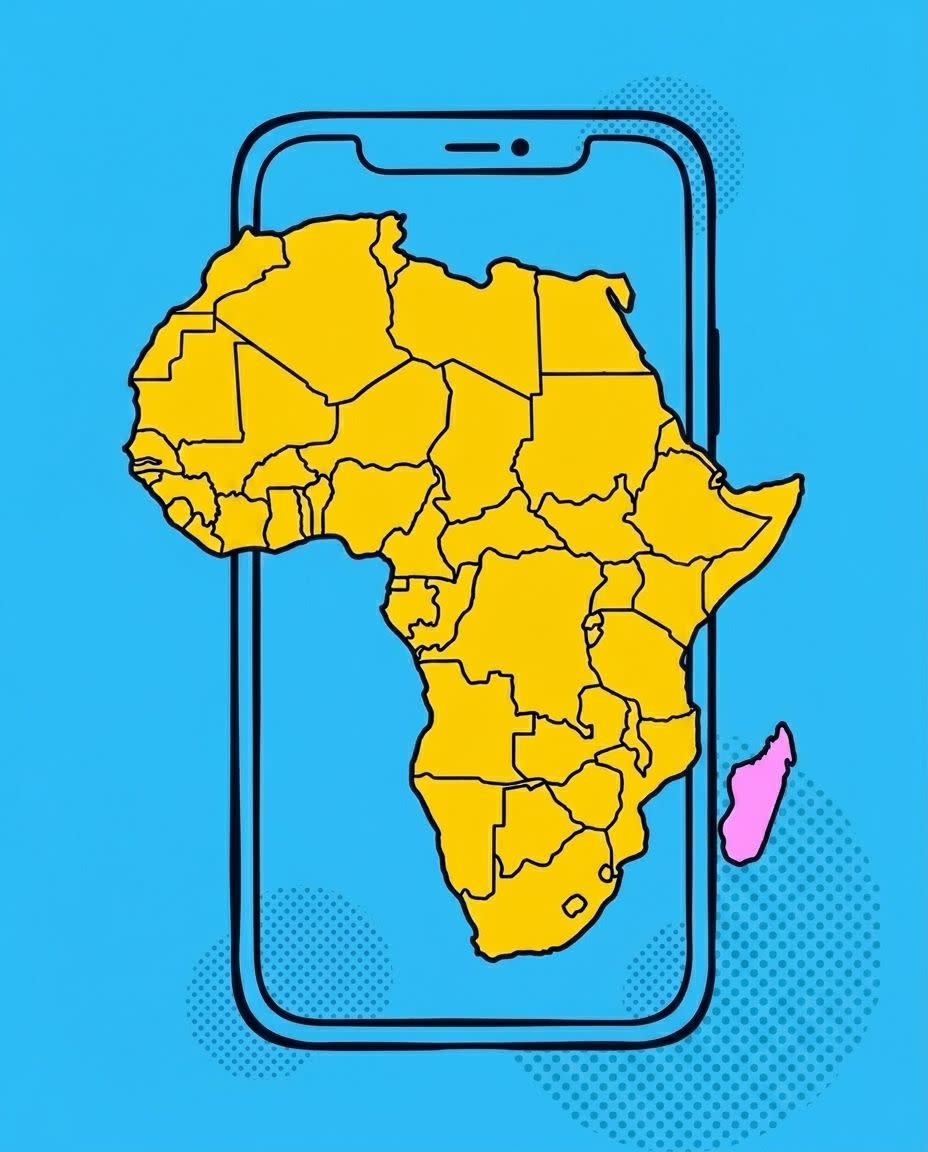
Airtel Africa operates mobile and financial services businesses across 14 countries on the continent. In the third quarter of the financial year just ended, its mobile services revenues rose 40% year on year to ₹15,010 crore, while profits from the Africa business jumped nearly 60% to ₹5,069 crore. Those are not the numbers of a business that is struggling for relevance. They are the numbers of a business in the middle of a structural growth cycle driven by rising smartphone penetration, expanding mobile money adoption, and a young, growing population that is increasingly transacting digitally.

Airtel Africa was separately listed in London in 2019, partly to give the business its own capital market identity and partly to raise funds for expansion. The listing served its purpose. But separately listed subsidiaries come with friction. They require their own investor relations, their own governance structures, and their own market-facing narrative. They also mean that a significant portion of the economics of a high-growth business flows to minority shareholders rather than staying within the parent group. When a subsidiary is underperforming, that arrangement can be useful as a way of isolating risk. When it is thriving and growing fast, the calculus looks different.

Bharti Airtel's move echoes a pattern seen elsewhere in global telecoms, where parent companies have moved to delist or consolidate fast-growing subsidiaries once they have demonstrated the growth trajectory that justified independent listing in the first place. Nokia's recent sale of its fixed wireless access business and Deutsche Telekom's exploration of a full merger with T-Mobile follow similar logic, structures that made sense at one stage of a business's development becoming less optimal as the underlying operations mature and grow.

For Bharti Airtel, taking full or majority control of the Africa business would simplify the group structure, eliminate the drag of minority shareholders on a high-margin growth engine, and give the parent company direct access to the full earnings stream from a continent where mobile penetration remains well below developed market levels. Africa's telecoms story is still in relatively early chapters. If Bharti Airtel believes the next decade will be as strong as the last few years suggest, consolidating now, before the market fully prices in that growth, makes strategic sense.

The funding optionality disclosed in the filing is also worth noting. The language around potential issuance of new equity on a preferential basis suggests Bharti Airtel may partly finance any acquisition with its own shares rather than purely cash. That would preserve balance sheet flexibility while allowing the deal to proceed at scale, though it would also dilute existing Bharti Airtel shareholders to some degree.

Wednesday's board meeting will be the first real test of how concrete the plans are. Bharti Airtel's disclosure was carefully worded to preserve optionality rather than commit to a specific transaction, which means May 13 could produce anything from a formal buyout offer to a more modest structural tweak.

The full-year results will also give investors a clearer picture of the Africa business's trajectory heading into the next financial year. For now, the market has made its view clear. At a 15% premium to Friday's close and a new all-time high, Airtel Africa shareholders are voting with their feet.
Comments
You must be logged in to comment.