yahoo Press
5 things to know about the quarantined Americans from the hantavirus-stricken cruise ship
Images
1 / 20
2 / 20

3 / 20

4 / 20
5 / 20
6 / 20

7 / 20
8 / 20
9 / 20
10 / 20
11 / 20
12 / 20

13 / 20

14 / 20
15 / 20

16 / 20

17 / 20

18 / 20

19 / 20

20 / 20
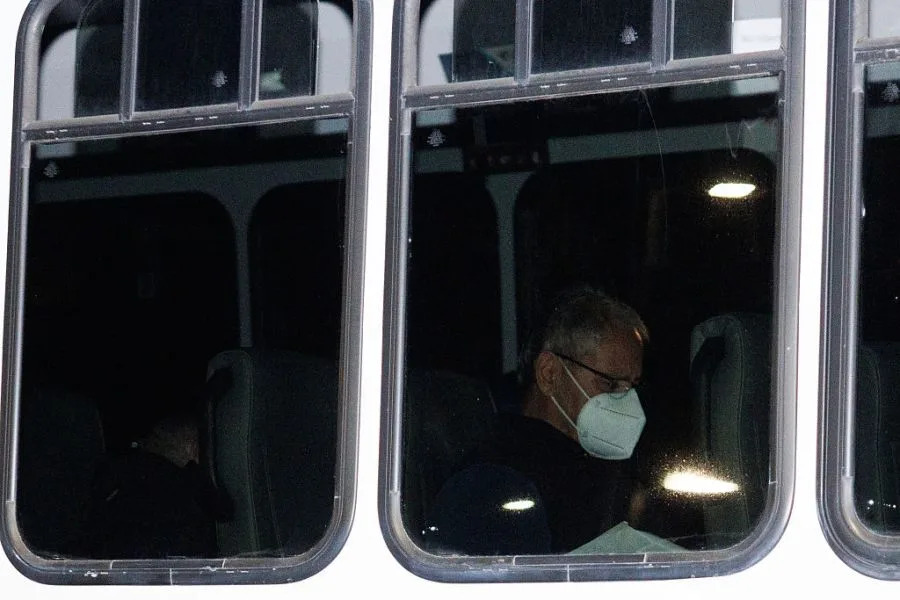
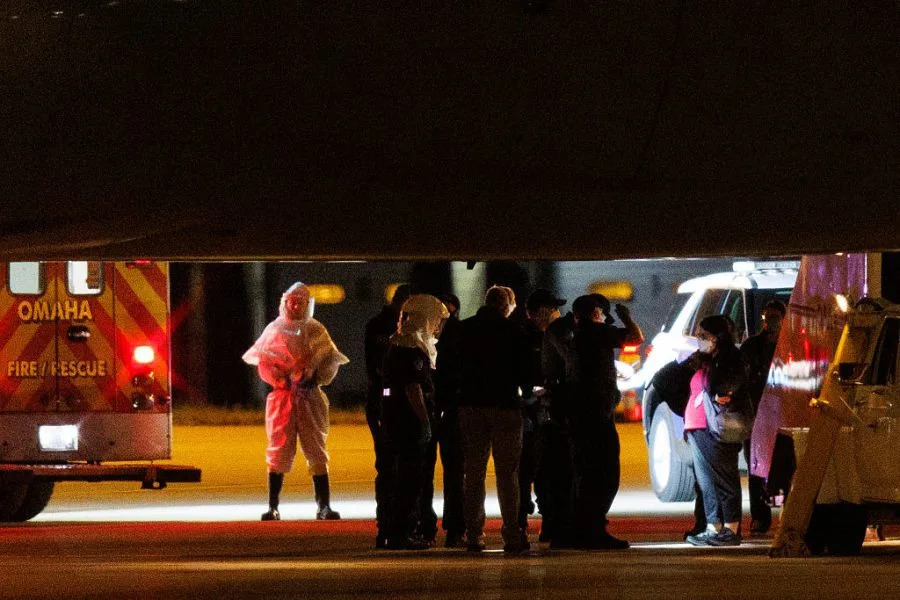
(NEXSTAR) – Eighteen people – 17 Americans and one British national – have returned to the U.S. after evacuating the hantavirus-stricken cruise ship MV Hondius on Sunday. They are now quarantined in either Nebraska or Georgia, as health officials monitor them for symptoms of the sometimes deadly virus.

One of 17 American passengers evacuated from the ship and flown to Nebraska also tested positive for the hantavirus but is not showing any symptoms, and another had mild symptoms, U.S. health officials said late Sunday.

During a Monday morning press conference, health officials maintained that the risk of hantavirus spreading as COVID did in the U.S. remains extremely low and that all precautions are being taken to contain the virus.

Here’s what to know.

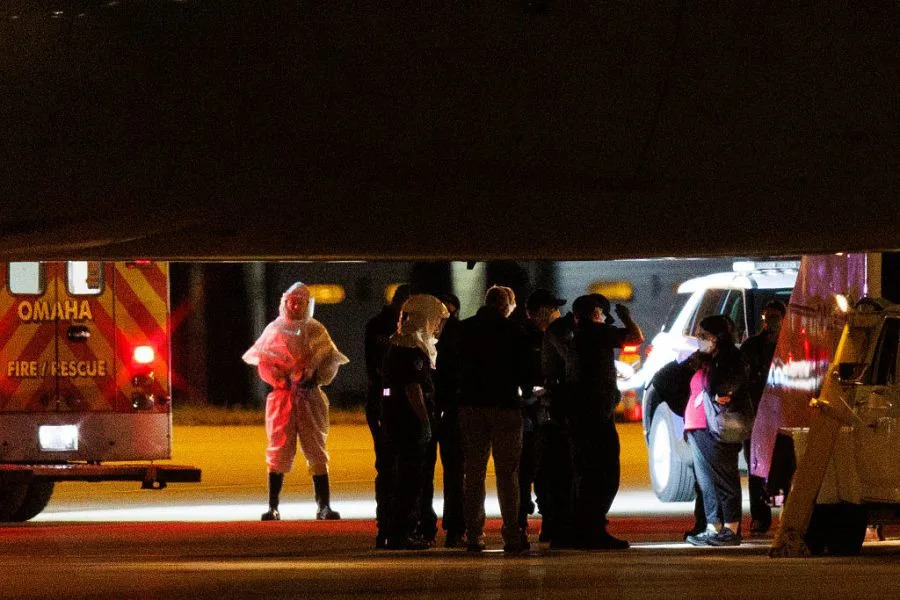
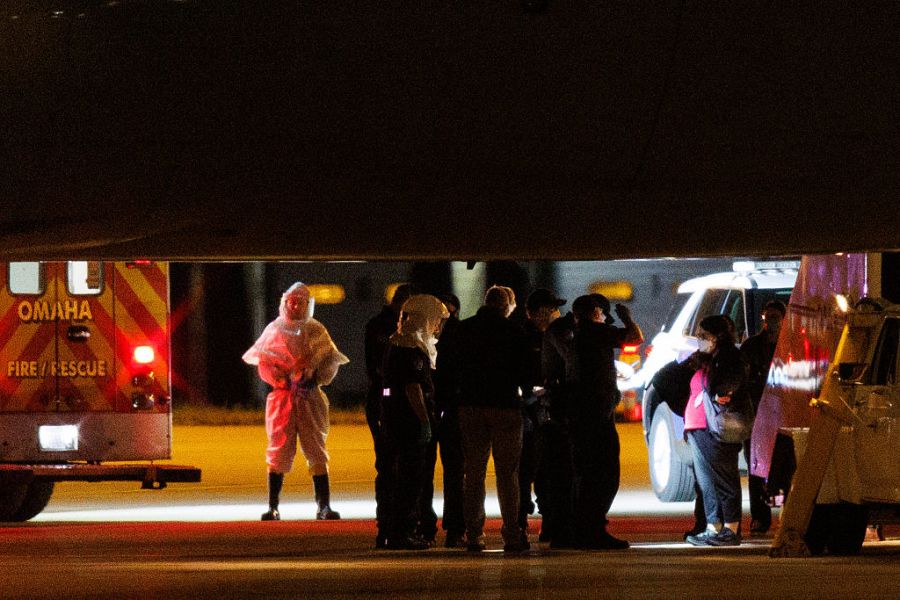
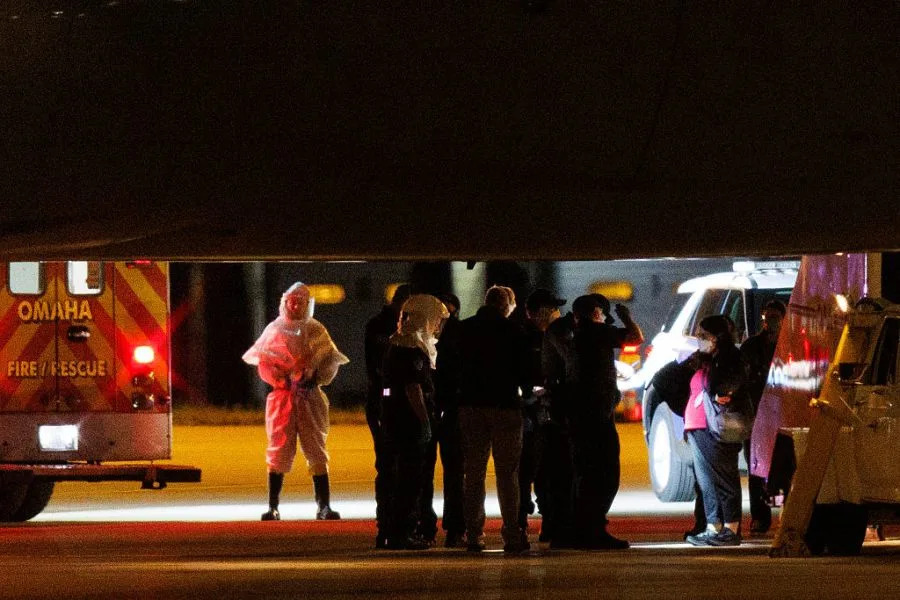
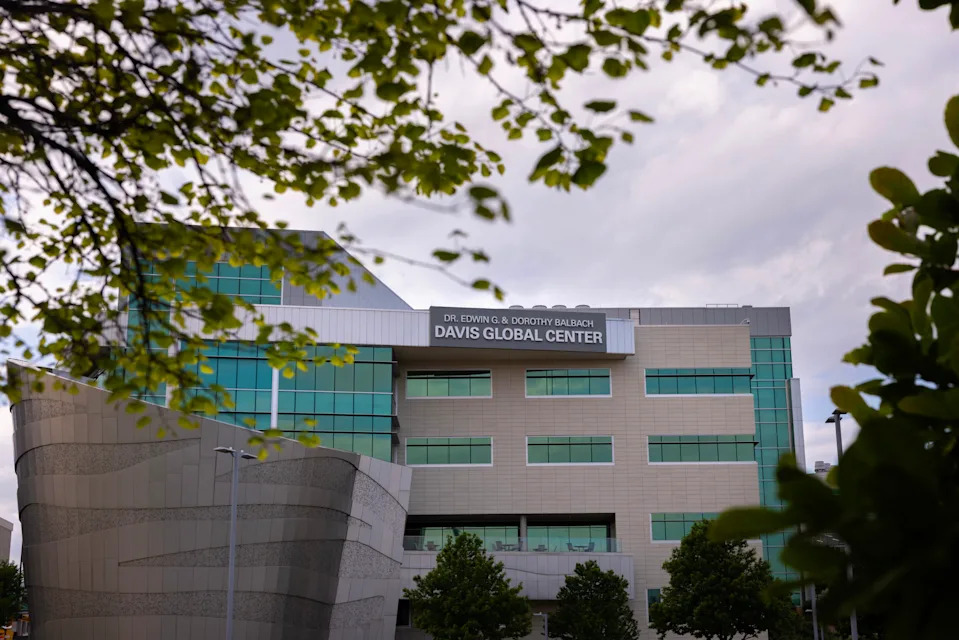
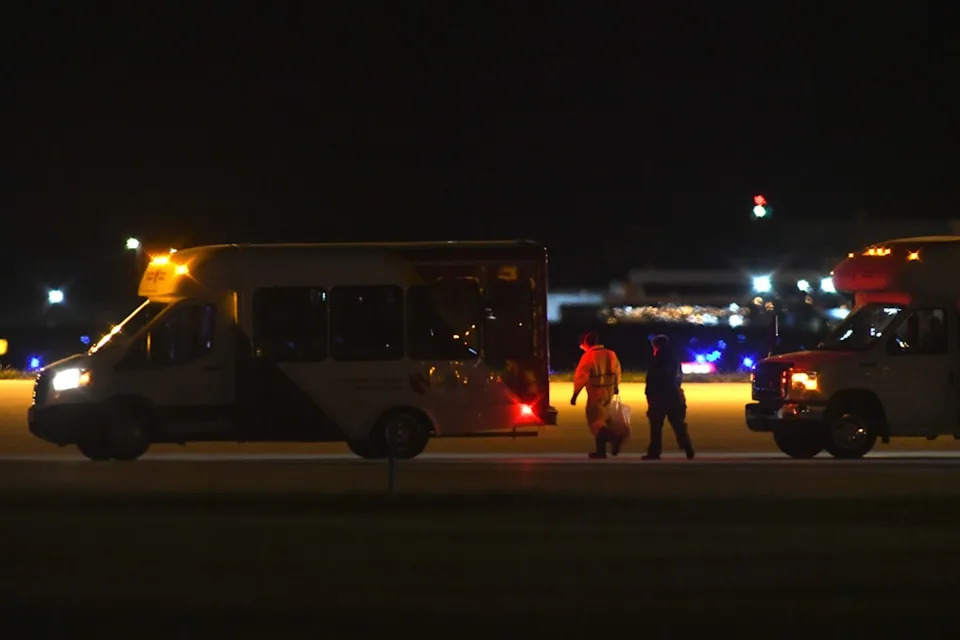
Sixteen of those patients are now at the National Quarantine Center, the only one of its kind in the U.S., at the University of Nebraska, after arriving at Offutt Air Force Base in Omaha aboard a repatriation flight overnight. The Omaha center was previously used for Ebola patients and early in the COVID pandemic.

One patient, who had a positive test for hantavirus but is asymptomatic, is in the Biocontainment Unit at the University of Nebraska Medical Center, while the others are in quarantine.

Officials described the quarantine space as similar to a hotel, used for patients who are well and under observation. They have their own rooms and access to technology, officials explained, but they cannot “intermingle” or receive visits from those outside of the medical center.

Is hantavirus the next pandemic? What health officials say

The Biocontainment Unit is more like a hospital, equipped with medical care for patients who need it. Because hantavirus can cause patients to become very ill quickly, the capacity for the unit is currently around two to three beds, officials explained. With an airborne illness, like avian flu, capacity could increase to about 10.

Two more patients were transported to Emory University in Atlanta, Georgia, as part of the accommodation contingency plan because one was experiencing mild symptoms. They were also staying in a Biocontainment Unit, though officials noted that the space can double as a quarantine area.

Officials on Monday could not provide specifics about each patient, but those staying in Nebraska range in age between their late 20s and late 70s or early 80s.

One of the patients is a British dual national who opted to come to the U.S.

The two people taken to Emory University were traveling together aboard the cruise ship, according to officials.

Most are not showing any symptoms of hantavirus, officials said Monday.

The person who tested positive was not showing symptoms. They are expected to undergo further testing because their lab results were inconclusive – one PCR test produced a negative result, while another was positive, officials explained.

Another person, who was taken to Georgia, had mild symptoms. That individual had not yet tested positive.

Hantavirus: Where the rare, sometimes deadly disease has been found in the US

Passengers are expected to have symptoms in the coming days, according to Capt. Brendan Jackson, MD, MPH, the acting director of the Division of High-Consequence Pathogens and Pathology in CDC’s National Center for Emerging and Zoonotic Infectious Diseases.

However, he explained on Monday that the symptoms that are noted may not indicate that the patients have hantavirus. “We’re being very, very liberal in how we’re framing symptoms and monitoring for symptoms here, so that’s how the system is working.”

At least a few days, but an exact timeline isn’t clear yet.

Andes virus, the strain of hantavirus that was detected aboard the cruise ship, can cause a deadly lung infection known as hantavirus pulmonary syndrome (HPS). Betsy Arakawa, the wife of actor Gene Hackman, and multiple California residents died after contracting the syndrome last year.

It can take between 4 and 42 days after exposure for symptoms of HPS to start, according to the CDC. Those who are staying in Omaha and Atlanta don’t necessarily need to stay the full 42 days, but officials say they will be given that option.

How to tell if you may qualify for ‘significant’ IRS refunds from COVID-era

Jackson said patients will have individualized plans for them depending on the care they need.

“If it makes more sense for them to complete their 42-day monitoring period at home, then there are going to be a couple of things that go into that decision,” he explained. That includes whether they have any symptoms and if they have the “structure and support” required to isolate or seek medical care if necessary.

“We want to do this in the least-restrictive way possible that is still safe,” Jackson added.

The patients are expected to undergo assessments over the next few days before receiving guidance on the next steps, officials said Monday.

Health officials maintain that the risk is minimal, but could not guarantee that the virus will not spread.

Unlike COVID, however, it’s difficult to spread hantavirus. It’s primarily spread by contact with rodents or their urine or feces. While the strain found in the U.S. has not been found to spread between people, the Andes virus strain can.

Human-to-human spread is extremely limited, according to health officials, and depends on prolonged direct contact with someone who is sick or their bodily fluids.

Syphilis making a comeback, health officials warn. CDC map shows where risk is highest

CDC acting Director Dr. Jay Bhattacharya said last week that the virus cannot be spread by those who do not have symptoms either. The Andes virus is more commonly spread through contact with rodents found in South America.

The best way to avoid the germ is to minimize contact with rodents and their droppings. Use protective gloves and a bleach solution for cleaning up rodent droppings. Public health experts caution against sweeping or vacuuming, which can cause virus particles to get into the air.

There is no specific treatment or cure for hantavirus, but early medical attention can increase the chance of survival.

The Associated Press contributed to this report.

Copyright 2026 Nexstar Media, Inc. All rights reserved. This material may not be published, broadcast, rewritten, or redistributed.

For the latest news, weather, sports, and streaming video, head to The Hill.
Comments
You must be logged in to comment.