yahoo Press
Hegseth boosts veteran benefits bill that key Republicans have opposed
Images
1 / 9

2 / 9

3 / 9

4 / 9

5 / 9

6 / 9

7 / 9

8 / 9

9 / 9
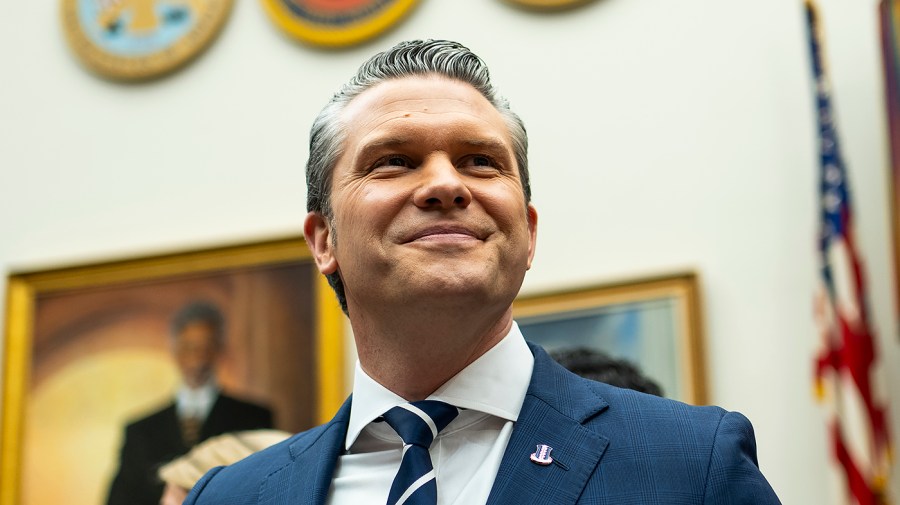
Defense Secretary Pete Hegseth gave a rare boost last week to a bipartisan bill that key Republicans, including the chair of the Senate Armed Services Committee (SASC), have opposed over cost concerns.

The legislation, named after a U.S. Army combat engineer, diagnosed with cancer due to toxic burn pit exposure, would provide about 54,000 combat-injured service members, who are medically retired, retirement pay and Veterans Affairs (VA) disability concurrently.

Sen. Richard Blumenthal (D-Conn.), who has championed the bill in the upper chamber, brought up the legislation during a SASC hearing last week on the Pentagon’s $1.5 trillion budget request for fiscal year 2027.

“Well, what I would like is your commitment that you will support the Major Richard Star Act,” Blumenthal said.

“As I have said in the past to other organizations, we support the Richard Star Act,” Hegseth said in response.

While veterans’ groups have pushed for the bill, which was first introduced in 2023, its potential passage was blocked by Republican senators last year and again earlier this year over cost concerns.

In October, Senate Armed Services Committee Chair Roger Wicker (R-Miss.) said that, like Blumenthal, he respects and supports veterans.

“However, my colleague is asking for an entitlement that does amount to a double benefit and that we cannot afford,” Wicker said on the Senate floor. “We’re talking between $9 billion and $10 billion on the Department of Defense Authorization Act and we’re talking about adding a bill, a piece of legislation that really belongs in another jurisdiction, as my friend acknowledged.”

Similarly, Sen. Ron Johnson (R-Wis.) blocked the legislation from unanimous consent passage and a motion to give the measure a floor vote in March, saying the bill would run the government more than $70 billion over the first decade.

The Pentagon is asking for $1.5 trillion in spending for next year, a request that has received broad support from the GOP.

The Richard Star Act already has the backing of nearly 80 senators and more than 320 House members. Veterans groups were hopeful that Hegseth’s endorsement could provide the momentum to get it across the finish line.

“I think Secretary Hegseth’s support could help build some momentum and additional public support” for the bill, said Kristina Keenan, the director for the National Legislative Service of the Veterans of Foreign Wars (VFW) of the United States.

“I think with the secretary’s comments and his public support, I do hope that that maybe doesn’t change anyone’s opinion, because I think we’re all on the same wavelength, but I do hope that it kind of pushes people to be more proactive and pushing it through,” Jess Finucan, the director of policy and advocacy at the Iraq and Afghanistan Veterans of America (IAVA), said in an interview with The Hill.

Veterans who have earned full retirement pay for being in service for more than two decades and who qualify for VA disability benefits get both if their disability rating is above 50 percent — a determination made by the department based on how severely conditions impact one’s functional ability.

However, veterans who were forced to retire early due to combat or combat-linked injuries do not receive full retirement pay from the Pentagon and full disability compensation from the VA, as their Department of Defense pay is offset dollar-for-dollar by the amount of VA disability payout they get, leaving some with considerably less benefits in the end.

“I think the average that someone could earn back if they were able to have concurrent receipt would be almost $2,000 [per month]. That could be rent in some areas. That could be financial stability for you and your family. A lot of these folks are still of working age,” said Finucan, of the Iraq and Afghanistan Veterans of America.

However, Johnson argued in March that it was simply not fiscally prudent.

“The men and women of this military that I know didn’t serve and sacrifice oblivious to the fact that we’re mortgaging our children’s future,” the Wisconsin Republican said on the Senate floor. “They serve and sacrifice to secure our children’s future.”

“So we can’t just come down here and talk about how much we love vets and how we want to support them. We also have to look at the reality situation, the dollars and cents, we’re $39 trillion in debt. Over the next decade, it could probably go to $60 trillion,” he added. “We have to look at the dollars and cents.”

Johnson told Blumenthal that the bill should be brought through the “committee process regular order” and if it has “great” support, “I might even vote for it.”

The Connecticut Democrat responded by pointing to the price tag of the Iran war, which had started days before the floor debate.

“I am heartbroken for a nation that can afford to spend tens of billions of dollars, as we are doing right now, perhaps hundreds of billions, in a conflict far away putting American lives in harm’s way, causing death, six at least so far, and casualties in real-time when we are failing to match their bravery with our own. It is unconscionable,” Blumenthal said. “A lot of words, a lot of numbers, a lot of fallbacks to Senate procedure process — meaningless.”

The Senate Veterans’ Affairs Committee said the bill could cost about $11 billion over the next 10 years, but other estimates attached a higher price tag. The Congressional Budget Office estimated in late March that the Richard Star Act would increase direct spending by $78 billion over the 2026-2036 period.

Keenan pushed back on criticism from lawmakers who argued it would cost too much money.

“What is the message that we want to send to those people? Are we going to take care of them when they come home? What if those, any of those folks are medically retired because of combat injuries, they would face similar offsets for any kind of disabilities that they may file for with the VA?” she said.

The VFW official also said passing the bill would be timely in light of the U.S. being at war with Iran and to make sure “we are taking care of those who are in harm’s way.”

Johnson’s and Wicker’s offices did not respond to The Hill’s request for comment on Hegseth’s support for the bill.

When reached for additional comment, the Pentagon pointed The Hill to Hegseth’s exchange with Blumenthal.

Blumenthal said Hegseth’s pledge to support the legislation is a “significant step,” particularly after it was blocked several times in the Senate.

“I plan on holding Secretary Hegseth and the Trump Administration accountable for helping get this important bill across the finish line by Veterans’ Day,” Blumenthal told The Hill this week. “Taking care of our veterans is a cost of war, and our nation has a moral imperative to act now to pass the Major Richard Star Act.”

The White House did not respond to The Hill’s request for comment on whether President Trump supports the bill.

When asked if VA Secretary Doug Collins supports the Richard Star Act, the department told The Hill it “doesn’t typically comment on pending legislation.”

Lawmakers in both parties and chambers have continued to advocate for the bill after Hegseth’s public support.

Rep. Jimmy Patronis (R-Fla.) will host a veterans town hall next Tuesday. In a press release for the event, he touted his sponsorship of the legislation.

“The Major Richard Star Act is a top priority for Northwest Florida’s veterans and military families, and I’m proud to be a cosponsor of this legislation,” Patronis said in a statement to The Hill on Saturday.

Patronis called Hegseth’s endorsement of the legislation a “game changer” and said now it’s “our job to get it to the President’s desk and deliver for our heroes.”

“To try to save money on the backs of veterans and combat-injured disabled veterans …doesn’t sit well with the VFW or with our members,” Keenan, of the Veterans of Foreign Wars of the United States, said this past week.

Copyright 2026 Nexstar Media, Inc. All rights reserved. This material may not be published, broadcast, rewritten, or redistributed.

For the latest news, weather, sports, and streaming video, head to The Hill.
Comments
You must be logged in to comment.