yahoo Press
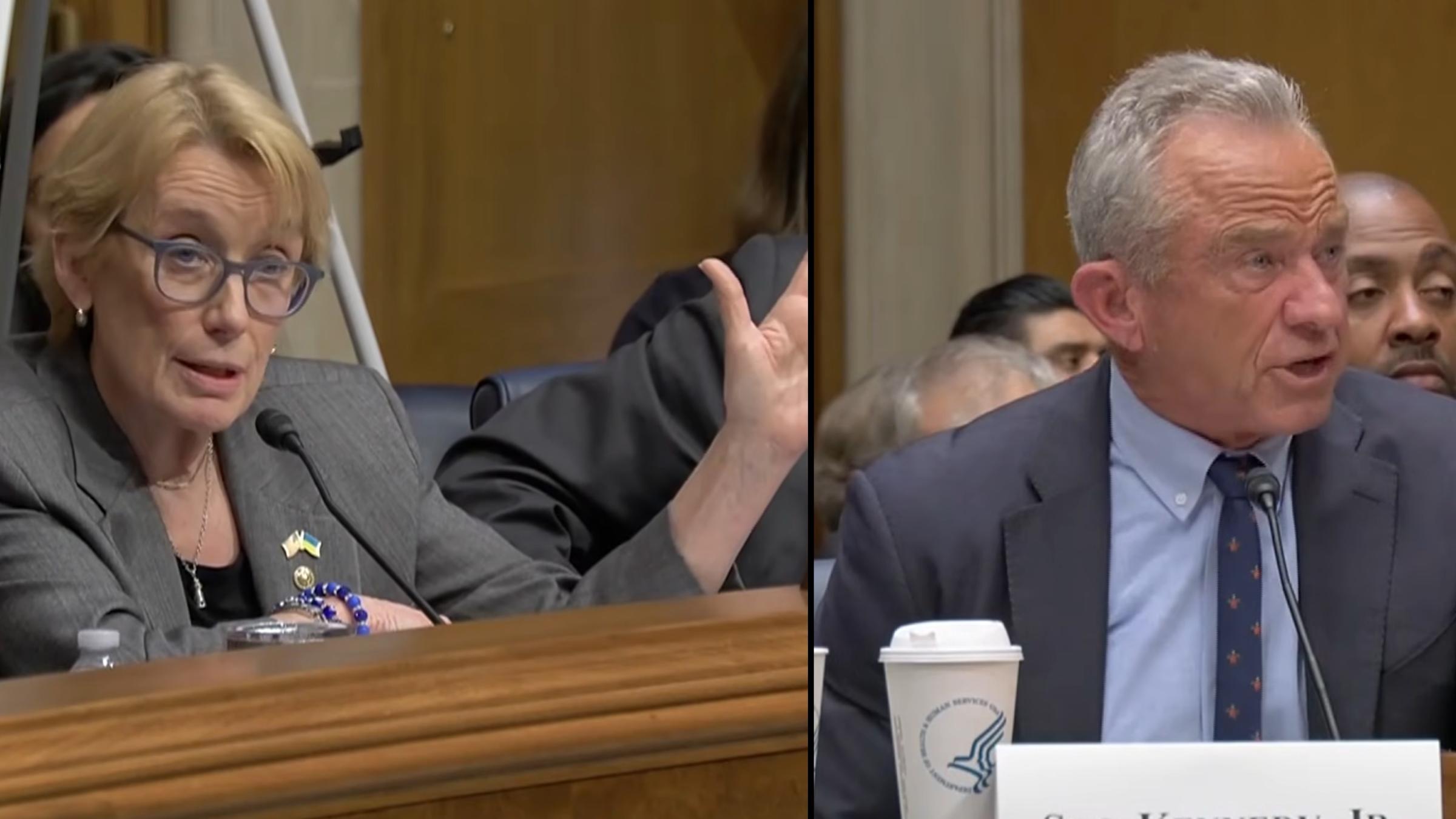
RFK Jr. visibly shaken after getting fact-checked to his face on soaring food costs: ‘Beef prices are up 20%’
Images
1 / 4
2 / 4

3 / 4

4 / 4
Moneywise and Yahoo Finance LLC may earn commission or revenue through links in the content below.

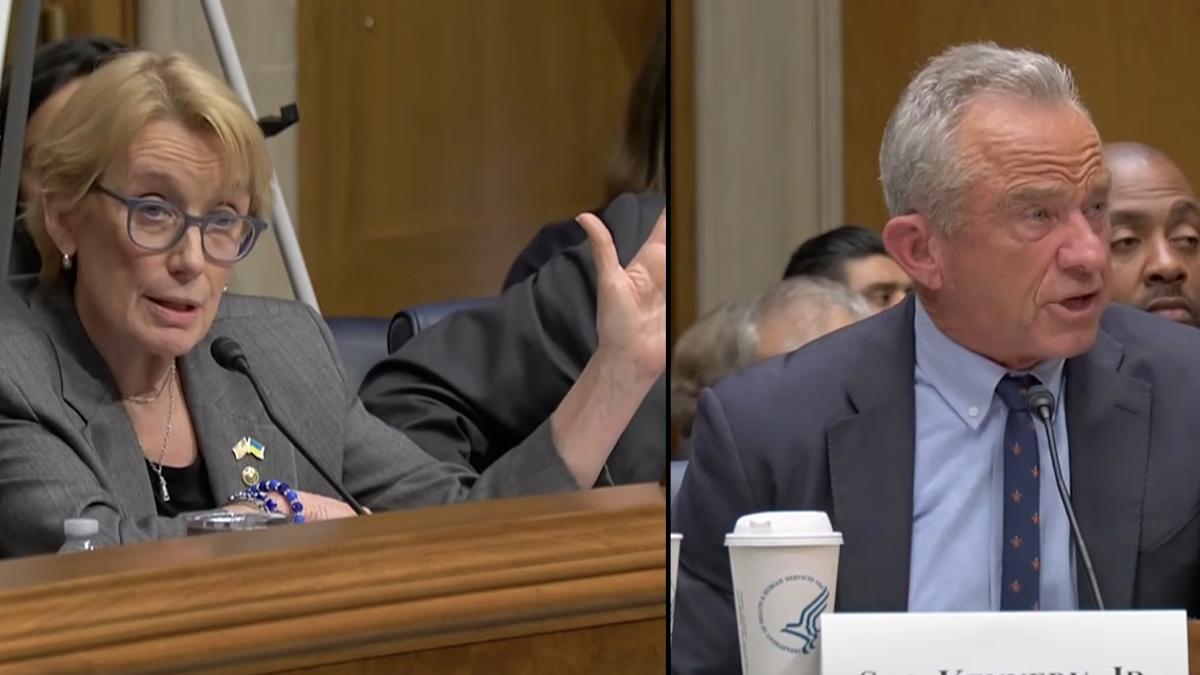
Health and Human Services Secretary Robert F. Kennedy Jr. was put on the spot during a tense exchange after Sen. Maggie Hassan fact-checked him to his face on soaring food costs.

The confrontation began when Hassan pressed Kennedy on whether high grocery prices make it harder for families to afford the fresh, healthy foods he has encouraged Americans to eat.

Thanks to Jeff Bezos, you can now become a landlord for as little as $100 — and no, you don't have to deal with tenants or fix freezers. Here's how

Dave Ramsey warns nearly 50% of Americans are making 1 big Social Security mistake — here’s how to fix it ASAP

The IRS usually taxes gold as a collectible — but this little-known strategy lets you hold physical bullion tax-free. Get your free guide from Priority Gold

Kennedy responded by saying beef had dropped by 1% in the last quarter — but Hassan quickly challenged that claim.

"No. Look, beef prices are up 20%, banana prices are up nearly 7% since President Trump took office. Cheese prices are up 6%," she said (1). "So again, when groceries get more expensive — easier or harder for families to afford the very healthy foods that you want them to eat?"

Kennedy said Americans can eat beef, poultry or fish, before adding that the price of beef is tied to the size of the cattle herd. "The herd dropped," he said.

Hassan wasn't satisfied.

"You're not answering," she said.

Kennedy appeared caught off guard as Hassan pressed him repeatedly, pausing before replying: "You're blaming President Trump for something he didn't do."

The exchange comes as food prices remain a major pressure point for American households — with the rise in beef prices especially striking. The USDA has noted that wholesale beef prices were 19.7% higher in March 2026 than in March 2025 (2), and predicts another 7.8% price increase by the end of the year.

Kennedy did have a point about cattle supplies. The USDA has cited a "cyclical contraction of the cattle herd" as one factor behind tight supplies and higher farm-level cattle prices.

Hassan closed the exchange by accusing Kennedy and the Trump administration of being disconnected from what shoppers are seeing at the grocery store checkout.

"Families are facing historic prices at the register. You don't need to be a Secretary of Health and Human Services to know that," Hassan said. "The people across this country know that because they go to grocery stores today, and the fact that you either don't know it or you don't want to admit it just shows how out of touch you and the Trump administration are."

Whether you agree with Hassan's political argument or not, the frustration behind it is familiar: when everyday essentials get more expensive, paychecks don't stretch as far.

And that pressure has been building regardless of who sits in the White House.

According to BLS data, the average price of ground beef has increased by 20.8% since Trump's second term began in January 2025 (3). But the longer-term rise is even more striking: ground beef is up 69.0% since Biden's inauguration in January 2021.

And it's certainly not just beef. Inflation has been eroding the value of the dollar for decades. According to the Federal Reserve Bank of Minneapolis, $100 in 2025 had the same purchasing power as just $12.06 did in 1970.

That's why many Americans are looking beyond cash and traditional savings when thinking about how to protect their purchasing power.

One time-tested option is gold. Its appeal is simple: unlike fiat currencies, the yellow metal can't be printed at will by central banks.

Gold is also considered the ultimate safe haven. It's not tied to any one country, currency or economy, and in times of economic turmoil or geopolitical uncertainty, investors often flock to it — driving prices higher.

Ray Dalio, founder of the world's largest hedge fund, Bridgewater Associates, told CNBC last year that "People don't have, typically, an adequate amount of gold in their portfolio," adding, "When bad times come, gold is a very effective diversifier."

Despite a recent pullback, gold prices have surged by more than 35% over the last 12 months.

One way to invest in gold that can also provide significant tax advantages is to open a gold IRA with the help of Goldco.

Gold IRAs allow investors to hold physical gold or gold-related assets within a retirement account, thereby combining the tax advantages of an IRA with the protective benefits of investing in gold, making it a compelling potential option for those wanting to ensure their retirement funds are diversified during rough economic times.

Goldco offers free shipping and access to a library of retirement resources. Plus, the company will match up to 10% of qualified purchases in free silver.

If you're curious whether this is the right investment to diversify your portfolio, you can download your free gold and silver information guide today.

Read More: Robert Kiyosaki warned of a 'Greater Depression' — with millions of Americans going poor. Was he right?

Gold isn't the only asset investors turn to during inflationary times. Real estate has also proven to be a powerful hedge.

When inflation rises, property values often increase as well, reflecting the higher costs of materials, labor and land. At the same time, rental income tends to go up, providing landlords with a revenue stream that adjusts for inflation.

Over the past ten years, the S&P Cotality Case-Shiller U.S. National Home Price NSA Index has jumped by 87%, reflecting strong demand and limited housing supply (4).

Of course, high home prices can make buying a home more challenging, especially with mortgage rates still elevated. And being a landlord isn't exactly hands-off work — managing tenants, maintenance and repairs can quickly eat into your time (and returns).

The good news? You don't need to buy a property outright — or deal with leaky faucets — to invest in real estate today. Crowdfunding platforms like mogul offer an easier way to get exposure to this income-generating asset class.

As a real estate investment platform offering fractional ownership in blue-chip rental properties, mogul gives investors monthly rental income, real-time appreciation and tax benefits — without the need for a hefty down payment or 3 A.M. tenant calls.

Founded by former Goldman Sachs real estate investors, the team hand-picks the top 1% of single-family rental homes nationwide for you. In other words, you gain access to institutional-quality offerings for a fraction of the usual cost.

Each property undergoes a rigorous vetting process, requiring a minimum 12% return even in downside scenarios. Across the board, the platform features an average annual IRR of 18.8%. Offerings often sell out in under three hours, with investments typically ranging between $15,000 and $40,000 per property.

Sign up for an account and browse available properties here to start investing today.

Prominent investors like Dalio often stress the importance of diversification — and for good reason. Many traditional assets tend to move in tandem, especially during periods of market stress.

That message feels especially relevant today. Nearly 40% of the S&P 500's weight is concentrated in its ten largest stocks and the index's CAPE ratio hasn't been this high since the dot-com boom.

This is where, for many investors, alternative assets come into play. These can include everything from real estate and precious metals to private equity and collectibles.

But there's one store of value that routinely flies under the radar: It's scarce by design, coveted worldwide and frequently locked away by institutions.

We're talking about post-war and contemporary art — a category that has outpaced the S&P 500 with low correlation since 1995.

It's easy to see why art pieces often fetch new highs at auctions: The supply of the best works of art is limited and many of the most desirable pieces have already been snatched up by museums and collectors. That scarcity can also make art an attractive option for investors looking to diversify and preserve wealth during periods of high inflation.

Until recently, purchasing art has been a domain reserved for the ultra-wealthy — like in 2022 when a collection of art owned by the late Microsoft co-founder Paul Allen sold for $1.5 billion at Christie's New York, making it the most valuable collection in auction history (5).

Now, Masterworks — a platform for investing in shares of blue-chip artwork by renowned artists, including Pablo Picasso, Jean-Michel Basquiat and Banksy — can help you get started with this asset class. It's easy to use and, with 27 successful exits to date, Masterworks has distributed more than $65 million in total proceeds (including principal).

Simply browse their impressive portfolio of paintings and choose how many shares you'd like to buy. Masterworks then handles all the details, making high-end art investments both accessible and effortless.

New offerings have sold out in minutes, but you can skip their waitlist here.

Note that past performance is not indicative of future returns. Investing involves risk. See Reg A disclosures at masterworks.com/cd (6).

Robert Kiyosaki says this 1 asset will surge 400% in a year and begs investors not to miss this ‘explosion’

No time to lower your crippling car insurance rate? Here’s how to do it within minutes — you could end up paying $29/month without a single phone call

Millionaires under 43 are reshaping investing — just 25% of their portfolios are in stocks. Here’s where their money is going

Dave Ramsey says this 7-step plan ‘works every single time’ to kill debt, get rich in America — and that ‘anyone’ can do it

Join 250,000+ readers and get Moneywise’s best stories and exclusive interviews first — clear insights curated and delivered weekly. Subscribe now.

We rely only on vetted sources and credible third-party reporting. For details, see our ethics and guidelines.

YouTube (1); USDA Economic Research Service (2); Federal Reserve Economic Data (3); S&P Global (4); Christie's (5); Masterworks (6)

This article provides information only and should not be construed as advice. It is provided without warranty of any kind.
Comments
You must be logged in to comment.