huffpost Press
Trump’s Behavior During His ‘60 Minutes’ Interview Alarms Experts: ‘Unfortunate’
Images
1 / 9

2 / 9
3 / 9
4 / 9
5 / 9
6 / 9
7 / 9
8 / 9

9 / 9
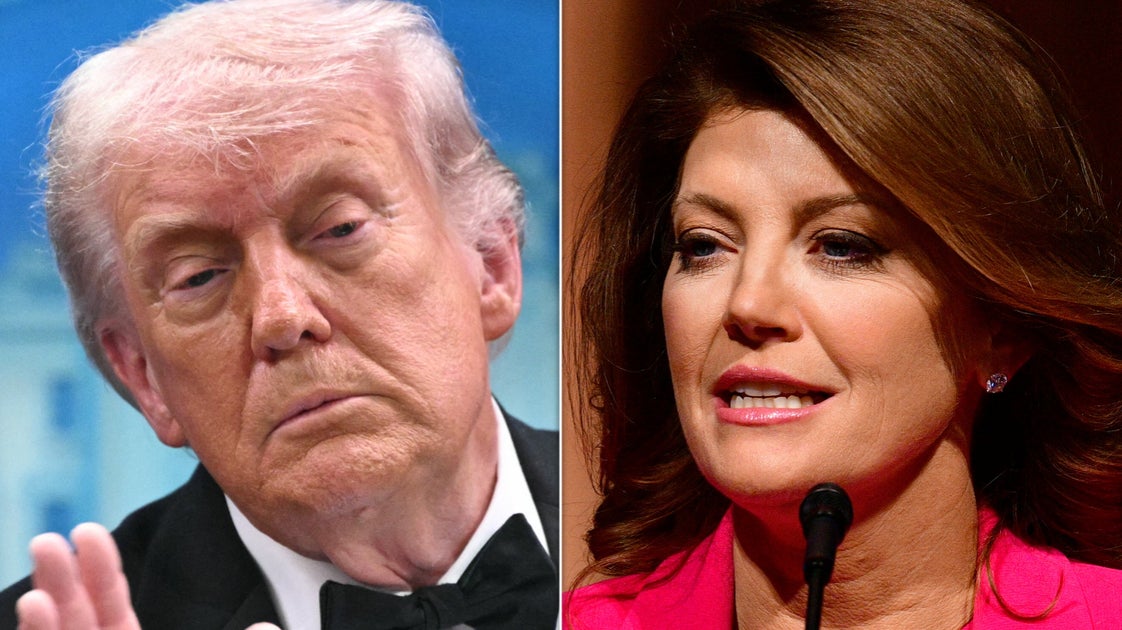
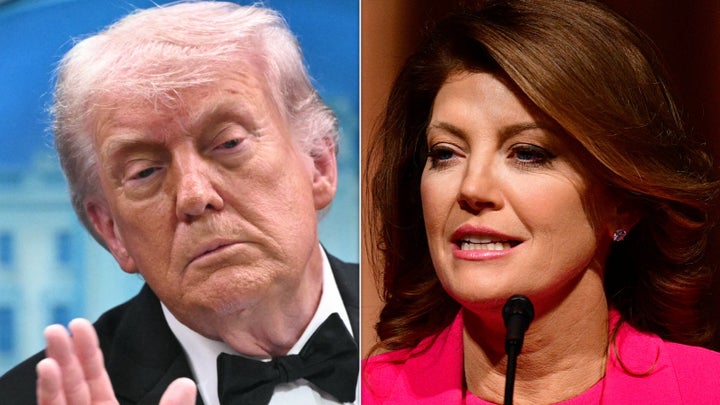
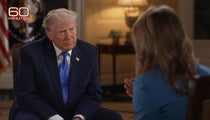
President Donald Trump recently slammed CBS reporter Norah O’Donnell, calling her a “disgrace,” during an interview on “60 Minutes” on Sunday. Experts in politics and journalism discussed Trump’s history of disparaging female journalists — and why it’s crucial that journalists continue to hold leaders accountable.

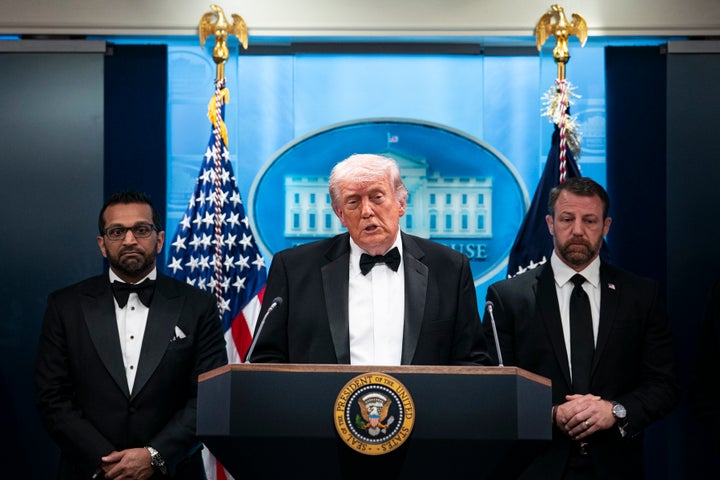
O’Donnell began the sit-down by saying she was glad Trump was safe and by asking how he was doing following the shooting at the White House Correspondents’ Association dinner on Saturday night. The interview began to sour when O’Donnell read aloud part of a note from the man suspected of opening fire on the dinner at the Washington Hilton hotel in Washington, D.C.

“The so-called manifesto is a stunning thing to read, Mr. President. He appears to reference a motive in it,” O’Donnell said. “He writes this quote: ‘Administration officials, they are targets.’ And he also wrote this: ‘I am no longer willing to permit a pedophile, rapist and traitor to coat my hands with his crimes.’ What’s your reaction to that?”

Trump hit back by saying he knew O’Donnell was going to read the alleged note, “because you’re horrible people.”

“Yeah, he did write that. I’m not a rapist. I didn’t rape anybody. I’m not a pedophile,” Trump said.

“Oh, you think he was referring to you?” O’Donnell interjected, while Trump repeatedly cut her off by saying, “Excuse me, excuse me.”

“I’m not a pedophile. You read that crap from some sick person. I got associated with stuff that has nothing to do with me. I was totally exonerated,” the president claimed. “Your friends on the other side of the plate are the ones that were involved with, let’s say, [sexual predator Jeffrey] Epstein or other things.”

“You should be ashamed of yourself reading that,” he said moments later, adding: “You’re a disgrace, but go ahead, let’s finish the interview.”

A 31-year-old suspect was charged on Monday with attempting to assassinate Trump, in addition to other firearm-related charges. He is facing up to life in prison.

He sent a message to family members minutes before the Saturday night attack, according to a law enforcement official. The Associated Press reviewed the note and reported that it alluded to grievances over the administration’s actions and made references to Trump, but did not name him.

Trump’s hostile exchange with O’Donnell was not surprising at all, said Peter Loge, associate professor of media and public affairs and director of the Project on Ethics in Political Communication at The George Washington University School of Media & Public Affairs.

“President Trump’s first instinct when confronted with anything he doesn’t like is to attack,” Loge told HuffPost. “He also has a long history of both misogyny and attacking the media. So he once again attacked a journalist, and he attacked a woman — so you had a woman journalist saying something he didn’t like, which is kind of a perfect storm for Trump to lash out.”

Trump has long had an adversarial relationship with the press. He also has a history of attacking and attempting to silence journalists, with a documented pattern of disparaging female journalists — oftentimes with personal attacks.

“Seasoned journalists understand that certain public figures have a well-established style when it comes to challenging interviews, including attempts to belittle or deflect, particularly toward women,” said Les Rose, a professor of broadcast and digital journalism at Syracuse University’s Newhouse School and longtime CBS News staffer. “That isn’t new, and it isn’t surprising.”

“I personally feel it’s disgusting, but a veteran professional like Nora O’Donnell would have gone into that interview fully aware of the terrain and prepared for pushback, and committed to staying focused on the questions that matter,” Rose said about O’Donnell’s tense exchange with Trump.

Loge emphasized that the message from Saturday’s shooting suspect was clearly “newsworthy” and relevant to O’Donnell and Trump’s interview.

“It’s unfortunate that the president’s response was to, once again, attack a journalist, attack a woman and attack an idea that he didn’t like,” he said.

At the end of the day, the president of the United States should “not be attacking a free and open press,” Loge emphasized.

“If the president doesn’t want to be criticized by the press, he should probably not run for president,” he said, before later adding, “If a journalist isn’t holding power to account, a journalist isn’t doing their job.”

Loge pointed out that presidents throughout history have had their own frustrations with how they were covered in the press — but that that just comes with the job.

Rose said that O’Donnell’s “steadiness” and “preparation” was reflected in her exchange with Trump, and that her questions were “exactly what the First Amendment is meant to protect.”

“There’s a reason the First Amendment comes first,” he said. “It’s the foundation that protects journalists as they do their job, and it places a unique responsibility on us to ask tough, necessary questions, especially those in power.”

“You don’t have to admire or dislike a leader to recognize that accountability is essential in a democracy, and that sometimes means pointed, uncomfortable exchanges,” he continued.

Speaking about Trump’s history of attacking journalists and saying “terrible, disparaging things about women in general,” Loge said that the “president of the United States should be a role model.”

“They should hold themselves to a higher standard,” he said, adding that Trump should criticize or debate the content of things he doesn’t agree with instead of leveling personal attacks.

“We should expect more of the president of the United States,” he added.

By entering your email and clicking Sign Up, you're agreeing to let us send you customized marketing messages about us and our advertising partners. You are also agreeing to our Terms of Service and Privacy Policy.
Comments
You must be logged in to comment.