huffpost Press
‘The Time For Free Riding Is Over’: Hegseth Slams U.S. Allies Amid Strait Of Hormuz Disruption
Images
1 / 9

2 / 9
3 / 9
4 / 9

5 / 9

6 / 9
7 / 9
8 / 9

9 / 9
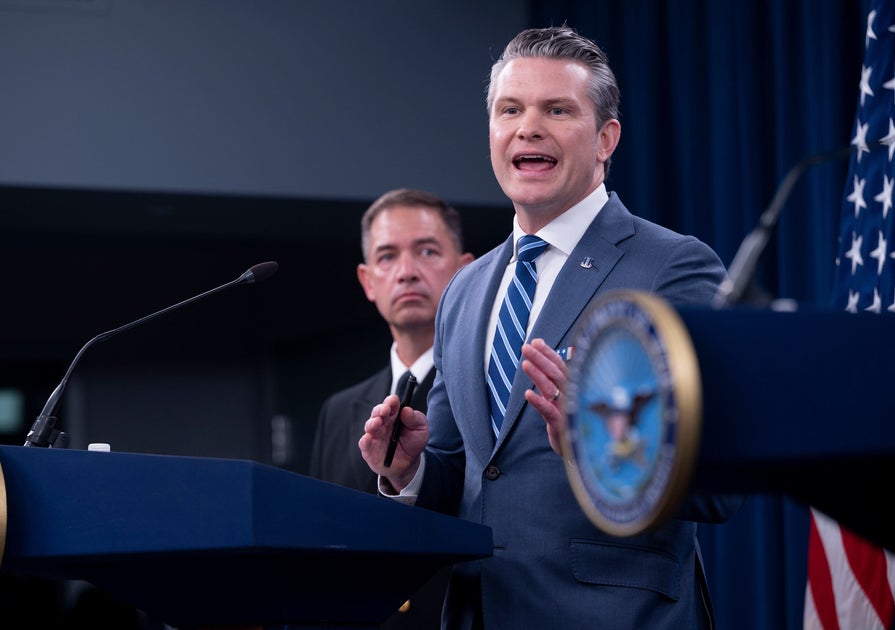
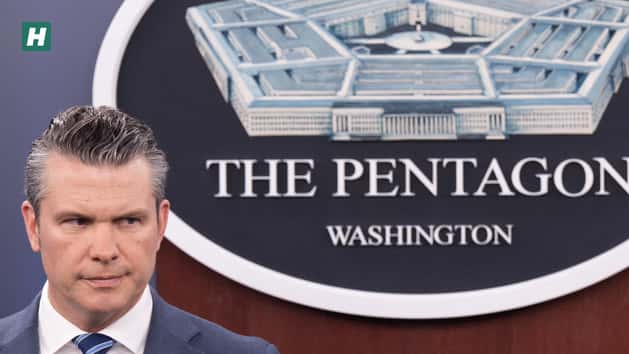
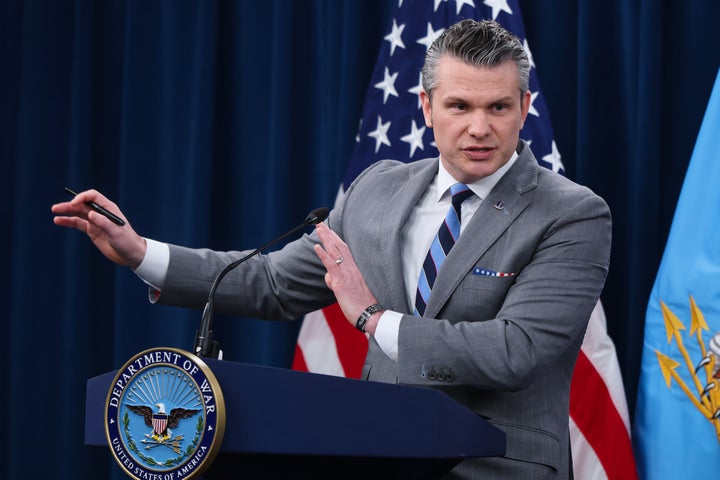
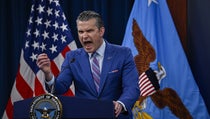
Defense Secretary Pete Hegseth harshly condemned U.S. allies on Friday, suggesting that reopening the Strait of Hormuz “should not be America’s fight alone,” amid the disruption prompted by President Donald Trump’s war against Iran. (Watch clip above.)

“Europe and Asia have benefited from our protection for decades, but the time for free riding is over,” Hegseth said. “America and the free world deserve allies who are capable, who are loyal, and who understand that being an ally is not a one-way street. It’s a two-way street.”

He added, “We are not counting on Europe, but they need the Strait of Hormuz much more than we do, and might want to start doing less talking and having less fancy conferences in Europe and get in a boat.”

Hegseth also dismissed a multinational effort led by the U.K. and France to reopen the strait once the war is over, apparently calling last week’s Paris summit, chaired by Keir Starmer and Emmanuel Macron, a “silly conference.”

“Those are not serious efforts yet,” the secretary said. “We would welcome a serious European effort to do something about this strait and this passage, considering it’s their energy capabilities that are most at stake.”

While it is true that the U.S. gets only a small amount of its oil imports through the Strait of Hormuz, Iran’s weaponization of the waterway as a means of retaliation against the U.S. and Israel for launching the war is hurting Americans at home in the form of high energy prices because the oil market is global.

Hegseth’s comments echo Trump’s relentless attacks on U.S. allies for refusing to send in their navies to reopen the strait, through which one-fifth of the world’s oil and one-fifth of the world’s liquefied natural gas normally flows.

Trump has recently said he’s considering withdrawing from NATO, which he’s described as a “paper tiger,” while a new internal Pentagon email reported by Reuters on Friday said the U.S. is drawing up plans to punish members of the military alliance, including Spain which blocked the U.S. from using its bases or airspace to attack Iran, in part, to decrease “the sense of entitlement on the part of the Europeans.”

Meanwhile, the European Union is preparing a blueprint for how its mutual assistance clause would work as the U.S. president continues to undermine NATO.

By entering your email and clicking Sign Up, you're agreeing to let us send you customized marketing messages about us and our advertising partners. You are also agreeing to our Terms of Service and Privacy Policy.
Comments
You must be logged in to comment.