huffpost Press
The Big Question That No One In Congress Seems To Have An Answer To
Images
1 / 6

2 / 6

3 / 6

4 / 6

5 / 6

6 / 6
WASHINGTON — It’s been 12 days since President Donald Trump launched a war against Iran, and no one in Congress seems to know how much it is costing U.S. taxpayers.

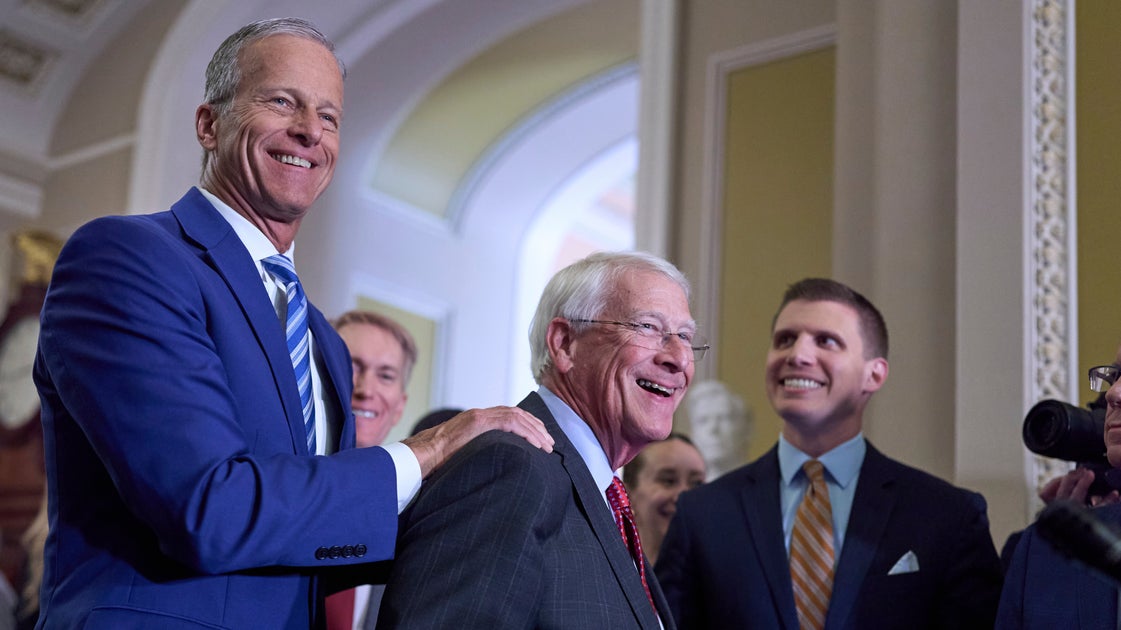
“That is a question that needs to be answered,” Sen. Roger Wicker (R-Miss.), the chair of the Senate Armed Services Committee, told HuffPost. “We need to have a definitive answer.”

The Pentagon hasn’t shared an estimate of the war costs, even as it continues its massive bombardment of Iranian targets on land and sea. A spokesperson for the department declined to provide information. The Trump administration is expected to ask Congress to pass a supplemental spending bill for Operation Epic Fury, but it’s not clear when.

Some lawmakers have pegged the daily costs at $1 to $2 billion a day, but that’s closer to a guess than an estimate.

“It’s never cheap to fight a war,” Sen. Mike Rounds (R-S.D.) told HuffPost.

The question is more than academic. The Pentagon is likely to ask Congress for additional money to pay for the war sooner rather than later, and the belief the government spends too much on global conflicts and not enough helping Americans has been politically potent during the post-COVID cost of living crisis, and the attack on Iran is already one of the least popular American wars on record.

Over 50,000 U.S. troops are deployed in the Middle East, including two aircraft carrier strike groups, with another carrier group on the way. Already, the U.S. has struck more than 5,000 targets inside Iran, including 60 ships, with attacks coming “nearly every hour” on Tuesday, according to the latest update from U.S. Central Command.

All those munitions are coming at a heavy price. The first 10 days of the war have cost about $8.5 billion, according to Ret. Marine Col. Mark Cancian, a senior adviser at the Center for Strategic and International Studies, a D.C.-based think tank focused on international affairs.

“The bulk of it was in the first couple of days that we fired off the very expensive munitions,” Cancian told HuffPost. “Since then, the number of missile launches and drone launches by Iran has come down … and we’ve been able to use much less expensive ground-attack munitions because we have air superiority.”

Cancian’s estimate is based on the limited information provided to the public by the Defense Department, including public statements by Defense Secretary Pete Hegseth and other top brass. But if it’s in the right ballpark, continuing that level of spending for weeks or months could put the war in the same price range as a host of high-profile domestic policy priorities, including things like an extension of health insurance subsidies.

Then there are broader costs as the war takes a toll on the global economy. Oil prices have fluctuated wildly this week, leading to pain at the pump for consumers and businesses alike.

“It’s costing consumers billions of dollars already,” Sen. Chris Murphy (D-Conn.) told HuffPost, citing the impact on oil prices and the global economy. “The open-ended nature of it suggests this might be trillion [dollars] plus when it’s done.”

Republicans are considering proposing an emergency funding package for the war that also includes assistance for wildfire victims and farmers hit by Trump’s tariffs, according to Politico.

But most Democrats have vowed to oppose any additional war funding, noting that Republicans already included $150 billion for the Pentagon in their party-line Big Beautiful Bill. That’s on top of the nearly $1 trillion budget that the Defense Department received last year.

“I’m a hard no on that. They have more than enough money,” said Sen. Brian Schatz (D-Hawaii), a senior member of the Senate Appropriations Committee.

“Congress has a responsibility to reflect the will of the people on powerful decisions like going to war, and one way we do that is to refuse to finance military adventures,” Sen. Elizabeth Warren (D-Mass.) added, “some military adventures that don’t make our nation any safer.”

The extra funds were supposed to be used for procurement, things like building ships and submarines, not for paying for a new war, Cancian said.

“There was no money that could be used for an operation like this,” Cancian said, though he added it would be possible for lawmakers to go back and tell the Pentagon to use some of the money on its Iran operations.

Trump’s decision to go to war against Iran last month came after years of complaints he made on the campaign trail about costly foreign interventions abroad. The “America First” candidate who vowed to end wars now finds himself defending another unpopular military conflict in the Middle East while Americans are dealing with higher costs at home.

Some of Trump’s MAGA allies are clearly getting antsy, signaling to the president to wrap it up and focus on the coming midterm elections.

“It would be better if we would vote to lower [insurance] premiums, lower out-of-pocket expenses, lower gas prices,” Sen. Josh Hawley (R-Mo.) told reporters on Wednesday. “That’s what we ought to be doing.”

By entering your email and clicking Sign Up, you're agreeing to let us send you customized marketing messages about us and our advertising partners. You are also agreeing to our Terms of Service and Privacy Policy.
Comments
You must be logged in to comment.