huffpost Press
Body Language Experts Had A LOT To Say About That Trump And Putin Interaction In China
Images
1 / 9

2 / 9
3 / 9
4 / 9
5 / 9
6 / 9
7 / 9
8 / 9

9 / 9
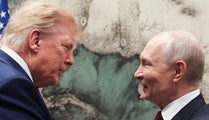
President Donald Trump and Russian leader Vladimir Putin had a seemingly friendly but widely criticized interaction this week at a bilateral summit in China.

In a video of the meeting, Trump can be seen entering the room, seeing Putin, pointing to him, and jokingly saying, “Who is he?” followed by “He’s my friend!” (This is the moment many people are criticizing online, calling it “truly sickening” as Putin continues a brutal war with Ukraine.)

Trump and Putin go on to exchange a handshake before Trump pulls Putin in and whispers something illegible to the Russian president. The pair then turn to face the camera as Trump thanks the crowd and shares hopes for progress during the meeting. Trump and Putin then exchange another handshake and thank the crowd.

Body language experts spot some telling moments between the duo during the interaction. Here’s what they saw:

Trump’s “who is he, he’s my friend” statement directed at Putin came as an unpleasant surprise to many. But this statement wasn’t so much a playful, happy recognition as it was an “audience-directed performance,” said Denise Dudley, a clinical psychologist and behavioral expert.

“It does several things. That pointing gesture ... happens before the handshake,” she said. “He’s using that to construct this idea that ‘oh, this is my good buddy.’”

“He isn’t simply greeting Putin; he’s introducing the relationship to the audience, and we want to remember that he plays to the audience,” Dudley continued, before adding that it’s more of a social performance over a diplomatic greeting. “And he wants the room to know that this interaction should be understood that way.”

Abbie Maroño, a behavioral scientist, looked at it as a display of power.

“Trump likes to show he’s connected,” Maroño said. “You’ll notice when there’s a lot of important people, Trump likes to show ‘yes, they’re my friends. I’m important too.’”

It’s a way of him showing that this is someone he knows and someone he approved of. “And again, it is a sense of control of this person is here because I’ve allowed them to be here,” Maroño said.

“I thought [the interaction] was really interesting because, overall, it seemed like a very friendly display, but with a subtle undertone of a dominance tug-of-war,” said Maroño. “There were lots of outward displays of friendliness, and then subtle displays of an attempt to gain dominance.”

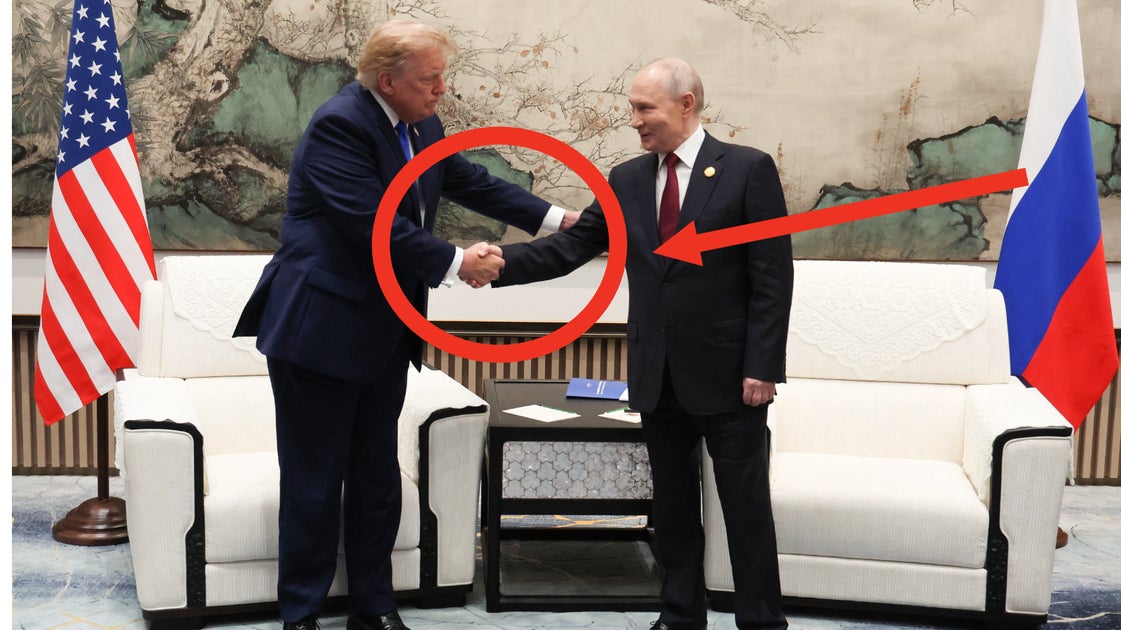
During their first handshake, Trump extends his arm and leans toward Putin, who then shakes Trump’s hand and puts his other hand on Trump’s arm.

“When someone has more touch points, they have more dominance,” Maroño said, referring to Putin’s additional hand placement. “So, if we have a handshake, and I then take my other hand and put it on your arm, I’m showing I’m more dominant.”

When Putin puts his other hand on Trump, it’s almost his way of saying “I have the most dominance here,” Maroño noted.

At the same time, though, Trump also used his free hand to briefly touch Putin’s arm — but there’s a difference.

“Putin took hold of Trump’s arm during the handshake, which gave him a more assertive role in that moment. Trump’s brief touch struck me as warmer and more familiar, but it also shows that he was willing to take the same liberty,” Maroño said.

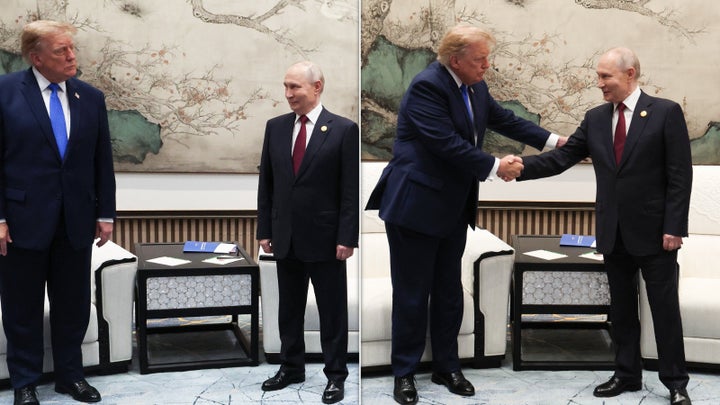
There’s a second handshake, shortly after the initial one, that is very “distanced,” Dudley said. This handshake happens after Trump speaks to the media, and both leaders extend their arms nearly fully.

Importantly, Trump initiates this handshake and doesn’t move forward, Maroño said, which then requires Putin to get closer and come into Trump’s space.

Putin doesn’t move in as much as he did for the first handshake, Dudley said. “He stays back, and I think it’s probably because Putin is ready to not be shaking hands and doing all this stuff, and also maybe by then he doesn’t really feel like being as warm.”

It’s a “perfunctory” movement, Dudley added. “It’s not a very connected handshake at all.”

When looking at both handshakes together, “I’d read it as a cordial exchange in which each man takes the lead at different points,” Maroño said. Again, showing the dominance tug-of-war that occurs throughout the interaction.

While there is a dominance battle, Trump is in control overall, according to Maroño’s analysis. At one point, it appeared Putin was ready to sit down, only to notice Trump wasn’t, so he quickly readjusted to remain standing, she noted.

There’s a mismatch here, Dudley observed.

“This would be what we would call ‘transition misalignment,’” she explained. “We’ve got this asymmetry going [on].”

Putin then looked to Trump to tell him when to sit, Maroño noted, which can also signal Trump’s dominance.

While the almost-sitting-down moment is a mismatch, there is also a lot of synchrony after that, both experts said.

They spend a good bit of time standing side by side and have the “exact same posture,” Maroño noted. “They’re stood with their arms in the same position, their feet in the same position, legs in the same position. They nod simultaneously a lot of the time ... there’s a lot of non-verbal mimicry and non-verbal mimicry and synchrony as a sign of rapport.”

Trump is known to praise Putin, a behavior many other world leaders shy away from. “We know that the more people’s behaviors synchronize, the more they are showing rapport,” Maroño said.

It’s known as “the social glue,” she continued. “It facilitates harmonious relationships. So, if you see people in synchrony, generally there’s a higher degree of mimicry, and also you can use mimicry to create a sense of rapport.”

When Trump is talking, he often nods to Putin, who responds by nodding along, which is another sign of synchrony. But Dudley says that nodding does not always mean agreement.

“It’s just acknowledgment that someone is talking and that you’re listening,” Dudley said. “It’s called backchannel behavior ... it’s a nonverbal signal that someone is attending to what you’re saying, or I’m allowing you to continue.”

The power plays throughout the interaction were evident through small nods, handshakes and more.

“Even when something looks friendly on the surface, there can be that subtle tug-of-war underneath it,” Maroño said. “And it doesn’t mean that it’s not friendly [but] we have to remember that these aren’t just two friends meeting. These are two political leaders that are very clearly trying to show cohesion.”

“So, we have to kind of appear more cooperative than we want to be, and that’s when those really subtle undertones have a lot of importance,” she noted.

By entering your email and clicking Sign Up, you're agreeing to let us send you customized marketing messages about us and our advertising partners. You are also agreeing to our Terms of Service and Privacy Policy.
Comments
You must be logged in to comment.